Rediscovering Muzharul Islam, the architect who imagined a nation

The master architect of Bangladesh and a doyen of modern architecture, Muzharul Islam, passed away on July 14, 2012. His buildings and ideas remain a legacy to be unearthed and interpreted again and again. A special publication, Muzharul Islam 1923–2012: A Folio of Built Works, produced by the Bengal Institute for Architecture, Landscapes and Settlements, presents his legacy in a unique folio format. Taufiqur Rahman Khan reviews the publication.
Every building begins as a line.
Long before concrete is poured or bricks are laid, architecture exists first in the imagination of an architect. That imagination becomes visible through drawings, plans, sections, elevations and master plans, which are not merely technical instructions but the language through which architects think. Like a musical score that precedes a performance, an architectural drawing anticipates a building long before it comes into existence.
Yet every line begins even earlier, with purpose.
More than two thousand years ago, Aristotle proposed that every act of creation could be understood through four causes: the material from which something is made, its form, the technique that brings it into being and, finally, its telos, its purpose or final cause. Of these, the final cause gives meaning to all the others. A chair is shaped from wood or other materials using certain techniques in order to serve a purpose. Likewise, architecture is never merely an arrangement of brick, concrete and steel. Buildings begin with an idea of what they are meant to achieve.
Among the many ways of understanding the work of architect Muzharul Islam (1923–2012), Aristotle's teleology offers an illuminating perspective. Islam's architecture was never simply about designing individual buildings. His deeper aspiration was the making of a modern nation, one that embraced the universal ideals of modern architecture while remaining profoundly rooted in the climate, landscape and culture of Bengal.
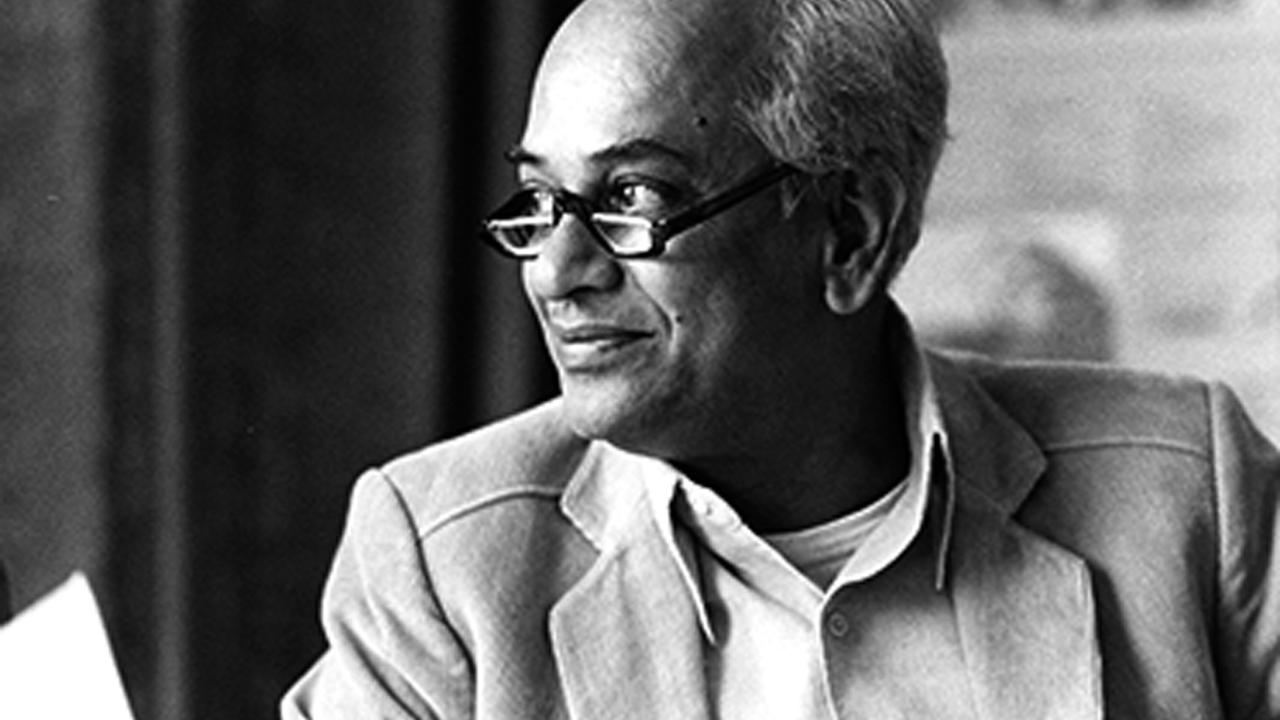
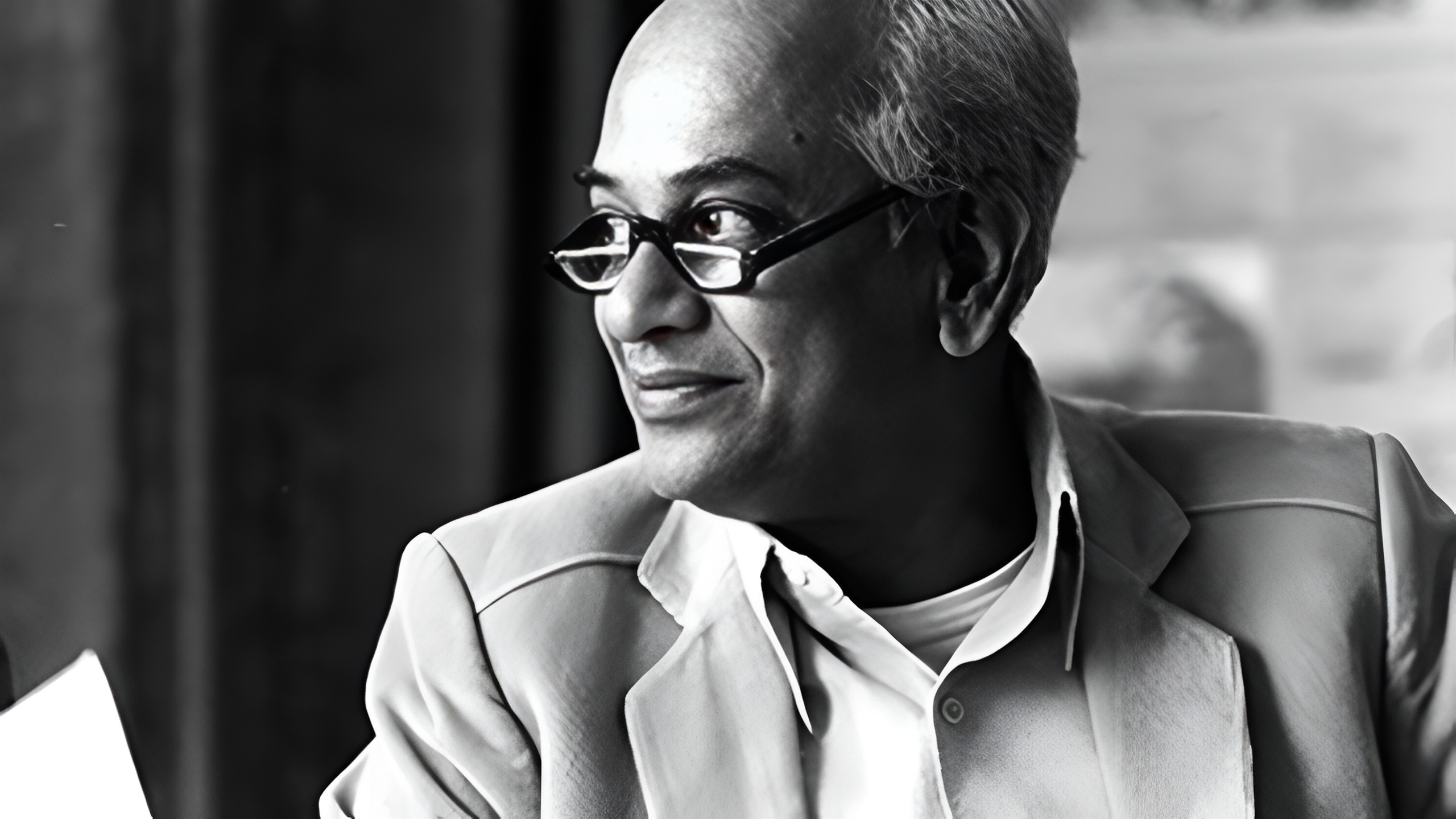
A revealing historical contrast further illuminates Muzharul Islam's architectural vision. In his seminal memoir Amar Dekha Rajnitir Ponchash Bochor (Fifty Years of Politics as I Saw It), Abul Mansur Ahmad recounts how, in the aftermath of Partition, leaders of the Pakistan Movement sought to reassure those disheartened by the loss of Kolkata by promising that Dhaka would one day become another Manhattan. It was a dream of progress measured through imitation of the West. Muzharul Islam, however, returned from the United States after completing his architectural training in the 1950s with a profoundly different aspiration. Rather than reproducing an imported metropolis, he sought to root architecture in the realities of the Bengal delta, its climate, landscape, culture and patterns of life. His ambition was not to transform Dhaka into Manhattan but to help it become the finest expression of what a city in this unique deltaic ecology could be. In retrospect, this was not merely an architectural position but a far-sighted cultural and civilisational vision.
The nation he imagined existed first as an architectural vision. Before brick met mortar, his vision for his country had already appeared in lines on paper. His buildings became the material expression of that vision. This understanding changes the way we look at architectural drawings.
Perhaps this explains why architects have long published folios rather than ordinary books. A folio allows drawings to exist as independent works of art. Large sheets can be unfolded, examined closely and even framed. The reader is invited not only to read but also to look. It is within this tradition that the Bengal Institute for Architecture, Landscapes and Settlements published its remarkable centenary folio on Muzharul Islam in 2024, titled Muzharul Islam 1923–2012: A Folio of Built Works.

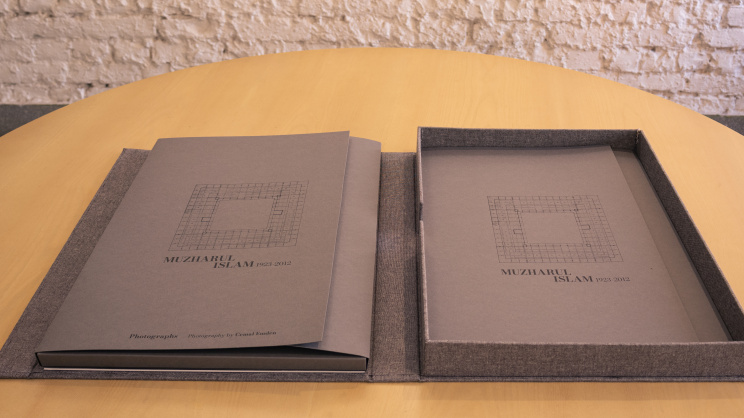
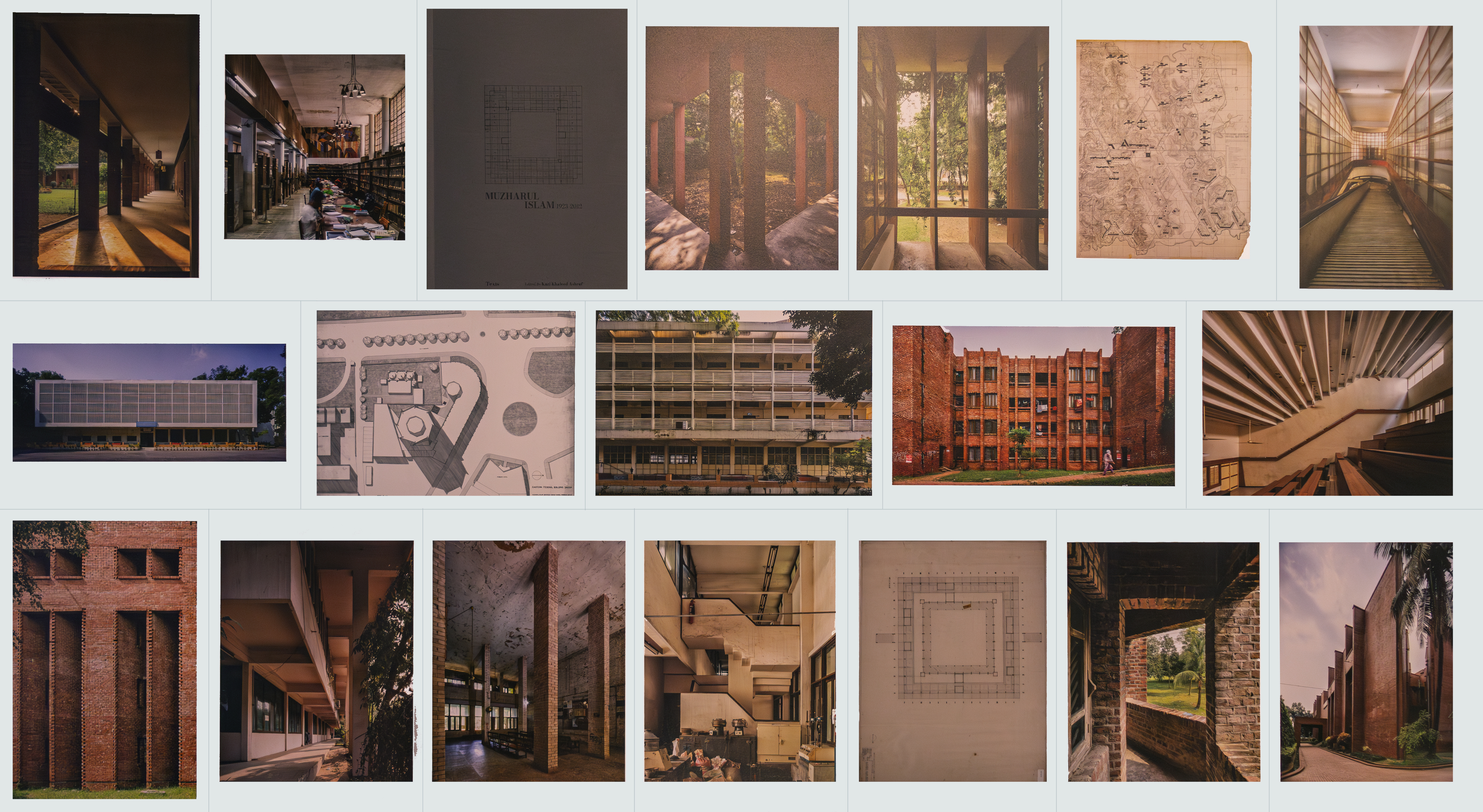
The folio contains three separate components: drawings, photographs and written excerpts, all housed in a beautifully textured, cloth-covered case. Twenty-two A3-sized drawings selected from the Muzharul Islam Archive at the University of Asia Pacific, together with forty A3-sized photographs of the corresponding buildings printed on fine art paper, represent selected built works by the architect. A booklet includes excerpts from essays by distinguished architects and scholars alongside selected writings by Muzharul Islam himself.
The folio is itself an outstanding work of design and collaboration. Edited by architect and writer Kazi Khaleed Ashraf (editor and author of the book The Great Padma), designed with remarkable elegance by architect Irteza Ameen, enriched by concise project descriptions written by architect Homaira Zaman and illustrated through sensitive contemporary photographs by renowned Turkish architectural photographer Cemal Emden, it sets a new benchmark for book publishing in Bangladesh.
The decision to print the drawings and photographs as loose sheets is particularly significant. Each may be handled individually and appreciated as an autonomous work of graphic art. The publication slows the reader down. It encourages careful observation rather than hurried consumption.
The greatest revelation of the folio lies in the drawings themselves. Collected together, they reveal Muzharul Islam not only as Bangladesh's pioneering modern architect but also as one of its finest graphic artists. Before digital rendering transformed architectural practice, drawings were handcrafted works requiring extraordinary discipline. Every line carried meaning; every empty space possessed intention.
Looking through these sheets, one immediately recognises a remarkable clarity of thought. Muzharul Islam's drawings persuade not through graphic ornament but through compositional restraint. Buildings are never isolated objects; they exist within landscapes, courtyards, pathways and open spaces that are treated with equal importance.
The master plans of the Institute of Fine Arts, Jahangirnagar University, Chittagong University, the five Polytechnic Institutes and the Joypurhat Limestone and Cement Works demonstrate an exceptional command of graphic composition. Their beauty lies not in decorative flourish but in balance, proportion and rhythm. Among the most remarkable drawings are the floor plans of the Chittagong University hostels and the Polytechnic Institutes. Looking at them, one cannot escape the impression that they resemble musical scores.
If the drawings are the intellectual heart of the folio, Cemal Emden's photographs are its emotional centre. Architectural drawings reveal buildings before they exist. Photographs reveal what life has done to them. Between the two unfolds the history of modern Bangladesh.
Unlike conventional architectural photography, which often celebrates pristine new buildings, Emden photographs architecture that has lived. His images acknowledge the passage of time with remarkable dignity. Mature trees complete compositions imagined decades earlier. Brick has weathered beneath monsoon rains. Concrete bears the marks of tropical humidity. Buildings have become inseparable from the lives they have sheltered.

The photographs are quietly beautiful precisely because they refuse spectacle. Yet they also reveal something unsettling. Several buildings display signs of inadequate maintenance, insensitive repairs and improvised additions. These images serve as a reminder that preserving architecture requires more than admiration. It requires understanding.
And yet the buildings continue to speak. The dialogue between drawings and photographs becomes the folio's greatest achievement.
The drawings reveal intention. The photographs reveal consequence. The drawings belong to the architect. The photographs belong to history.
Together, they remind us that architecture never ends when construction is completed. Every generation becomes a silent collaborator in the life of a building.
The cultural significance of Muzharul Islam's architecture extends far beyond the history of buildings; it is deeply woven into the intellectual and literary awakening of Bangladesh, then East Pakistan, in the 1960s. In his memoir Bhalobashar Shampan, Abdullah Abu Sayeed recalls the formative years of Kanthashwar (“The Voice”), the little magazine he edited that became the mouthpiece of a new generation of avant-garde writers. Disillusioned with the limitations of nationalist rhetoric and inspired by the Beat Generation and the countercultural currents emerging from the West, these young writers gathered around the Dhaka University Library and the campus of the then East Pakistan College of Arts and Crafts, now the Charukala Bhaban. There, the modernist architecture of Muzharul Islam and the pioneering sculptures of Novera Ahmed became far more than physical objects; they were emblems of a new intellectual horizon.
Sayeed writes that these buildings and sculptures symbolised progress, freedom and modernity for his generation, much as Rabindranath Tagore's Shesher Kobita had embodied a new sensibility for generations of Bengalis. The circle around Kanthashwar, including Asad Chowdhury, Nirmalendu Goon, Rafiq Azad, Akhtaruzzaman Elias, Shahid Kadri, Farhad Mazhar and many more, would go on to reshape the literary landscape of Bangladesh.
Read in this light, the folio documents not merely an architect's oeuvre but also the physical setting of one of the most consequential cultural transformations in modern Bengali history. The drawings and photographs preserve the spaces where architecture, literature, art and youthful imagination converged to articulate a new vision of Bengal and its future. The significance of the folio therefore extends far beyond commemoration. It is an act of cultural preservation.
Looking back through Aristotle's idea of telos, one begins to realise that the final cause of Muzharul Islam's architecture was never the building itself. Buildings were means rather than ends. Their deeper purpose was to cultivate institutions, shape civic life and give physical form to the aspirations of a modern Bangladesh.
The third component of the folio is its thin, A3-sized booklet, which brings together excerpts from essays by writers who knew Muzharul Islam personally. Read together, these texts reveal a figure whose search for identity was far more complex than a simple architectural label suggests. Muzharul Islam repeatedly affirmed his Bengali cultural identity while also imagining himself as a citizen of a wider world shaped by modern ideas and international exchange. At the same time, he remained associated with Marxist politics and was a member of a socialist party.
It may appear paradoxical that a committed socialist should also participate in a cultural nationalist movement, yet this trajectory was shared by many Bengali left-wing intellectuals, particularly after the Pakistani military regime's attempt to suppress Rabindranath Tagore's songs in the 1960s. Muzharul Islam's involvement with the Chhayanaut movement emerged from that historical moment when questions of culture, language and political belonging became inseparable. The coincidence is striking: this cultural awakening unfolded during the very years when left-wing politics in Bengal was itself being reshaped by the ideological divisions of the Soviet and Chinese communist movements following Stalin's death. The booklet therefore presents not a figure of ideological certainty but a modern Bengali intellectual negotiating multiple loyalties: Bengali, internationalist, leftist and modernist at once.
That unresolved complexity may be one of the reasons Muzharul Islam continues to provoke reflection across generations. Yet the Bengal Institute's folio gently redirects our attention from ideological labels to the work itself. As one turns through the drawings and photographs, particularly those of the Charukala Bhaban, what emerges above all is the sincerity of an architect who believed deeply in the transformative power of architecture. The measured lines of the drawings and the quiet dignity of the completed buildings reveal neither dogma nor spectacle but a lifelong search for harmony between land, climate, culture and modernity. They remind us that, for Muzharul Islam, architecture was never simply about constructing buildings; it was about giving cultural form to a people and a place. In that sense, this folio is more than a commemorative publication. It is an invitation to look again, to rediscover an architect whose works continue to shape not only the physical landscape of Bangladesh but also its cultural imagination.
Taufiqur Rahman Khan is principal architect of Metropolis Architects. His writings focus on art and culture in the 1960s.
Send your articles for Slow Reads to slowreads@thedailystar.net. Check out our submission guidelines for details.
Slave raids in Bengal and the making of Arakan’s power

The missing daughters of colonial Bengal

How Nobel laureate Anne Carson discovered new possibilities within language

Dipankar Gupta speaks / The history of caste is not what we think
From al-Andalus to the Mughals: How empires become identity

From artificial intelligence to the artificial state: Is the trajectory inexorable?
157th Birth Anniversary of Mahatma Gandhi / Gandhi’s return to Noakhali
Why does Tagore still trouble Bangladesh’s idea of ‘us’?

Can Bangladesh make better use of its zakat money?