Hurt sentiments and majoritarian politics: South Asia’s crisis of secularism

The Daily Star (TDS): How do you view the dynamics of hurt religious sentiment at the provincial level in undivided India, compared with those in the independent states of India, Pakistan, and Bangladesh? Do you think the nature of ‘hurt sentiment’ has changed across these subsequent political, economic, and cultural contexts?
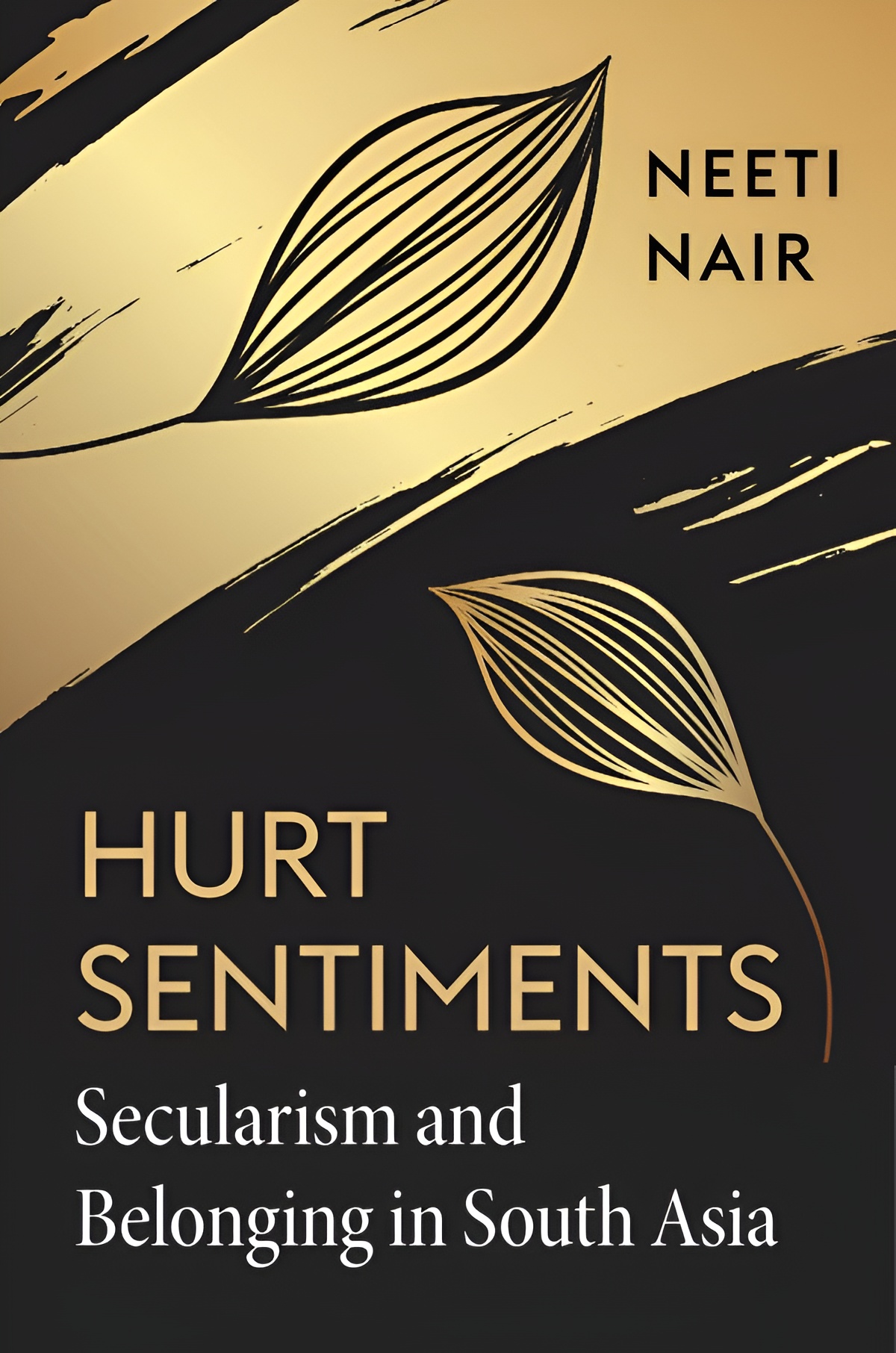
Neeti Nair (NN): Yes, certainly. In undivided India, cases alleging hurt religious sentiment were few and far between, even if consequential in terms of leading to the creation of new laws such as Section 295-A of the Indian Penal Code. In newly partitioned India, as I have shown in my book, Section 295-A was briefly used to censor hate speech and anti-Muslim writings in the press. As far as litigation is concerned, there has been a proliferation of lawsuits after the banning of Rushdie’s The Satanic Verses in 1988, and the institution of new ‘blasphemy laws’ in Pakistan during General Zia-ul-Haq’s rule (1977–1988).
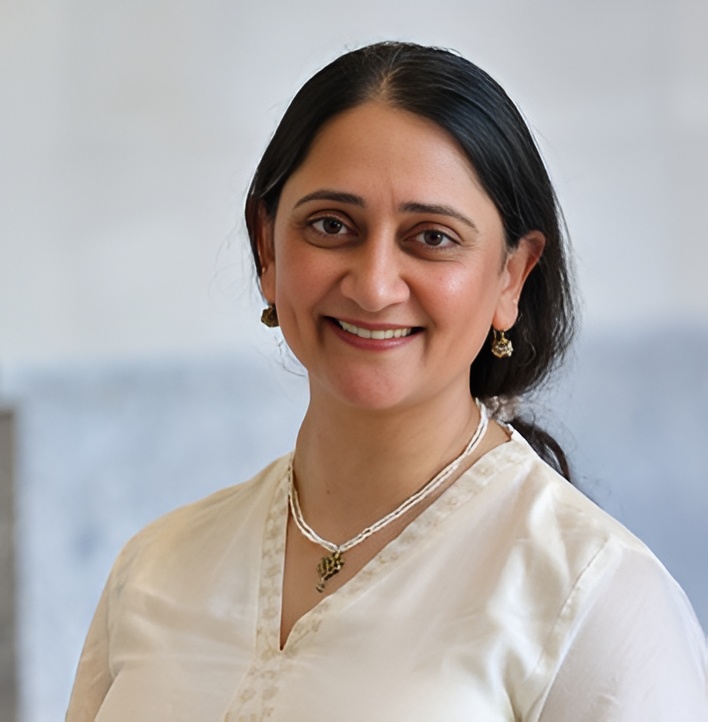
In recent decades, Section 295-A has been weaponised to manufacture new victims who claim to be “wounded” or “hurt” by works of literature, art, film, or speech that courts would previously have dismissed under the “reasonable man” standard. Furthermore, the law has given a fresh lease of life to causes and people who demand a hearing, on threat of more violence. Yet the law has also been applied selectively, so that instances of actual hate speech, now on the rise across South Asia, are allowed freer and more airtime and column space.
TDS: The idea of ‘hurting majoritarian sentiment’ seems to function similarly across secular and Hindu-majority India, secular yet Islamic-devout Bangladesh, and theocratic Pakistan. If this is the case, what is the practical distinction between a secular and a theocratic state in terms of their religious outlook and governance?
NN: Constitutionally, India remains secular. This means that the courts are constitutionally bound to intervene when cases of blatant discrimination along religious lines come to their attention. So, they have provided some justice when cases of hate speech are brought forward by members of religious minorities. We saw this in the Supreme Court order against hate speech in October 2022. Yet it is also evident that Hindu hate speech is allowed to flourish in contemporary India. Kunal Purohit’s book H-Pop: The Secretive World of Hindutva Pop Stars documents this phenomenon in gruesome detail.
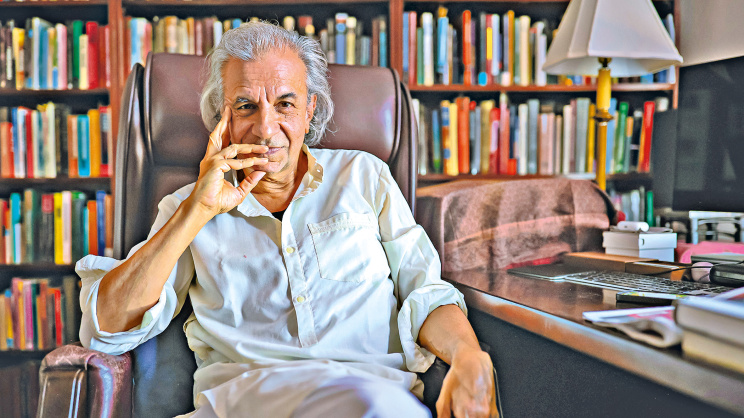
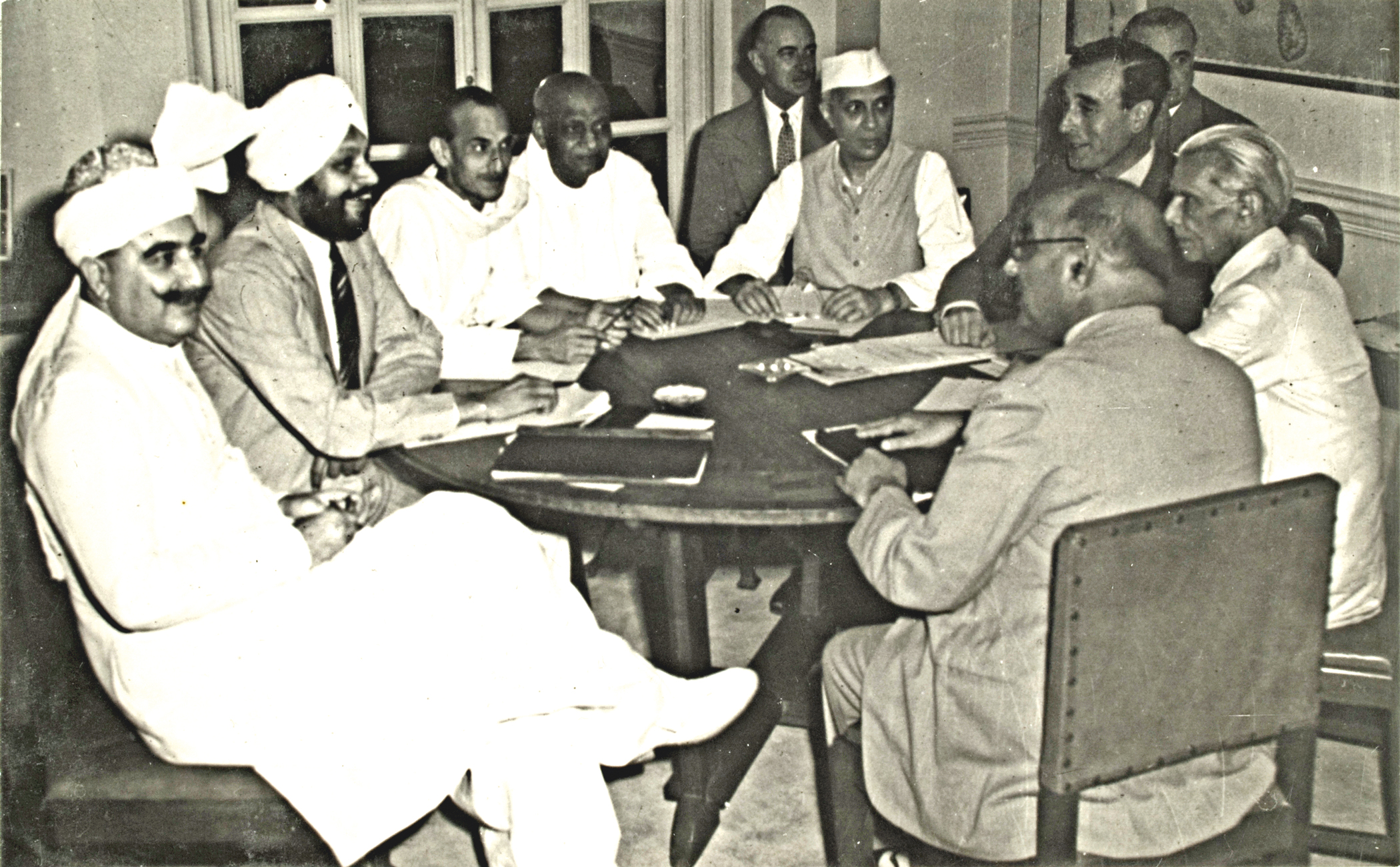
My research on the naming of Pakistan as the ‘Islamic Republic’ of Pakistan, at a time when non-Muslims were about 14% of the population (of both East and West Pakistan combined), suggests that a feeling of ‘not-belonging’ suffused the lives and political discourse of non-Muslims quite soon after independence. This is also borne out by the slow and steady migration of Namasudras from East Bengal into West Bengal through the 1950s. In India, however, there was a measure of stability afforded by the long spell of Prime Minister Jawaharlal Nehru, widely recognised as secular, at the helm of affairs. A spate of riots targeting ‘outsiders’ in Maharashtra, orchestrated by the newly formed Shiv Sena, morphed into riots that targeted Muslims across large swathes of Uttar Pradesh, Gujarat, and Maharashtra after the death of Nehru. So, one practical distinction is that the insecurity that now pervades Muslim life in India is a more recent phenomenon than the one that has pervaded non-Muslim life in Pakistan and Bangladesh.
TDS: What is your assessment of the democratic spirit that shaped nation-making in the Constituent Assemblies of India and Pakistan, especially in relation to discussions on minority rights? While these early promises aimed to ensure democratic practices in the post-independence states, why do you think Pakistan quickly failed to uphold them, eventually leading to the birth of Bangladesh? And why does India also seem to be drifting away from the founding ideals of its leaders?
NN: In the case of India, Deputy Prime Minister and Home Minister Sardar Vallabhbhai Patel placed far too much weight on the ‘goodwill of the majority community’, as I note in my discussion of the Constituent Assembly debates. India’s founders, such as Patel, could not conceive of a future where political parties might wilfully prevent Muslim candidates from getting a ticket to contest parliamentary elections, as has happened in recent years. That goodwill, never properly calibrated, has disappeared from the ledgers of certain political parties that were once fringe but are now prominent and mainstream.
The recent murder of a Bangladeshi Hindu, Dipu Chandra Das, on the basis of an allegation that he had insulted a religion, sadly shows that mobs in Bangladesh are on a par with mobs in India and Pakistan on the question of weaponising ‘hurt sentiments.’
In the case of Pakistan, there was so much effort expended towards keeping a lid on the potential power of the democratic majority in East Pakistan that drafting a constitution took a back seat. The views in both wings of Pakistan on the question of separate electorates reveal a stark dissonance. As Huseyn Shaheed Suhrawardy presciently noted in 1957, ‘critics… say that even the concept of Pakistan was different in the two wings, and hence Pakistan could not be considered to be one country and one people with one outlook, one ideology and one basis of action’ (Hurt Sentiments, p. 186).
TDS: How do you interpret the birth of Bangladesh in 1971 within the framework of the two-nation theory that initially justified the Partition of 1947? Do you think secularism was later embraced as a quick remedy to address the trauma and bloodshed of the Partition?
NN: The two-nation theory, as a framework, was never accepted by members of the Congress party in India. Their disagreement with this theory was articulated many times, including during parliamentary discussions on the Liaquat-Nehru Pact of April 1950, when the need to have religious minorities remain in both parts of Bengal was expressly defended.
Let us recall that the landmark and historic elections of 1970 were fought by the Awami League on the plank of adhering to “Islamic ideology, which is the basis for the creation of Pakistan”, a key tenet of the Legal Framework Order promulgated by General Yahya Khan. However, the decision of the framers of the Constitution of Bangladesh to adopt secularism two years later was no ‘quick remedy’, as your question suggests. It stemmed from the founders’ lived experience of discrimination at the hands of a ‘Punjabi minority’, and I discuss this in some detail in my book. Secularism, in the Bangladesh Ganoparishad, was clearly defined as the absence of communalism, as being opposed to the abuse of religion for political purposes, and as opposed to discrimination against or persecution of persons practising a particular religion.
TDS: Do you believe religious tolerance in India, Pakistan, and Bangladesh is more resilient at the societal level than the state-sponsored, top-down secularism these countries have attempted to implement?
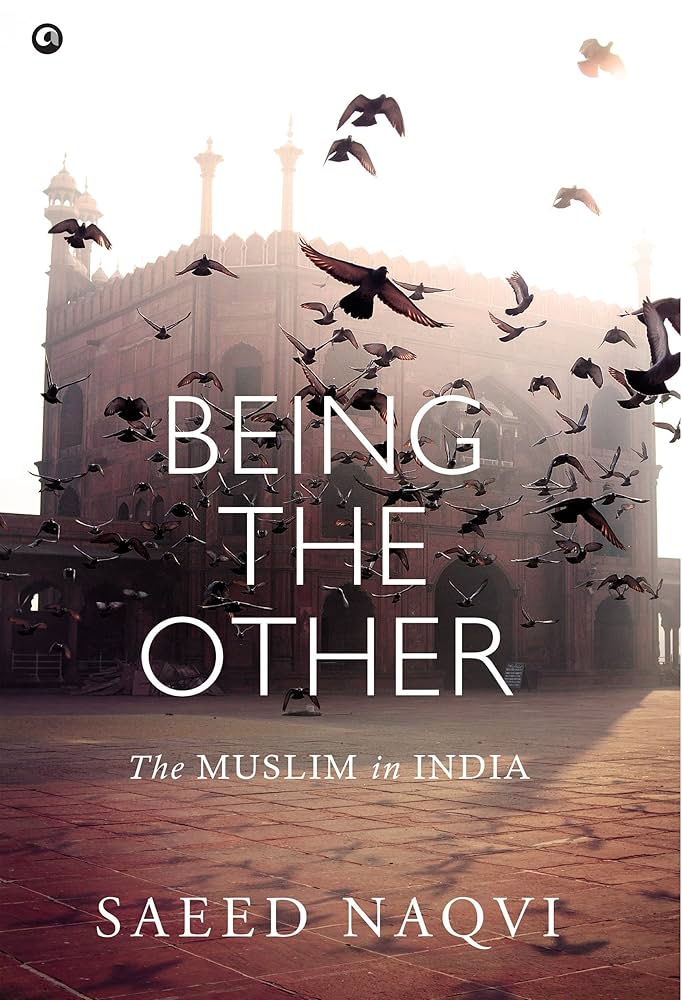
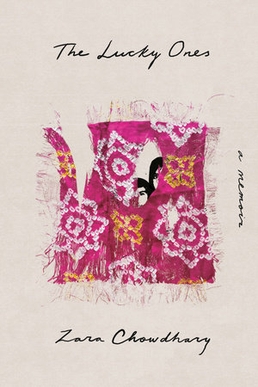
NN: By way of an answer, let me quote from a very moving and powerful memoir that I read in 2025: The Lucky Ones by Zara Chowdhary. The author recalls the Ahmedabad of her childhood, where apartment buildings were ‘filled with families of every state, faith, language, and caste of India. Secularism and pluralism weren’t distant constitutional values here; they constituted the very names on the Jasmine nameboard by the elevators.’ This was, in some measure, the India of my childhood, although I don’t think caste lines were so easily blurred. We took religious, regional, and linguistic diversity for granted. Another beautiful book that recalls the Ganga-Jamuni tehzeeb of an earlier time is Saeed Naqvi’s Being the Other: The Muslim in India, which was published in 2015 and is a powerful reminder of the Hindu-Muslim shared ethos, familiarity, and acceptance that characterised life in South Asia not so long ago.
But a series of ‘riots’ since the 1980s fuelled the gradual ghettoisation of religious communities so that Hindus and Muslims do not live in such close quarters any more. There has been a lot of news and commentary about Resident Welfare Associations (RWAs) not permitting Muslims to rent or own property in Hindu-majority neighbourhoods. This is unconstitutional and is sometimes challenged in the courts, which is how one hears about these instances. But it suggests that religious tolerance is no longer resilient at the societal level.
Pakistan has a much deeper problem in that it does not have a large percentage of religious minorities any more to aspire to a religiously tolerant society. But the alacrity with which houses of worship, homes, and offices belonging to a dwindling minority of Ahmadis are attacked suggests a deeply intolerant society.
If South Asian secularism means ‘equal respect’ to all religions, as I argue in my book, there is still evidence to suggest at least the public and vivid presence of multiple religious communities—to hear the azan loud and clear multiple times a day, even as the neighbourhood bookstore now stocks more books on Hinduism than ever before.
It is difficult to know what is transpiring in Bangladesh, especially since the ouster of Sheikh Hasina in July 2024. But it must be acknowledged that minorities, especially Hindus, have been fleeing Bangladesh over the last few decades. The recent murder of a Bangladeshi Hindu, Dipu Chandra Das, on the basis of an allegation that he had insulted a religion, sadly shows that mobs in Bangladesh are on a par with mobs in India and Pakistan on the question of weaponising ‘hurt sentiments’. However, it is a relief to read articles in the press, such as in The Daily Star on December 26, that forcefully condemn such deaths.
TDS: As the author of Hurt Sentiments, how do you perceive South Asian secularism? Is it something that has grown organically within these societies, or does it remain a surface-level concept without deep roots in the region’s cultural and social fabric?
NN: South Asia is an enormously vast region, so it is impossible to generalise. In large swathes of India today, especially in urban Indian cities such as Bengaluru, Chennai, Cochin, Delhi, Kolkata, and Mumbai, it is difficult to walk past a street that does not have denominational schools, private schools, and public schools catering to every and all religious communities, and houses of worship for several different religious communities. If South Asian secularism means ‘equal respect’ to all religions, as I argue in my book, there is still evidence to suggest at least the public and vivid presence of multiple religious communities—to hear the azan loud and clear multiple times a day, even as the neighbourhood bookstore now stocks more books on Hinduism than ever before. And yet, there is also evidence of bulldozer injustice targeting Muslim-owned homes, shops, and mosques. In the case of India, I would say secularism’s roots are as deep as those of Hindu majoritarianism, and in many instances, their roots are entwined and entangled—historically, and in the present.
As for Pakistan and Bangladesh, the picture sometimes appears more dire because secularism as equal respect was not given institutional space to grow after the death of key founders such as M. A. Jinnah and Liaquat Ali Khan, Sheikh Mujibur Rahman, and Tajuddin Ahmad.
The interview was taken by Priyam Pritim Paul.
Send your articles for Slow Reads to slowreads@thedailystar.net. Check out our submission guidelines for details.

Forgotten story of Jeanette Van Tassel, the American woman who flew over Dhaka in 1892
Beyond 1947 / A personal essay
Abul Mansur Ahmad / A global quest in search of a nation
Chand Bibi and the forgotten history of Muslim women’s political resistance
Women’s voices in Nazrul’s Dhumketu
How Milad-un-Nabi shaped Muslim cultural life in colonial Bengal
What Rashomon teaches us about truth and human behaviour

Why Chittagong never became a maritime city
The many worlds of Ghulam Murshid