Does South Asia need secularism?

In conversation with Akeel Bilgrami, Sidney Morgenbesser Professor of Philosophy and a faculty member of the Committee on Global Thought at Columbia University, and a renowned scholar of political philosophy.
The Daily Star (TDS): Could you elaborate on the origins of secularism in Europe? How did the idea evolve there?
Akeel Bilgrami (AB): ‘Secularism’, first of all, should be distinguished from ‘secularisation’. Both emerged initially in Europe. Secularisation is the name of a process of change—part intellectual, part societal. In the simplest terms, it can be described as a decrease in both religious belief and religious practice, that is, a decrease in belief in God and the myths of creation, as well as a decrease in various practices such as church-going, rituals, habits of religious dress, diet, etc. By contrast, secularism is the name of a political doctrine that sought to usher religion out from having the kind of direct bearing that it so often had on the polity and the state. Your question is about the origins of secularism, not secularisation. But I mention this distinction because there are subtle ways in which these two distinct notions get run together, which, for the sake of clarity, they should not be.
So, for instance, in my view, Kemalist Turkey (or indeed, the Soviet Union) adopted not just secularism but also a kind of state-enforced secularisation, and France, to a much less comprehensive degree, also did that when, for instance, it banned the hijab from being worn in some public places such as schools. In countries like India, Pakistan, and Bangladesh, in which there is not as much secularisation as there is in Europe—nor does one expect there to be in the foreseeable future—the point of focus is on secularism.
So now let me answer your question about secularism. It has its origins in some of the developments around European nationalism, which itself originated as a result of large changes in the seventeenth century.
With the rise of modern science, certain longstanding theological forms of legitimation of state power—such as the divine right of the monarch who personified the state—began to lose their hold. New forms of justification for it were therefore sought, not in theology, but in political psychology. At just about the same time, after the Westphalian peace, there were two political developments on the ground: first, a new form of entity had emerged (the nation); and second, power, which hitherto had rather scattered locations, began to be increasingly centralised. These were not miscellaneously parallel developments; they were deeply integrated developments, so much so that the nation and the state became completely fused, a fusion expressed by a hyphen (the ‘nation-state’).
And the reason why I say the new justification of state power invoked political psychology is that it took the form of generating a feeling for what was named by the first half of the hyphenated conjunction (the nation), and this thereby—because of the fusion—legitimated what was named by the second half of the hyphenated conjunction (the state). The interesting and crucial question is: how was this feeling generated? Everywhere in Europe, it was done by a standard method: finding an ‘external enemy within’ the nation (the Jews, the Irish, Protestants in Catholic countries, Catholics in Protestant countries), despising it and subjugating it, and saying ‘the nation is ours, not theirs’. Much later, this came to be called ‘nationalism’.
And when numerical and statistical forms of discourse were introduced in the study of society, and notions of ‘majority’ and ‘minority’ were coined, this method came to be called ‘majoritarianism’, and since the criteria for defining majorities and minorities were very often religious, it was often a ‘religious majoritarianism’. All of this, in turn, quite naturally caused religious minoritarian backlashes against it, thus generating, in general, a great deal of religion-based domestic strife. And secularism emerged as a doctrine because it was felt that the only way to stop such strife was to steer the polity to be free of all direct religious influence, whether majoritarian or minoritarian.
So, secularism, you might say, was first formulated as a way of repairing the damage caused by nation-building exercises in Europe some centuries ago.
TDS: During the anti-colonial movement in undivided India, intense religious rivalry, tension, and violence—particularly between Hindus and Muslims—ultimately culminated in the Partition along religious lines. You have argued that Gandhi was not a proponent of secularism. What, then, was his actual understanding of religion and religious divisions within society and the nation?
AB: The anti-colonial movement was a very protracted affair over four decades, and it had many complex elements and developments. Gandhi’s position (indeed even Nehru’s position) on the question of secularism changed over this period in response to these developments. Gandhi’s only really systematic piece of writing was Hind Swaraj, published in 1909. In it, there is no mention of secularism. Nor did Nehru make much mention of it in the early decades of the freedom movement. It is really only in the very last decade at most of the freedom movement, and especially during the acrimonies around the Partition period, that secularism as a doctrine began to loom larger in their thinking and in their speeches and writings. Why? Why not earlier?
Gandhi’s position (as also Nehru’s in his book, Discovery of India) was that India’s history was a history of an unselfconscious pluralism in which Hindus and Muslims (as well as Sikhs, Christians, and others) lived side by side in a culture that had both shared elements and diversity. It had not suffered the damage induced by the kind of nationalism, the nation-building exercises I mentioned in my answer to your first question, which characterised European history. Our nationalism, they said, was not that kind of European nationalism; it was an anti-colonial nationalism embodied in a movement which they claimed would reflect that plurality, bringing together Muslims and others along with the Hindus. Regarding the Muslims in particular, they sought to implement this claim in such efforts as the Khilafat movement, which explicitly and specifically mobilised poor Muslims and Muslim kisaans (unlike the Muslim League, which by and large represented the urban, careerist, relatively educated Muslim), as well as the shorter-lived Muslim Mass Contact Campaign, whose leadership they actually put in the hands of a communist-leaning Muslim leader, K. M. Ashraf.
Now, one might say that we can infer from the very fact of Partition that that claim on Gandhi’s part was incorrect as a description of the national movement he led. I think, to some extent, that inference is right. But it is interesting to analyse exactly how those efforts on his and Nehru’s part went wrong. My own view is that while the freedom struggle Gandhi led involved Muslims in mass mobilisations, such as those I mentioned, Muslims tended to be driven primarily by anti-imperialism and not along religious or communal lines. Khilafat, in particular, had a tremendously dynamic and progressive effect on Muslim politics in many states like Bengal, Uttar Pradesh, Bihar, and Assam, and these lasted until fairly late in the 1920s. It is only when the freedom movement involved Muslims, not in mass movements but in formal negotiations with the British, with Hindu and Muslim leaders representing the interests of each community, that Muslim leaders felt they were being treated as mere minorities, especially in the politics of key regions like Uttar Pradesh. And it is then that Congress began to lose some of its hold on Muslim support. In fact, Nehru and Gandhi realised this by the late 1930s, and that is why Nehru (with Gandhi’s assent) started another mass mobilisation that was focused on Muslim involvement, the Muslim Mass Contact Programme. But that mobilisation was much more short-lived than the Khilafat movement.
In any case, you asked what Gandhi’s thinking on the subject of secularism was. The short answer is that he thought secularism was not relevant in the Indian context, since the damage it is intended to repair had not occurred in India, and that adopting it would merely be slavish mimicry of Europe. Of course, if he were alive today, he would recognise that the very grounds on which he thought secularism was not relevant in India then would be the grounds for thinking that it is highly relevant and necessary today, since it is exactly European nationalism that Hindutva is mimicking today.

TDS: How do you assess Muhammad Ali Jinnah’s political trajectory? He was once regarded as a champion of Hindu–Muslim unity and was not particularly interested in the Khilafat Movement, yet he later became the principal advocate of the Two-Nation Theory, which ultimately led to the creation of Pakistan. After independence, however, he did not emphasise Hindus and Muslims as two separate nations within Pakistan but rather spoke in terms of citizens. How would you describe the evolution of his views on religion, secularism, and political action?
AB: Jinnah, too, went through various stages of thinking in the long period of the freedom movement. His anti-imperialism was much stronger in the early phase. The Khilafat movement unnerved him, since his temperament as a leader was much more lawyerly and not attuned to or comfortable with mass movements. From the late 1920s onward, his focus was much more on protecting the future of Muslims than on opposing the British. I also think it is important to keep in mind that he and the Muslim League leadership, as I have said, basically represented urban, middle-class, relatively educated Muslims, not poor Muslims, not the Muslim kisaan. This was actually a trajectory that went from Sir Syed to Jinnah. Maulana Azad was clear-eyed in seeing Jinnah and the Muslim League as belonging to this trajectory and said so quite early on.
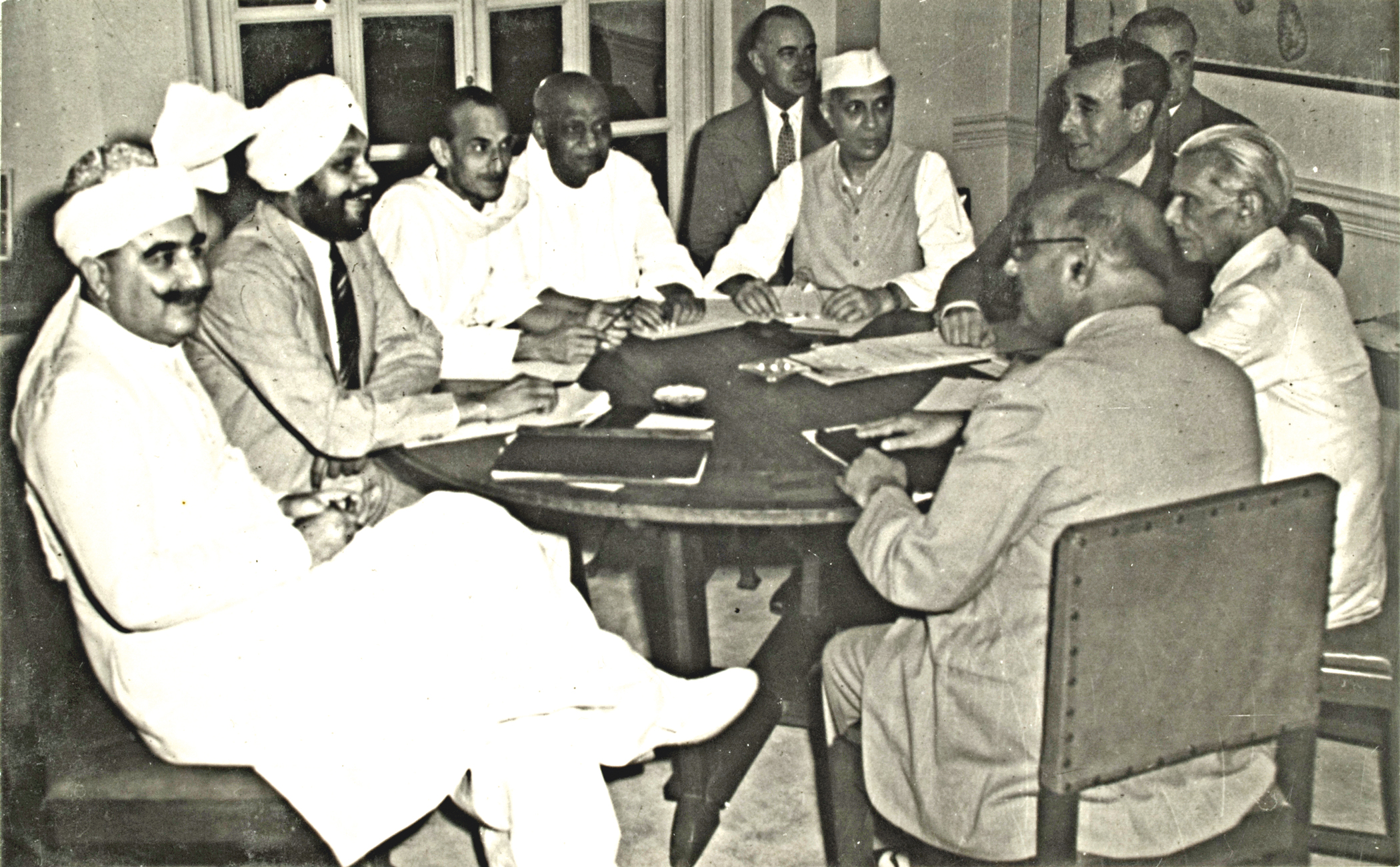
In your question, you say Jinnah was the principal advocate of the Two-Nation Theory—but you have to ask when this became a total commitment of his. I think historians like Ayesha Jalal (and even other less academic biographers of Jinnah, like H. M. Seervai and Stanley Wolpert) have argued convincingly that, until almost the very end, Jinnah’s talk of Pakistan (and there was much talk of that kind) was a bargaining weapon, and his sights were really set on a unified India with radical provincial autonomy (and, of course, his deepest concern was the regions of the north-west and the east, where there were concentrations of large Muslim populations). As everyone knows, there were complicated and intense negotiations on this issue towards the end, and things came to a head with the Cabinet Mission proposals. It was a complex matter with different considerations in play.
Gandhi’s entire political outlook, which was one of a highly decentralised polity (and economy), was of a piece with the idea of radical regional autonomy, but he had deep anxieties about the compulsory groupings clause in the proposals, fearing that they would be preludes to partition. The real opposition to the idea of provincial autonomy came from Nehru, who wanted a strong centre because that was needed to implement the ideas that he had been developing with Mahalanobis and others for central planning in an independent India, which they envisioned would adopt policies of Soviet-style industrialisation. (Subhas Chandra Bose was an ally of Nehru’s on this issue of a strong centre, something that became clear as early as 1938 when Bose set up the National Planning Committee and made Nehru its chair. Gandhi’s ideas, represented on the committee by Kumarappa, were pooh-poohed in the proceedings by the other members.)
I suspect Nehru also was seriously worried that it would be hard to get rid of the Princes if there was the kind of regional autonomy Jinnah was demanding. Moreover, the emerging interests of capital in India were also for a strong centre, since big capital, in general, does not like fragmented markets; so its interest in a strong centre coincided with Nehru for quite the opposite reasons. Nehru’s position carried the day, as you know, and then partition began to look inevitable once Jinnah’s demand for regional autonomy was rejected.
Now, if this understanding of Jinnah’s motives and role is right, then it is quite unsurprising that, after Pakistan was created, he would have articulated a secularist vision of governance for it, as he indeed famously did. That articulation would only be surprising if you accept the occasional Congress caricature of Jinnah as a man of outsize ambition or a sort of Muslim counterpart to Hindu Mahasabhite ideologues. But I think that the scholars I mentioned earlier (especially Jalal) have definitively shown, with documentation, that that understanding of his role and motives during the previous decade is quite wrong.
However, even when it was looking as if Partition was inevitable as a result of the considerations I have just mentioned, the question remained whether Bengal province should be partitioned or not. That question was not settled just by the deliberations of the Muslim League and northern Congress politicians and the British; it was something that was pushed by the Bengali Hindu upper castes, represented by the regional Hindu political leaders of Bengal, who were jittery about the prospect of being a minority in a united Bengal with a majority Muslim population.
And this, of course, raises the further question, a counterfactual one: could the Partition of India have been avoided in 1947 if the earlier partition of Bengal in 1905 had not been reversed? The what-ifs of history have no easy answers.
The interview was taken by Priyam Paul. He is currently pursuing a PhD at Ashoka University.
Send your articles for Slow Reads to slowreads@thedailystar.net. Check out our submission guidelines for details.

157th Birth Anniversary of Mahatma Gandhi / Gandhi’s return to Noakhali
Why does Tagore still trouble Bangladesh’s idea of ‘us’?

Can Bangladesh make better use of its zakat money?
Three revolutions that reshaped the world
Paradise lost and found: Rediscovering early modern Bengal
Unbound Mother: The making and remaking of Kaali in Bengal
Do great leaders make history, or does history make them?
Poison and cremation: A forensic history of colonial Bengal