More than a saree: The living legacy of Tangail
Bangladesh has no shortage of things to be proud of. For centuries, the Tangail saree has been one of them.
Walk into almost any wedding in this country and you will find one. Visit a village and you will hear the handloom before you see it, that steady, rhythmic clatter that has defined districts for generations. The Tangail saree is deeply embedded in Bangladeshi life. Yet it is rarely studied in terms of what it actually is: a textile shaped not just by craft, but by a long history of people making something together. The smell of cotton, the tension of thread, and the steady movement of the loom form a quiet, everyday rhythm in Tangail’s weaving households.
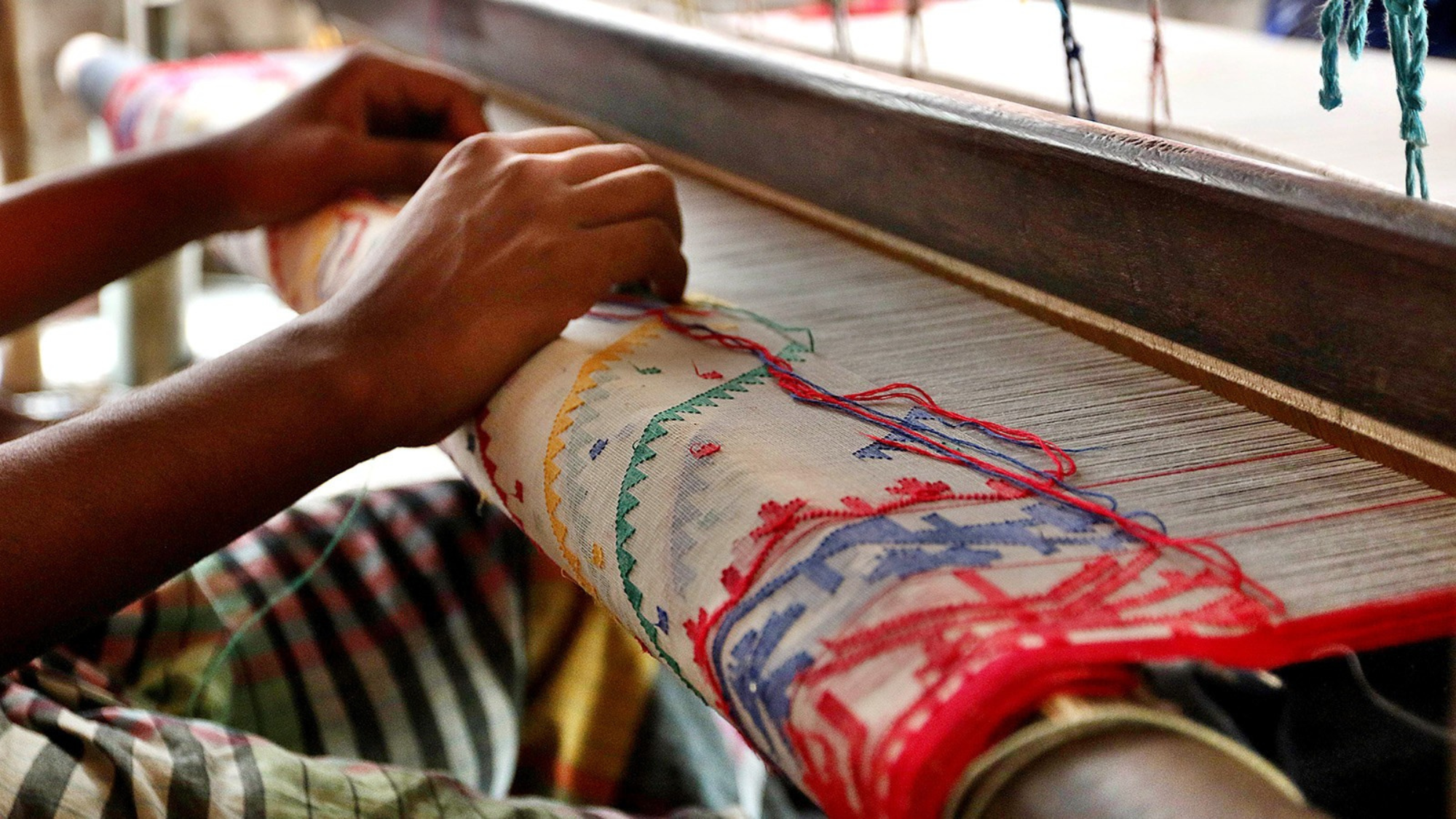
The Tangail saree is a handwoven cotton saree from Tangail district of Bangladesh. It is known for its fine, lightweight fabric, intricate kalka and jhal motifs, and a distinctive zari border.
Each saree takes days to make. The cotton is so fine it can be folded into a fist. The kalka and jhal motifs are built thread by thread on handlooms that have changed little over generations. Depending on the light, the zari border shifts from gold to silver. The work demands patience and discipline. No machine has managed to replicate it.
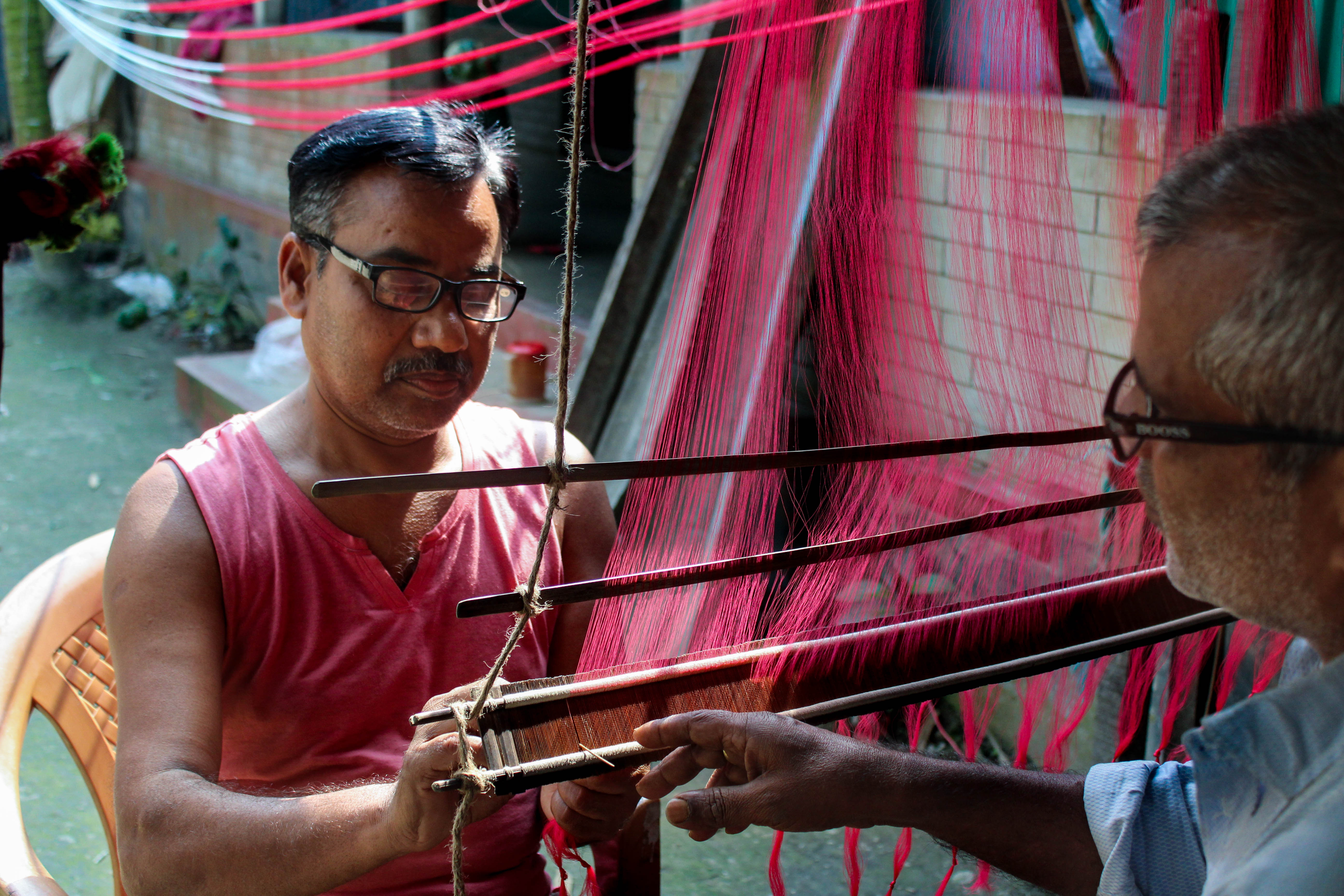
Yet the Tangail saree’s significance lies beyond its technique. Hindu Basak weavers and Muslim artisans built this tradition side by side over centuries. Persian-inspired kalka motifs appeared beside temple-style borders, not through deliberate cultural messaging, but through everyday collaboration. Communities worked alongside one another long enough to create something neither could have made alone.
Stories like that of Nilkamal Basak are not exceptions in this craft; they are its quiet norm. Nilkamal Basak, now sixty-one and based in Tarabo, Rupganj, has spent nearly four decades at the loom. Weaving was never new to him when he began; it had already been present in his surroundings through his father, and before that through his grandfather and great-grandfather, each bound to the same work in their time. He describes it not as an occupation he entered, but as something he grew within, shaped by repetition, observation and family continuity. What continues through him today is more than technique or income; it is an inherited thread of knowledge, patience and identity that has moved quietly from one generation to the next without breaking.
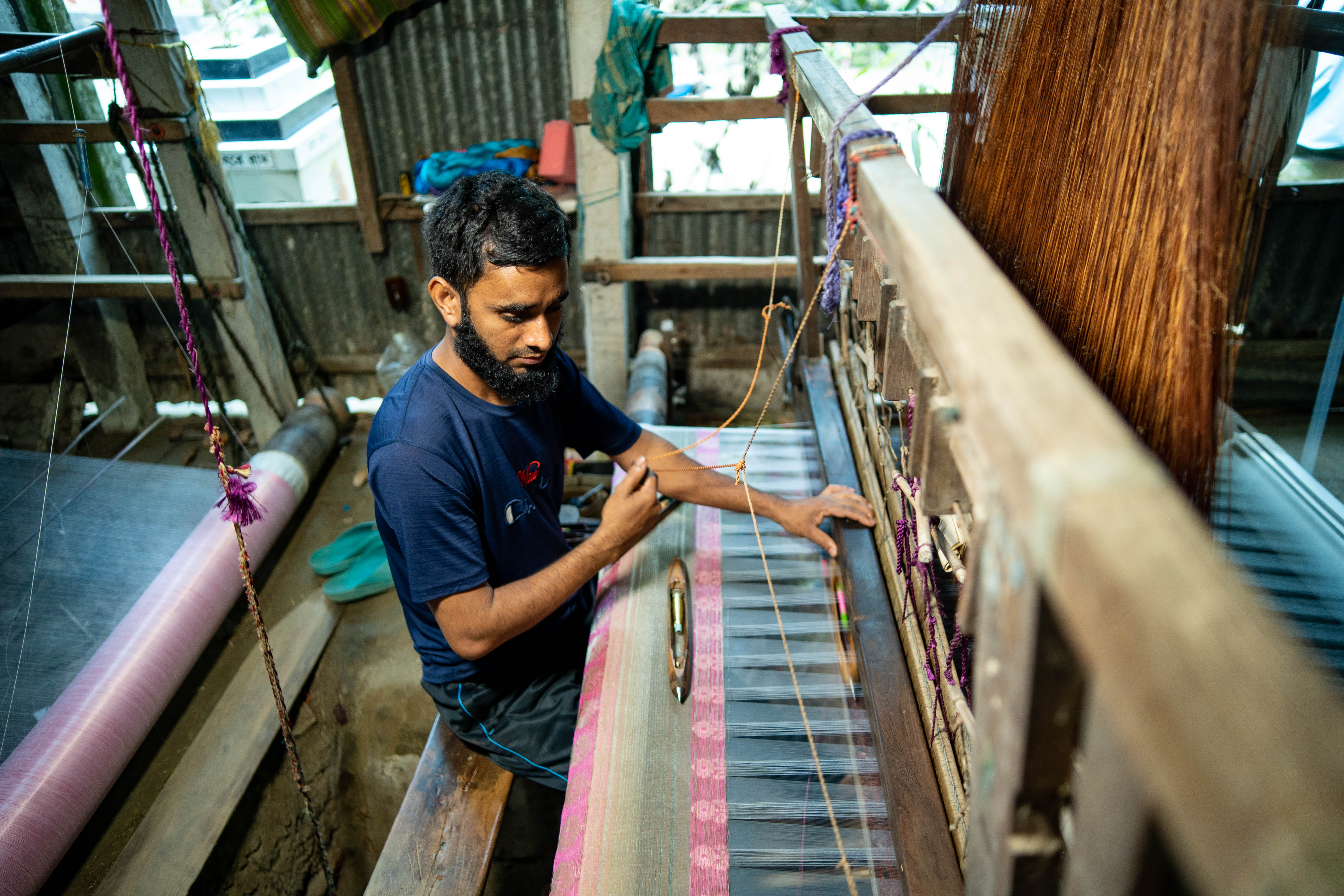
That history carries particular weight today. In an era where conversations about identity can be narrow and divisive, the Tangail saree presents an alternative inheritance of exchange, continuity and coexistence. Its survival through the ages depends not only on beauty or skill; it survives because every generation finds something they recognise in it - a pattern, a border, a weight in the hands that links them to all those who wore it before.
UNESCO recognised this in 2025 by inscribing the Tangail saree on its Representative List of the Intangible Cultural Heritage of Humanity. The recognition acknowledged more than a textile. It recognised a living cultural practice that continues to connect generations, communities and histories through the quiet persistence of craft. The Tangail saree also reminds us that learning does not only happen within classrooms or formal institutions. Sometimes it takes place beside a loom, through observation, repetition and intergenerational exchange, where skills are absorbed slowly and passed on with care. In that sense, it reflects the idea often echoed in UNESCO’s broader Culture and Arts Education Week theme of “Culture and Arts Education for Lasting Peace”, where cultural practices become spaces of shared understanding. Some of the most enduring lessons are taught quietly through everyday work, carried forward across generations, woven as much into relationships as into fabric itself.
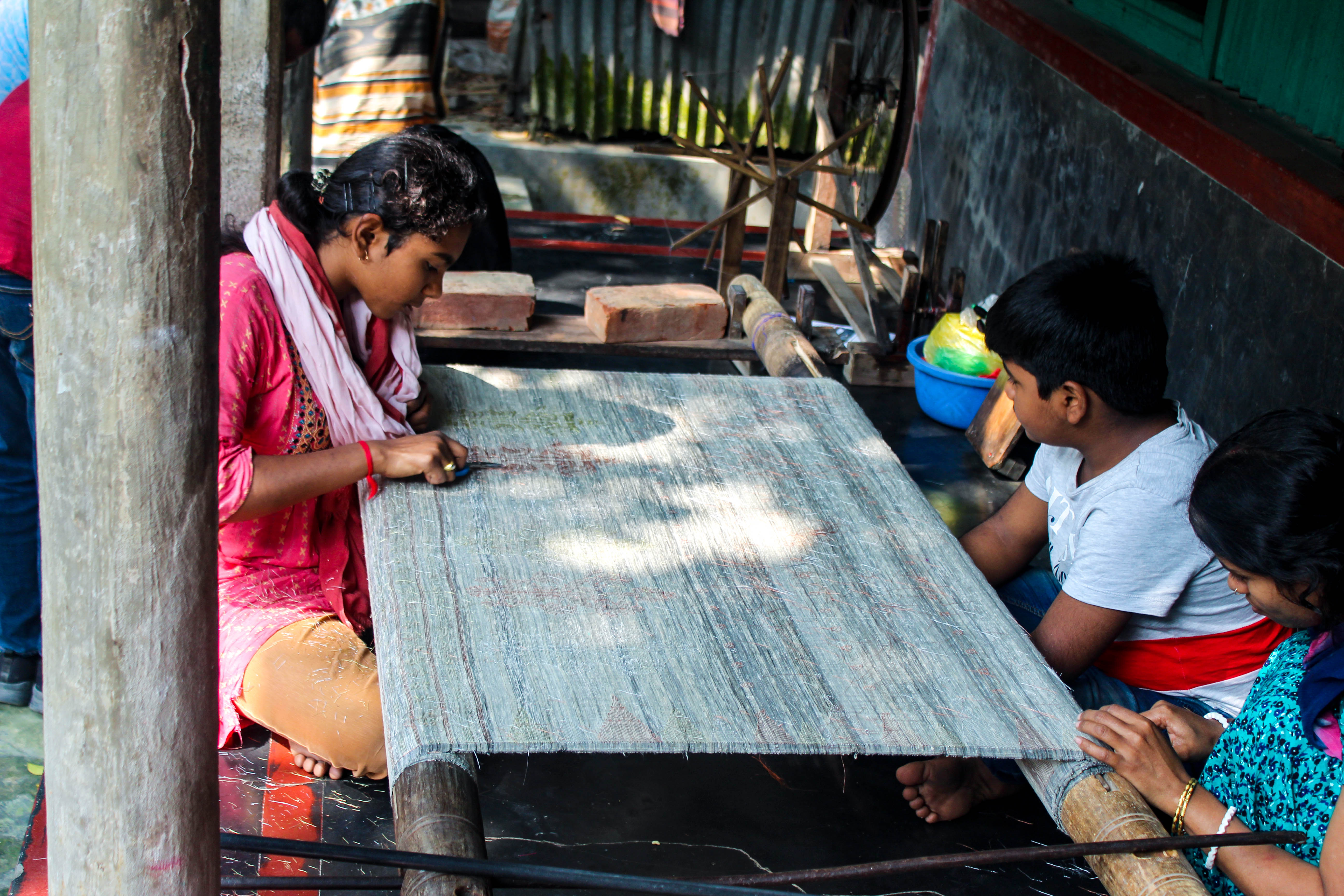
At a time when many societies are struggling with distrust and fragmentation, the Tangail saree offers a reminder that culture can preserve forms of understanding long before they are articulated in politics or policy. Bangladesh has been wearing that reminder for centuries, threaded quietly through its looms, homes and everyday lives.
Masuma Moriom is a development practitioner engaged in climate education, disaster risk reduction, communication, and youth skill development. Her work centers on climate communication and disaster resilience as tools for community learning, capacity strengthening, and advocacy, with a focus on translating field insights into accessible and action-oriented narratives. She is currently serving at the UNESCO Dhaka Office. She can be reached at: masumamoriom.du@gmail.com.
Send your articles for Slow Reads to slowreads@thedailystar.net. Check out our submission guidelines for details.

157th Birth Anniversary of Mahatma Gandhi / Gandhi’s return to Noakhali
Why does Tagore still trouble Bangladesh’s idea of ‘us’?

Can Bangladesh make better use of its zakat money?

Three revolutions that reshaped the world
Paradise lost and found: Rediscovering early modern Bengal
Unbound Mother: The making and remaking of Kaali in Bengal

Do great leaders make history, or does history make them?
Poison and cremation: A forensic history of colonial Bengal