Mercy, love, and pluralism: A sufi vision of Islam
Islam affirms the oneness of God, yet it has never been a uniform or monolithic tradition. Over the centuries, it has generated a wide range of intellectual, legal, and spiritual currents—among the most influential of which is its mystical dimension, known as sufism (tasawwuf). Sufism articulates a distinctive form of Islamic devotion focused on drawing nearer to God through inner purification, moral cultivation, and experiential knowledge (maʿrifa).
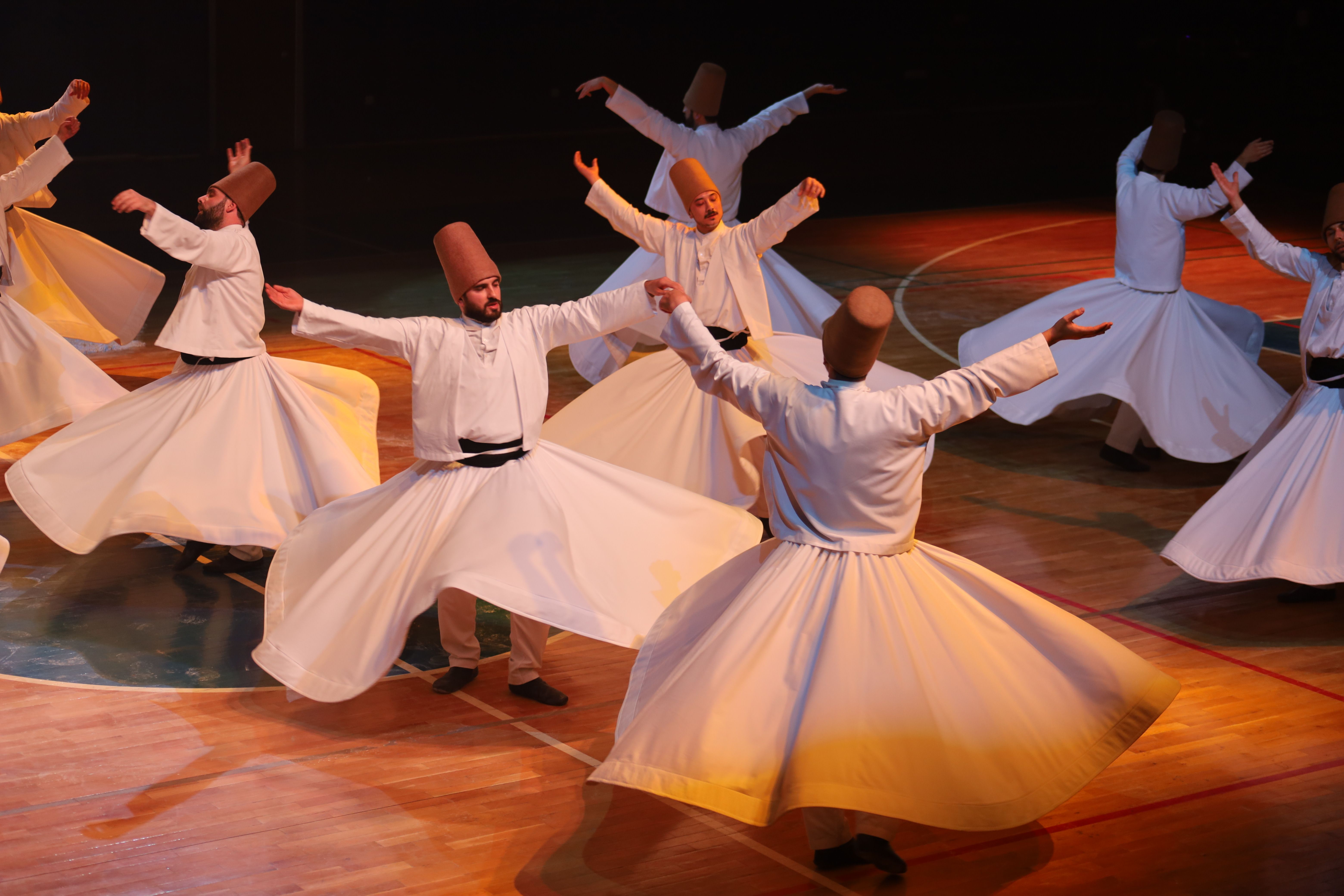
In its earliest manifestations, sufism arose as an ascetic movement marked by intense personal piety and, at times, a quiet critique of what was perceived as ethical and spiritual laxity within emerging Muslim societies. Its adherents devoted themselves to prolonged prayer, night vigils, fasting, simplicity of life, and detachment from worldly excess, animated by a profound love for God and the Prophet—a love that extends to all creation. Over time, this ascetic impulse developed into a rich spiritual tradition encompassing diverse forms, practices, and expressions.
Sayyid Muhammad Hassan of the Maizbhandariyya tariqa once said, “We may refer to sufis and their followers as ahl al-ʿishq, or the ‘community of passionate love’” (interview by this author, May 29, 2022). Kabir Helminski characterises sufism as the “vertical” dimension of human experience: the soul’s ascent through successive stages of refinement, made possible through the transformative power of love. In his view, without this animating love, Islam remains incomplete (Holistic Islam: Sufism, Transformation, and the Needs of Our Time, 2017, p. 8).
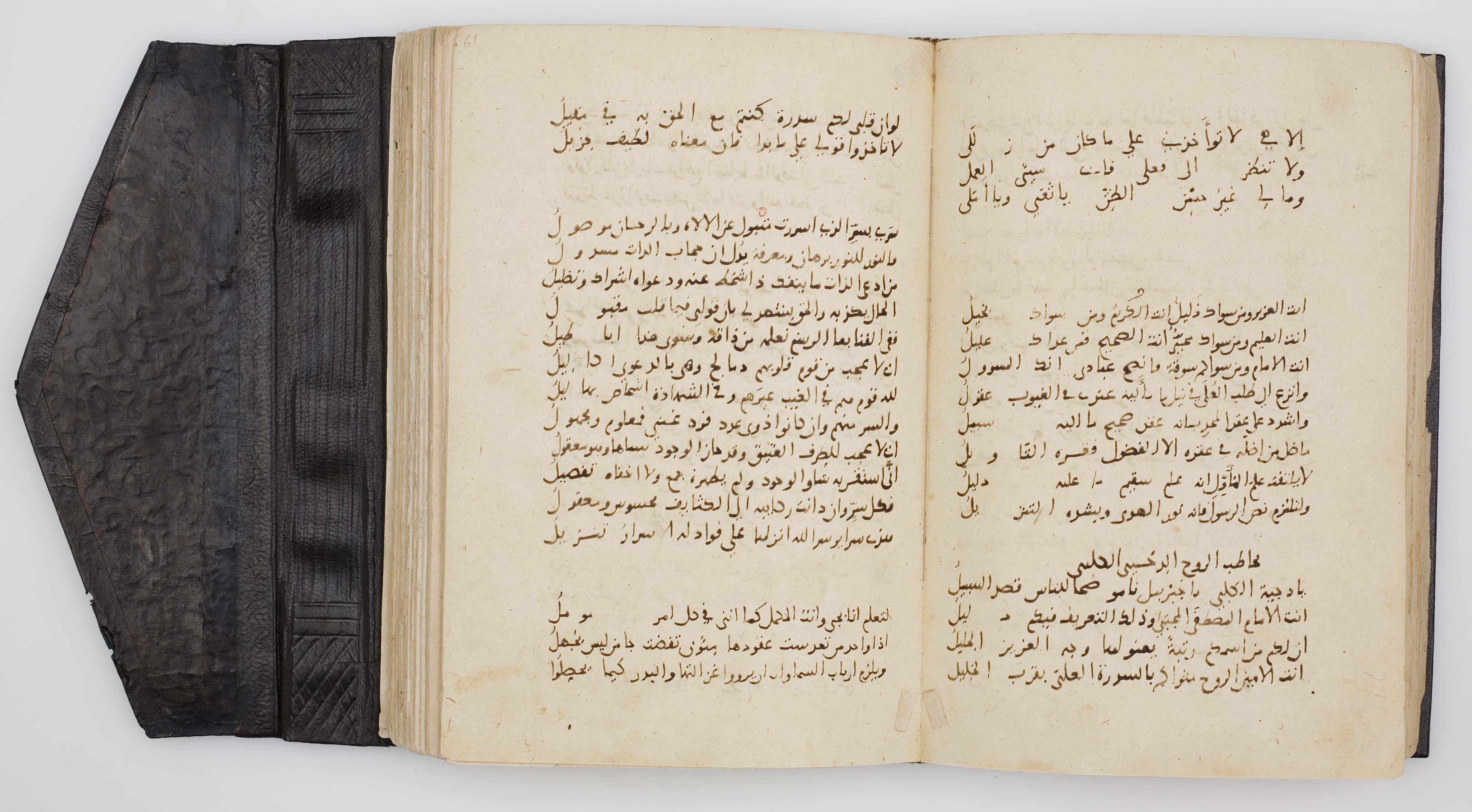
Rooted in the Qur’an and the Prophetic example of humility, remembrance, and moral excellence, sufism places particular emphasis on practices such as dhikr (remembrance of God), mujahada (spiritual striving), and tazkiyat al-nafs (purification of the soul). While the shariʿa and fiqh govern outward behaviour and legal norms, sufism turns inward, attending to the inner states and intentions that animate faith. At its heart lies the quest to purify the soul and cultivate an experiential awareness of divine unity (tawḥid), culminating in the realisation of iḥsan—spiritual excellence.
Although the Qur’an refers to the term shariʿa only a handful of times—and explicitly only once in 45:18 [“We set thee (O Muhammad) on a clear road of (Our) commandment; so follow it”]—the larger architecture of Islamic law and ethics unfolds through a series of dispersed yet foundational verses. Drawing on other key references (5:48; 42:13; 42:21; 45:18), classical Muslim jurists conceptualised shariʿa not as a narrow legal code but as a divinely ordained moral path. They organised these scattered injunctions into structured categories such as aḥkam, arkan, and the maqaṣid al-shariʿa.
At the same time, sufis wholeheartedly affirmed the outward obligations of shariʿa while expanding its inward horizons through a parallel interpretive endeavour. Engaging with the Qur’an’s layered and allusive themes, they developed spiritual doctrines centred on longing (shawq), yearning (ḥanin), contemplation (tafakkur), purification of the soul (tazkiya), and even the annihilation of the self (fana) in the Divine. In both juridical and mystical traditions, the Qur’an functioned not as a fixed legal manual but as a rich, multivocal text whose dispersed references invited sustained reflection and systematic development in both the legal and spiritual dimensions of Muslim life.
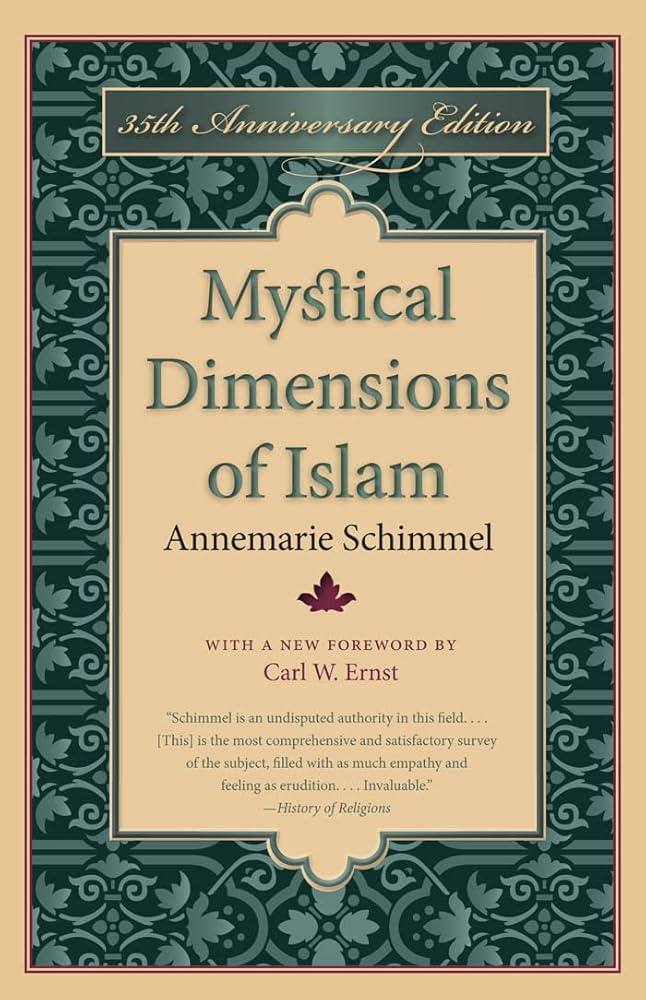
The formative phase of sufism arose organically from the devotional life of the earliest Muslim community. The ahl al-ṣuffa, known for their simplicity and steadfast worship, exemplified a life of renunciation and dedication within the Prophet’s circle. Another explanation traces the word sufi to suf (wool), alluding to the coarse woollen garments worn by Christian monks; those who adopted such attire as a symbol of detachment from worldly concerns and exclusive devotion to God came to be called sufis. Early ascetic figures such as Ḥasan al-Baṣri (d. 728) and Rabiʿa al-ʿAdawiyya (d. 801) stressed repentance, sincerity, and an all-consuming love of God. Over time, this ascetic impulse matured into a complex tradition with developed metaphysical teachings, pedagogical methods, and communal institutions. In The Mystical Dimension of Islam (1975), Annemarie Schimmel argues that sufism historically evolved as a disciplined “science of the heart” within the wider Islamic intellectual tradition rather than as a separate sect. Indeed, many prominent sufis were also well-versed scholars of Qur’anic exegesis, hadith, and Islamic law.
Interestingly, 19th- and early 20th-century Orientalists portrayed sufism as irrational or heretical, often interpreting it through Christian mysticism and separating it from the Islamic moral code. Alexander Knysh (Islamic Mysticism: A Short History, 2000) maintains that colonial narratives divided Islam into a “spiritual” sufism acceptable to Western tastes and a supposedly rigid shariʿa. This framing created an artificial divide between Islamic law and spirituality, obscuring the theological coherence maintained by classical sufi thinkers. In contemporary Western culture, William Chittick observes in The Sufi Path of Knowledge: Ibn al-Arabi's Metaphysics of Imagination that sufism is frequently romanticised and commodified, with figures like Rumi detached from their Qur’anic worldview.
While the shari’a and fiqh govern outward behaviour and legal norms, sufism turns inward, attending to the inner states and intentions that animate faith. At its heart lies the quest to purify the soul and cultivate an experiential awareness of divine unity (tawḥid), culminating in the realisation of iḥsan—spiritual excellence.
Ironically, within the Muslim world as well, reformist and puritanical movements have often criticised sufism as bidʿa (innovation), arguing that it departs from the Qur’an, the Prophet’s teachings, and the practices of the early Muslim community. As Vincent Cornell notes in Practical Sufism: An Akbarian Basis for a Liberal Theology of Difference (Journal of Muhyiddin Ibn Arabi Society, Vol. XXXVI, 2004), these critiques generally rest on two main claims. First, critics contend that sufism is inauthentic, alleging that it incorporates foreign influences from Greek, Persian, and Indian traditions. This line of argument can be traced to early Hanbali critiques, particularly Ibn Taymiyya’s (d. 1328) refutations of Ibn ʿArabi (d. 1240), and was revived in the twentieth century by reformers such as Rashid Rida (d. 1935). Hasan al-Banna (d. 1949) accepted a “pure” form of sufism but criticised much of the tradition for absorbing what he saw as alien philosophical elements, while Sayyid Qutb (d. 1966) went further, depicting sufi orders as backward and divisive. Second, critics argue that sufism is socially and politically impractical. Qutb, for example, claimed that it fosters an isolated spirituality detached from activism, and al-Banna contrasted sufi inwardness with a socially engaged Islam committed to action and resistance to injustice. It may be noted here that after the death of Hasan al-Banna, Salafi modernists such as the Muslim Brotherhood and Pakistan’s Jamaat-i Islami formed an alliance with Saudi Wahhabi Salafi traditionalists. This nexus culminated in the establishment of the Muslim World League (Rabitat al-‘Alam al-Islami) in 1962—an organisation that funds Salafi missionary efforts and anti-sufi propaganda worldwide.
Scholars of sufi history and doctrine argue that the common criticisms of sufism are largely unfounded. Like other major Sunni traditions, sufism traces its foundations to the Qur’an, the Prophet’s Sunna, and the practices of the early Muslim community (al-salaf al-salih), giving it as strong a claim to a “Salafi” lineage as its critics. Early systematisers of sufi thought—such as al-Sulami (d. 1021), Abu Nuʿaym al-Iṣfahani (d. 1038/39), and al-Qushayri (d. 1074)—were firmly grounded in established Sunni legal schools, particularly the Shafiʿi tradition. While specific sufi teachings or practices may be debated, dismissing sufism as inauthentic is historically untenable. Indeed, some scholars contend that sufism more accurately represents the mainstream development of Islamic intellectual and spiritual history than modern Salafism.
The claim that sufism is socially irrelevant is also unfounded. In early sufi terminology, a “saint” was often called ṣaliḥ—the same term associated with al-salaf al-saliḥ, the pious predecessors invoked by modern Salafis. The Qur’an (4:69) describes the ṣaliḥin as those favoured by God—individuals marked by moral integrity, righteous action (ṣalaḥ), and active commitment to reform (islah) in both personal and social life. By definition, then, the sufi ṣaliḥ is oriented towards improving the world, not withdrawing from it (Cornell, ibid.).
In contemporary cultural and ideological conflicts, where Salafi and other activist movements frame themselves against a perceived hostile West, while Western narratives often portray Islam as problematic, the perspectives of Sufism and classical Islamic traditions are particularly vital. Salafi modernists, by rejecting much of Islamic intellectual history, commit a significant error: they erase Islam’s “Middle Ages” and construct an idealised early period as the basis for a utopian political vision—one that rarely reflects the realities of historical Islamic societies. This blend of myth and ideology, therefore, lacks historical authenticity.
A central feature of sufism—largely missing from reformist discourse—is love: a reciprocal relationship between God and the servant rooted in the Qur’anic vision of divine intimacy. The Qur’an emphasises God’s closeness and responsiveness, stating, for example, “I am nigh. I answer the prayer of the suppliant when he crieth unto Me” (2:186) and “We are nearer to him than his jugular vein” (50:16). This divine-human closeness is not merely ontological but affective, as highlighted in 5:54, which promises a people whom God loves and who love Him in return. Sufism draws on these verses to develop a theology in which the purified heart, disciplined through remembrance and ethical practice, can reciprocate God’s love, embodying the transformative, mutual bond described in the Qur’an.
Moreover, Muslim reformers often overlook the concept of mercy (rahma), emphasised repeatedly throughout the Qur’an, which stresses God’s all-encompassing mercy (7:156). This theme recurs in numerous other verses, including 8:1, 21:107, 55:7–9, and 6:54. From a broader sufi perspective, particularly that of Ibn al-ʿArabi, divine command operates at multiple levels. The most universal, al-amr al-takwini, encompasses all creation and reflects God’s all-encompassing mercy (7:156). Humanity’s primordial covenant (7:172) establishes shared dignity and responsibility. Qur’anic verses such as 4:1 affirm a common human origin, grounding moral equality.

The Qur’an emphasises human diversity and the moral significance of individual and communal differences. It affirms that people are created male and female, and into nations and tribes, so that they may come to know one another; the noblest among human beings in God’s sight is the one who is best in conduct (49:13). It also acknowledges multiple laws and ways of life, presenting diversity as a test and encouraging competition in good deeds rather than coercion in belief (5:48; 10:99).
The Qur’anic principle, “There is no compulsion in religion” (2:256), calls for respect towards all religions, even those considered mistaken, as they exist by God’s will. This pluralism does not equate all faiths as equally valid paths to God but affirms the dignity and divine origins of religions. It also means respecting the dignity and divine origins of other faiths such as Buddhism, Christianity, Judaism, and Hinduism, while still opposing unjust actions that violate universal principles of life, dignity, freedom, and justice. Ibn al-ʿArabi emphasized that no religion permitted by God is inherently evil and that all believers belong to a shared human brotherhood. Misrepresenting entire religions or peoples as perpetual enemies, or blaming all conflicts on religion, is both morally and theologically flawed. Muslims can acknowledge religious diversity without compromising Islam’s theological integrity or disobeying God (Cornell, ibid.).
Classical Islamic thought preserved interpretive plurality through taʾwil and ikhtilaf. Al-Ghazali emphasised that interpretation involves reasoned judgment (zann), not absolute certainty. Imam Malik, the founder of the Maliki school, refused to impose a single legal code across the empire, recognising legitimate diversity. Imam Abu Ḥanifa acknowledged the possibility of error in his own views (Khaled Abou El Fadl, Speaking in God’s Name, 2001, p. 10). Such epistemic humility contrasts sharply with contemporary rigid literalism. Classical Islamic civilisation flourished precisely because it embraced intellectual diversity.
In sum, sufism provides an essential counterbalance to both external misconceptions and internal distortions of Islam, placing love, mercy, and moral refinement at the core of the faith. Grounded in the Qur’anic principles of divine closeness, human dignity, and pluralism, it highlights the reciprocal relationship between God and the human heart while affirming respect for the diversity of peoples, religions, and interpretive traditions. Reclaiming these legacies requires engaging with the Qur’an and Sunna beyond rigid literalism, appreciating the multiple layers of revelation, and embracing sufism’s enduring emphasis on love, mercy, and moral responsibility. By doing so, contemporary Muslims can restore a holistic, inclusive, and spiritually transformative understanding of their tradition, one that harmonises devotion, ethical action, and respect for the diversity inherent in God’s creation.
Dr Sarwar Alam is currently an Adjunct Professor of Religious Studies at George Mason University, USA. He can be reached at salam25@gmu.edu
Send your articles for Slow Reads to slowreads@thedailystar.net. Check out our submission guidelines for details.

Three revolutions that reshaped the world
Paradise lost and found: Rediscovering early modern Bengal
Unbound Mother: The making and remaking of Kaali in Bengal

Do great leaders make history, or does history make them?

Poison and cremation: A forensic history of colonial Bengal

Partition, Bor Porong and the Chakmas’ unfinished struggle for belonging

The young radicals who challenged 19th-century Bengal

More men are cooking. But is patriarchy leaving the kitchen?

Everyday secularism and the Bangladesh we rarely talk about