



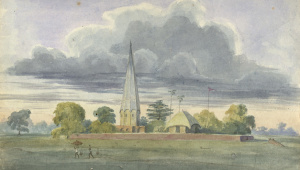
How Dhaka lost its green and water: Revisiting the first master plan of the city
16 July 2026
The first clear and large scale planning for Dhaka city emerges in the form of this master plan.
16 July 2026

A grieving street dog and reflections on environmental humanities
19 December 2025
This human-made tragedy, however, was partially remedied by "humans" themselves.
19 December 2025
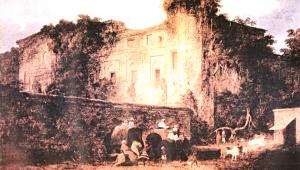
Environmental history of Dhaka: An outline
4 October 2020
Environment has been key to Dhaka’s birth and rebirth, growth and development as well as its urban predicaments. Recently, Dhaka’s environmental issues have led to public debates drawing a lot of interest.
4 October 2020
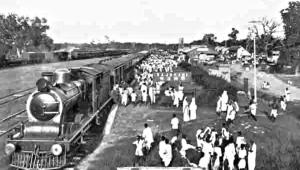
The ecological cost of railways in colonial Bengal
7 April 2019
After conducting a year-long survey of landscape, possible routes and profitability, Macdonald Stephenson, a Scottish engineer, proposed the first Indian railway scheme in 1845.
7 April 2019
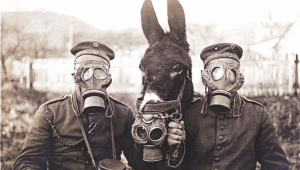
ENVIRONMENTAL COSTS OF WORLD WAR I / How the deadly water hyacinth invaded Bengal
23 December 2018
Wars are not just about strategy, diplomacy, weapons, death and destruction of human life, but also about the way it affects natural environment.
23 December 2018
The Partition of Bengal, 1905 / South Asia's first Look East Policy?
15 October 2017
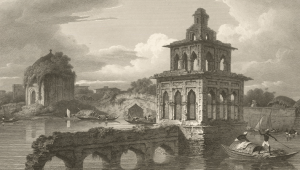
Politics, patriotism, and palliatives for economic woes—all expressed themselves centrally in terms of the land and landscape of Bengal. The new province therefore fell apart and Bengal reunited.
15 October 2017
Locating the Rohingya in time and space
12 October 2017
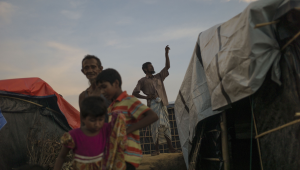
There is no instance in the world where after decades of experience of citizenship and of exercising the rights to electing their representative to parliament an entire population becomes stateless without security to life, property and honour, except of course in Nazi Germany.
12 October 2017

Partition 1947 / How communal politics ruined agrarian society
24 August 2017
First, when it came to the ecological question, the two-nation theory, on which the partition was claimed to be based, was muted as seen in Punjab and Bengal where the question of partitioning the water bodies took the centre stage. Second, the immediate aftermath of the partition left thousands of people dead and millions homeless and filled with gruesome trauma.
24 August 2017