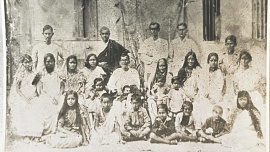
Shreemati Rassundari and the making of the first autobiography by a Bengali woman

In nineteenth-century Bengal, a woman sat inside a crowded zamindari kitchen secretly trying to teach herself how to read. She had no books of her own, no teacher, and almost no time to think beyond the endless demands of household labour. Yet somewhere between cooking fires, clay stoves, and sleepless nights, she began memorising letters in secret.
The page she studied had been quietly torn from a copy of the Chaitanya Bhagavata, a Vaishnav religious text. Hidden beside cooking pots and firewood, it became her private doorway into literacy.
That woman was Shreemati Rassundari (1810–1899), who would later write Amar Jiban (1876), widely regarded as the first autobiography by a Bengali woman.
What makes Rassundari Devi remarkable is not simply that she became literate in a society that denied education to women, but the conditions under which she learned.
Rassundari was born in March 1810 in the village of Potajia, Pabna. She grew up in a conservative Hindu society where women’s lives were tightly regulated from childhood. Girls were expected to marry young, remain within domestic spaces, and devote themselves entirely to household responsibilities. Education for women was not merely considered unnecessary. In many households, it was treated as dangerous.
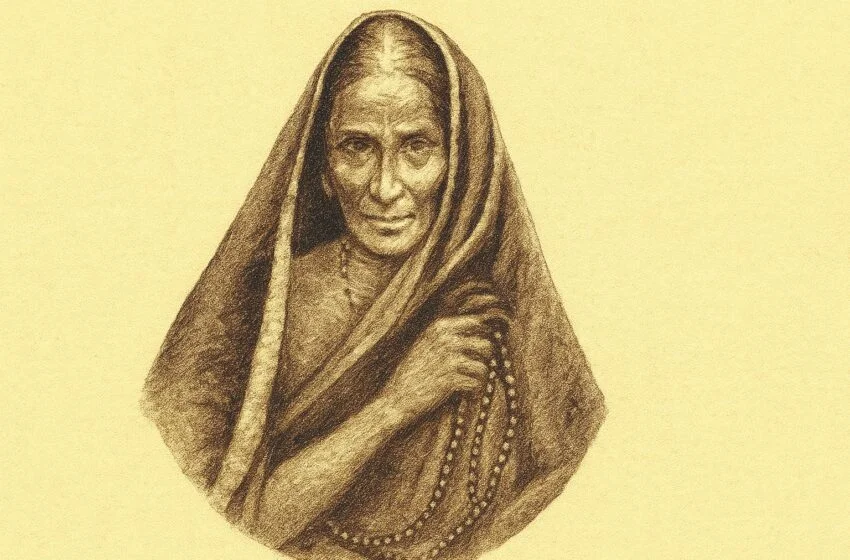
As a child, Rassundari watched boys study in a small pathshala inside her home. They traced letters on the floor, repeated alphabets aloud, and practised writing under supervision. She was never supposed to participate, but she watched carefully from a distance and silently memorised the shapes of letters.
At twelve, she was married into a wealthy zamindari family in Faridpur. The transition from childhood to marriage was abrupt. In Amar Jiban, she recalls waking up surrounded by strangers, separated from her mother, relatives, and familiar home. The journey to her marital household felt less like celebration than displacement. Again and again, her autobiography returns to images of confinement. She compares herself to a bird trapped in a cage and a fish caught in a net. Marriage drastically narrowed the boundaries of her world.
Inside the zamindari household, labour became constant. She cooked for large numbers of people, cleaned endlessly, cared for children, and managed domestic routines that never truly ended. Wealth did not necessarily make life easier for her. Larger households required stricter discipline and greater domestic labour, while social respectability depended heavily on seclusion. The walls were larger, but so was the confinement.
One of the most painful moments in Amar Jiban comes when her mother falls seriously ill. Rassundari wants to visit her, but cannot leave her husband’s household freely. Domestic responsibilities and social expectations stand in the way. She writes with grief about being unable to care for her dying mother because she was a daughter and not a son.
“If I were a son,” she reflects, “I would have flown to my mother.” Her understanding of gender emerged not through abstract ideas, but through everyday restriction: restricted movement, restricted learning, and also restricted choice. And yet her desire to read persisted. Religion became the only socially acceptable path through which literacy could enter her life. Deeply devoted to Dayamadhav, the divine figure introduced to her during childhood, Rassundari longed to read religious texts herself instead of depending on others to recite them aloud. That desire eventually centred on the Chaitanya Bhagavata.
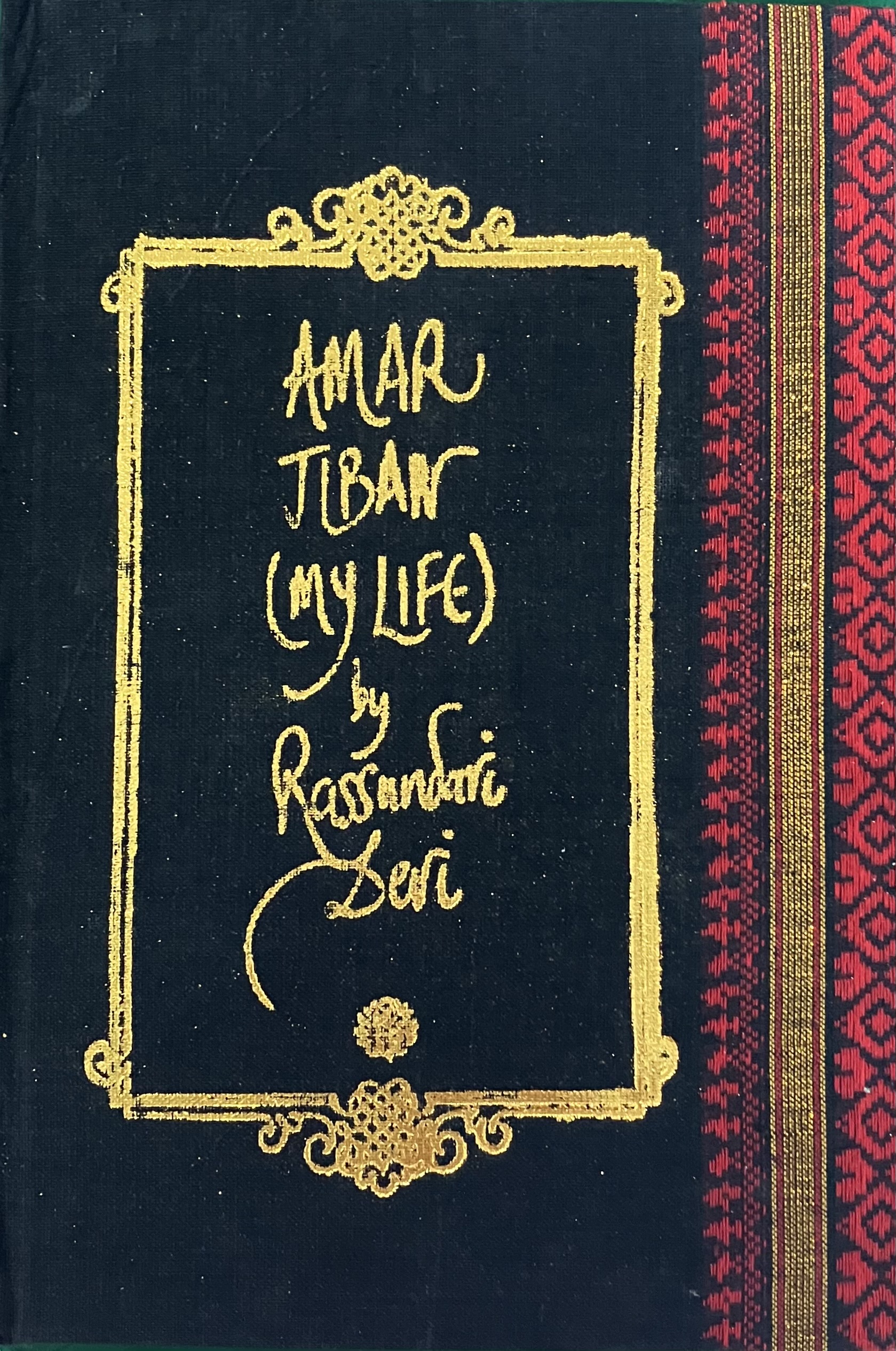
One day, when a copy of the manuscript entered the household, she secretly removed a page and hid it in the kitchen. Around the same time, one of her sons was learning the alphabet on palm leaves. Rassundari began matching the letters from his lessons with the letters on the stolen page.
The kitchen became both workplace and classroom. Literacy, in her case, was not acquired through formal education but through fragments of time stolen from domestic labour.
Writing proved even harder than reading. A page could be hidden quickly beneath a sari or beside the stove. Writing required materials, stillness, and visible activity. It demanded time that her domestic life rarely allowed. In Amar Jiban, she repeatedly describes the impossibility of finding uninterrupted moments for herself. Someone always needed her. Household work consumed the entire day. There were times when she barely had enough time to eat.
Years passed between her learning to read and her ability to write. Eventually, members of the household discovered that she could read. To her surprise, some reacted with admiration rather than punishment. But by then, secrecy had already shaped her relationship with knowledge. Reading remained emotionally tied to fear and guilt.
That fear reveals something important about how patriarchy often operates within domestic life. Control does not always require open punishment. It can work through internalised shame and self-surveillance. Women learn to hide ambition before anyone explicitly forbids it.
Rassundari repeatedly describes feeling guilty simply for wanting knowledge. Yet the desire persisted.
Her autobiography also challenges conventional ideas about autobiography itself. Many autobiographies, particularly in Western literary traditions, focus on the growth of an independent individual self. Rassundari’s narrative works differently. Her identity emerges through relationships: with her mother, children, household, and religious faith.
By writing her life down, she transformed experiences considered ordinary and private into historical record. Perhaps that is the most radical part of her story. Not simply that she learned to read, but that she decided her life was worth documenting at all. A woman who had spent decades being told that her role was only to serve others quietly sat down and wrote herself into history. It began with a single hidden page beside a stove.
She rarely presents herself as separate from others. At the same time, moments of frustration and longing repeatedly surface beneath this relational world. She does not openly reject the customs of her society, but she documents their consequences with remarkable clarity. She accepted many religious and social values of her time, yet her life story quietly exposes the violence embedded within them. Without using political language, she documents how women’s labour was consumed, how their movement was controlled, and how access to knowledge was denied.
That is precisely why Amar Jiban remains important today. Its significance lies not only in being the first autobiography by a Bengali woman, but in the way it preserves experiences often erased from official history. Histories of colonial Bengal tend to focus on reformers, intellectuals, nationalism, and the Bengal Renaissance. Women like Rassundari rarely occupy the centre of those narratives. Yet her autobiography reveals the hidden domestic structure upon which that society depended.
Even today, parts of her story feel familiar. Across South Asia, women’s access to education, technology, and information continues to be monitored within many families. Phones are checked. Internet use is restricted. Knowledge still circulates unevenly according to gender. The methods have changed, but the logic often remains similar.
Toward the end of her life, Rassundari finally wrote Amar Jiban. She did not imitate elite literary Bengali or adopt the intellectual style associated with male writers of her time. Her prose remained direct, domestic, and grounded in lived experience.
That simplicity is part of the book’s power. She wrote about kitchens, childbirth, household pressure, grief, religious faith, and exhaustion without trying to transform them into grand philosophical ideas. In doing so, she preserved aspects of women’s everyday lives that formal archives often ignore.
By writing her life down, she transformed experiences considered ordinary and private into historical record. Perhaps that is the most radical part of her story. Not simply that she learned to read, but that she decided her life was worth documenting at all. A woman who had spent decades being told that her role was only to serve others quietly sat down and wrote herself into history. It began with a single hidden page beside a stove.
Musrat Hossain Mithila works at the Slow Reads, The Daily Star. She can be reached at mmusrat30@gmail.com.
Send your articles for Slow Reads to slowreads@thedailystar.net. Check out our submission guidelines for details.
The world map we know is distorted. Why does it matter?

Bengal and the coming of Islam: A story of soil and spirit
Xuanzang’s travels to Bengal and beyond : The man, the pilgrim and the Monkey King
Professor Anisur Rahman: The economist who put people at the centre

APO 433: Dhaka’s forgotten post office of World War II
Dadabhai Naoroji: The man who exposed the economics of British colonialism
Untold stories of 1971 through private letters
The extraordinary journey of Atish Dipankar Srigyan
Forgotten story of Jeanette Van Tassel, the American woman who flew over Dhaka in 1892