Dadabhai Naoroji: The man who exposed the economics of British colonialism

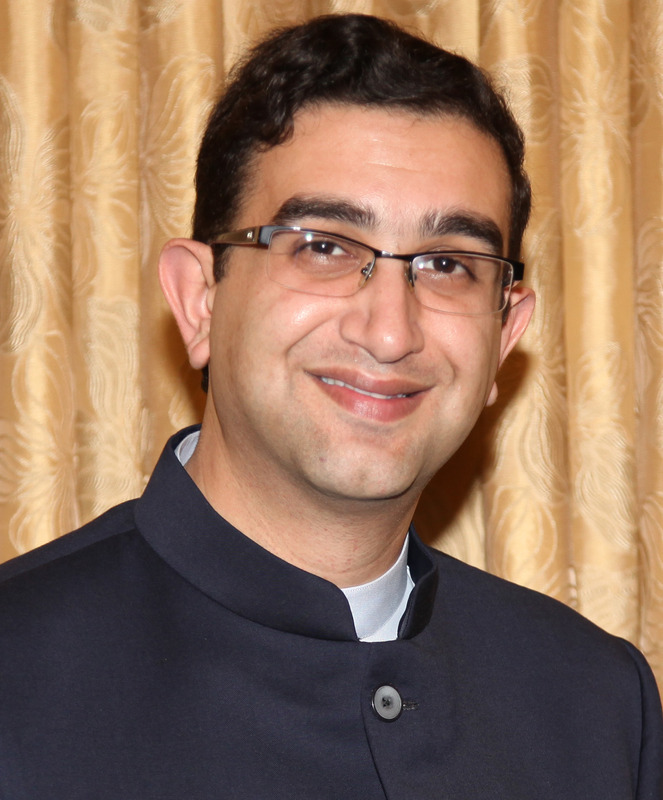
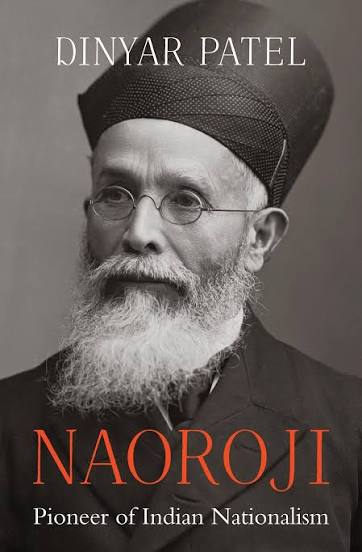
On the 201st birth anniversary of Dadabhai Naoroji, widely known as the “Grand Old Man of India”, The Daily Star speaks with historian Dinyar Patel about Naoroji’s pioneering role in shaping Indian nationalism, his influential “drain theory” and his enduring political and intellectual legacy. Patel is the author of Naoroji: Pioneer of Indian Nationalism, published by Harvard University Press in 2020, and Associate Professor of History at the S. P. Jain Institute of Management and Research in Mumbai.
The Daily Star (TDS): Before discussing Naoroji’s intellectual and political ideas, could you briefly give us an overview of some key events in his life that significantly shaped his personality and the future course of his actions?
Dinyar Patel (DP): Perhaps the most significant life event for Naoroji was his youth. Naoroji grew up in relative poverty in Bombay, with his mother having to scramble for money and support after his father passed away. Naoroji had great respect for his mother for overcoming these obstacles. And, although she was uneducated and illiterate, she prioritised education for her son. After her son studied in a traditional pathshala for a few years, Naoroji’s mother had the foresight to enrol him in a unique experiment in public education in Bombay, one where poor students did not have to pay tuition. Subsequently, Naoroji received what was probably the best primary and secondary education possible in western India. The experience made him a lifelong advocate of quality, state-supported universal education (something India continues to struggle with).
His mother also influenced Naoroji’s support for female education: he was one of a generation of young reformers in the 1840s and 1850s who broke orthodox taboos and opened schools for Hindu and Parsi girls. In his youth, therefore, we see the roots of several of his political positions: a concern for, and understanding of, poverty; a commitment to the spread of education; and support for women’s rights.
Another influential event was Naoroji’s first trip to Great Britain, in 1855. Naoroji wrote a Gujarati-language travelogue of his journey and arrival and, in this travelogue, one gets a sense of the absolute wonder he felt on first seeing the wealth and technological advancement of Europe. It no doubt crystallised his views of India’s relative poverty and backwardness: he commented on the agricultural productivity of farmlands in France and the prosperous appearance of farmers. Paris and London presented to him a level of urban, economic, and technological development that made Bombay seem like a backwater. In later years, Naoroji would develop such observations into a tactic of international comparison, using statistics to quantify the differences in quality of life between countries like Britain and India.
TDS: How did Naoroji’s critique of the colonial economic drain shape his vision of Indian nationhood and his understanding of India’s poverty under British rule?
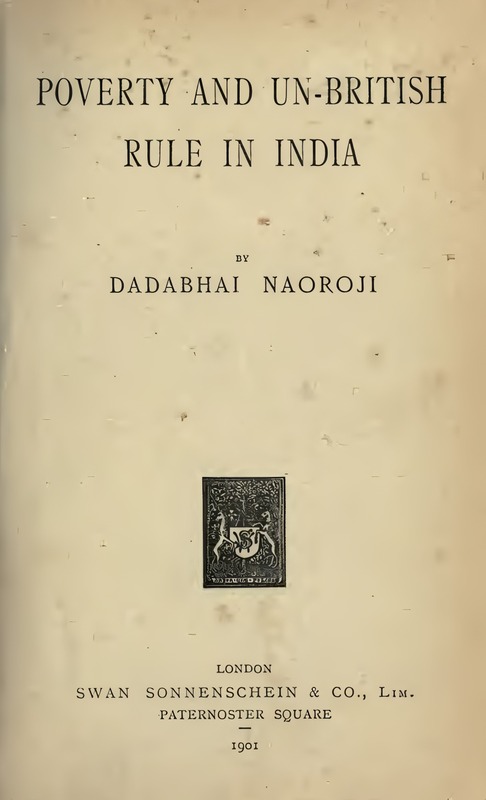
DP: For Naoroji, poverty was the central fact of life in India. Poverty explained the mass incidence of famine, the sickly nature of the Indian economy, a lack of industry and development, and India’s very status as a colonised society with an unrepresentative government. While Naoroji crafted his version of the drain theory with economic data, and provided solid evidence on the widespread nature of poverty, we have to remember that, for him, the drain theory ultimately had a polemical purpose. It was the justification for a sweeping programme of political reform, one which would empower Indians and, eventually, lead to swaraj.
Colonial rule itself was responsible for impoverishment, and the only solution to this problem was transferring political power to Indians. While this might seem like an obvious point today, it was quite unique and heterodox in the mid-nineteenth century, when there was a broad consensus, at least in Britain, that colonial rule was a force for economic and political advancement in India.
TDS: What was his experience engaging with Westminster, particularly in challenging the total exclusion of natives from participation and representation in the administration, and how did this connect with the struggles of other colonised peoples?
DP: Naoroji was elected to the British Parliament in 1892 and lost his seat in the next election, in 1895. His experience in the British Parliament ended with bitterness and disappointment. Upon being elected to Parliament, he was optimistic—perhaps naively so—that he could achieve real political reform for India through legislation and by convincing fellow MPs about the urgent need for change in the Indian administration.
What he discovered, ultimately, was that most MPs did not care about India, and a certain portion were downright hostile towards any reformist programme. He was mocked by some MPs and members of the British press for constantly speaking about Indian reform. As Naoroji became more frustrated with this hostility and intransigence, he took a more global view of colonisation and oppression. He made comparisons between American slavery and British rule in India, for example, and began cultivating relationships with political activists from British Caribbean colonies.
TDS: As a pioneer of Indian nationalism, what was his political vision for navigating the relationship between the Empire and colonised India in the pursuit of freedom and the establishment of just rule?
DP: Naoroji’s political vision evolved with time. In my book, I outline three distinct stages in his political vision and thought. In the first stage, Naoroji thought about Indian poverty and posited political solutions. By the 1880s, the solution to this problem was some form of self-government, albeit within the British Empire (something like what Canada or Australia enjoyed). In the next stage, Naoroji tried catalysing political reform for India by shifting his base to London and standing for election to the British Parliament.
As I’ve explained above, this ended in frustration, which propelled the third phase of his career, when he radicalised considerably and openly called for self-government. Naoroji went so far as to argue that self-government was more important than good government, countering the British argument that the Raj at least provided efficient administration.
In his last political speech, before the Calcutta Congress in December 1906, Naoroji called for swaraj and offered the possibility that swaraj could entail complete autonomy from the British Empire. This ruffled feathers amongst Congress moderates and, to a very large degree, emboldened radicals such as Tilak.
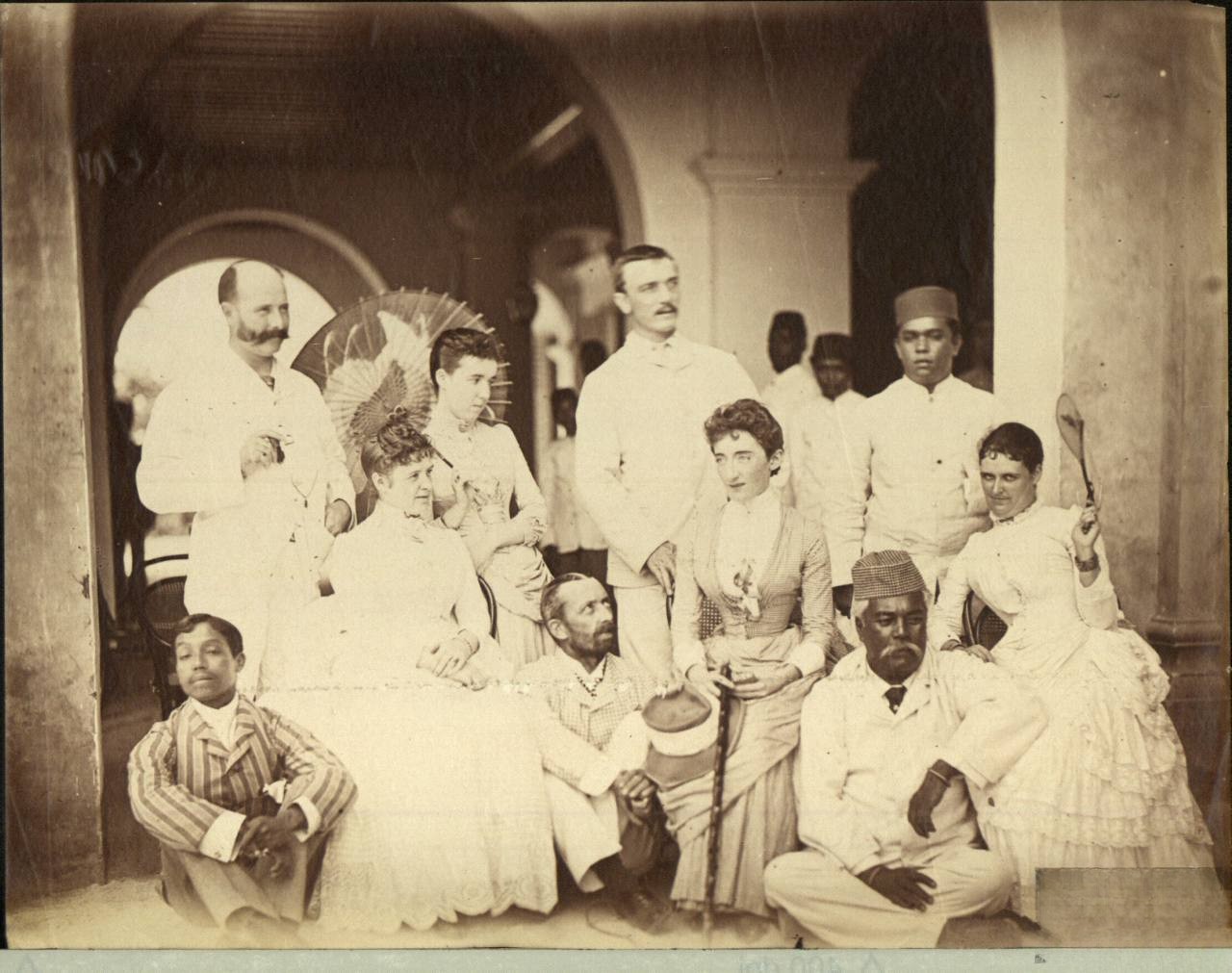
TDS: Could you explain Naoroji’s most original political contribution—the idea of swaraj, or self-government—and how it systematically redefined colonial India’s claim to independence? In what ways was his approach similar to or different from those later adopted by Gandhi and other nationalist leaders? Also, how did he shape the Indian National Congress in its formative years?
DP: It is quite clear that Naoroji arrived at the idea of self-government at an early date—his earliest public declaration of the idea is from 1884, a year before the establishment of the Congress. Although he chose not to talk about Indian self-government while standing for election to Parliament, it is clear that he did not back away from this position: both he and Allan Octavian Hume privately discussed how their ultimate goal was home rule, similar to what Irish nationalists were demanding (and, significantly, Naoroji was a vocal supporter of Irish home rule).
By the very last years of the nineteenth century, he returned to publicly stating this demand. Self-government was an idea discussed in hushed tones by many moderate Congress leaders, who were worried about how colonial authorities would react and clamp down on the Congress organisation. But, by tiptoeing around the idea, they denied the Congress a powerful goal which could rally popular support much more effectively than uninspiring pledges about incremental reform, such as simultaneous civil service examinations and expanded legislative councils. This is something that radicals like Tilak clearly understood. So, by publicly declaring in 1906 that the goal of the Congress was swaraj, Naoroji effected a major transformation in the organisation and helped shift the balance of power away from the moderates.
At the same time, we must remember that Naoroji’s idea of self-government was not as advanced as that advocated by later generations, like Gandhi and Nehru, who by 1929 clearly enunciated a clean and immediate break with the British Empire (purna swaraj). While Naoroji kept open the possibility of exiting the British Empire, he saw this as a future possibility, whereas Gandhi and Nehru demanded it immediately.
TDS: Before writing the biography of Naoroji, you also edited his selected private papers. What was your experience of working in these two distinct forms of research—writing a biography and editing archival papers? What were the most challenging and intriguing aspects of your research?
DP: The most challenging, but also the most enjoyable, feature of my research was going through Naoroji’s personal papers, held at the National Archives of India in New Delhi. These consist of some 30,000 individual items, which can range from a single sheet of paper to book-length documents. The scale of this collection is staggering, and it was daunting for me, as a young graduate student freshly arrived in Delhi, to contemplate. Over a period of about two years, I went through about half of this collection, and I’m confident that I’ve seen most of the important items in it. A number of these items feature in the edited volume of Naoroji’s papers, which I co-edited with S. R. Mehrotra, who was a great inspiration for me.
Mehrotra, who passed away in 2019, had a commitment to rigorous archival research that sadly fell out of fashion amongst South Asian historians due to the influence of Postcolonialism and Subaltern Studies, which pushed theory and theoretical frames instead (although I am happy to see that the archival habit seems to be reviving). Mehrotra continued to show up at the National Archives of India into his mid-80s, having taken overnight trains from his home in Shimla to Delhi. He also had access to incomplete volumes of Naoroji’s writings, and I worked with him to revise and expand one of these manuscripts and publish it.
Mehrotra, who passed away in 2019, had a commitment to rigorous archival research that sadly fell out of fashion amongst South Asian historians due to the influence of Postcolonialism and Subaltern Studies, which pushed theory and theoretical frames instead (although I am happy to see that the archival habit seems to be reviving). Mehrotra continued to show up at the National Archives of India into his mid-80s, having taken overnight trains from his home in Shimla to Delhi. He also had access to incomplete volumes of Naoroji’s writings, and I worked with him to revise and expand one of these manuscripts and publish it.
For that particular volume, as well as for my archival research in the Naoroji Papers in general, one of the greatest challenges was reading handwriting. After a while, I got used to Naoroji’s handwriting, but the handwriting of certain correspondents was almost undecipherable. People like the social reformer Behramji Malabari and the Congress politician Dinsha Wacha wrote in such a rushed hand that even their correspondents, in the late nineteenth century, loudly complained about it. This material is now even more difficult to read due to faded ink and the brittleness, discolouration, and damage of the letters.
Most of Naoroji’s outgoing correspondence survived only as tissue-thin “press copies”, the nineteenth-century version of carbon copies. Due to wear and tear, these now look like strings of ink blots. In the worst-case scenarios, the acid content in the ink has produced a string of holes. So, quite often, I had to confront a string of holes and try to turn it into a readable sentence. Needless to say, my eyesight went for a toss, and I had to consult a few eye doctors after I finished my research.
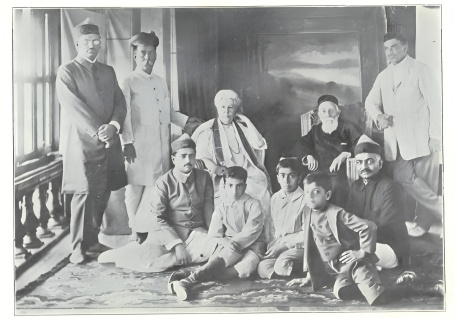
TDS: What influence did Naoroji have on later political leaders such as Gandhi, C. R. Das, and Jinnah? How did Naoroji anticipate the Indian freedom movement’s eventual struggle with Hindu-Muslim rivalries, which ultimately culminated in the Partition of 1947?
DP: Naoroji’s influence upon Gandhi is quite clear: while nowhere near as important an influence as Gokhale, Naoroji certainly inspired the young Gandhi and provided constructive help and assistance during his early years in South Africa. Gandhi would send Naoroji periodic updates on the situation in Natal and Transvaal, which Naoroji would then broadcast to powerful friends and allies in London, including those in the Colonial Office and Parliament. Gandhi, of course, broke with Naoroji’s strategies of strictly constitutional agitation, yet he defended Naoroji’s methods in the first chapter of Hind Swaraj, arguing that such tactics and strategies built a foundation upon which others, like Gandhi, could innovate.
And the other undeniable influence of Naoroji upon Gandhi was the centrality of poverty: Gandhi was moved by Naoroji’s exposition of Indian poverty and, in later years, argued that things like the spinning of khadi cloth were in tune with Naoroji’s political mission. For Jinnah, it is much more difficult to establish a direct relationship or influence. Jinnah claimed to have worked for Naoroji’s parliamentary campaign and to have served as Naoroji’s secretary. I found no evidence for either claim. In any case, Naoroji had numerous parliamentary volunteers and secretaries, so this would not have been a unique achievement. I am afraid that I do not know about Naoroji’s influence on C. R. Das.
As for Hindu-Muslim rivalries, Naoroji somewhat naively downplayed them—one can argue that he did not think enough about their explosive possibilities. He certainly went out of his way to make sure that the Congress was a broad tent that included Muslims, and during the 1893 Lahore Congress he issued specific instructions to ensure strong Muslim participation and incorporation in its proceedings. But he was shocked by dissenting voices amongst certain Muslim leaders, such as Sayyid Ahmed Khan, and struggled to make sense of why they kept aloof from the Congress.
As for Hindu-Muslim rivalries, Naoroji somewhat naively downplayed them—one can argue that he did not think enough about their explosive possibilities. He certainly went out of his way to make sure that the Congress was a broad tent that included Muslims, and during the 1893 Lahore Congress he issued specific instructions to ensure strong Muslim participation and incorporation in its proceedings. But he was shocked by dissenting voices amongst certain Muslim leaders, such as Sayyid Ahmed Khan, and struggled to make sense of why they kept aloof from the Congress.
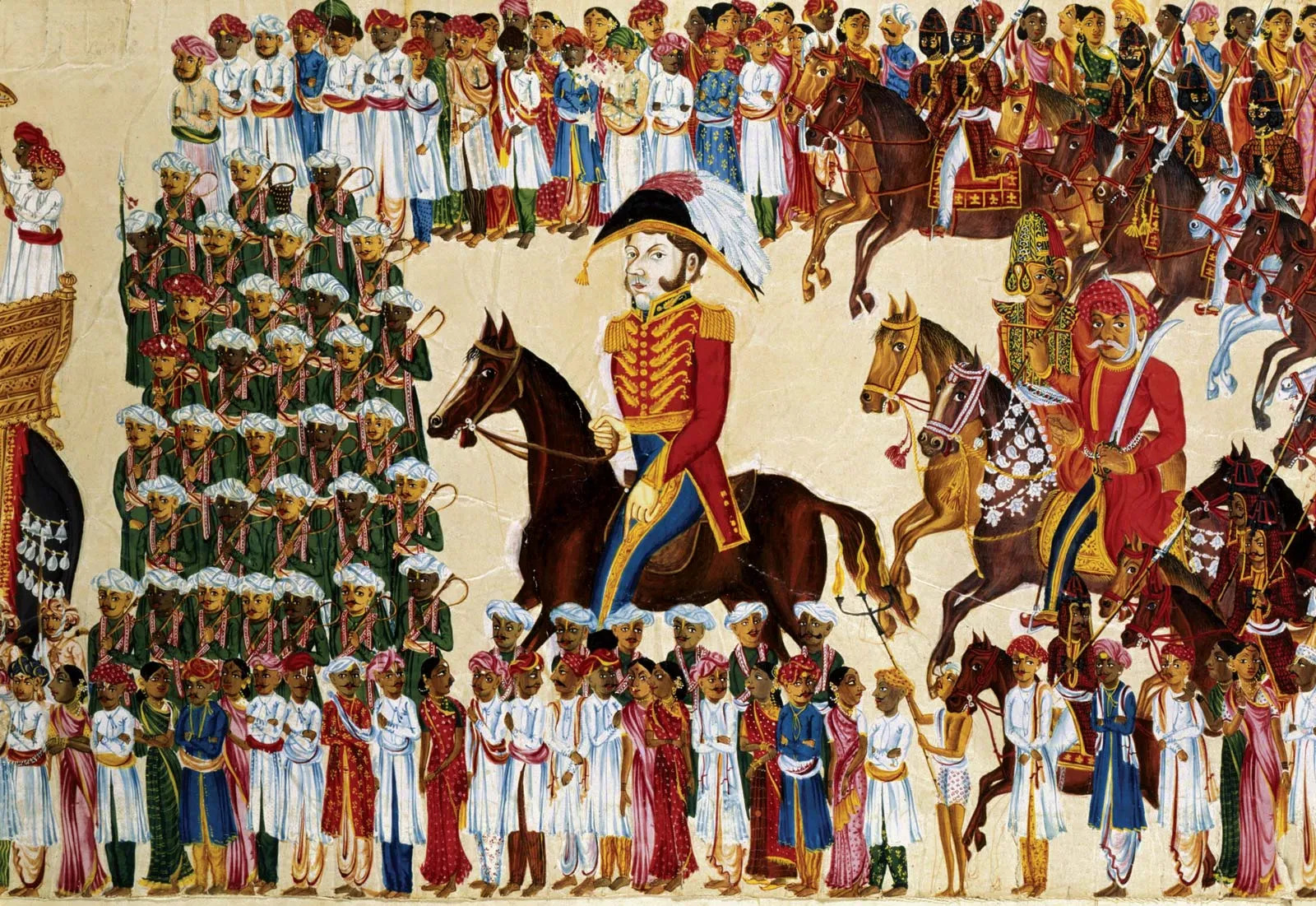
TDS: As the author of Naoroji’s biography, what do you think are his most impactful political ideas historically, and which of these remain particularly relevant today in the context of global anti-colonial political thought?
DP: Naoroji’s popularisation of the drain theory was, I believe, his most impactful contribution in the long run. Again, it was the intellectual foundation for self-government. Although the drain theory has come under attack by many historians and economists, who have crunched numbers and cast doubt on the veracity of the numbers which Naoroji and others quoted, they miss the point that the drain theory was always about politics. It is a powerful political idea because it neatly lays bare the power dynamic inherent in colonial rule: power and enrichment on the part of the coloniser, and the steady erosion of power and wealth on the part of the colonised. Precise numbers are immaterial—it is this power dynamic which is important.
In his later years, Naoroji took his economic ideas about India and applied them to the global capitalist economy, recognising similar dynamics of power and powerlessness in places like industrial Britain and the emerging American empire. The drain theory also spread widely across the world. It might have influenced Karl Marx’s late thought. American Progressives like William Jennings Bryan saw in the drain theory a warning against American imperialism. Anti-colonial leaders both inside and outside of the British Empire, in places as diverse as Cyprus and Indonesia, picked up on the idea. It is not too much of an exaggeration to draw a line between the drain theory and later critiques of global capitalism, such as dependency theory, articulated by twentieth-century Latin American economists. They might not have been familiar with Naoroji’s work, but they drew from a wellspring of criticism of the global capitalist economy which Naoroji helped to create.
In our own world of economic oligarchies, burgeoning socioeconomic cleavages, and the “one percent”, Naoroji’s ideas remain very relevant, and especially so in a country like India.
The interview was taken by Priyam Pritim Paul.
Send your articles for Slow Reads to slowreads@thedailystar.net. Check out our submission guidelines for details.

Untold stories of 1971 through private letters
The extraordinary journey of Atish Dipankar Srigyan

Forgotten story of Jeanette Van Tassel, the American woman who flew over Dhaka in 1892
Beyond 1947 / A personal essay
Abul Mansur Ahmad / A global quest in search of a nation

Chand Bibi and the forgotten history of Muslim women’s political resistance
Women’s voices in Nazrul’s Dhumketu
How Milad-un-Nabi shaped Muslim cultural life in colonial Bengal
What Rashomon teaches us about truth and human behaviour