Why Bangladesh needs mandatory warning labels on packaged foods

For today's children and young people in Bangladesh, packaged food is no longer an occasional treat; it has become part of daily life. A packet of chips after school, a sugary drink during tuition breaks, instant noodles for a quick meal, or sweetened yoghurt marketed as "healthy" have become familiar choices. Bright packaging, celebrity endorsements and attractive marketing often make these products appear harmless. Yet behind many of these colourful packages lies a hidden reality: excessive amounts of sugar, salt and unhealthy fats that silently increase the risk of non-communicable diseases (NCDs).
On the other hand, modern family life has changed dramatically. In many households in Bangladesh, both parents work long hours to support their families. Balancing jobs, commuting and household responsibilities leaves little time to prepare home-cooked meals every day. As a result, instant foods, frozen snacks, biscuits, sugary drinks and other packaged foods have become convenient solutions for busy families. Parents do not choose these products because they are unconcerned about their children's health, but because they are affordable, convenient, readily available and heavily marketed as suitable for children.
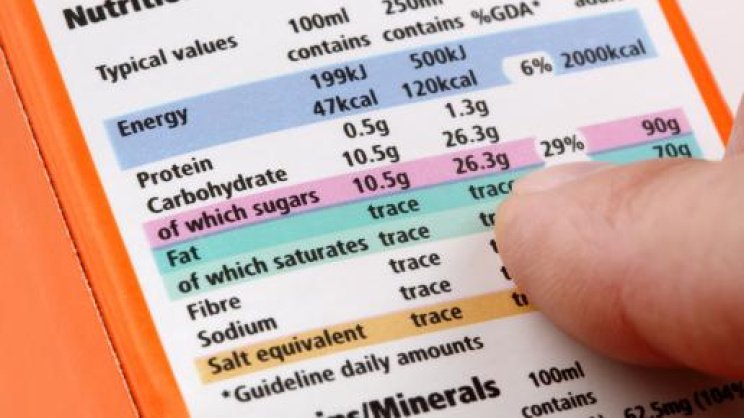
Standing in a supermarket after a long working day, few parents have the time to read complicated nutrition panels printed in tiny fonts on the back of a package.
Over time, this convenience is becoming a habit, and these foods are gradually replacing healthier alternatives.
Bangladesh stands at a crossroads. While we have made remarkable progress in reducing infectious diseases and improving maternal and child health, another public health crisis is growing rapidly. According to data from the World Health Organization (WHO), non-communicable diseases (NCDs), including heart disease, stroke, diabetes, cancer, chronic respiratory diseases and kidney disease, account for nearly 71 percent of all deaths in Bangladesh, with almost half occurring prematurely. An unhealthy diet has become one of the leading drivers of this epidemic.
The tragedy is that many of these diseases are preventable.
A simple symbol indicating that a product is 'High in Sugar', 'High in Salt' or 'High in Saturated Fat' allows consumers to make informed decisions within seconds.
One of the simplest and most cost-effective interventions is mandatory Front-of-Pack Labelling (FOPL). Unlike the detailed nutritional information printed on the back of food packages, which is often difficult to understand, written in small fonts and ignored by many consumers, Front-of-Pack Labelling provides a clear warning on the front of the package. A simple symbol indicating that a product is "High in Sugar", "High in Salt" or "High in Saturated Fat" allows consumers to make informed decisions within seconds.
The purpose of FOPL is not to ban foods or dictate what people should eat. It simply ensures that consumers know what they are buying before they purchase it.
Children deserve this information even more than adults.
Today's food environment is vastly different from that of previous generations. Children are exposed to aggressive marketing through television, social media, online games, influencers and supermarket displays. Young people rarely have the nutritional knowledge needed to distinguish healthy products from unhealthy ones. Even parents often assume that products labelled as "fruit drink" or "fortified" are nutritious, when in reality they may contain dangerously high amounts of sugar or salt. On average, adults in Bangladesh consume about 9 grams of salt each day, almost double the maximum daily intake of 5 grams recommended by the WHO.
Without clear front-of-pack warnings, families are making decisions with incomplete information.
Evidence from around the world demonstrates that FOPL works.
Almost 44 countries worldwide have adopted government-endorsed FOPL policies, while 16 countries, including Chile, Mexico, Canada, Uruguay, Peru, Argentina and Brazil, have introduced mandatory warning labels on packaged foods. Research shows that these labels help consumers identify unhealthy products more quickly, reduce purchases of foods high in sugar and salt, encourage healthier eating habits, and motivate manufacturers to reformulate products by reducing harmful ingredients.
In Chile, after warning labels became mandatory, many food manufacturers voluntarily reduced sugar and sodium levels to avoid displaying warning symbols. Consumers also reported paying greater attention to nutritional quality when buying packaged foods. This is exactly how good public policy should work: not by restricting choice, but by improving transparency and encouraging healthier products.
The Bangladesh Food Safety Authority has already developed the draft Safe Food (Packaged Food Labelling) Regulations, 2026. The draft proposes warning labels for foods containing excessive amounts of sugar, salt and saturated fat. Public health experts, nutritionists, consumer rights advocates, youth organisations and civil society groups have widely welcomed this initiative.
Bangladesh has an opportunity to follow these successful examples.
The Bangladesh Food Safety Authority has already developed the draft Safe Food (Packaged Food Labelling) Regulations, 2026. The draft proposes warning labels for foods containing excessive amounts of sugar, salt and saturated fat. Public health experts, nutritionists, consumer rights advocates, youth organisations and civil society groups have widely welcomed this initiative.
Bangladesh has also committed to achieving Sustainable Development Goal (SDG) target 3.4 by reducing premature deaths from non-communicable diseases by one-third by 2030. However, achieving this target will be difficult without implementing strong, evidence-based public health policies. The mandatory implementation of Front-of-Pack Labelling (FOPL) regulations is one such policy.
Yet the regulation remains pending. A study conducted by the National Heart Foundation of Bangladesh and Resolve to Save Lives surveyed 974 individuals from metropolitan, urban and rural areas across Bangladesh and found that 97 percent had consumed at least one processed or ultra-processed food in the previous week. So every month of delay means that millions of consumers continue purchasing unhealthy products without knowing what they contain. Every year of delay means more children develop unhealthy eating habits that increase their lifetime risk of obesity, hypertension and diabetes.
Some food industry representatives may say that mandatory warning labels could negatively affect businesses or confuse consumers. However, global experience tells a different story. Transparent labelling builds consumer trust. Companies that invest in healthier products benefit from increased consumer confidence, while innovation in food reformulation creates new market opportunities.
In our increasingly busy lives, awareness alone is insufficient if the information remains hidden. We cannot expect teenagers to calculate their daily sugar or salt intake during a 20-minute tiffin break using complicated nutrition tables printed in tiny fonts. We cannot expect busy parents to compare multiple ingredient lists while buying food. Public policy must make the healthy choice the easier choice.
Mandatory Front-of-Pack Labelling does exactly that.

Bangladesh has already shown leadership in tobacco control by introducing graphic health warnings on cigarette packs. Those warnings have become a powerful public health tool because they communicate risk clearly and immediately. Packaged foods that contain excessive amounts of sugar, salt and unhealthy fats deserve the same level of transparency.
The next generation should not become the first generation to live shorter, less healthy lives because we failed to provide clear information about the food they consume every day.
Passing the Front-of-Pack Labelling (FOPL) Regulation is about investing in a healthier future for Bangladesh, preventing disease and reducing the nation's growing healthcare costs. So it is high time that front-of-pack labelling showed consumers the truth about what is inside the packet.
Marjana Muntaha is coordinator at the Ahsania Mission Youth Forum for Health and Well-Being.
Send your articles for Slow Reads to slowreads@thedailystar.net. Check out our submission guidelines for details.
Can the new strategy achieve Bangladesh’s renewable energy targets?

André Wink speaks / What we get wrong about the Indo-Islamic world
Bengali Muslims and the ghosts of India's citizenship politics

Bangladesh’s solar growth: Will the incentives be enough?

The missing link in Bangladesh's innovation economy
Dhaka’s battery rickshaw problem is economic, not just about traffic

The staircase between our mothers and care
Is Bangladesh prepared for the next food shock?

From more power to better power: Rethinking Bangladesh’s energy future