How renewable natural gas (RNG) can help ease Bangladesh's gas crisis
Bangladesh is facing two increasingly serious problems: a shortage of natural gas and a growing municipal waste-management crisis. These challenges are usually discussed separately, but they may be closely connected.
Bangladesh’s gas demand is around 3.8 billion cubic feet per day (Bcf/d), while the grid typically receives about 2.7 Bcf/d, leaving a substantial structural shortfall. Declining domestic gas production and growing reliance on imported liquefied natural gas (LNG) have left the country’s energy system increasingly exposed to international supply disruptions and price volatility.
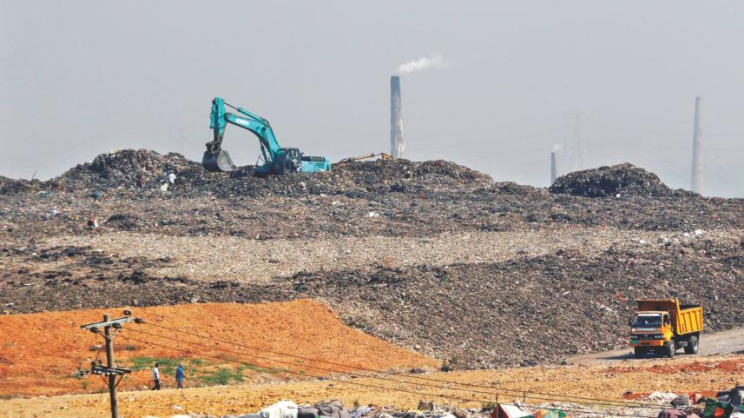
At the same time, Bangladesh’s cities generate enormous quantities of municipal waste every day, much of it organic and capable of producing biogas.
Renewable natural gas (RNG) from municipal waste offers a way to address both problems: it can turn a waste-management burden into a locally produced source of renewable energy while reducing the country’s exposure to imported gas.
What is RNG?
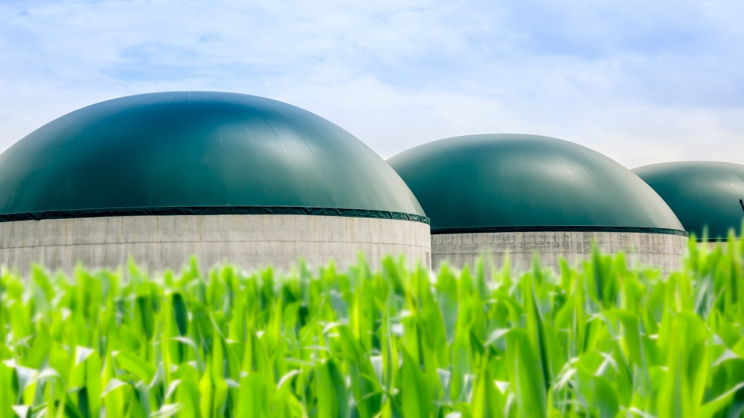
RNG is biomethane produced from organic materials such as food and vegetable waste, livestock manure, agricultural residues and wastewater sludge.
Through a process called anaerobic digestion, microorganisms break down organic material in the absence of oxygen and produce biogas. The biogas contains methane together with carbon dioxide, moisture and other impurities. After cleaning and upgrading, the biogas becomes RNG.
Depending on available infrastructure and applicable standards, RNG can be compressed for use as vehicle fuel, supplied to industrial consumers or, where technically and commercially feasible, injected into the natural-gas network. The process also leaves behind digestate, the residue from digestion, which can be processed into compost or organic fertiliser.
Bangladesh’s overlooked energy resource
Bangladesh generates an estimated 38,000 tonnes of municipal solid waste every day. Roughly 70% of this, about 26,600 tonnes, is estimated to be organic and potentially digestible. At an indicative biogas yield of 80 cubic metres per tonne of organic feedstock, the organic fraction represents a theoretical raw-biogas potential of about 2.13 million cubic metres per day. Assuming a methane content of 60% and upgrading to RNG of 95% methane, the theoretical output is about 47.5 million standard cubic feet per day (MMscfd).
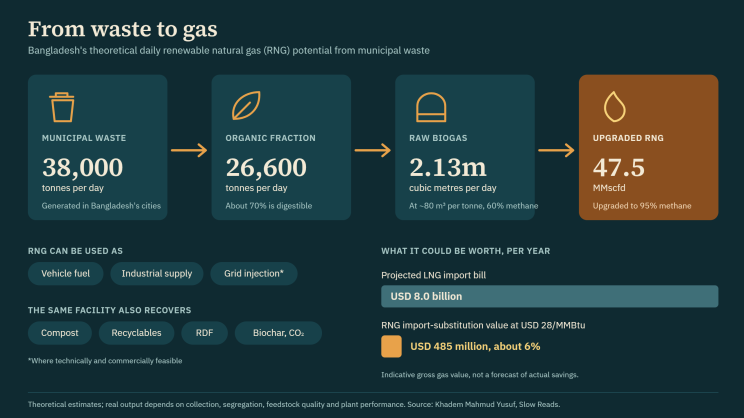
This figure should not be interpreted as an immediately achievable production level. Actual output would depend on waste collection, source segregation, contamination, feedstock quality, digestion efficiency, methane recovery, plant availability and technology performance.
Nevertheless, even realising a fraction of this potential could create a meaningful domestic energy resource.
Unlike imported LNG, RNG produced from domestic waste is not directly exposed to international shipping disruptions, force majeure declarations by LNG suppliers or global spot-market volatility
Why RNG matters for energy security
RNG will not replace LNG. Bangladesh’s energy requirements are far too large for that. RNG’s strategic value is that it provides a domestically sourced and decentralised supplementary gas resource. Unlike imported LNG, RNG produced from domestic waste is not directly exposed to international shipping disruptions, force majeure declarations by LNG suppliers or global spot-market volatility. It can also ease pressure on foreign-exchange reserves by replacing at least part of the country’s imported gas.
Most importantly, RNG facilities could be developed at city or regional scale, close to both the waste source and local energy consumers. This opens the way to a more distributed and resilient energy system, less dependent on centralised infrastructure for imported gas.
The economic opportunity
The economics become particularly attractive when international LNG prices rise, and they have risen sharply. Bangladesh’s LNG import bill is now projected at about USD 8.0 billion, with spot cargoes trading at around USD 28 per million British thermal units (MMBtu), more than double the average of about USD 12/MMBtu paid in 2025.
At an assumed LNG price of USD 28/MMBtu, the theoretical RNG potential of about 47.5 MMscfd would have an indicative gross gas value, or import-substitution value, of about USD 485 million per year, equivalent to about 6% of the projected LNG import bill. This should not be read as a forecast of actual savings, which would depend on collection, processing, investment, operating costs and other factors.
Lessons from international experience
The concept is already being demonstrated internationally. India, for example, has developed large-scale municipal Bio-CNG (compressed biomethane) facilities that convert segregated organic waste into renewable gas and organic compost. The important lesson is that technology alone is not enough. Successful waste-to-RNG projects depend on reliable collection, effective source segregation and consistent feedstock quality.
For Bangladesh, this means that waste-to-RNG must be part of a broader transformation of municipal waste management. The objective should be not simply to build digesters but to create an integrated system for waste collection, sorting, recycling, organic-waste processing and energy recovery.
From waste disposal to resource recovery
A modern waste-management system should treat municipal waste as a resource rather than simply something to be collected and dumped. A properly designed facility can potentially recover:
- RNG/biomethane from organic waste;
- compost or organic fertiliser from digestate;
- plastics, metals, paper and other recyclables;
- refuse-derived fuel (RDF) from suitable residual materials; and
- potentially other products such as biochar or recovered CO₂ where economically viable.
This is the essence of the circular economy: extracting value from materials that would otherwise become environmental liabilities.
What Bangladesh needs to do
Bangladesh should begin with carefully designed city-scale demonstration projects and use their results to develop a national model. This will require three things: better waste collection and source segregation to improve feedstock quality; a clear regulatory framework for municipal waste-to-RNG projects and for private-sector participation; and appropriate standards and offtake arrangements for compressed RNG, industrial use and, where feasible, gas-grid injection.
RNG from municipal waste will not replace LNG or solve Bangladesh’s energy crisis on its own. But it can provide a domestically produced, decentralised and renewable source of gas while addressing one of the country’s most persistent urban environmental problems.
Bangladesh does not have to choose between solving its waste crisis and strengthening its energy security.
Khadem Mahmud Yusuf is the managing director and CEO of Bangladesh Petrochemical Company Ltd.
Send your articles for Slow Reads to slowreads@thedailystar.net. Check out our submission guidelines for details.

The politics behind the Nobel Prize in economics

Can Bangladesh bring its hilsa back?
Can the new strategy achieve Bangladesh’s renewable energy targets?

André Wink speaks / What we get wrong about the Indo-Islamic world
Bengali Muslims and the ghosts of India's citizenship politics
Bangladesh’s solar growth: Will the incentives be enough?

The missing link in Bangladesh's innovation economy
Dhaka’s battery rickshaw problem is economic, not just about traffic

The staircase between our mothers and care