Chained majesties: The plight of captive elephants in Bangladesh


From street extortion and circus performances to years spent in chains and illegal wildlife trade, Bangladesh's captive elephants face multiple forms of exploitation. Recent deaths, rescues and cases of mistreatment raise a larger question: why has the country still failed to build a humane system for managing elephants that can no longer return to the wild?
An invisible population
An IUCN publication, Status of the Asian Elephants in Bangladesh, found 268 resident wild elephants and 93 migratory elephants in Bangladesh. An annex included a list, sourced from the Bangladesh Forest Department, of 96 captive elephants. Among them, 82 were kept by 35 different owners. Nearly half of the captive animals were male bull elephants, which require more space and careful management.
That decade-old data does not reflect the current number of captive elephants, and their whereabouts are in many cases practically unknown. Many elephants in captivity are now believed to be held without licences, while no updated official registry is publicly available. More than 25 elephants are in the custody of Gazipur Safari Park, Dulahazara Safari Park and Bangladesh National Zoo. Without a reliable registry, it is difficult to monitor ownership, transfers, breeding, health or welfare.
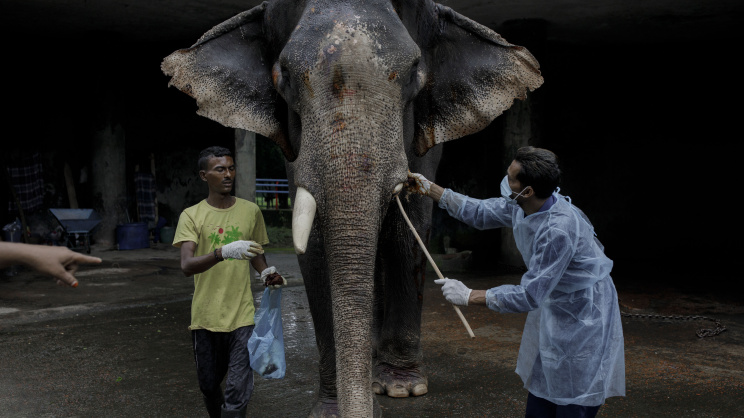
The gaps in oversight also raise questions about illegal wildlife trade. Abdul Malek, originally from Kamalganj and later living in Bagaichari, Rangamati, registered a large group of elephants on May 20, 2010. According to the 2016 IUCN report, of 17 registered elephants, three females were inherited, one male was purchased and the remaining 13 were registered as offspring. Authorities later alleged that he also kept 25 unregistered elephants for hauling logs and entertainment.
In May 2023, following a tip-off about alleged wildlife smuggling, the Rapid Action Battalion raided his flat in Chattogram and recovered 14 kilograms of elephant tusks—four whole tusks and 20 smaller pieces—along with a buckskin. The seized items were valued at Tk 1.37 crore on the black market. A wildlife smuggling case was filed. The case raises serious questions about the relationship between captive-elephant ownership, registration and the illegal trade in wildlife parts.
Hadani: Breaking an elephant into captivity
Captive elephants in Bangladesh are either caught from the wild or bred among other captives. Because enforcement of licensing and captive-elephant rules remains weak, it is difficult to know whether the trade in calves continues. Young elephants, often between three and six years old, can be subjected to a process known as “Hadani” or crush training while they are still deeply attached to their mothers.
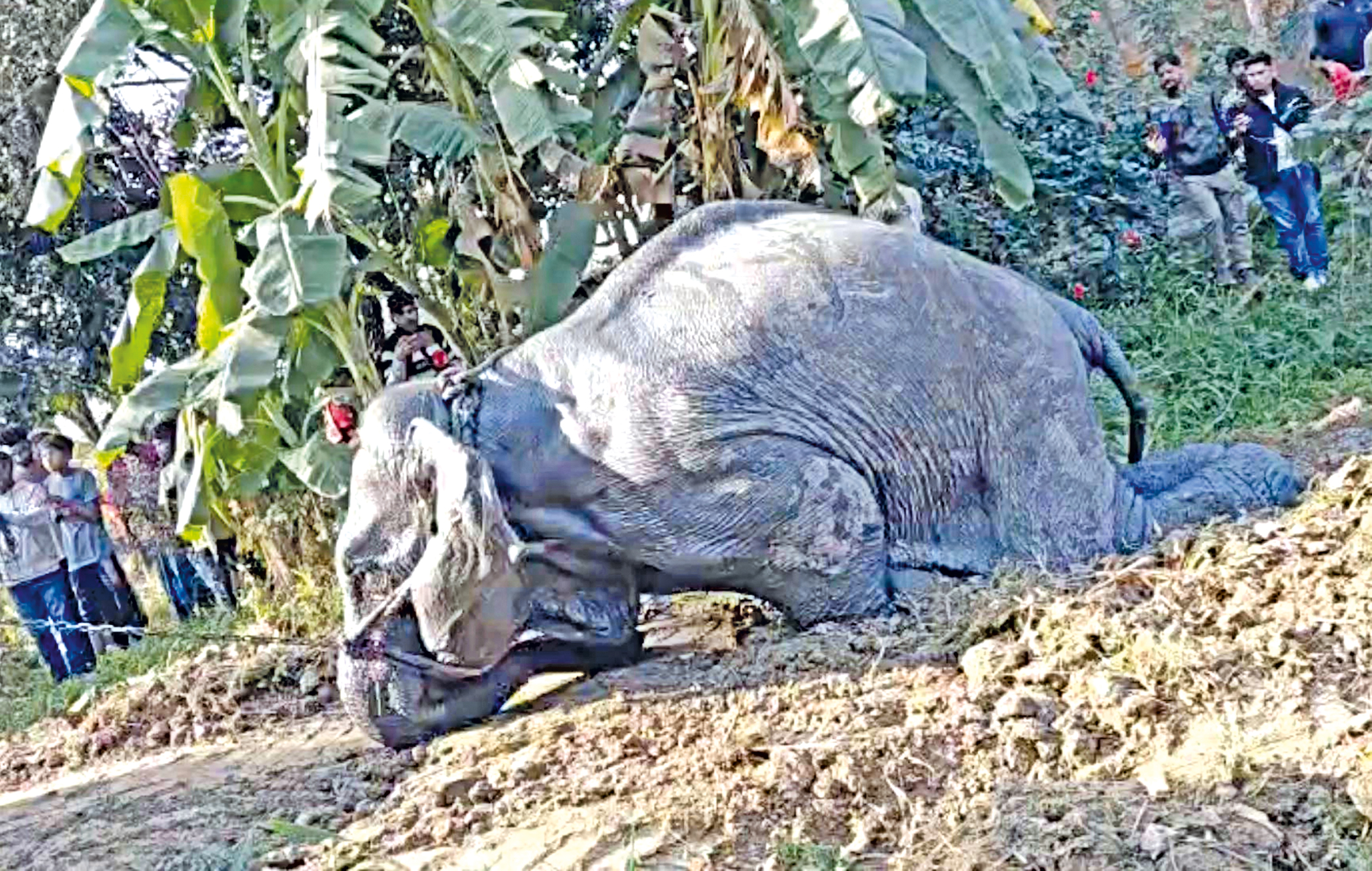
Hadani is designed to force young elephants to obey humans. The process begins by separating calves from their mothers. Their four legs are tied to separate poles so that they can barely move. They may remain restrained for prolonged periods with limited food and water. Chains, tight ropes and other restraints can cause wounds and infections, while bullhooks and other implements are used to inflict pain and create fear. The process is repeated until resistance is suppressed.
Elephants are highly social and sensitive animals. Early separation, isolation, restraint and repeated beating can cause lasting physical and psychological damage.
Elephants are highly social and sensitive animals. Early separation, isolation, restraint and repeated beating can cause lasting physical and psychological damage. Captive elephants subjected to harsh conditions may develop stereotypic behaviour, including repetitive swaying that is sometimes presented to audiences as an “elephant dance”. Early trauma and social separation can also disrupt normal learning, trust and social development, leaving animals more reactive and unstable over time.
In January 2026, a video of seven-year-old elephant calf Birbahadur being shackled and beaten during Hadani training in Moulvibazar’s Kulaura Upazila sparked nationwide outrage. After the Forest Department intervened, Birbahadur and his 42-year-old mother, Sundarmala, were released into the Kalapahar forest. But without proper rehabilitation, the move offered little real protection. Ten days later, Sundarmala was hit by a train in Sylhet’s Shibbari area and died two days later, leaving Birbahadur motherless. More recently, a video circulated on social media showing Birbahadur being used for extortion on the streets.
Following a Daily Star report in 2022 on the brutality of Hadani, a district court in Moulvibazar directed local authorities to stop the practice. In 2024, responding to a writ petition, a court suspended the issuing and renewal of licences to adopt elephants from the wild, effectively restricting the practice further. Birbahadur’s case suggests that court orders alone have not ended it. On June 17, 2026, Supreme Court lawyer Jyotirmoy Barua served a legal notice on relevant government officials alleging widespread abuse by licensed and unlicensed owners and demanding measures to protect and rehabilitate captive elephants.
When abused elephants become 'criminals'
Most privately held elephants are rented out for events and circuses, while some have been used for logging and street extortion. Elephants may also be handed to inexperienced or seasonal mahouts. An elephant accustomed to a long-term caregiver can become severely distressed when suddenly handled by someone unfamiliar. Attempts to control the animal through repeated beating can further increase fear and the risk of accidents.
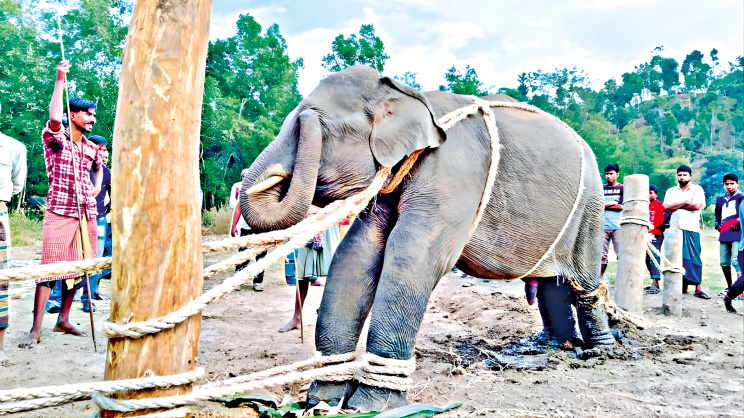
On September 24, 2024, an elephant reportedly subjected to severe beating by a new mahout while trying to reach food went out of control, resulting in the mahout’s death. The Forest Department took the elephant into custody and kept it chained at Gazipur Safari Park. In incidents like this, elephants are often labelled “killer elephants”, while the conditions preceding the incident receive far less attention.
A similar framing appeared after a July 28, 2026 easy-bike accident in Faridpur that killed a 10-month-old child. Reports said an elephant being used for extortion contributed to the accident. The elephant and mahouts were taken into custody, and some reports portrayed the animal itself as “criminal”. Ten days later, the elephant was returned to its owner, with little public explanation of why it had been used illegally for extortion in the first place.
The question is not whether a frightened or distressed elephant can be dangerous—it unquestionably can. The question is how an elephant came to be on a crowded road collecting money in the first place, and who was responsible for putting it there. Between 2017 and 2025, at least 148 resident, non-resident and captive elephants were killed in Bangladesh, according to Forest Department figures cited in media reports. Further deaths this year brought the reported total to 153. In the absence of a comprehensive public registry, the real toll may be higher.
What captivity does to an elephant
Asian elephants are highly intelligent, social megaherbivores. Females live in close-knit, matriarchal herds and cooperatively raise their young. Following an 18- to 22-month pregnancy, calves can be breastfed for up to five years while learning essential survival skills from their mothers, grandmothers and aunts. These social bonds make prolonged isolation particularly damaging.
An adult Asian elephant can eat up to 150 kilograms of vegetation a day and requires large quantities of water for drinking, bathing and cooling. In the wild, elephants roam, forage, dust-bathe and submerge themselves in water. Captivity therefore requires far more than simply providing food and a place to stand.
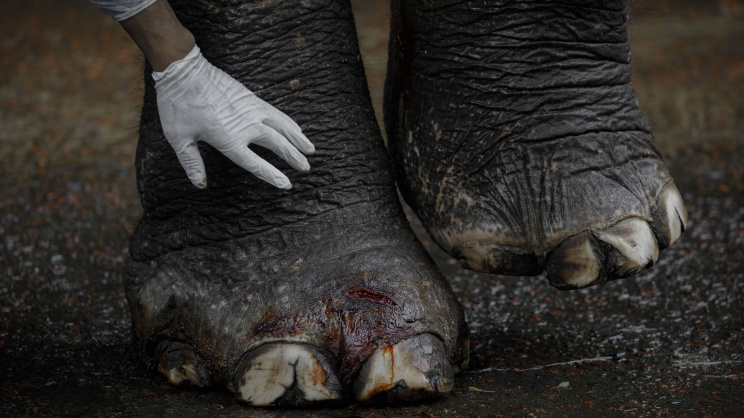
The reality for many captive elephants in Bangladesh is starkly different. They may be fed monotonous diets dominated by banana plants, leaving them vulnerable to nutritional deficiencies. Animals denied sufficient movement and natural terrain can develop serious foot problems. Standing for long periods on concrete or asphalt can contribute to infections and arthritis. Repeated use of bullhooks and chains can leave deep wounds that become infected. Captive elephants also require regular veterinary monitoring, deworming, mineral supplementation and specialist treatment—care that is often inadequate or unavailable.
An elephant’s spine is also not designed to carry heavy, concentrated loads on its back. Its strength evolved for natural behaviours such as pushing and pulling with the head and trunk, not carrying tourist platforms or heavy loads for prolonged periods. For captive animals already weakened by poor nutrition, injuries and inadequate exercise, such work compounds existing health problems.
Gazipur Safari Park: what happens after 'rescue'?
Removing an elephant from private exploitation does not automatically guarantee humane care. Conditions at Gazipur Safari Park illustrate the challenge facing government facilities that receive abused or confiscated animals.
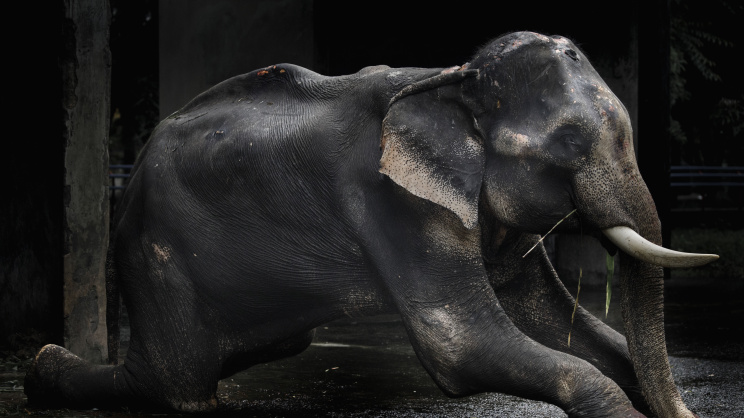
In 2023, an elephant named Sher Bahadur died after a confrontation with another elephant, Amir Bahadur, while the animals were kept in close proximity. In the enclosure for larger elephants, six animals have been kept in a shed of about 2,500 square feet. Since being rescued from captivity or abuse, several have remained chained there, and two reportedly stayed in the same place for years.
The roof leaked, while urine made the concrete floor slippery and algae-covered. Standing on hard, wet surfaces for long periods can severely damage elephants’ feet. A young bull elephant, Raju Bahadur, fractured both front legs after slipping on the floor. After almost three months of suffering, a medical board decided to euthanise him in August 2026.
The Forest Department and the two safari parks care for numerous animals, yet specialist capacity remains limited. Many elephants arriving in state custody have already endured years of abuse and malnutrition, making their treatment particularly complex. Gazipur Safari Park has around 10 elephants but has struggled to provide suitable accommodation for all of them.
There are, however, signs of change. Using emergency development funds and expert advice from Thailand and Bangladesh, a modern night shelter capable of accommodating four elephants has been built. The hope is that elephants can eventually be kept there without chains. The broader lesson is clear: “rescue” must mean more than transferring ownership. It must include rehabilitation, appropriate housing, veterinary care and long-term welfare.
Joyeeta and an alternative to Hadani
Elephant owners and mahouts have long defended Hadani on the grounds that there is no practical alternative. But positive reinforcement training offers a different approach. It rewards desired behaviour rather than obtaining compliance through punishment, pain or fear.
The objective is to create a chain-free environment in which captive elephants can be managed safely while retaining as much natural behaviour as possible. Because many captive elephants cannot simply be released into the wild, humane sanctuary models seek to give rescued animals space to form social groups, forage, move freely and interact with caregivers without constant coercion.
Since May 2025, Joyeeta, the three-year-old calf of Belkoli, has been receiving positive reinforcement training at Gazipur Safari Park under Rakibul Haque Amil, with cooperation from Thailand’s Save Elephant Foundation. Two mahouts, Moinu Mia and Kiran Bikash Chakma, who previously practised Hadani, also learned the new training process and accepted its effectiveness. Two Forest Department officials received training in modern elephant management at Save Elephant Foundation’s Elephant Nature Park in Chiang Mai, Thailand.
In April 2026, the Bangladesh Tree Protection Movement and People for Animal Welfare Foundation invited Saengduean Lek Chailert, founder of Save Elephant Foundation, to Bangladesh. During a visit to Gazipur Safari Park, elephant rights activists observed Pujarani, Joyeeta and Belkoli forming a small social group—an unusual sight among captive elephants in Bangladesh. Joyeeta responds to her regular trainers and caregivers through food rewards rather than physical punishment. Yet a proper safety barrier and fully natural, chain-free environment are still needed if this approach is to be sustained.
Badshah Bahadur and the problem with 'rescue'
The July 2026 rescue of Badshah Bahadur, an approximately 55-year-old bull elephant, illustrates another problem: highly publicised rescues can leave the underlying questions of abuse and accountability unanswered.
Badshah Bahadur had appeared in social-media videos showing signs of severe mistreatment. He had reportedly been rented out for extortion and suffered a serious fall through a concrete drain that left a hind leg badly injured. Despite this, he continued to be used in circuses. His head bore wounds associated with an iron hook, while his left tusk had been cut off at the root, leaving the pulp cavity exposed and infected.
Elephant rights activists travelled to Bogura in May 2026 seeking to assess his condition and provide medical support. On June 3, the Bangladesh Tree Protection Movement sent an urgent letter to the Forest Department and the Ministry of Environment, Forest and Climate Change describing his condition and calling for action. When Badshah Bahadur was eventually removed from his owner on July 4, the rescue became a major media event and he was transported to Bangladesh National Zoo in Mirpur.
A rescue that does not investigate the conditions that led to the abuse risks becoming a spectacle rather than an enforcement action.
But the intervention left important questions unresolved. Was the removal of the tusk properly investigated? How did the elephant suffer a broken leg? And who was responsible for the signs of abuse visible across his body? Was any action taken against his owner, Sabur? Why did an elephant whose owner reportedly could not afford his care continue to be used commercially? Why was he transferred to the National Zoo rather than to a specialised elephant facility? A rescue that does not investigate the conditions that led to the abuse risks becoming a spectacle rather than an enforcement action.
What Bangladesh should do now
Bangladesh needs to move from reacting to individual cases to building a coherent national system for captive-elephant welfare. The first requirement is to know where every captive elephant is. Mandatory registration, identification cards and microchips should record each animal’s name, age, sex, owner or custodian, location, health history and transfers. Regular inspections should make it harder to conceal unregistered animals or illegal trade.
Second, commercial exploitation and Hadani must end. Court orders restricting the brutal training method need effective enforcement. Elephants should no longer be used for street extortion, circus performances or forced entertainment. Mahouts, as the people closest to captive elephants, should receive training in positive reinforcement and modern elephant management so that coercive practices can be phased out rather than reproduced across generations.
Third, Bangladesh needs proper lifetime-care facilities for elephants that cannot return to the wild. Gazipur Safari Park, Dulahazara Safari Park and Bangladesh National Zoo should provide adequate space, natural flooring, water, night shelters, safety barriers and opportunities for compatible elephants to form social groups. Dedicated wildlife hospitals, emergency transport and veterinarians trained specifically in elephant medicine are also necessary. Private ethical sanctuaries meeting strict welfare standards could be encouraged under close regulation.
Fourth, accountability must become central to elephant conservation. The Wildlife Crime Control Unit and other responsible agencies need the authority and resources to investigate abuse, illegal possession, trafficking and ivory offences. Newly drafted captive-elephant management rules should be approved and enforced, while cases involving suspected cruelty or illegal wildlife products should not be abandoned once an elephant has been removed from an owner.
“Bir” (warrior), Rani (queen), “Bahadur” (brave) and “Badshah” (king) are among the names commonly given to captive elephants in Bangladesh. The names evoke strength, dignity and majesty. Their lives often bear little resemblance to them. For Bangladesh, the challenge is not only to rescue elephants once their abuse comes to light, but also to address the system that allows such mistreatment to persist. Only then can these animals begin to regain the dignity that years of captivity have denied them.
Amirul Rajiv and Naim Ul Hasan are elephant rights activists and coordinators at the Bangladesh Tree Protection Movement.
Send your articles for Slow Reads to slowreads@thedailystar.net. Check out our submission guidelines for details.

Can the new strategy achieve Bangladesh’s renewable energy targets?

André Wink speaks / What we get wrong about the Indo-Islamic world
Bengali Muslims and the ghosts of India's citizenship politics

Bangladesh’s solar growth: Will the incentives be enough?

The missing link in Bangladesh's innovation economy

Dhaka’s battery rickshaw problem is economic, not just about traffic

The staircase between our mothers and care
Is Bangladesh prepared for the next food shock?

From more power to better power: Rethinking Bangladesh’s energy future