


A roadmap to boost foreign direct investment in Bangladesh


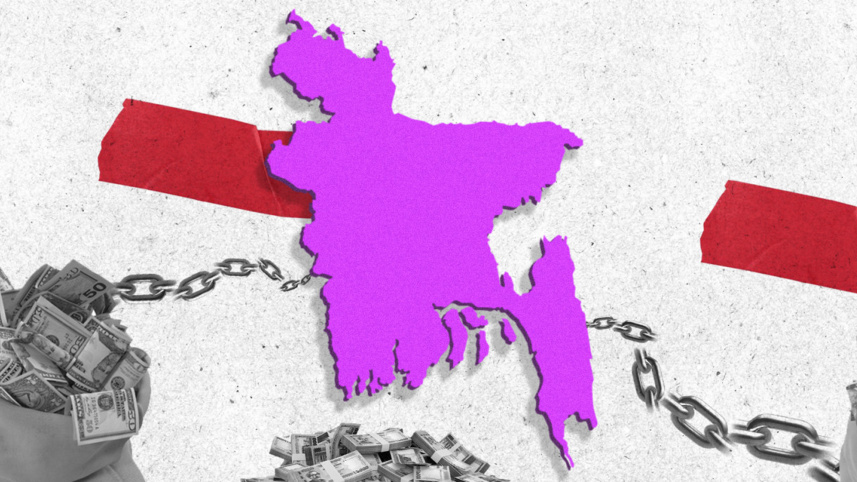
By improving the investment policy landscape, Bangladesh can attract more foreign direct investment (FDI) to catalyse the next wave of economic structural transformation, according to a key finding in the latest UN Trade and Development (UNCTAD) report on the implementation of the Investment Policy Review (IPR).
While Bangladesh aspires to become a world-class manufacturing hub, the country’s absolute and relative FDI performance continues to lag behind that of several regional peers, including Cambodia, Indonesia, and Vietnam, as well as averages for the Association of Southeast Asian Nations (ASEAN) and the Regional Comprehensive Economic Partnership (RCEP)—regional groups Bangladesh aims to join.

The UNCTAD report shows that several important milestones were reached since the last IPR in 2013. These include, inter alia, the establishment of the Bangladesh Investment Development Authority (BIDA), the creation and operationalisation of the Bangladesh Competition Commission, the strengthening of the Public-Private Partnership Authority, and, more recently, the establishment of a multidisciplinary negotiators’ pool who are contributing to the formulation of preferential trade and investment agreements. Moreover, key regulatory and institutional reforms were implemented, including in labour, taxation, and intellectual property, as well as efforts to digitalise and rationalise investment facilitation platforms. The National Drug Policy was also updated to relax restrictions for foreign pharmaceutical manufacturers. Together, these reforms have contributed to improvements in the investment environment, against the backdrop of Bangladesh’s transition from least developed country (LDC) status.
The IPR implementation report was prepared through a partnership between UNCTAD and UNDP under the Transformative Economic Policy Programme, with financial support from the United Kingdom’s Foreign, Commonwealth and Development Office. The report notes that despite improvements, much remains to be done, describing reforms as a “work in progress.” In particular, the legal and institutional framework for investment requires further strengthening, including the review and updating of the Foreign Private Investment (Promotion and Protection) Act of 1980. Institutional fragmentation in access to land, the need for more integrated infrastructure planning, and capacity constraints in key institutions such as the Bangladesh Competition Commission are some of the major challenges.
FDI inflows to Bangladesh peaked at over $1.8 billion in 2019, before declining in subsequent years amid macroeconomic pressures, foreign exchange constraints, global crises, and domestic political developments. By 2024, inflows were approximately one‑third lower than 2019 levels. Preliminary data for the first three quarters of 2025, however, point to a rebound, supported mainly by reinvested earnings and intracompany loans. Despite recent volatility in flows, the inward FDI stock has remained broadly stable at around $18 billion since 2021, reflecting the continued presence of foreign investors. Textile and garment, finance, and the power sector account for the largest shares of FDI stock, while investment is gradually diversifying towards sectors such as pharmaceuticals, telecommunications, and information and communication technologies, with the digital economy emerging as a promising frontier.
The current challenges faced by Bangladesh amid rapid changes in the global political and economic landscape call for greater engagement by both the government and the private sector to better leverage FDI as a source of development finance. The importance of FDI in this regard was underlined at the Fourth Global Conference on Financing for Development (FfD4) held in Spain’s Seville last year. Cuts in official development assistance by traditional donors, a generalised slowdown in global FDI flows, and the gradual loss of preferential market access following LDC graduation underline the urgency for reforms to ensure that Bangladesh remains competitive in attracting higher levels of quality FDI aligned with strategic development objectives.
Looking ahead, the report emphasises the need for developing a national investment policy and a consolidated investment law to reinforce investor confidence and policy coherence. As Bangladesh approaches LDC graduation, proactive engagement with key investment and trading partners will be required to secure the best possible terms under ongoing negotiations of preferential trade and investment agreements. Priority sectors that can enhance competitiveness and diversification should be further nurtured, including pharmaceuticals and the digital economy. Continued reforms are also needed to address persistent bottlenecks to investment, notably in relation to access to land and infrastructure. UNCTAD and UNDP remain committed to continuing the engagement with key stakeholders in Bangladesh to support the implementation of these important reforms and to ensure that FDI contributes effectively to inclusive growth, decent jobs, and sustainable development.
Owais Parray is country economic advisor at United Nations Development Programme (UNDP), Bangladesh.
Kiyoshi Adachi is legal officer at United Nations Conference on Trade and Development (UNCTAD), Bangladesh.
Views expressed in this article are the author's own.
Follow The Daily Star Opinion on Facebook for the latest opinions, commentaries, and analyses by experts and professionals. To contribute your article or letter to The Daily Star Opinion, see our guidelines for submission.
 For all latest news, follow The Daily Star's Google News channel.
Comments