


Remembering Raghu Rai and the light he left behind

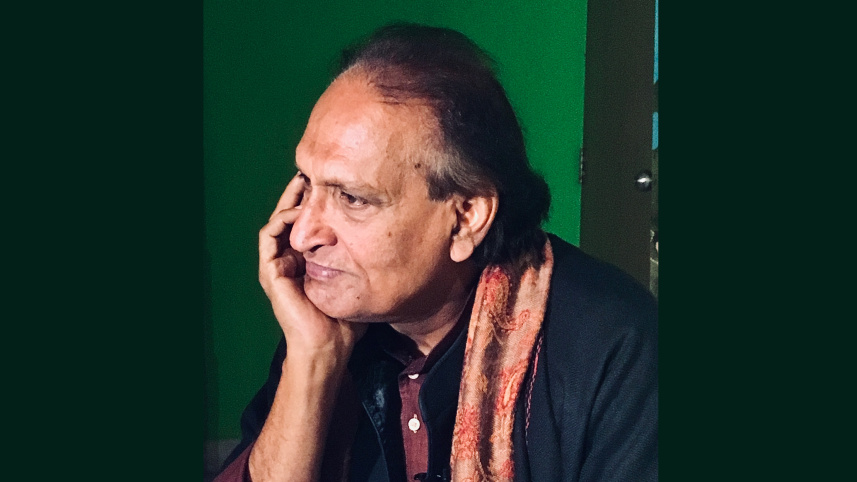
February, 2016. India was in turmoil. Across universities, protests erupted over the tragic suicide of Dalit student Rohith Vemula. The streets were filled with voices demanding dignity and justice. At India Gate in Delhi, Rohith’s mother sat in a protest, surrounded by students and heavily guarded by police. We were in Delhi at that time. We arrived at the protest site with Raghu Rai, cameras hung from our shoulders. The air was tense and charged. Raghu Rai, with his tall stature, draped in a robe of sort, stepped out of the car. His presence alone shifted something in the air. The police parted slightly, making way.
We had barely enough space to stand. Journalists pressed in from all sides. Ahead of us stood the renowned filmmaker Anand Patwardhan, camera in hand. “Anand, can we get a little space?” Raghu asked. A narrow opening appeared. He stepped forward. We were not there for over a minute. He took a few frames. Then he turned to us and said quietly, “Let’s go. It’s not safe to stay.” We walked a short distance and stopped in front of a small ice cream shop. There, he showed us the images—me, Naim, and Prem Kumar. It was astonishing. In that chaos and urgency, he had captured light, form, and emotion with a precision that felt almost otherworldly. A fleeting moment, transformed into something timeless. Raghu Rai was, in every sense of the word, a magician of light and composition.

For over 50 years, he shaped a visual language that defined the Indian subcontinent. From war to ritual and suffering to beauty, his lens revealed the poetry within the everyday life. Through him, the lives of millions became part of a shared visual history.
He was born on December 18, 1942, in Jhang, Punjab, now in Pakistan. The youngest in his family, he was first guided toward engineering, even working briefly as a civil engineer in Delhi. But the calling of photography came through his elder brother, S. Paul. In 1962, he began learning, quietly and instinctively. By 1965, he joined The Statesman as a chief photographer, where his signature style of bold, intimate, and high-contrast images began to emerge.
Bangladesh’s Liberation War in 1971 became a turning point in this photographic journey. Through his images of refugees, of war and surrender, he captured history with an honesty that resonated across the world. Those photographs brought him a much-deserved international recognition. He was awarded India’s Padma Shri in 1972. Decades later, in 2012, Bangladesh honoured him with the Friends of Liberation War Award.
In 1971, the legendary Henri Cartier-Bresson, after seeing his work, invited him to join Magnum Photos,an international photographic cooperative. By 1977, Raghu Rai became a full member. From there, his journey expanded to India Today, global publications and a number of books. His photograph of a buried child from the Bhopal gas tragedy became one of the most haunting symbols of industrial disaster in modern history. He captured not just events but essence: of people, cities, rituals, and silences. He published more than 50 books that carry his vision.
I first interviewed him in 2004. We spoke about the intellectual void in Bangladesh left by the violence during the Liberation War. I was drawing parallels between this and state-sponsored violence on the Naxalite movement in India. Our conversation grew intense. He did not easily accept simplifications. He thought there was violence from both sides and considered the Naxalites terrorists and expressed that their movement could have been less violent. Yet, in the end, we agreed that both incidents left behind a deep emptiness that echoed across generations, especially in the 70s.
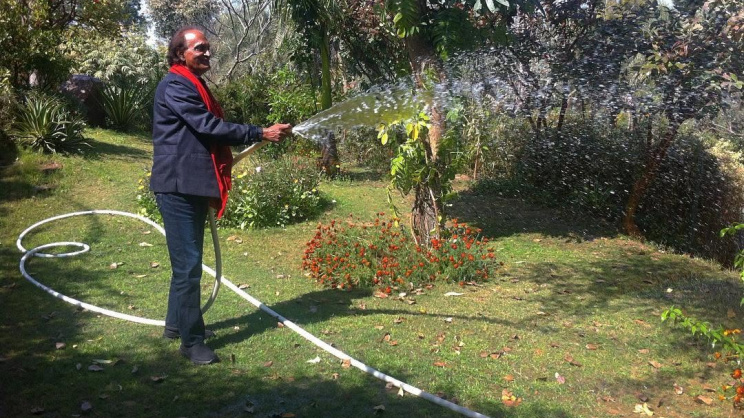
In 2016, I visited him again at his photography school in Gurgaon. He had arranged fish for us. Smiling, he said, “I know Bengalis love fish and conversation.” When we arrived, he was watering plants and speaking softly to a dying tree. He seemed genuinely distressed, telling the gardener it needed care, and that it could still be saved. His connection to life extended beyond humans. He had gathered rare plants from across India, nurturing them with his own hands. He even published several books on trees.
I once asked him how he saw Bangladesh after the Liberation War. He paused, then said, “Look, when it comes to wrongdoing, India, Pakistan, Bangladesh—we are all the same. So many years after independence, we are still careless towards nature, towards life. Democracy has too often become a tool for corruption. I cannot give you a satisfying answer.”
Whenever he came to Dhaka, he would rise early and go out to photograph. He preferred the outskirts, the quieter edges of the city, where he could mingle with ordinary people. As he had grown older, I would instinctively reach out to support him on uneven streets and roads. He, however, would burst out laughing. Gesturing me to watch, he would leap across potholes with ease and say, “I can still climb trees…can you keep up with me?”
He was deeply devoted to his guru and held an unshakable faith in the creative and spiritual power within human beings. One of his most famous sayings, long displayed on Magnum’s website, was: “The picture comes from God.”
Like his world-renowned photographs, he too seemed to fade into an eternal mystery. For many of us, it was his images that gave us the courage to step into photography—both as a discipline and as a profession. Through his work, he left behind a new visual language, one that will continue to shape how we see life, aesthetics, and spirituality of this region for generations to come.
What remains are his images, a language of light, through which we continue to see ourselves.
The eyes may have closed, but what it has seen and shown, will be luminous and live within us. May your onward path be lit with grace and golden light, maestro!
Amirul Rajiv is an art historian, curator, and co-founder of Duniyadari Archive.
Views expressed in this article are the author's own.
Follow The Daily Star Opinion on Facebook for the latest opinions, commentaries, and analyses by experts and professionals. To contribute your article or letter to The Daily Star Opinion, see our guidelines for submission.
 For all latest news, follow The Daily Star's Google News channel.
Comments