


Bangladesh’s food insecurity warning cannot be ignored

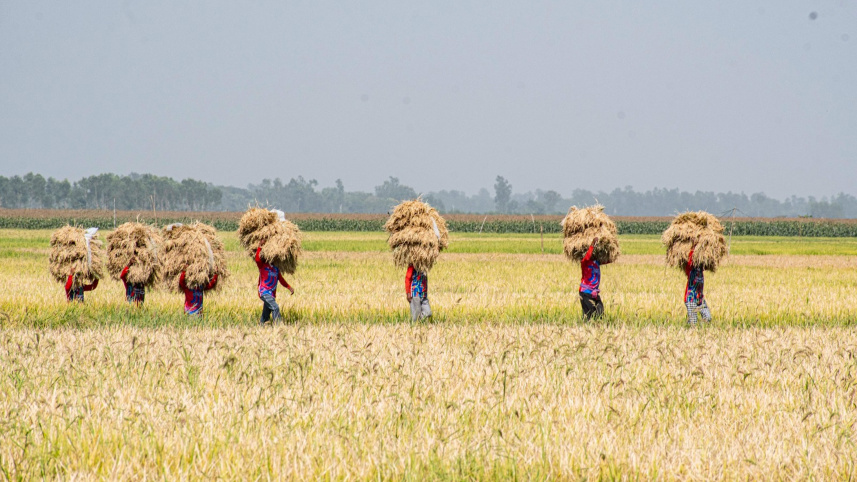
The 2026 Global Report on Food Crises (GRFC) carries an uncomfortable message for Bangladesh. The country is not facing famine, nor is it experiencing a catastrophic food crisis per se. Yet it appears on a list no country would wish to be on: the top 10 countries and territories with the largest number of people who faced high levels of acute food insecurity in 2025. According to the report, around 1.6 crore people in Bangladesh faced crisis-level food insecurity or worse during the 2025 peak, including about 1.56 crore in “Crisis” and four lakh in “Emergency” categories. These represented 17 percent of the analysed population, although the report also notes that the analysed population covered 59 percent of the total population, not the whole country.
The report also says that Bangladesh saw an improvement compared with 2024, with 76 lakh fewer people facing high levels of acute food insecurity. The improvement was linked to the absence of major disasters in early 2025, a decline in food inflation, and increased remittance inflow. But that is exactly why the finding is so troubling. Even in a relatively better year, with fewer major disaster shocks and some relief from food inflation, Bangladesh still had one of the world’s largest absolute numbers of people in acute food insecurity.

This indicates that Bangladesh’s food insecurity problem is not only about floods, cyclones, droughts, or sudden price spikes. These shocks matter, of course, as they can push vulnerable households into immediate distress. But the persistence of food insecurity points to a more structural problem: low and unstable incomes, weak purchasing power, regional deprivation, climate exposure, inadequate nutrition outcomes, and gaps in social protection. For many households, the crisis is not that food is unavailable in the market, but that food is unaffordable, diets are poor, and coping mechanisms are already exhausted.
Food inflation in Bangladesh in recent years has not been a temporary inconvenience for the poor. It has changed household behaviour. Families have reduced protein intake, shifted to cheaper staples, postponed health spending, borrowed from informal sources, and cut back on children’s needs. When rice, edible oil, lentils, eggs, fish, and vegetables remain expensive for long periods, the damage happens on a nutritional level. Children suffer silently. Women often eat last and eat less. Elderly people in poor households become more dependent on irregular support.
Remittances helped in 2025. That is encouraging, but it should not become a reason for complacency. Remittance inflows are unevenly distributed across regions and households. They support many families, but they cannot substitute for a national food security strategy. A household without a migrant worker, a landless labourer facing seasonal joblessness, an urban informal worker paying high rent, or a woman-headed household with limited income does not automatically benefit from the remittance cushion. The food security challenge is, therefore, also a question of inequality.
The Rohingya crisis adds another dimension. The GRFC notes that acute food insecurity worsened among forcibly displaced Myanmar nationals in two Bangladeshi districts amid the recent influx of Rohingya refugees, floods, and reduced humanitarian assistance. This is not only a humanitarian issue. It is also a local development issue for Cox’s Bazar and surrounding host communities. When aid declines, pressure rises on already fragile local labour markets, forests, public services, water resources, and community relations. Bangladesh has carried this burden for years. The international community must not treat it as a forgotten crisis.
The first policy implication is clear: food security policy must go beyond food availability. Bangladesh has done reasonably well in increasing rice production and maintaining staple supplies. But food security is also about access, nutrition, stability, and dignity. The policy lens must shift from “Is there enough rice?” to “Can poor households afford a nutritious diet throughout the year?” This requires regular monitoring of food baskets, not only headline inflation.
Second, social protection must be made more responsive to shocks. Bangladesh has several programmes, but too many are fragmented, poorly targeted, and administratively slow. Food-insecure households need timely cash or food support when prices rise, floods hit, or seasonal employment collapses. Digital databases can help, but only if they are updated, inclusive, and protected from political capture. Urban food insecurity also needs more attention, since low-income urban households have to buy almost everything they consume.
Third, market governance has to improve. Price volatility is often worsened by weak competition, information gaps, stock mismanagement, and sudden import decisions. A smarter food market policy would combine better public stock management, timely imports when needed, transparent market intelligence, and stronger action against collusive behaviour. Farmers must receive fair prices, but consumers cannot be left hostage to avoidable market manipulation.
Fourth, nutrition must sit at the centre of food policy. The aim should not be calorie sufficiency alone. School feeding, maternal nutrition, child nutrition services, fortified foods, safe water, sanitation, and primary healthcare all matter. Food insecurity and malnutrition are linked, but they are not identical. A family may eat every day and still be nutritionally deprived.
Finally, climate resilience has to be treated as a food security policy. Flood control, salinity management, climate-resilient crops, crop insurance, storage facilities, rural roads, and early warning systems are not separate development projects. They are part of the architecture of national food security.
The GRFC 2026 should, therefore, be read as a warning, not as a verdict of failure. Bangladesh has made progress, and 2025 showed some improvement. But 1.6 crore people facing high levels of acute food insecurity is far too large a number for a country aspiring to graduate from LDC status and move towards upper-middle-income ambitions. The real test is not whether Bangladesh can produce enough food in a normal year. It is whether every household can eat adequately, nutritiously, and consistently, even when prices rise, floods come, jobs disappear, or aid declines. For that test, the country still has much work to do.
Dr Selim Raihan is professor of economics at Dhaka University and executive director at the South Asian Network on Economic Modeling (Sanem). He can be reached at selim.raihan@gmail.com.
Views expressed in this article are the author's own.
Follow The Daily Star Opinion on Facebook for the latest opinions, commentaries, and analyses by experts and professionals. To contribute your article or letter to The Daily Star Opinion, see our guidelines for submission.
 For all latest news, follow The Daily Star's Google News channel.
Comments