


Rid Geneva Camp of drug trade
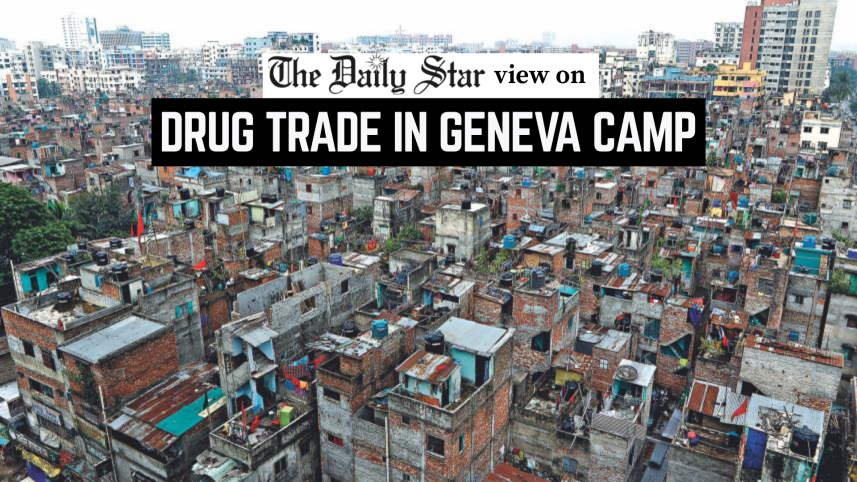
That illegal drug trade continues largely unabated at Geneva Camp in Dhaka’s Mohammadpur area despite repeated law enforcement crackdowns is deeply concerning. While it was largely confined to the camp’s narrow alleys before, now it has spilled onto the surrounding streets, becoming more organised and visible. Reportedly, around 500 people inside the camp are directly involved in the illicit business, and narcotics are now openly sold near the camp’s rear gate. In addition, clashes between rival groups over control of lucrative trading spots have intensified, leaving at least 10 people dead over the past 19 months. This expansion of the trade raises serious questions about the effectiveness of the ongoing law enforcement efforts to stop it.
Geneva Camp’s association with illegal drug dealing is not new. It has survived successive governments and countless special drives. About a decade ago, two kingpins reportedly dominated the trade. After they died, smaller groups took over; they now operate under two major rival gangs. After the Awami League government’s fall in 2024, violent clashes among these armed groups have become frequent as they continue to fight for dominance. The widespread use of firearms has further alarmed the residents within the camp as well as in neighbouring areas. Although police have recently conducted several raids and arrested dozens of suspects, there has been no visible change.

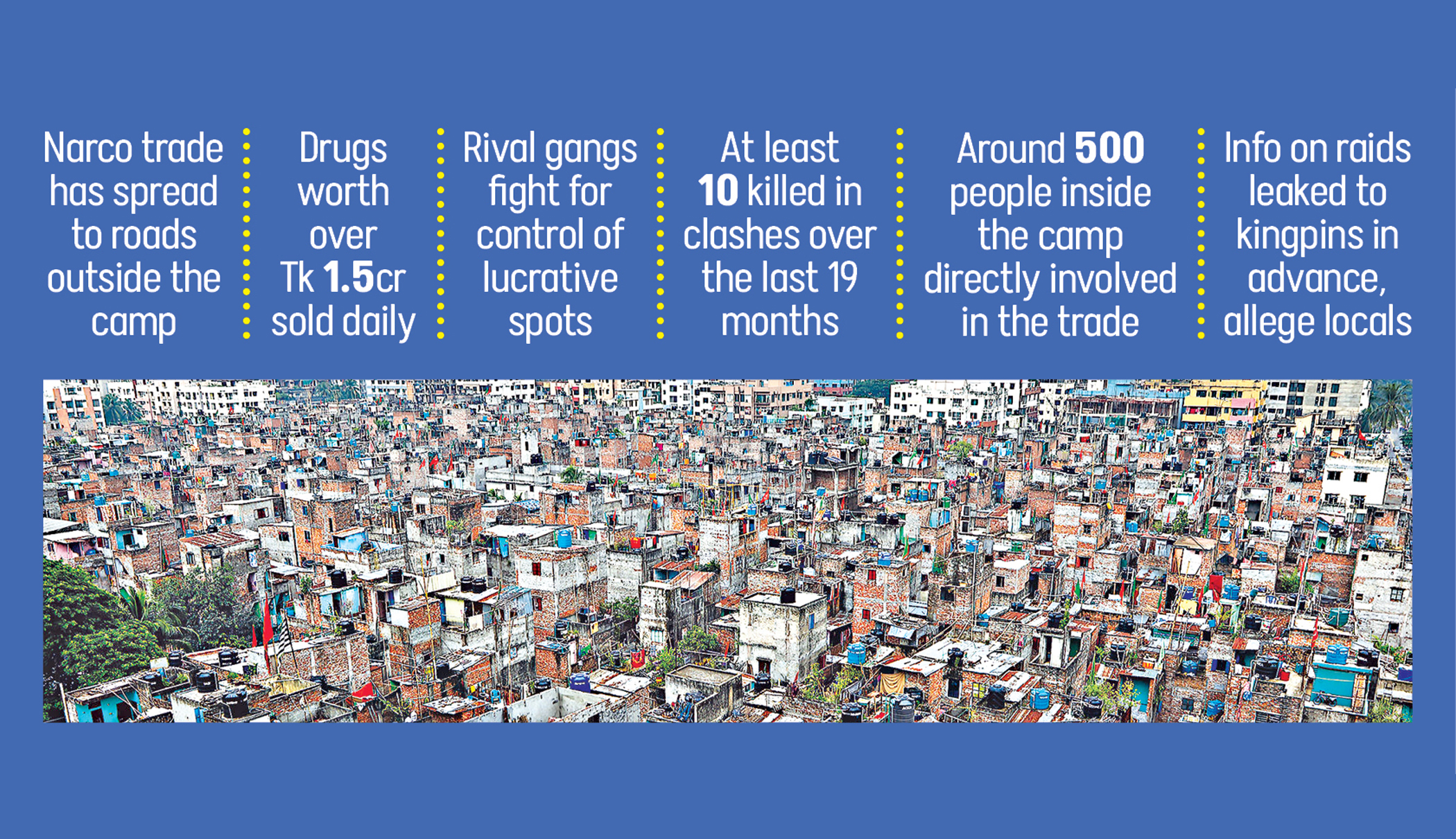
Illegal substances worth more than Tk 1.5 crore are reportedly sold at the camp daily. Many of those involved in the trade are themselves trapped in the cycle of addiction, debt, and crime, becoming easy recruits for a system that offers quick money with little fear of consequences. While law enforcers appear to be targeting the carriers, street-level sellers, and users, the ringleaders remain beyond reach. As long as they operate with impunity, the network will continue to function as usual.
This state of affairs is unacceptable. Clearly, sporadic drives and arrests are not enough to dismantle these criminal networks. What is needed is a properly planned, intelligence-led operation focused on identifying and apprehending the masterminds who control the flow of drugs and finances in the camp. This must be backed by stronger internal oversight and better coordination among relevant agencies to close the existing gaps. The stories of addiction and exploitation emerging from the camp, on the other hand, highlight the urgent need for rehabilitation, social support, and viable economic alternatives for vulnerable residents. Lastly, people living in and around the Geneva Camp deserve security and relief from the grip of organised crimes. Without urgent action against those at the top, the cycle of raids, arrests, and resurgence will continue, at the cost of public safety.
 For all latest news, follow The Daily Star's Google News channel.
Comments