Khulna at 144: A city of fading glory and enduring grace

Cradled by the gentle embrace of the Bhairab and Rupsha rivers, Khulna—once celebrated as Bangladesh's third-largest city and a thriving industrial hub—has quietly drifted away from much of its former glory. The proud title of "industrial city" has long faded, much like the network of over fifty canals that once crisscrossed its landscape. Today, most of those canals lie dead or dying, choked by neglect and unplanned urbanisation. The dense green that once defined the city has thinned, and civic amenities remain inadequate.
And yet, in this age of what many call "self-destructive development," Khulna retains something rare, an enduring liveability. Here, one can still breathe deeply. Fish remain abundant in its waters. And above all, the city holds on to an intangible warmth—a sense of affection—that refuses to disappear.
Today, April 25, marks the 144th founding anniversary of this historic city in Bangladesh's southwest. On this day in 1882, a notification was issued creating Khulna district, comprising Khulna and Bagerhat from Jashore district, along with the Satkhira subdivision from the then 24 Parganas.
Long before it became a city, much of Khulna was part of the Sundarbans. Over time, forests were cleared, and settlements emerged. A key figure in this transformation was the revered Sufi saint Hazrat Khan Jahan Ali, whose influence helped expand habitation in the region. During his time, the area, particularly present-day Bagerhat and its surroundings, was known as Khalifatabad.
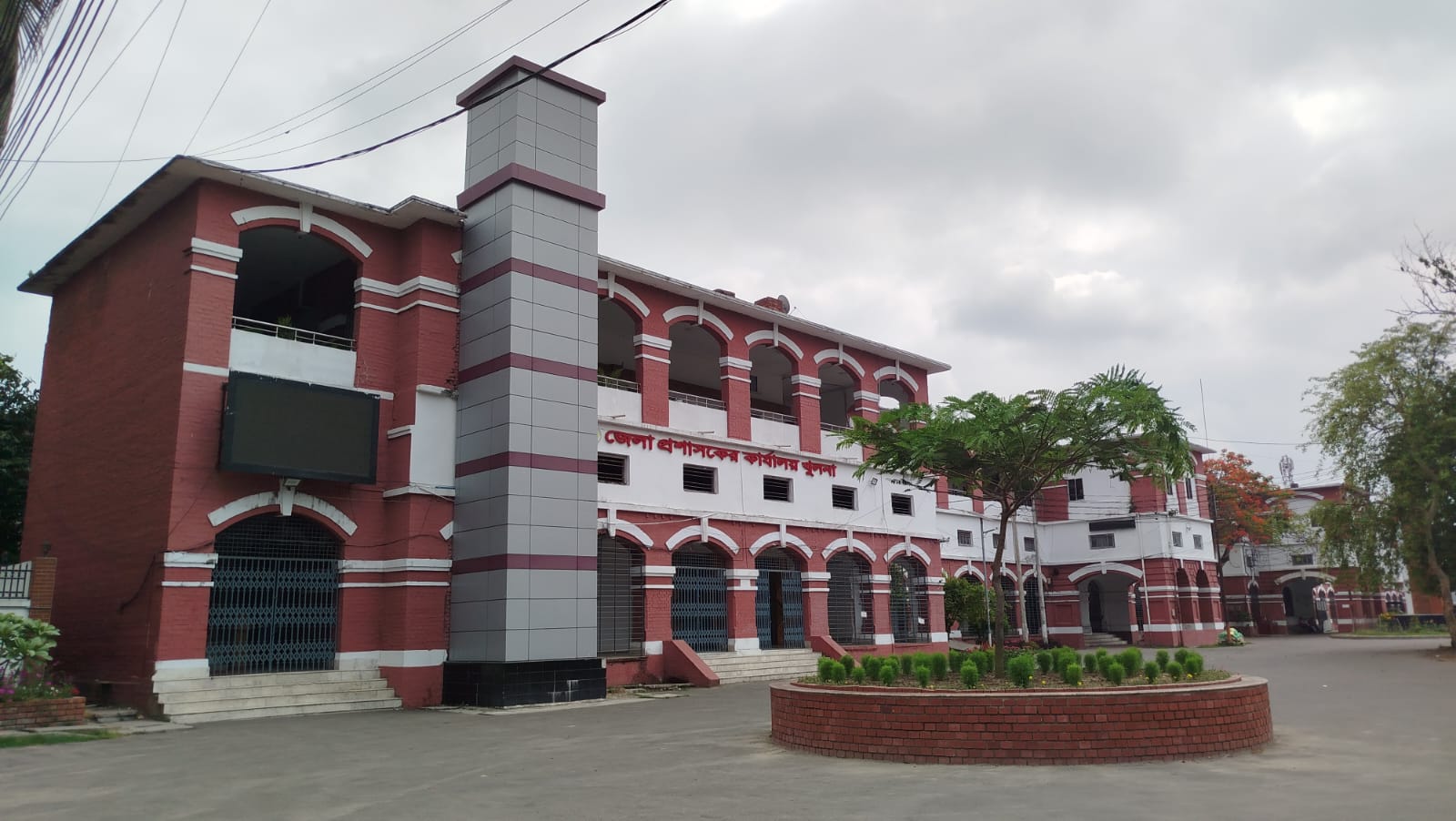
Khulna began gaining administrative importance during British rule. Local journalist and researcher Gouranga Nandi notes that the area was once under Jashore district. In 1842, Khulna became the first subdivision of Jashore—the first of its kind in Bengal. Its first magistrate was none other than literary giant Bankim Chandra Chattopadhyay, who later served as Sub-Divisional Officer here. He established his office and residence on the eastern bank of the Bhairab River—now the official residence of the Deputy Commissioner.
Bagerhat subdivision was formed in 1863, while Satkhira had already been established in 1861 under the 24 Parganas of British India.
Although the formal notification for Khulna district was issued on April 25, 1882, administrative activities began on June 1, with Khulna town designated as the district headquarters. At that time, the district extended even beyond the Madhumati River to the east. It had a population of just 43,500 and covered an area of 4,630 square miles. The first district magistrate was British official WM Clay.
Two years later, in 1884, Khulna Municipality was established. A century on, in 1984, it was upgraded to a City Corporation. Reverend Gagan Chandra Dutta served as its first chairman.
In 1913, the district boundaries were redrawn, with the Madhumati River serving as a natural divider.
The origin of the name "Khulna" remains a subject of debate. Some believe it comes from "Khulneshwari," a temple named after Khulna, the second wife of the legendary merchant Dhanapati. Others trace it to a mouza called "Kismat Khulna." Yet another theory points to a British record from 1766 mentioning "Culnea," which over time evolved into "Khulna." Even colonial maps bore the name "Jessore-Culna."
Once a modest linear town along the Bhairab and Rupsha rivers, Khulna has since expanded significantly. Areas like Khalishpur, Daulatpur, and Maheshwarpasha were once bustling industrial zones, home to jute mills, paper mills, and hardboard factories. These industries provided livelihoods to thousands and helped shape Khulna as a planned industrial city.
The Khulna Newsprint Mill, once among South Asia's largest, was built on timber sourced from the Sundarbans. Place names such as Bagmara, Harintana, Labonchara, and Banargati still echo the region's forested past.
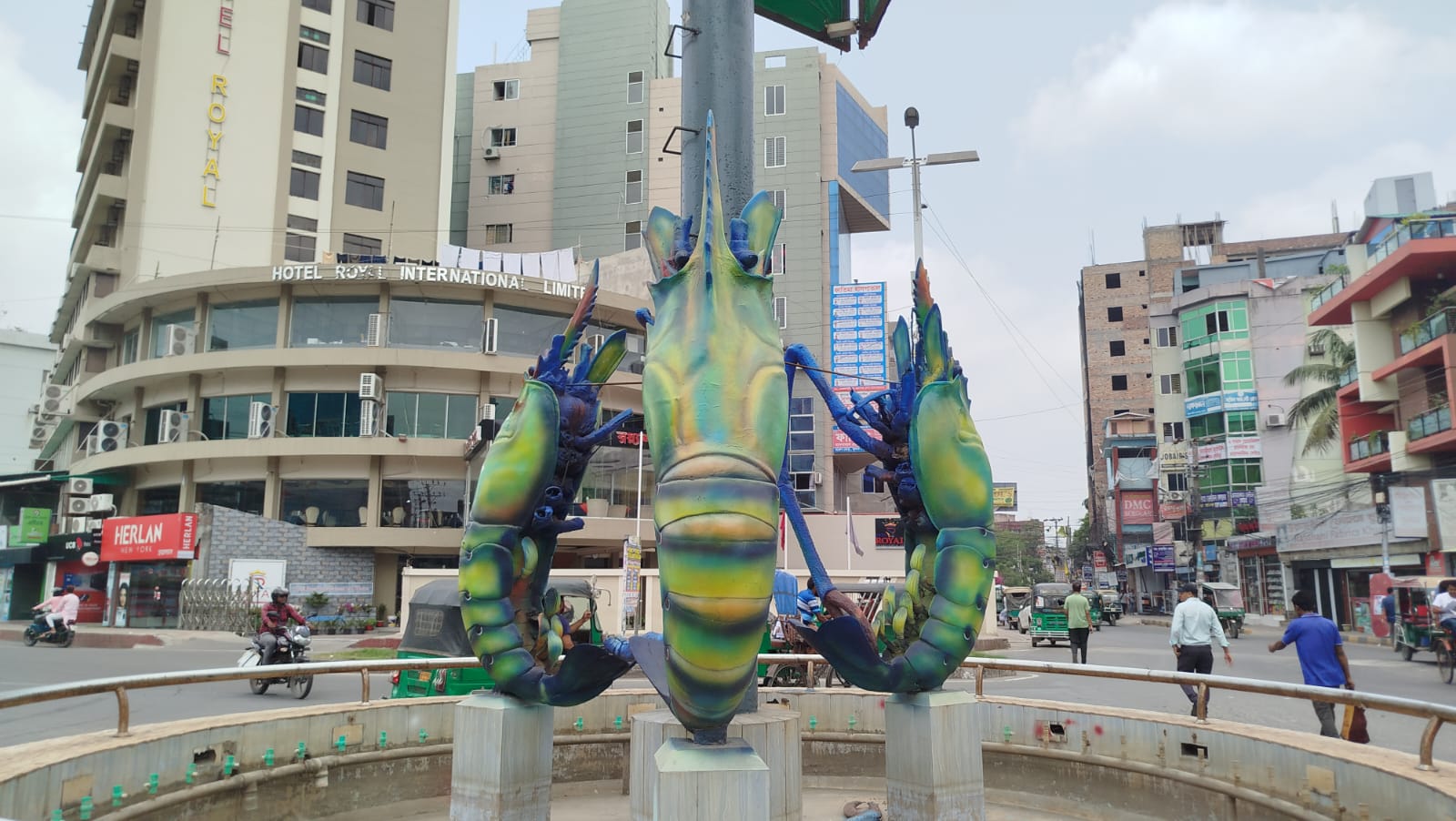
Moylapota intersection remains one of the city's oldest and busiest points, now surrounded by high-rise buildings. Over time, Khulna has stretched far beyond its original limits—past Rupsha, Gollamari, and Sher-e-Bangla Road.
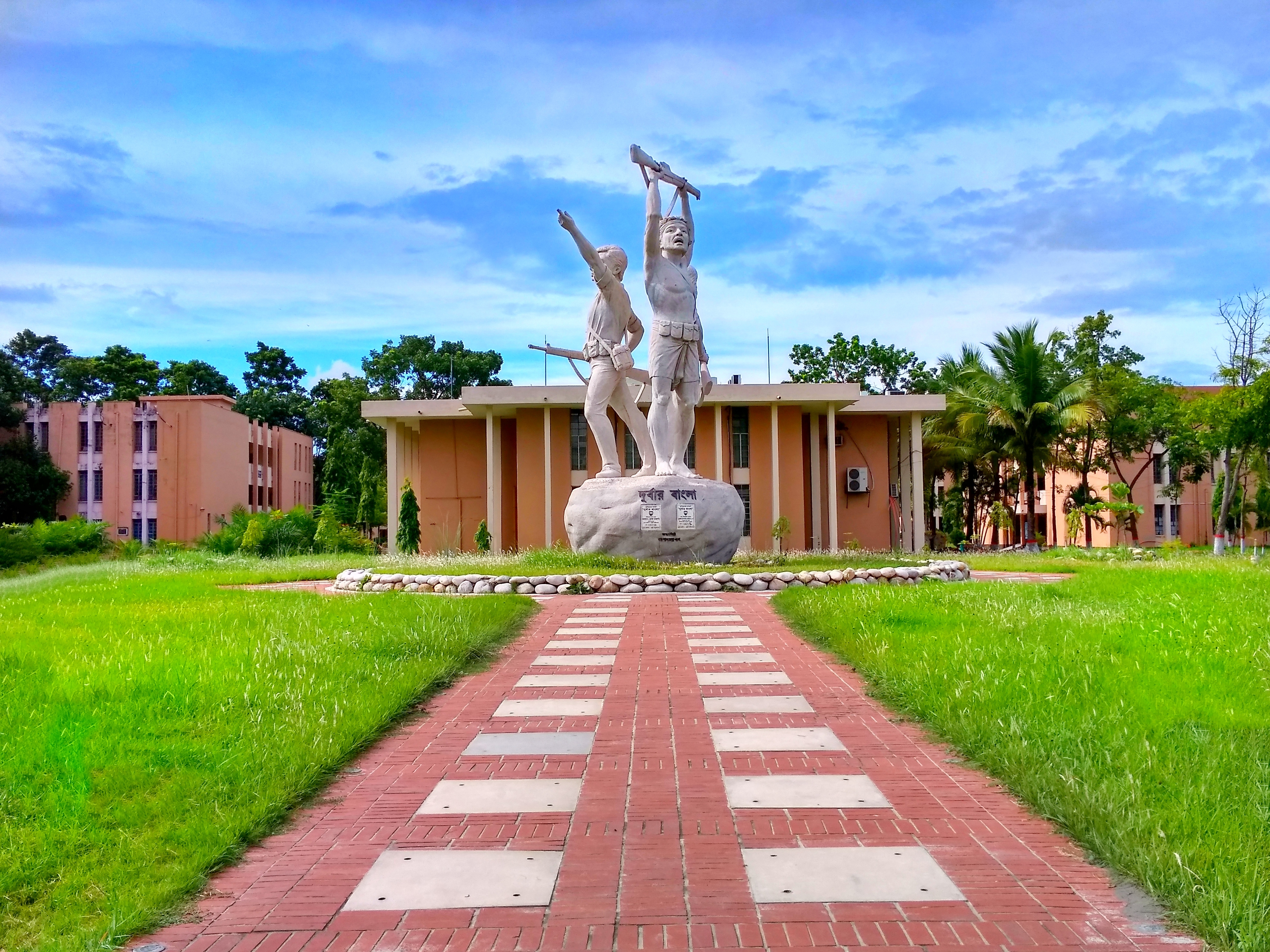
The scars of 1971 remain deeply etched in Khulna's history. During the Liberation War, the city was under Pakistani occupation. Places like Gollamari, Circuit House, and the Radio Station became centres of torture and execution. Victims were often taken along the road from Moylapota to the Radio Station, never to return. Today, the Gollamari mass grave and remnants of those sites stand as solemn memorials, with the area now part of Khulna University.
During World War II, a jetty was constructed along the Bhairab River, around which the four-, five-, and six-number ghats developed. These river ports played a vital role in shaping Khulna's identity as a commercial and industrial hub. Today, they also serve as popular recreational spots.
Yet, in post-independence Bangladesh, as development became increasingly Dhaka-centric, Khulna lagged behind. Despite its strategic and historical importance, the region remained outside the mainstream of national investment for decades.
In the 1960s, during Ayub Khan's so-called "Decade of Development," land was acquired for the Khulna-Mongla railway line—but the project stalled for years. Last year, it finally became operational, with just one train running daily. By then, however, much of Khulna's industrial potential had already diminished.
Jute, once the lifeblood of Khulna, gradually lost its global demand. Government-owned mills, Khalishpur, Daulatpur, Platinum Jute Mill, shut down one after another amid financial constraints and privatisation policies. The closure of the newsprint mill, hardboard factory, and Dadabhai Match Factory further deepened the crisis. Investment came but rarely stayed. Workers' voices faded, replaced by quiet despair.
Still, Khulna is not a city that surrenders easily.
In recent years, it has begun to rediscover its potential. The housing sector has seen significant investment, with multi-storey buildings reshaping the skyline. Infrastructure development is slowly gaining pace. The Padma Bridge has strengthened connectivity between the southwest and Dhaka, opening new economic possibilities.
The government has also started focusing on long-term plans for the region, with major initiatives in energy, transport, and transnational trade routes centred around Khulna.
The rivers that once carried silent dreams now ripple with renewed promise.
The canal once excavated by Rupchand Saha to connect the Bhairab and Kazibacha rivers has evolved into the Rupsha River—now bridged, linking history with progress.
If this momentum continues—if political will aligns with effective governance—Khulna may yet rise again. Not just as a national centre, but as one of South Asia's significant urban hubs.
For now, at 144, Khulna stands as a city of contrasts—of loss and resilience, decay and hope. A city that may have lost much, but still holds on to its soul.
Dipankar Roy is a journalist at The Daily Star
Send your articles for Slow Reads to slowreads@thedailystar.net. Check out our submission guidelines for details.

157th Birth Anniversary of Mahatma Gandhi / Gandhi’s return to Noakhali
Why does Tagore still trouble Bangladesh’s idea of ‘us’?

Can Bangladesh make better use of its zakat money?
Three revolutions that reshaped the world
Paradise lost and found: Rediscovering early modern Bengal

Unbound Mother: The making and remaking of Kaali in Bengal

Do great leaders make history, or does history make them?
Poison and cremation: A forensic history of colonial Bengal