


Remove ageing buses from roads
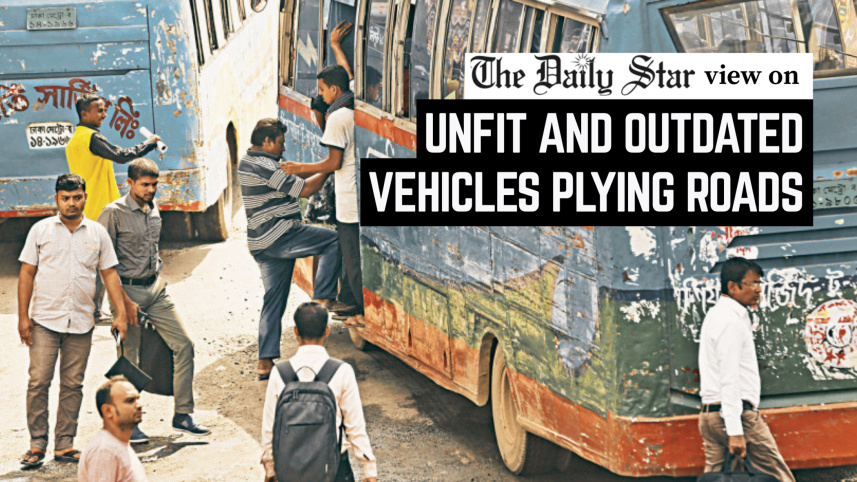
It is deeply frustrating that despite changes in political leadership over the past one and a half decades, Dhaka’s ageing and unfit buses continue to operate on the roads with little interruption. According to the Bangladesh Road Transport Authority (BRTA), around 30 percent of the buses and minibuses currently operating in the capital are more than 20 years old. This far exceeds their economic and operational lifespan. These vehicles are often modified with additional seats to maximise revenue, even as their mechanical condition deteriorates, raising serious concerns about passenger safety, comfort and environmental impact. They are also a frequent cause of road crashes and are highly fuel-inefficient.
Since 2010, successive governments have announced initiatives to remove unfit and outdated vehicles from Dhaka’s roads. However, these efforts have repeatedly stalled due to weak enforcement, lack of political will, and consistent resistance from transport owners’ and workers’ associations. Following the political transition after August 2024, leadership in transport associations shifted from Awami League-affiliated figures to BNP-linked leaders. Sadly, this change in control has not translated into any meaningful improvement in the transport sector. After taking office, the interim government set a six-month deadline to remove old vehicles and promised support for new purchases, but no action followed.

Reportedly, Dhaka has around 7,000 approved buses operated by roughly 300 companies and at least 4,000 owners, but many run without valid fitness certificates or route permits. To avoid police action, owners often attach their vehicles to companies linked to influential figures. As a result, much of the system functions informally, with widespread disregard for transport regulations. Transport experts say this disorder enables large-scale informal earnings and extortion across multiple layers of the system. A Transparency International Bangladesh (TIB) study published in March 2024 found that approximately Tk 1,059 crore is collected annually in extortion from privately owned buses. In such a context, any move towards order and regulation directly threatens established financial interests, thereby generating resistance to reform. This cycle must be broken.
To end the persistent anarchy in the transport sector, the new government must take urgent and effective measures. A comprehensive bus route rationalisation or franchise-based system should be introduced to bring operations under regulated, accountable frameworks. At the same time, strict enforcement of fitness standards, a phased but time-bound removal of expired buses, and transparent financing mechanisms for fleet replacement must be ensured. Replacing old and inefficient buses with modern vehicles would significantly improve urban air quality, reduce transport energy demand, and save fuel and foreign exchange at a time of energy crisis.
 For all latest news, follow The Daily Star's Google News channel.
Comments