The making of democratic Bengal: Fazlul Huq’s KPP and 1937 election
In the heart of a restive British India, the winds of change were sweeping across the vast province of Bengal. The colonial regime, grappling with rising nationalist politics and the simmering discontent of an emerging urban middle class, sought to maintain its grip through a clever political maneuver. The Government of India Act of 1935 was their answer, a constitutional provision that introduced provincial autonomy. It was a grand stage set for elections, designed to delegate the messy business of local governance such as, agriculture, education, and health, to Indian politicians, while the British masters kept firm control over the real levers of power: finance, defense, and the imperial centre. This was indirect rule, dressed in the finery of self-governance.
The year 1929 saw the formation of the Nikhil Banga Praja Samity, which later evolved into the Krishak Praja Party (KPP) under the leadership of A.K. Fazlul Huq. The spread of English education among Muslims, particularly in East Bengal following the establishment of Dhaka University, created a new class of rural leadership that was young and educated but did not rely on traditional landholding. This class represented the desire for modernisation while also providing leadership to Praja Andolon, which was a new development in Bengali Muslim politics. Although the Krishak Praja Party sought to serve the peasant interests, they also included poor non-Muslim tenants. On the other hand, the aristocrats and landlords formed the United Muslim Party, which claimed to be a branch of the All India Muslim League.
KPP's manifesto issued a direct economic challenge to the elite, prioritising material needs with promises of food and basic sustenance, epitomised by its slogan 'dal bhaat' (rice and pulse curry), which resonated more with the common populace than the rhetoric of 'Muslim unity.'
The KPP, under the leadership of Fazlul Huq, gained significant popularity by appealing to the youth and advocating for radical change, expanding its organisational structure to connect with the masses. In contrast, the United Muslim Party was dominated by the Nawabs, landlords, and urban elite, restricting its influence mainly to selected urban areas. The KPP’s coalition of Muslim and non-Muslim peasantry, alongside a rising young middle class, unsettled the landed aristocrats, prompting them to seek dialogue with KPP leaders to negotiate unity for the broader Muslim interest in Bengal. However, despite extensive discussions, both parties could not reconcile their positions due to irreconcilable differences. The United Muslim Party focused on Muslim solidarity to defend the rights of Muslims in India, catering primarily to elite concerns. In contrast, the KPP's manifesto issued a direct economic challenge to the elite, prioritising material needs with promises of food and basic sustenance, epitomised by its slogan 'dal bhaat' (rice and pulse curry), which resonated more with the common populace than the rhetoric of 'Muslim unity.'
As the Krishak Praja Party’s fame grew, the rivalry intensified into a bitter feud. The League, gripped by fear, began to weave religion into its campaign, calling upon mullahs and maulavis to rally the faithful. As the election neared, the League-sponsored newspapers, the powerful Bengali daily Azad, and the English Star of India, launched a furious assault on Fazlul Huq. They painted him as a traitor, an agent of the Hindu Congress, and a conspirator against the very soul of Bengali Islam.
The KPP announced a 14-point election manifesto, focused entirely on a radical economic programme; in response, the Central Parliamentary Board (United Muslim Party) of the AIML put forward its own 14-point agenda, closely imitating the KPP’s proposals.
The KPP adopted a 14-point election Manifesto, which were as follows:
“(1) abolition of the Zamindari system (Permanent Settlement) without compensation; (2) establishment of proprietary right of the cultivators in the land; (3) reduction of land rent by fixing a maximum rate for each class of land; (4) annulment of landlords’ right of pre-emption; (5) abolition of nazar-salami and criminal punishment for all illegal exactions, such as, abwab; (6) solution of the problem of agricultural indebtedness of cultivators by constituting Debt Settlement Boards and giving long-term loans at not more than 4 per cent interest per annum; (7) restriction of jute cultivation and fixation of the minimum price of jute; (8) resuscitation of dead and dying rivers and improvement of agriculture, trade, commerce and sanitation; (9) establishment of one hospital in each thana (local police area); (10) full self-government in Bengal; (11) introduction of compulsory and free primary education; (12) reduction of the cost of administration; (13) fixation of minister’s salary at Rs.1000/- per month; and (14) repeal of all repressive laws, and release of all political prisoners.”
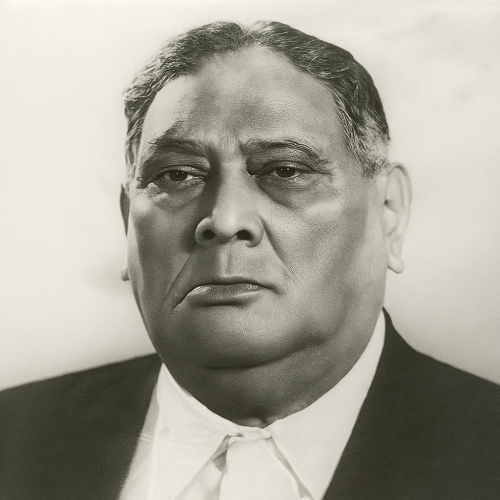
In June 1936, the Central Parliamentary Board of the AIML prepared a 14-point Manifesto which included: “(1) protection of the religious rights of the Muslims; (2) repeal of all repressive laws; (3) resistance to all measures detrimental to the interests of India; (4) reduction of heavy cost of administrative machinery; (5) nationalisation of Indian Army and reduction of military expenditure; (6) encouragement of the development of industries, including cottage industries; (7) regulation of currency and exchange; (8) the social, educational and economic uplift of the rural population; (9) relief of agricultural indebtedness; (10) free and compulsory elementary education; (11) protection and promotion of the Urdu language and script; (12) reduction of the heavy burden of taxation; (13) financial assistance for the development of industries and the last but not the least (14) creation of a healthy public opinion and general political consciousness throughout the country.”
Crucially, the League also drew up a special 25-point program for Bengal, with many points lifted directly from the KPP's agenda. Both parties spoke of free education, lower rents, and higher jute prices. But on the core issue of land system, they remained worlds apart. In the early August, in 1936, Fazlul Huq declared in clear terms:
“From today I will start the terrible and continuous fight between prajas and zamindars everywhere in Bengal’s bazars and fields, gardens and forests, land and water, day and night. With the blessings of Allah, very soon I will bring end to zamindari.”
He also stated, "The nation will inevitably split into two major classes: the wealthy and powerful on the one hand, and the impoverished and defenseless on the other. We stand for the latter.”
While the League focused on Muslim-specific demands like amending university acts and ensuring representation in public service, the KPP maintained its non-communal, peasant-focused stance, viewing the League's cry for Muslim solidarity as a "false cry" designed to distract from the real issues of class. Meanwhile, the Bengal Provincial Congress Committee internally divided and having lost most of its Muslim leaders, announced a manifesto that conspicuously failed to demand the abolition of the Permanent Settlement, rendering itself almost irrelevant in the Muslim constituencies.
The campaign that followed was a spectacle of a new, vibrant democracy. In the absence of modern voting machines, the election was a battle of symbols, familiar objects from rural life: a plough, a spade, a hurricane lamp, and a hookah. Voters would receive a slip and place it in the ballot box marked with their chosen candidate's symbol. After voting ended, polling officers counted the slips from each box, and the candidate with the most votes was declared elected.
The nomination process for the elections commenced in December 1936, with political parties completing their candidate selections by January 1937. The League Parliamentary Board (LPB) and the Krishak Praja Party (KPP) competed in Muslim constituencies, with the LPB receiving substantial backing from the Muslim press, particularly the influential Azad and Star of India. Akram Khan's leadership positioned Azad as a key voice for the LPB among Bengali Muslims, while the KPP’s efforts were confined to a single publication, Chashi. The LPB’s appeal for Muslim unity was well received, and Khawaja Nazimuddin, a prominent LPB leader, utilised his governmental resources to significantly support LPB candidates, outspending his opponent, A.K. Fazlul Huq.
But the Krishak Praja Party held aces that money could not buy. Its greatest asset was A.K. Fazlul Huq himself, the beloved “Huq Saheb”, whose eloquence and popular touch were legendary. The KPP’s candidates were locals who spoke the dialect of the people, fostering a deep connection with rural voters that the League’s mostly Urdu-speaking leaders could never match. And then there was the manifesto itself, whose promise to abolish the zamindari system resonated in the soul of the peasantry. A.K. Fazlul Huq’s promise of ‘dal-bhat’ became the defining slogan of the election—a simple, profound hope for the newly enfranchised, who dreamed only of a regular meal.
A.K. Fazlul Huq was not an outsider revolutionary. He was well educated, had legal training, and belonged to Bengal’s political elite. However, he possessed a unique quality in elite politics: the capacity to translate the suffering of peasants into political terminology. Huq spoke about rent, debt, eviction, and zamindari oppression through the Krishak Praja Party, rather than abstract communal rights. He addressed Muslim peasants as farmers oppressed by an unjust agrarian system, rather than as a purely religious entity.
During the election campaign, the KPP’s dedicated workers fanned out across the countryside, their grassroots approach a stark contrast to the League’s hired hands and religious messaging. In a direct challenge to the Nawab of Dacca’s power, Huq promised to abolish Khawaja Nazimuddin’s own zamindari, framing the election as a holy war to protect the krishaks and prajas from exploitation. The Nawab threw his full weight behind Nazimuddin. Maulana Abu Bakr Siddiqui, a revered religious leader, issued a fatwa declaring the League Board as the true representative of Muslims and calling on all to support Nazimuddin. Muslim students were brought in from other provinces to campaign for him. But A.K. Fazlul Huq assembled his own formidable coalition of party workers and religious figures, his speeches painting a harrowing picture of starving villages and promising salvation through radical reform.
It should be noted that Muhammad Ali Jinnah, who was invited by M.A.H. Ispahani in a letter dated 13 December 1936, also travelled to Bengal and spent two weeks campaigning for Muslim League candidates in Calcutta, Dacca, Mymensingh, Comilla, and Barisal. He vehemently denounced the KPP and the Congress and urged people not to trust the party’s election manifesto, especially its dramatic pledge to do away with the zamindari system. He said: “Men may promise to abolish the Permanent Settlement tomorrow. But in fact it is moonshine and a false promise.” At a public meeting in Calcutta, where Ispahani was facing tough opposition, Jinnah categorically stated: “I appeal to you in the name of the solidarity of the 80 million Muslims of India… to see that those who create difference in your camp at this critical juncture are smashed and the flag of the Muslim League is carried into the Legislature.” In his political task, he was strongly supported by the Muslim press, which portrayed KPP candidates as ‘paid agents’ of the Congress, Mahasabha, etc., and warned Muslims that “to vote for them is to cut your throat.”
In Bengal, significant political developments unfolded, capturing voter attention and favouring the KPP. Dr. R. Ahmed openly challenged Khawaja Nazimuddin to contest against A.K. Fazlul Huq in Nazimuddin’s historically safe Patuakhali constituency, where he had previously been elected twice as the Education Minister of Bengal. Although Fazlul Huq was perceived as an outsider, originating from Pirozepur, he boldly contested against Nazimuddin. This electoral battle, described by B.D. Habibullah as ‘the fourth battle of Panipat’, highlighted Fazlul Huq’s opposition to the zamindari system and challenged both the Muslim League and the Government.
In his election campaign, A.K. Fazlul Huq captivated the hearts of the peasants by saying: “….. from now onwards begins the grim fight between the zamindars and capitalists on the one side and the poor people on the other …. You know much more than I do of the appalling misery that prevails in villages and how thousands are dying every day in rural areas of Bengal in actual starvation and semi-starvation. The problem of ‘dal bhat’, some kind of coarse cloth to cover nudity, is the problem of problems which stares us in the face and which must be solved immediately…… An obvious and immediate solution to the problem will be by effecting drastic economy in the cost of administration, by reducing taxation on the poor, by repeal of such taxation as tells heavily on the masses and by thorough overhauling of the Bengal Tenancy Act and other Acts in the interest of the Raiyats.”
As the election campaign entered its zenith, the papers’ entire wrath was directed against A.K. Fazlul Huq. Azad was particularly harsh in condemning him and his group. In one of its editorials, it remarked: “From Mymensingh Praja Sammelan in 1935, respectable A.K. Fazlul Huq is forgetting that his Krishak Praja Party is proceeding towards Karbala. Destruction is inevitable.” This paper categorised supporters of A.K. Fazlul Huq into three groups: (a) those who, dishonouring the unanimous decision of Muslim society, became councillors of the Calcutta Corporation; (b) those who were Congress-minded and anti-Communal Award; and (c) those who had violated the religious and social injunctions of Islam. It ended with the warning: “Muslim Bengal be careful, the elimination of Muslims and establishment of Hindu Raj is the conspiracy.” During that time, the Star of India also gave a clarion call: “Muslim voters, beware! Do you want Congressmen to rule Bengal? If not—send A.K. Fazlul Huq to the wall: smash up the Praja Party.” On the other hand, on the eve of the election, A.K. Fazlul Huq gave an emotional statement: “….. if unfortunately I am defeated, my defeat will be even more glorious than that of Napoleon at Waterloo. The forces of wealthy people arrayed against me….”
While the League focused on Muslim-specific demands like amending university acts and ensuring representation in public service, the KPP maintained its non-communal, peasant-focused stance, viewing the League's cry for Muslim solidarity as a "false cry" designed to distract from the real issues of class.
From the election manifestos, campaign approaches, speeches, and media portrayal, it was quite clear that the Muslim League had emphasised Muslim identity and communal rights as their first and foremost priority, while the KPP focused on radical economic changes, irrespective of communal issues. A.K. Fazlul Huq’s party underscored the congenial utilisation of the electoral process to bring a revolutionary shift in the sociopolitical landscape. A.K. Fazlul Huq’s vehement verbal attacks on the elite class in light of both class exploitation and the nationalist theme earned him a very special position in shaping Bengal politics. His radical position for abolishing the zamindari system and curtailing non-Bengali domination not only made him more influential but also radicalised the then people’s minds towards a self-deterministic political consciousness through that electoral channel. On the other hand, the Muslim League’s frequent appeal to Muslim identity, conflated with Islam, and condemnation of the KPP as a Hindu-backed party, sustained the dominance of Muslim non-Bengali elite authority over Bengal politics. While the KPP’s political stance seemed to propagate Bengal’s own distinctive political expression in light of its peasant and lower-class problems, the Muslim League was keen to serve the political logic of the Indian Muslim body politic. Another issue was the contestation of ‘true representation of Muslims’. Political disagreement was recast as ethical transgression, and alternative political alignments were treated as existential threats to Muslim unity. The language employed went beyond electoral competition; it sought to draw boundaries around who could legitimately claim to represent Muslim Bengal. The notion of deviation from the elite-consensus political stream was acutely marked as a symbol of communal endangerment. However, the KPP’s sole claims did not challenge Muslim solidarity; rather, they emphasised that this unity or solidarity should be attained at “the door of peasants and never at the palace of zamindars”.
Considering the historical context of this election in a Marxist sense, the KPP was more of a revolutionary force with its charismatic leadership, rising middle-class support, and radical goals that would shift the relations of production and means of production into a new process. But their method was not to declare any social movement that would lead them to commit revolutionary struggle in the classical Marxist convention. It was a colonial regime, and any attempt to do so would be treated as terrorism or political defiance of the colonial master. The KPP did not even consider pursuing that path. At the same time, its sole resort was to diminish the zamindari system, which was the prime impediment to the flourishing of society. So, they organised as a political force, pursuing the electoral route to achieve legal authority to bring radical reform in social relations. The Muslim League, on the other hand, put enormous effort into sustaining social relations in the name of Muslim interest. Through elections, they would obtain legislative power to develop a strong Muslim body politic, which would eventually serve the political logic of Indian Muslims in response to the Congress-backed Hindu body politic. The League did not pay attention to economic and social relations as determining factors of sociopolitical development; rather, they were more interested in consolidating their own authority and establishing a Muslim homogenised power under colonial rule.
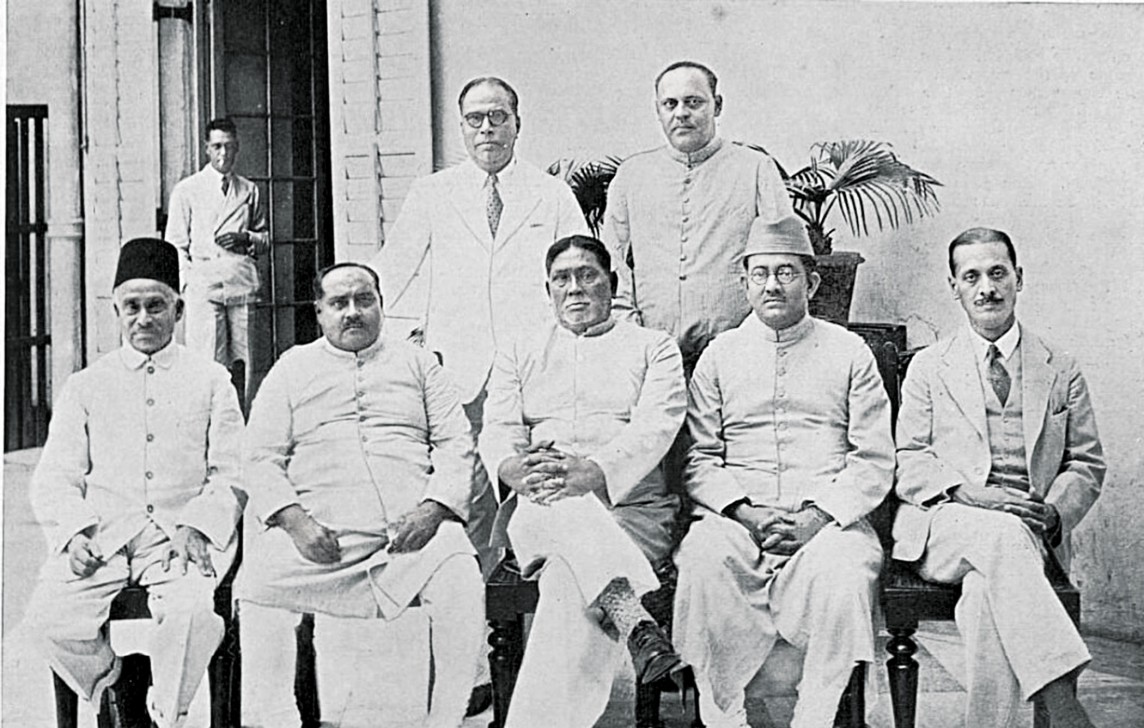
The results of the election were a stunning reflection of political polarisation. No single party secured a majority. In a surprising twist, independent candidates won the most seats. The League Board came second, its victories concentrated in urban, special, and western Bengal constituencies. The Krishak Praja Party finished third, but its victory was profound: it won all of its seats in the rural heartlands of East Bengal. The Muslim League’s confidence was severely damaged when A.K. Fazlul Huq defeated Khawaja Nazimuddin decisively in the prestigious contest in the Patuakhali (rural) constituency. A.K. Fazlul Huq gained 13,742 votes in this contest, while Khawaja Nazimuddin only got 6,308, less than half of the votes that Mr Huq was able to secure. On receiving the news of his victory, A.K. Fazlul Huq became overwhelmed and, in youthful exuberance, uttered: “In the event of the failure of the government to accept the demands of the peasants I will throw the Writers’ Buildings into the Lal Dighi (the lake in front of the red-coloured Writers’ Buildings, the secretariat building where the ministers took their offices).”
The numbers told the true story. Despite winning more seats, the League had received a lower percentage of the total Muslim vote—only 27.10%. The Krishak Praja Party, in contrast, captured 31.51% of all Muslim votes, surpassing the League by a significant margin. The KPP had lost some battles, but it had won the war for the soul of the Bengali peasantry. With the Bengal Assembly hung, the Congress as the largest single party, and the League and KPP holding nearly equal strength, a coalition ministry was the only way forward.
Thus began the great electoral journey of Bengal. For the first time, the peasant, the common man, and the new middle class had not just voted but had forged a political community. The raw nerves of class, community, and economic struggle were laid bare. The KPP’s overwhelming victory in the countryside carved out the political destiny of what would become East Bengal. The urban elite’s backing of the Muslim League crystallised the power struggles and identity politics that would define the Muslim body politic.
The 1937 election was a landmark, a test of the promises and perils of colonial constitutional reform. It allowed the voice of the people to rise and form a government, yet that government was shackled by gubernatorial powers and institutional divisions. The election did not resolve the political tensions of Bengal; it reconfigured them, setting the stage for even greater polarisation and rivalry in the 1940s. This election was more than just a change of government; it was a restructuring of political power, with mass participation disrupting elite control while also deepening fragmentation—a result that shaped Bengal’s political trajectory until Partition. In other ways, the KPP had a significant historical impact on both Bengali and global political history. The KPP was the only rising middle-class and peasant political party in the entire subcontinent. Not even in the West, where universal suffrage was not yet properly established, did such a formation exist. Furthermore, with its democratic goals and rights-based intervention, the KPP was the first political party to enhance representative politics for the Bengali masses. It served as the cornerstone for creating the then-desired political community with a great deal of hope for change. The KPP’s journey can also be interpreted as a symbol of growing popular sovereignty, a symbol of amiable secularisation, and an affirmation of a non-communal identity that can be referred to as “citizenship”. According to Abul Mansur Ahmed, it is the sole and genuine platform for the economic liberation of the Bengali peasantry, whose long-standing struggles and movements have shaped this country’s politics.
And in this journey, A.K. Fazlul Huq was the primary catalyst who pioneered the democratisation of hope and became an audacious, transformative figure in shaping the political consciousness of Bengal. In his 1957 convocation speech at the University of Dhaka, A.K. Fazlul Huq asserted that:
‘I am the living history of Bengal and East Pakistan of the last sixty years. I am the last survivor of that band of unselfish and courageous Muslims who fought fearlessly against terrific odds in order to secure the rights and prestige of Muslims in this part of the world. I am now in the evening of my life and I am licking the wounds which I received in the long fight during the last six decades. I am getting old physically; but my heart is young and my optimism is unimpaired. I firmly believe that God, in His infinite mercy, will enable the present and coming generations in this country to raise the prestige of this country, and work for peace, harmony and love in the world. The flower fades, but its fragrance remains. Men come and go, but the memory of their deeds and achievements never dies. I have faith in my country and its people. Insha’Allah, they will achieve glory after glory, which I hope I shall live to see.’
Fazlul Huq remains the fragrance forever, the fragrance of the wind of Bengal political history.
Minhazul Islam is an independent researcher and translator.
Send your articles for Slow Reads to slowreads@thedailystar.net. Check out our submission guidelines for details.
Reading Sarat Chandra at 150, with empathy

Who really owned Britain’s royal jewels?

The 25,000-year history of betel nut chewing
The world map we know is distorted. Why does it matter?

Bengal and the coming of Islam: A story of soil and spirit
Xuanzang’s travels to Bengal and beyond : The man, the pilgrim and the Monkey King
Professor Anisur Rahman: The economist who put people at the centre
APO 433: Dhaka’s forgotten post office of World War II
Dadabhai Naoroji: The man who exposed the economics of British colonialism