


New NCT deal must deliver measurable gains for Bangladesh

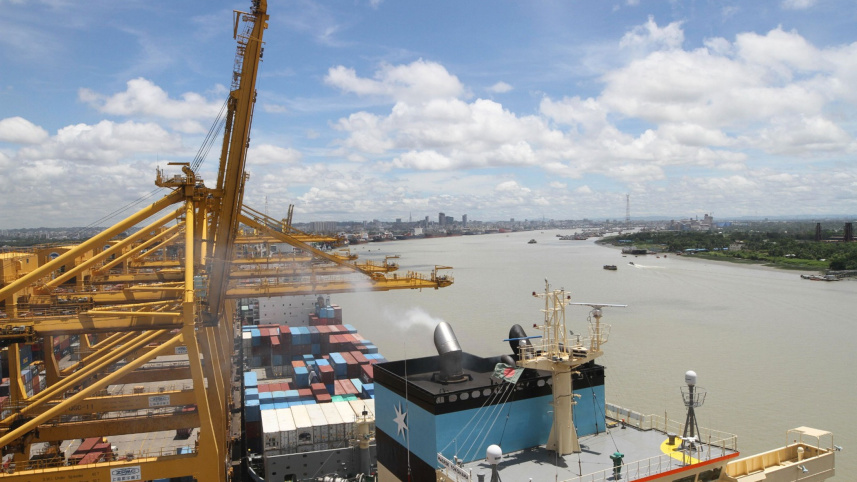
The debate over the New Mooring Container Terminal (NCT) at Chattogram port has entered a new phase after Chittagong Port Authority (CPA) and UAE-based DP World signed a 15-year concession agreement on Thursday, October 8, for the operation, maintenance, and modernisation of NCT and its overflow container yard. Ownership of the terminal, land, and core infrastructure remains with the port authority, while Customs, Immigration, the Navy, Coast Guard, and other security functions remain under the control of the relevant state agencies.
Now that the deal has been signed, following a lengthy process marked by controversy and protests, the debate should move beyond the binary question of “foreign versus local.” The more useful question for our trade and economy is: what measurable additional value will the concession produce, and how will that value be verified?

NCT is not a new facility being built from scratch. It is an established public asset that has been operating since 2007 and already handles around 44 percent of the port’s container traffic. So, a concession involving such an asset cannot be judged by whether it maintains existing service levels; it must demonstrate additional gains in productivity, reliability, technology, service quality, and public revenue.
Some important parameters are already publicly known. According to Invest Bangladesh, DP World will pay an upfront fee of approximately Tk 600 crore and invest more than Tk 1,000 crore over the first 10 years in modernisation, equipment, and technology. CPA will also receive a revenue share and a fixed annual fee. The agreement establishes key performance indicators (KPIs) and requirements for regular reporting, CPA monitoring and audits, along with financial penalties for missed targets. These provisions make the concession’s performance measurable, but they alone cannot guarantee whether it will ultimately deliver value for money. The real test lies in implementation.
To assess the results, the first priority should be to establish a performance baseline before the full operational handover. If vessel turnaround, berth productivity, crane moves per hour, truck turnaround, equipment availability, container dwell time, and yard utilisation are expected to improve, their starting levels should be documented. Otherwise, future gains may be difficult to distinguish from changes resulting from trade growth, new infrastructure, or wider port reforms.
As it is, Chattogram port’s current performance leaves much room for improvement. It ranked 364th among 400 ports in the 2025 Container Port Performance Index, while container dwell time exceeds nine days and vessels spend more than 2.5 days in port. To turn these performance gaps into measurable improvements, any targets set must be specific, time-bound, and enforceable. Under the concession agreement, DP World’s KPIs will include truck turnaround and crane productivity, with financial penalties applying if the company fails to meet agreed targets for three consecutive months. Such provisions will be meaningful only if performance is consistently monitored and the penalties enforced.
The reported minimum annual container handling guarantee also needs to be put in perspective. The agreement reportedly sets a floor of 1.23 million TEUs (twenty-foot equivalent units), below the 1.385 million TEUs that NCT handled in FY2025-26. The guarantee is, therefore, better viewed as a contractual volume floor than as a productivity target. The more important test is whether the operator can improve crane productivity, vessel and truck turnaround, dwell time, and service reliability while handling future growth.
Investment commitments deserve the same scrutiny. The Tk 1,000-plus crore commitment should be broken down into measurable stages: what equipment will be purchased or replaced, which digital systems will be introduced, when investments will be made, and what improvements they are expected to deliver. DP World says its investments will cover civil works and equipment upgrades, digital solutions, and improvements in berth planning, yard management, equipment utilisation, preventive maintenance and safety.
Public accountability does not require the disclosure of every commercially sensitive clause. But users and citizens should understand the broad basis on which an established national asset is expected to generate public value over 15 years. It would, therefore, help to have a concise public concession summary disclosing the principal investment obligations, performance benchmarks, broad revenue-sharing principles, tariff governance, reporting requirements, review arrangements, default remedies, and handback conditions.
Terminal productivity is not the same as overall logistics productivity. Modern cranes, automated gates, and advanced terminal operating systems can improve NCT’s performance, but a container that moves rapidly through the terminal and is then delayed by Customs clearance, banking documentation, regulatory approvals, or inland transportation remains part of an inefficient logistics chain. NCT’s digital transformation should, therefore, integrate with Customs and Bangladesh’s wider trade-facilitation systems. A digitally advanced terminal should not become an efficient island surrounded by paper-based processes. What matters to an exporter or importer is not merely how quickly a crane moves a container, but how predictably cargo moves from vessel to factory, or from factory to vessel.
Labour transition should also be part of the performance equation. The government says local employment will continue and that modern technology and international training will strengthen skills within the port and logistics sector. There remain some concerns among sections of workers, however, and these should be addressed through a structured workforce development programme covering retraining, safety, new technical skills, and opportunities for local professionals to take on increasingly sophisticated roles.
There is also an opportunity to make accountability visible. Since the agreement already provides for KPIs, regular reporting, CPA monitoring, and audits, CPA could publish a concise quarterly performance dashboard without disclosing commercially sensitive information. Indicators such as throughput, berth productivity, vessel and truck turnaround, dwell time, equipment availability, safety performance, and investment delivered would show whether promises are being translated into results.
Such transparency would benefit both sides. If DP World achieves substantial productivity gains, objective data will demonstrate the value of international operational expertise. If performance falls short of agreed commitments, the same system will allow CPA to intervene early.
Bangladesh has legitimate reasons to engage experienced global terminal operators. Technology, operational discipline, maintenance practices, and international standards can strengthen the competitiveness of the country’s trade gateways. That said, the signing of the agreement itself should not be regarded as success. For exporters and importers, the desired outcomes are shorter logistics times, greater predictability, and more efficient cargo movement. For CPA and the state, what’s expected is a fair and verifiable return from a public asset as well as the preservation of effective regulatory oversight.
So, the most constructive approach going forward would be to properly establish the baseline, measure contractual commitments, monitor investment and performance, enforce agreed standards, and report the results. If NCT becomes faster, more reliable, and technologically stronger while Bangladesh receives a fair return and CPA retains effective oversight, the concession will make its own case. If those improvements do not materialise, the country should be able to see that just as clearly.
Ahamedul Karim Chowdhury is former head of Kamalapur Inland Container Depot and Pangaon Inland Container Terminal, and an adjunct faculty member at Bangladesh Maritime University.
Views expressed in this article are the author's own.
Follow The Daily Star Opinion on Facebook for the latest opinions, commentaries, and analyses by experts and professionals. To contribute your article or letter to The Daily Star Opinion, see our guidelines for submission.
 For all latest news, follow The Daily Star's Google News channel.
Comments