


Is social media use getting out of hand?
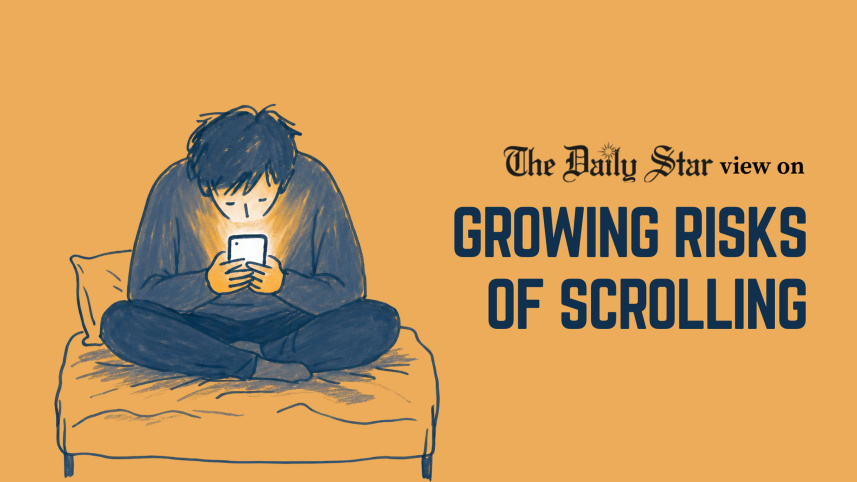
Whenever we think of “doomscrolling”—defined as the compulsive habit of spending a huge amount of time viewing negative, distressing, or alarming content on social media—we usually blame ourselves for lacking the self-restraint to stop. While we do bear some personal responsibility for avoiding harmful habits, it would be naïve to let social media platforms off the hook entirely. These platforms invest considerable effort in keeping users hooked, employing research-backed mechanisms to increase engagement and time spent on social media. What may seem like a straightforward pursuit of profit maximisation has translated into serious consequences for users’ mental health.
A Bangladesh-based study, conducted in 2024 involving 440 young adults aged 18 to 35 years, found that spending more than four hours a day on social media was associated with a higher likelihood of depression and anxiety. The findings point to a broader relationship between excessive social media use and mental health difficulties. These can, in turn, contribute to internet addiction, sleep problems, poor concentration, and irritability, among other challenges. Easy access to digital devices and a lack of digital literacy have exacerbated the problem, as parents often hand smartphones to very young children, without setting clear limits on screen time or monitoring the content they consume.

All this points to a grim reality for Bangladesh’s overall mental health. The last national mental health survey, conducted in 2019, found that at least 18.7 percent of adults aged 18 years and above and 12.6 percent of children between the ages of 7 and 17 years had a mental disorder. The toll on young people is reflected, in part, in reports of student suicides, with at least 224 students dying by suicide up until September this year. There may also be links between deteriorating mental health and the reported rise in teen gang violence across the country. As per research in other countries, gang involvement has been associated with polytraumatisation—the experience of multiple traumatic events—which can have lasting adverse effects on mental health.
To address this crisis, our government must implement policies such as digital literacy programmes, accessible mental health services, and public awareness campaigns. Digital platforms must also be held accountable for design practices that encourage compulsive use. Young people need to grow up with healthier digital habits that promote their overall quality of life, rather than undermine it.
 For all latest news, follow The Daily Star's Google News channel.
Comments