


Low-income families need more support
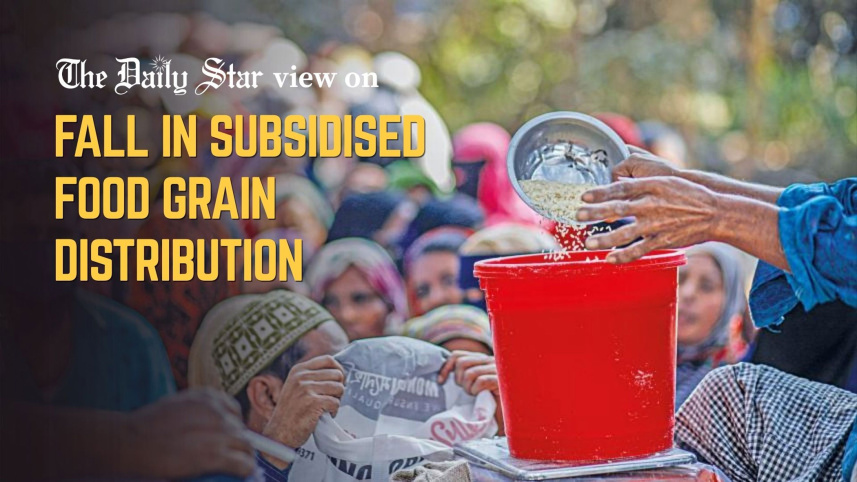
The fall in subsidised food distribution in the first quarter of the current fiscal year is perplexing, amid prolonged high inflation; fuel, gas, and electricity price hikes; slow wage growth; and reports of lay-offs in several industrial sectors. Food ministry data show that 7.55 lakh tonnes of rice and wheat were distributed between July 1 and September 30, down 7 percent from 8.15 lakh tonnes a year ago. According to a report in this daily, the decline largely reflects lower open market sales (OMS) of subsidised rice and wheat flour, with first-quarter distribution falling 22 percent year-on-year to 2.05 lakh tonnes in FY2026-27. Meanwhile, media reports suggest that lower-income families, even with supplementary income, are struggling to make ends meet amid the rising cost of living, with many queuing for hours to buy essentials from TCB trucks. Some are even cutting their monthly food budgets to supplement higher transportation costs, gas, and electricity prices, which went up as the government pushed up energy prices, mostly in response to ongoing conflicts in the Middle East.
Distribution also fell under several other programmes in the government’s public food distribution system (PFDS). Among those are the Vulnerable Group Feeding (VGF) programme (which witnessed a 20-percent reduction in distribution), and Chittagong Hill Tracts and Others programme (which saw a 78-percent drop). However, distribution under Food Friendly Programmes, Vulnerable Group Development, and Vulnerable Women Benefit increased slightly.

A decline in relief-related food distribution is understandable, as there have been no major widespread natural disasters so far this fiscal year, but Bandarban did experience several days of severe rain and flash floods in July. One would expect a higher amount of foodgrain distribution under the CHT category, not otherwise. Besides, the measles and dengue outbreaks in the country have also put many families under severe financial strain. Inflation easing slightly recently is doing little to help these households as wage increases have not kept pace.
The government, therefore, should expand and ensure better coverage of social safety net programmes, particularly as the UN Food and Agriculture (FAO) programme in its report last month identified several regions where food insecurity would reach crisis level between September and December. Besides, the World Bank also warned that 6.2 crore people are at risk of falling into poverty. These forecasts demand urgent action to close safety-net gaps.
 For all latest news, follow The Daily Star's Google News channel.
Comments