


Bangladesh’s 5G moment: promise, challenges, and the road ahead

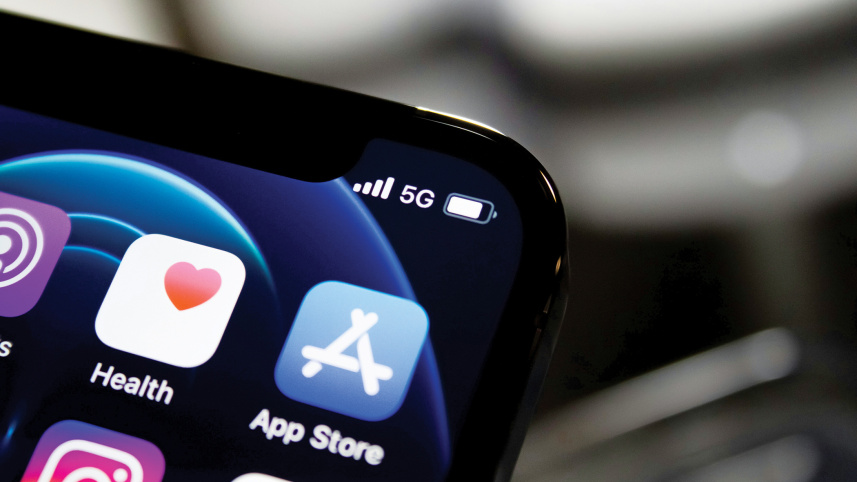
On September 1, 2025, Bangladesh formally entered the 5G era when Robi Axiata became the first operator to switch on commercial fifth-generation services in select areas of Dhaka, Chattogram and Sylhet. Within hours, Grameenphone followed with its own announcement, claiming coverage across all eight divisional headquarters. The occasion came with customary fanfare. Government officials spoke of transformative potential, operators invoked visions of smart cities and telemedicine, and the Bangladesh Telecommunication Regulatory Commission declared a new horizon for the sector.
Yet beneath the ceremonial rhetoric lies a more sobering reality. Bangladesh’s 5G launch comes more than three years after the March 2022 spectrum auction that raised $1.23bn from operators, and nearly seven years after South Korea became the first country to deploy commercial 5G networks. More pertinently, it arrives at a moment when the gap between the country’s digital aspirations and its structural capacity to realise them has rarely been starker.

The long road to the fifth generation
Bangladesh’s mobile telecommunications journey is, in many respects, a remarkable story of catch-up development. At independence in 1971, the country possessed fewer than 200,000 telephone lines serving a population of 70 million, yielding teledensity of less than 0.3%. Today, mobile subscriptions exceed 180 million, representing a penetration rate of 107%, while internet users account for roughly 73% of the population. Mobile financial services, pioneered by BKash, have brought 120 million registered accounts into the formal financial system.
Yet this progress has consistently arrived late relative to global technology cycles. The country launched 3G services in 2013, roughly 12 years after the technology’s commercial debut elsewhere. 4G followed in 2018, about nine years behind the global curve. The pattern has repeated with 5G. While India launched commercial services in October 2022 and had accumulated more than 250 million active 5G users by early 2025, Bangladesh’s operators spent years in a holding pattern, citing regulatory delays, unclear rollout obligations, and insufficient ecosystem readiness.

The consequences of perpetual lateness compound. According to industry analysts, only 55% of Bangladesh’s mobile users currently access 4G services, and just 3% to 4% own 5G-compatible devices. Smartphone penetration, while rising, remains heavily skewed, with 64% in urban areas against 31% in rural regions. National digital literacy hovers around 31%. These figures suggest that the infrastructure of the future is being laid on foundations that remain uneven and incomplete.
The spectrum burden: a self-inflicted constraint
If 5G is to serve as a catalyst for national competitiveness rather than a prestige project for metropolitan elites, the economics of network deployment must make sense for operators. Here, Bangladesh faces a problem largely of its own making. A comprehensive study released by the GSMA in September 2025 laid bare the scale of the regulatory burden: spectrum fees in Bangladesh now account for about 16% of operators’ recurring revenue, substantially higher than the Asia-Pacific median of 10% and the global median of 8%.

Image: DCTRNH/ Unsplash
When revenue-share levies, universal service contributions and sector-specific taxes are added, the total fiscal burden rises to an unprecedented 55% of operators’ market revenue. Corporate tax rates on mobile operators can reach 45%, levels typically reserved for harmful products such as tobacco in other jurisdictions. By comparison, India applies 35%, Pakistan 29%, and Vietnam about 20%. A supplementary duty of 20% on mobile recharges adds further pressure, passed directly to consumers who are already among the region’s poorest.
The GSMA’s modelling suggests that aligning spectrum costs with the Asia-Pacific median could lift average download speeds by 17% and enable 5G to reach 99% of the population by 2035, adding an estimated $34bn to GDP. Alignment with the global median, requiring about a 75% reduction in spectrum prices, could generate $45bn in additional economic value over the same period. These are not trivial sums for a country aspiring to upper-middle-income status by 2031.
The counterargument, invariably advanced by treasury officials, is that spectrum auctions and sector-specific levies represent legitimate revenue streams for a developing state with pressing fiscal demands.
This is true, but it misses the broader point. Telecommunications infrastructure is not a luxury; it is an enabling layer on which digital commerce, e-governance and industrial automation depend. Taxing it punitively is akin to imposing tolls on roads so high that freight costs become uncompetitive. Receipts may flow into the exchequer, but the wider economy suffers.
The device gap: network without terminals
Even if the regulatory burden were eased, Bangladesh faces a more immediate bottleneck: the scarcity of handsets capable of connecting to 5G networks. According to BTRC data, local manufacturers produced 1.08 lakh 5G-enabled devices in October 2025, up from 63,000 units in September, marking the second time since June 2024 that monthly production has crossed the one-lakh threshold. Yet despite this uptick, 5G devices accounted for only 4.74% of the total 22.81 lakh handsets manufactured in Bangladesh that month. Feature phones continue to dominate production with a 61.21% share, while 4G handsets account for 34.29%.
Industry estimates suggest that only 6.6% of smartphones currently in use across the country are 5G-compatible. About 62% of devices nationwide are smartphones, most of which remain 4G-enabled. Imported and expatriate-gifted handsets make up roughly 50% to 60% of the smartphone market. Many are high-end 5G-ready devices, though a significant portion consists of refurbished models.
The economics are stark. Average monthly revenue per user in Bangladesh hovers around $2, while a 5G-capable smartphone typically costs $300 to $400. Even mid-range 4G devices command prices of about $150.

Operators such as Robi have acknowledged this reality, noting that its initial rollout prioritises areas where 5G device penetration already reaches 12% to 15%, with 120 areas approaching nearly 20% penetration. Most of these imported and gifted handsets registered on its network are compatible with 5G. Nevertheless, according to Robi’s estimates, it may take five to seven years for 5G adoption to reach current 4G levels, as affordability and broader economic factors remain key constraints. This is a pragmatic assessment, but it also underscores the risk of 5G becoming a service for the affluent few rather than a platform for mass digital participation. With the National Equipment Identity Register (NEIR) initiative, the government system to verify every mobile handset on Bangladesh’s telecom networks, the number of informally brought 5G-enabled phones on the network is expected to fall further.
 For all latest news, follow The Daily Star's Google News channel.
 The regional context: falling behind neighbours
Bangladesh’s 5G trajectory cannot be assessed in isolation. Across South Asia and the wider Indo-Pacific, the race to deploy next-generation connectivity has become a marker of technological ambition. India’s 5G rollout, launched in October 2022, has been among the fastest globally, underpinned by aggressive spectrum allocation and regulatory clarity. By March 2025, the country had deployed roughly 469,000 5G base stations and connected more than 250 million active users. Even smaller economies such as Bhutan and the Maldives have achieved commercial 5G deployments in selected areas.
The stakes extend beyond bragging rights. Fifth-generation networks are designed not merely to offer faster mobile broadband but to enable qualitatively different applications, including ultra-reliable low-latency communications for industrial automation, network slicing for dedicated enterprise services, and massive machine-type communications for the internet of things. These capabilities matter for manufacturing competitiveness, logistics efficiency and the ability to attract foreign direct investment in technology-intensive sectors.
The scale of infrastructure required to support these ambitions is considerable. National bandwidth consumption in Bangladesh currently stands at about 35 terabytes and is projected to reach 50 terabytes by year’s end, with demand expected to grow four to fivefold over the next five years. Meeting this demand will require substantial backbone investment beyond the wireless access layer.
For Bangladesh, whose garment industry faces mounting pressure from automation trends in competitor countries, the question is whether 5G-enabled smart manufacturing can be achieved before the window of demographic dividend closes. The country’s fibre-optic backbone has expanded from 37,000 kilometres in 2015 to about 142,000 kilometres today, and 4G coverage now reaches 95% of the population. Yet only 23% of industrial zones are connected to fibre, and electricity supply remains intermittent, with urban areas experiencing two to three hours of daily outages and rural regions facing four to six hours.
The stretched reality of a smarter nation
Over the next 15 years, Bangladesh has aimed to become a high-income, knowledge-based economy characterised by full digitisation of government services, universal smartphone access, and an ICT sector contributing 20% to GDP.
Such aspirations are not inherently unrealistic. Bangladesh has demonstrated resilience and adaptive capacity in its development journey, repeatedly confounding sceptics who doubted its ability to transcend the circumstances of its birth. The government’s infrastructure initiatives reflect both the scale of ambition and the challenges of execution. BTCL’s BDT 1,059 crore 5G network expansion project, launched in 2022, aims to establish fibre capacity of 100 Gbps at upazila level, 300 Gbps at district headquarters, and up to 1,000 Gbps in metropolitan areas. Upon completion, the state-owned operator would supply about 11,250 Gbps, representing 30% of projected national bandwidth requirements for the coming decade. Such investment is essential if Bangladesh is to avoid a bandwidth bottleneck as 5G adoption accelerates.
Yet there remains a persistent gap between policy pronouncements and delivery. The 5G guidelines, promised after the 2022 spectrum auction, were not finalised until 2024 and omitted clear rollout obligations. Operators that paid $1.23bn for spectrum were left without certainty on deployment timelines or coverage requirements. The interregnum allowed “ecosystem readiness” arguments to become self-fulfilling: without clear deadlines, neither operators nor device manufacturers had strong incentives to accelerate preparations.
What needs to change
If Bangladesh is serious about harnessing 5G for national competitiveness rather than merely ticking a box on the technology adoption checklist, several interventions appear necessary. First, the fiscal burden on the telecommunications sector requires urgent recalibration. Spectrum pricing should be anchored to present-day market fundamentals rather than used primarily as a revenue-maximisation tool. Exempting or relaxing VAT on spectrum fees, and streamlining sector-specific taxes, deserves careful consideration.
Second, device affordability must be addressed through a combination of reduced import duties on 5G-capable handsets and further incentives for local assembly. Without a critical mass of compatible devices, network investments will yield diminishing returns.
Third, regulatory clarity is essential. Operators need long-term licences with predictable renewal terms and local-currency payment options to reduce foreign exchange risk. The timely release of additional spectrum bands, particularly the 700 MHz and 3.5 GHz frequencies identified for 5G expansion, should be prioritised. The 700 MHz band is already in the pipeline, which is progress.
The need for streamlined procurement and governance is equally pressing. State-owned BTCL’s 5G backbone project, currently around 50% complete and pending a technical assessment by BUET faculty, exemplifies how procurement disputes and regulatory uncertainty can delay critical infrastructure. The project’s equipment, supplied by Huawei at BDT 326 crore, faced port clearance delays following an Anti-Corruption Commission inquiry into tender procedures. Due diligence is necessary, but protracted investigations that halt infrastructure deployment impose their own costs on national competitiveness.
Fourth, and perhaps most fundamentally, 5G deployment must be conceived as part of broader ecosystem development. This includes accelerating fibre connectivity to industrial zones, ensuring reliable electricity supply, building digital literacy through education reform, and developing use cases in priority sectors such as healthcare, agriculture and manufacturing that justify enterprise investment in 5G-enabled solutions.
Bangladesh stands at a familiar crossroads. The technology has arrived, albeit late. The potential is evident, if not yet realised. The question now is whether policymakers will treat 5G as a genuine enabler of economic transformation or allow it to become another instance of infrastructure serving the already connected while leaving the majority behind. For 5G to fulfil its promise, Bangladesh must address the regulatory, fiscal and infrastructural constraints that have historically impeded the translation of technological potential into broad-based development gains. The alternative is a future in which the country’s digital aspirations remain perpetually just beyond reach.
Shahriar Rahman is a veteran digitech policy analyst specialising in the APAC region and a doctoral candidate researching 5G at RMIT University, Australia.
Comments