


Families must be told within 12 hours of arrest
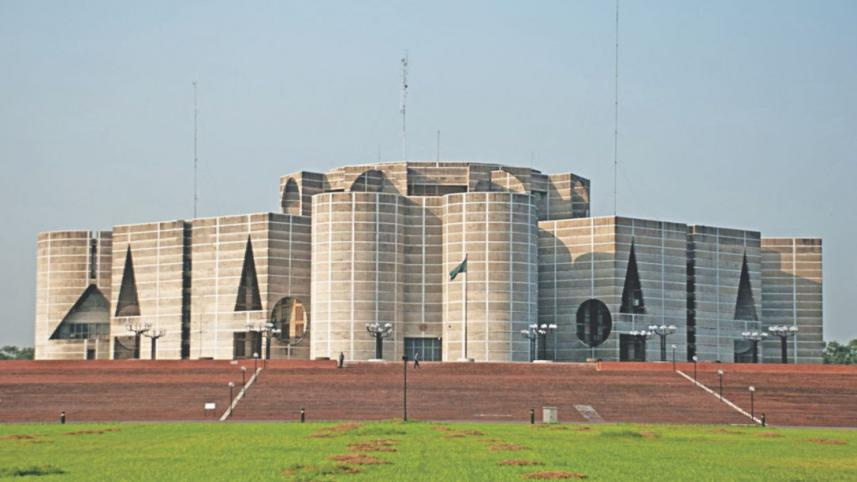
Parliament yesterday passed 14 bills, including the Code of Criminal Procedure (Amendment) Bill, 2026, which makes it mandatory to inform the family within 12 hours of arresting a person.
The bills converted ordinances issued during the interim government into law. With no amendment proposals placed, they were passed directly through voice vote without discussion.

Two other bills were also tabled with changes from the ordinances. They are the National Freedom Fighters’ Council (Amendment) Bill and the Smoking and Tobacco Products Usage (Control) Bill.
The opposition had submitted dissent notes on these in the special committee that scrutinised the ordinances. The two bills will be discussed later.
Among the bills passed, the Haor and Wetlands Conservation Bill was introduced by Water Resources Minister Shahiduddin Chowdhury Anee.
Law Minister Md Asaduzzaman separately placed the CrPC amendment, the Civil Courts (Amendment) Bill, the International Crimes (Tribunals) (Amendment) Bill, and the Registration (Amendment) Bill.
While moving the International Crimes Tribunal bill, Asaduzzaman said it now includes enforced disappearance within the definition of crimes against humanity.
He also said those who claim that the current administration does not intend to criminalise enforced disappearances should read the bill carefully, as it reflects the government’s determination to prosecute such cases.
After the bill was passed, Opposition Leader Shafiqur Rahman raised a point of order, saying the minister’s remarks were unnecessary and should have been avoided. He added that the opposition would speak on the matter at the appropriate time.
In reply, Asaduzzaman said questions had been raised outside parliament about the government’s sincerity about prosecuting those accused in cases of enforced disappearances, which was why he clarified before presenting the bill.
Speaker Hafiz Uddin Ahmad reminded members to keep remarks confined to parliamentary discussions and external commentary should not influence proceedings.
In Health Minister Sardar Md Sakhawat Husain’s absence, Home Minister Salahuddin Ahmed introduced three bills: the Smoking and Tobacco Products Use (Control) (Amendment) Bill, the Bangabandhu Sheikh Mujib Medical University (Amendment) Bill, and the Sheikh Hasina Medical University (Amendment) Bill.
While introducing the second bill, Home Minister Salahuddin Ahmed quipped, “It’s unfortunate that after speaking so much, I now have to say [the name of] Sheikh Hasina again.”
Later, Health Minister Sakhawat joined the session and placed the Bangamata Sheikh Fazilatunnesa Mujib Medical University, Sylhet (Amendment) Bill.
The bills confirmed the renaming of Bangabandhu Sheikh Mujib Medical University to Bangladesh Medical University, Sheikh Hasina Medical University to Khulna Medical University, and Bangamata Sheikh Fazilatunnesa Mujib Medical University to Sylhet Medical University.
Finance Minister Amir Khosru Mahmud Chowdhury placed the Appropriation Supplementary (2024‑25) Bill, the Appropriation (2025‑26) Bill, and the Commercial Court Bill, 2026.
Power, Energy and Mineral Resources Minister Iqbal Hasan Mahmud moved the Speedy Supply of Power and Energy (Special Provisions) (Repeal) Bill.
State Minister for Local Government Mir Shahe Alam placed the Academy for Poverty Alleviation and Rural Development (Amendment) Bill and the Sheikh Russel Rural Development Academy, Rangpur (Amendment) Bill.
Besides the provision on informing families, the CrPC amendment bill stated that arresting officers must carry and show visible ID cards and arrestees must be allowed to consult a lawyer or meet relatives, preferably within 12 hours.
Arrest details must be recorded in the official register, noting the reason, complainant’s information, the relative or friend informed, and the officer having custody of the arrestee.
 For all latest news, follow The Daily Star's Google News channel.
 All arrests must be recorded immediately in the local police station’s general diary. If the arresting officer is not from the station, a copy of the arrest memorandum must be sent to the officer‑in‑charge of the local station who will then ensure an entry in the general diary.
Each arrest must be attested by at least one witness, either a family member or a respected local resident. If no witness is available, reasons must be recorded in the memorandum.
Out of 133 ordinances issued during the interim government, the special committee recommended that 98 be approved unchanged and 15 with amendments. Of the remaining 20, the committee suggested repealing four and reintroducing 16 later as new, stronger bills.
Comments