


How Asad Sattar redefined cultural experiences for young Bangladeshis
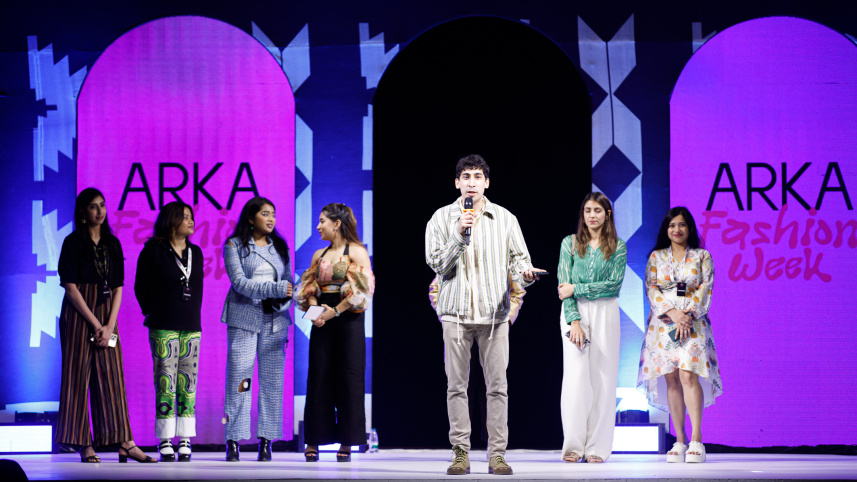
There is a familiar way of telling stories about creative founders. Someone spots a gap in the market, builds a brand to solve it, and scales it with precision. Asad Sattar’s story does not fit that structure neatly.
He spent five years in the United States. And after returning to Bangladesh, he did not immediately enter the cultural space. Sattar joined his family’s garment business and remained there for a couple of years. Arka came later, and when it did, it was not born out of a formal business model.

“It wasn’t really a business decision. I just knew that I wanted to do something interesting,” he shares. If there was a turning point, it came after Arka’s first event.
According to Sattar, that was when he realised there was a genuine gap in the market. He realised people were looking for a cultural experience that felt communal, contemporary, and intentionally designed.
“There was a vacuum in the market for something like this… For a community, creative, cultural experience,” he explains. That response, he suggests, is what pushed him to take Arka seriously and pursue it full-time.
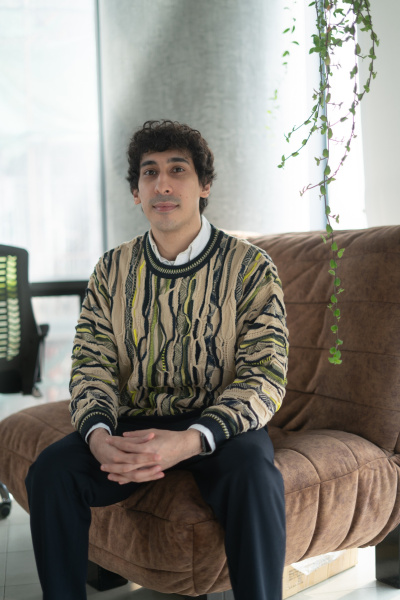
What gap did Arka actually fill?
Dhaka has never lacked events. What it has often lacked is a coherent cultural experience designed for a younger urban audience without slipping into pure commercial spectacle.
Arka entered that fragmented space and treated these elements as connected. Sattar is candid that this clarity did not exist from the beginning.
“When I first got into that space, I did not think too much about it,” he says. Over time, though, Arka became less about staging an event and more about creating an environment where fashion could coexist with music, atmosphere, movement, and social interaction.
Sattar believes Arka’s appeal lies partly in how these experiences are shaped.
“I just try to create an inclusive space for everyone,” he says. “We’re very energetic in our approach to things. I like there to be a lot of things happening, whether it’s in the music, the content, the feeling, the vibe, the colours.”
However, energy alone is not the full answer. He argues that Arka’s bigger difference lies in the details of user experience.
“We are mindful of the final 10 per cent of UI and user journey as well,” he says. Audiences may not consciously identify those choices, but, as he puts it, “People definitely can tell the difference.”
So, the gap Arka filled was not simply the absence of another event. It was the absence of a format that made younger audiences feel considered.
The generalist as organiser
Sattar resists tidy labels. Asked whether he sees himself as an entrepreneur, a creative director, or a cultural strategist, he replies, “Mainly as a human.” Then he adds, “I’m a specialist of nothing,” saying that one of the things he does best is “being a generalist.”
That answer explains more than it avoids.
His educational background moved across economics, behavioural thinking, psychology-linked study, business, and a liberal arts structure that allowed him to take courses from computer science to audio and light engineering.
“It really allowed me to explore my generalist desire,” he says, “to understand basic constructs and explore things.”
Arka reflects that mindset. It does not operate like a single-industry platform and moves across fashion, design, performance, branding, music, film, and audience experience.
 For all latest news, follow The Daily Star's Google News channel.
 Fashion week from Dhaka, but not by imitation
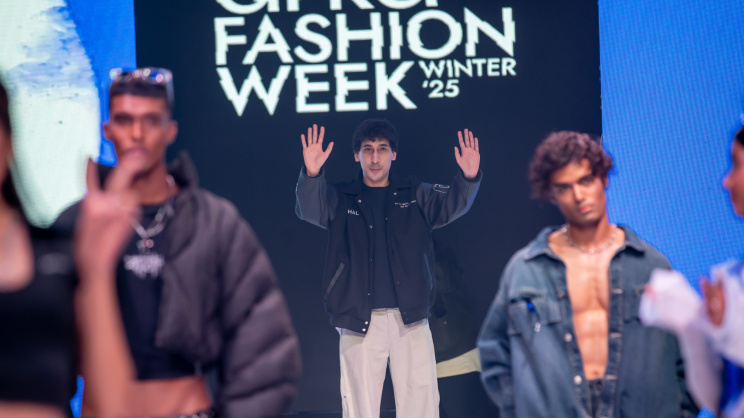
Sattar’s presence at platforms such as the BRICS+ Fashion Summit, Colombo Fashion Week, and Modest Fashion Week Jakarta seems to have sharpened his sense of difference rather than pushing him toward imitation.
Meeting representatives from numerous fashion weeks made one thing clear to him: Arka did not emerge from the same lineage. “We came from the other side,” he says, describing it as more democratic, youthful, and broad-based than many conventional fashion week structures.
That distinction matters. Bangladesh’s fashion conversation often swings between inferiority and imitation, as if legitimacy must come through resemblance to Paris, Milan, or some other model. Sattar seems uninterested in that route. “We don’t have to become like anyone,” he says. “We can create our own taste and identity.”
He argues that Dhaka should not try to prove itself by more efficiently copying global templates; the city could become regionally significant by building a platform that reflects the energy of South Asia on its own terms.
That ambition, of course, depends on money, sponsorship, infrastructure, and policy support. However, as an idea, it is more compelling than imitation.
The uneasy math of culture and commerce
If Arka is the public face of Asad Sattar’s work, Ami Dhaka and Kathal reveal a more experimental side of his thinking.
By his own account, these clothing brands did not begin with a strong business formula. “I just wanted to design a few things, test the market, and test out creativity,” he says, describing the process as something not well planned.
That honesty points to a larger truth about Bangladesh’s creative economy. Many concept-driven brands begin with expression first and structure later, but expression alone cannot sustain a label. Sattar seems aware of that tension, even joking that his brands are his “neglected children” because Arka takes up so much of his time.
Arka is now visible and influential, but visibility is not the same as permanence. The larger question is whether this kind of platform can continue to grow without becoming formulaic or over-commercialised.
For now, Sattar’s work suggests that a younger audience in Bangladesh is not just looking for products or spectacles, but for formats that make them feel culturally addressed. Arka’s rise proves there is an audience for that – but whether it can become something more lasting remains to be seen.
Photo: Courtesy
Comments