


Why Bangladesh Delta Plan 2100 Matters for the Country’s Future
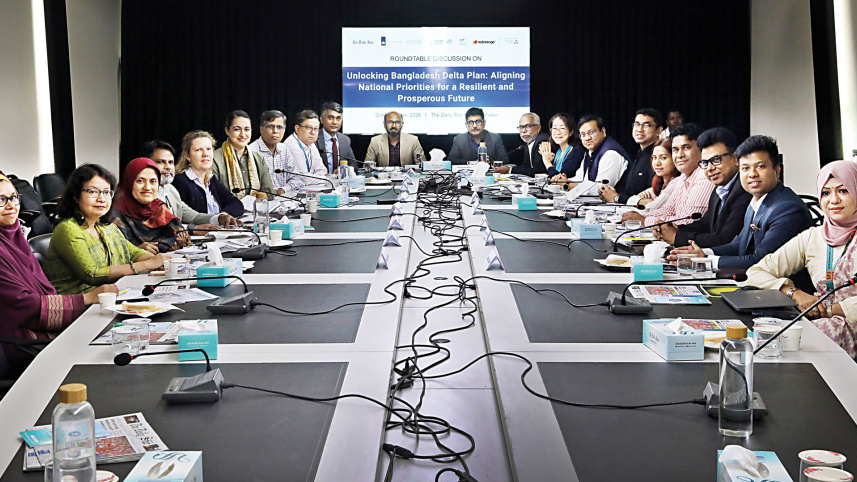
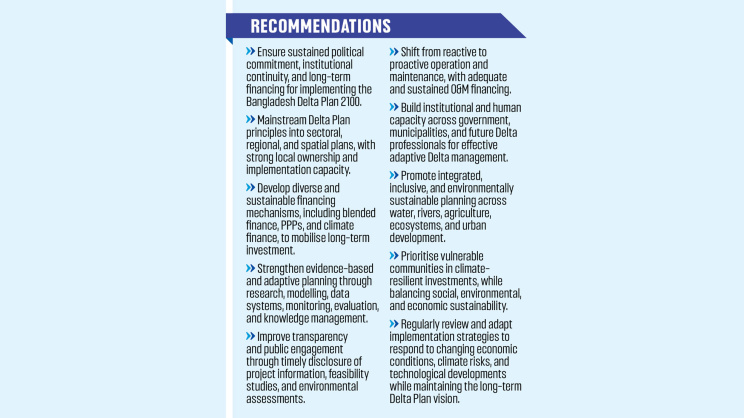
While emergency response remains the immediate priority, experts argue that the real challenge lies beyond relief. The Bangladesh Delta Plan 2100 (BDP 2100) offers a blueprint for making the country more resilient but only if it becomes a shared national mission embraced by government, businesses, local communities and citizens alike. As Bangladesh faces growing climate, water, environmental and economic challenges, BDP 2100 is crucial for guiding sustainable water management, climate resilience, environmental protection and inclusive growth. Its effective integration into national policies, investment priorities and budgetary decisions can help turn this long-term vision into a stronger driver of development. These were the conclusions of the roundtable organised by RedOrange Limited and The Daily Star, and supported by the Embassy of the Kingdom of the Netherlands held on 24 June 2026.

Dr. Mahfuz Kabir
Research Director
Bangladesh Institute of International and Strategic Studies (BIISS) (Keynote Speaker)

Integrating the Bangladesh Delta Plan 2100 into national policies and budgetary frameworks is vital to achieving a one-trillion-dollar economy and ensuring climate resilience. While strong convergence exists regarding river restoration and adaptive social protection, introducing a specialised Delta budget tagging system and an annual Delta report will significantly enhance public investment transparency. Additionally, establishing a high-level Delta Implementation and Coordination Council will streamline multi-sector execution. Empowering local governments through spatial planning cells is equally essential. Ultimately, forging a comprehensive implementation compact that unites the private sector, youth, and media will successfully transform climate vulnerabilities into long-term national prosperity.
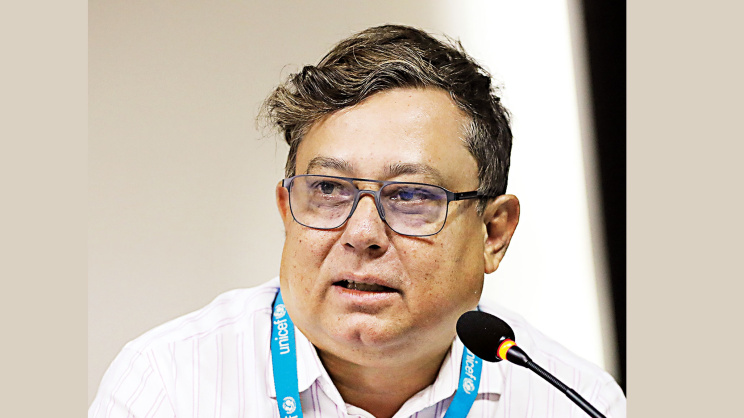
Mohammad Monirul Alam
WASH Specialist
UNICEF
Bangladesh’s 100-year Delta Plan offers an extraordinary opportunity to move past short-term planning and address long-term environmental degradation. Consequently, the newly approved 15-year Sector Development Plan and bankable Sector Investment Plan serve as vital short-term bridges focusing on climate resilience, surface water development, and sustainable sanitation. Furthermore, addressing the current $1.3 billion funding gap is critical, as inaction risks a 6.2% loss of GDP. Therefore, climate-resilient service standards, sustainable water management, safely managed sanitation, and greater investment should remain priorities. Strengthening economic planning and closing the financing gap will help achieve long-term, resilient, and inclusive WASH services.
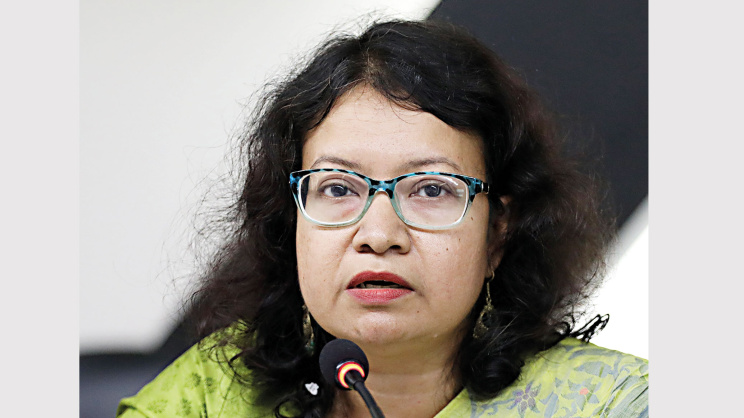
Dr. Farhana Ahmed
Director, R&D
CEGIS
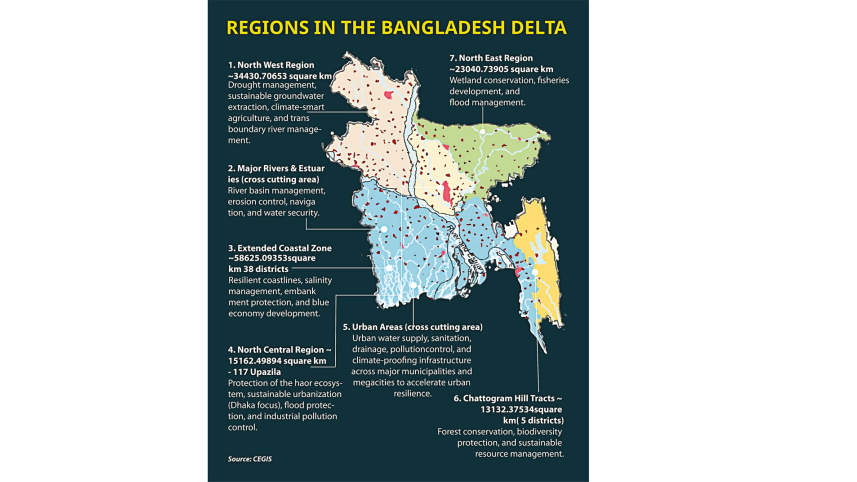
Unlike traditional strategies, the BDP 2100 stands out for its future-focused, scenario-based model that aligns short, mid, and long-term national frameworks. However, executing its multi-sectoral and multi-agency programs introduces unique institutional, political, and coordination challenges. To streamline this implementation, national strategies are transitioning into specific regional documents spanning five diverse geographic areas. Furthermore, adopting an Adaptive Delta Management concept helps untangle leadership overlaps, while customised Public-Private Partnership formats are being structured for regional investment. Ultimately, operationalising spatial planning through recent legislative acts and prioritising collaborative, knowledge-driven networks will successfully address transboundary and localised structural challenges.
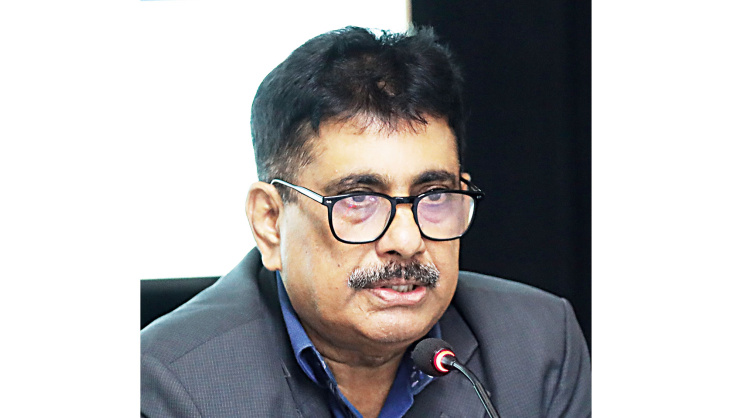
Alok Kumar Majumder
WASH Expert and Director, Programme & Operations
RedOrange Limited
The BDP 2100 must be fully aligned with national and sectoral development priorities to ensure its long-term impact. Since the plan covers water, climate, agriculture, disaster management, land use, and sanitation, stronger participation from the government, the private sector, civil society, development partners, and academia is essential. Furthermore, institutional knowledge and cross-sector expertise should be translated into practical recommendations that can guide policymaking. This collaborative approach will help turn the Delta Plan into an effective framework for sustainable and resilient development.
Patricia Solorzano
Senior Project Manager
SNV
A long-term vision, like the Bangladesh Delta Plan, can succeed only when translated into practical local action. Stronger municipal ownership, institutional capacity, sustainable financing, and evidence-based planning are essential to align local investments with national priorities. Public-private partnerships, supported by inclusive business cases, can strengthen service delivery and mobilise investment from local financial institutions and international partners. Simultaneously, improved contract management, academic engagement, operations and maintenance in parenthesis, and locally appropriate financing mechanisms can ensure sustainable urban water and WASH services.

Molla Karimul Islam
Operational Head, Sustainable Finance Department
City Bank PLC
The commercial banking sector demonstrates a strong commitment to sustainability, having disbursed substantial climate-aligned funding to the private sector. However, effectively financing the infrastructure-heavy components of the Delta Plan requires transforming traditional government projects into viable Public-Private Partnerships. Therefore, utilising blended finance models and viability gap funding is essential to make these initiatives commercially attractive to commercial banks. Furthermore, securing low-cost capital from international sources like the Green Climate Fund remains critical. Clearly articulating these financial structures within the plan will successfully unlock private sector investment for long-term climate resilience.
Dr Md. Shibly Sadik
Senior Policy Advisor (IWRM)
Embassy of the Kingdom of the Netherlands
Supporting institutions, government - private sector - knowledge organization - civil society partnership and strong political commitment of guaranteed long-term financing are three essential pillars for successful Delta management. The gap in public finances in Bangladesh can be filled by alternative sources. Therefore, innovative finances like bonds, green climate funds and private finances through collaboration (e.g. PPP) must be explored.. Transboundary water cooperation is another challenge which risks effectiveness of Delta management in Bangladesh. Netherlands as a twinning partner of Bangladesh helps strengthen its capacity of hydro-diplomacy for implementing the UN Water Convention. The Netherlands is improving its cooperation with Bangladesh towards a mutually beneficial partnership where Dutch knowledge institutions and the private sector would also play important roles specially in water and Delta management and maritime sector.
Dr. Kazi Matin Uddin Ahmed
Professor, Department of Geology
University of Dhaka
Addressing agricultural and water management challenges requires an Adaptive Delta Management approach. Consequently, ongoing research projects are focusing on coastal water systems, sustainable landscapes, and resilient agriculture. Furthermore, scientific solutions must be co-created alongside local communities, the private sector, and government agencies to ensure practical application. Additionally, establishing a centralised, unified knowledge management platform remains crucial for long-term data accessibility. Ultimately, building institutional capacity by training future Delta leaders will successfully bridge existing gaps between academia and policymakers, thereby ensuring the sustainable implementation of the Delta Plan.
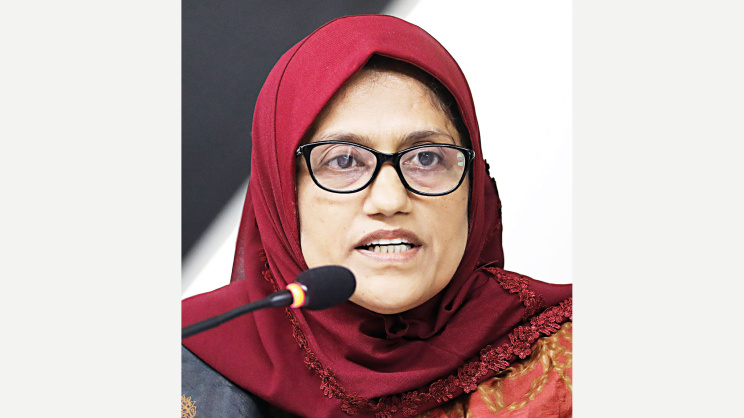
Shume Akhter
Senior Specialist
Institute of Water Modelling (IWM)
Understanding hydrology is critical for effective water sector planning, which relies heavily on advanced mathematical modelling. Notably, coarse-scale meta-models serve as vital planning tools to simulate future scenarios, factoring in climate change and rising sea levels. These simulations allow planners to predict long-term impacts on agriculture, polder management, and coastal salinity, enabling immediate, well-informed project decisions. Furthermore, detailed fine models remain essential for designing localised hydraulic structures during actual implementation. Combining these forecasting tools provides the strategic foresight necessary to evaluate intervention outcomes and ensure long-term climate resilience.
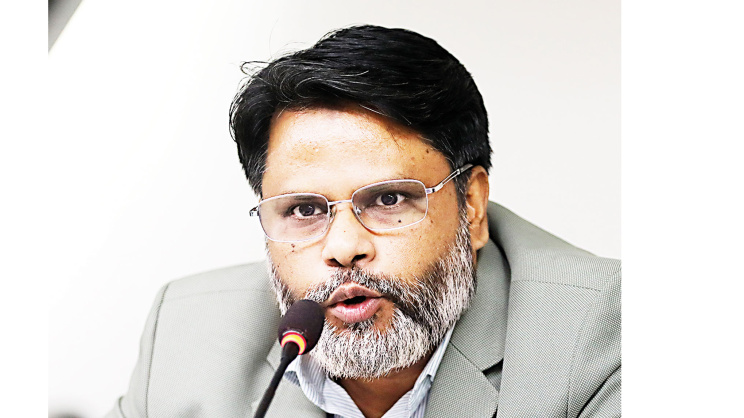
S.A. Abdullah Al Mamun
Senior Project Officer (Urban Structure)
Bangladesh Resident Mission
Asian Development Bank
 For all latest news, follow The Daily Star's Google News channel.
 The long-term Delta Plan requires extensive investment and joint action through strong multi-stakeholder partnerships. Clarifying government alignment with the plan’s infrastructure projects remains essential for effective development assistance. Major international commitments, such as the $5 billion pledge for the Integrated Growth Network Development project, are crucial for urban infrastructure and agriculture. Furthermore, a specialized Small Expenditure Financing Facility will be signed to focus on resilient river and canal restoration. This facility will successfully enhance cross-sectoral coordination, improve institutional capacity, ensure project readiness, and shift fragmented river management toward sustainable, long-term programmatic solutions.
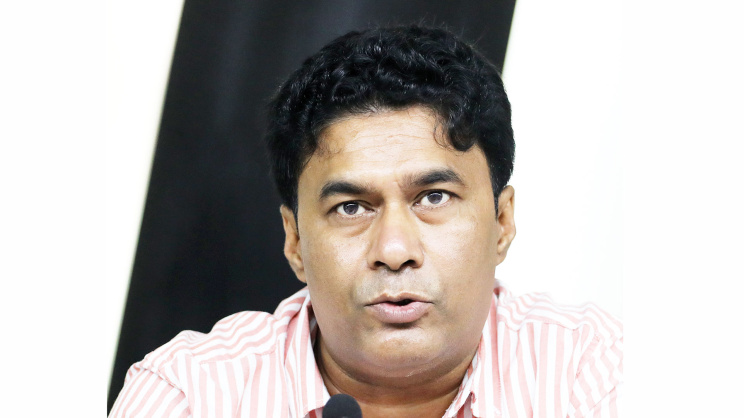
Golam Iftekhar Mahmud
Editor-in-Chief
Dhaka Stream
Historically, major ecosystem interventions face localised public resistance when critical data is withheld, or single-sided narratives dominate. As a result, ensuring complete, timely transparency regarding feasibility and environmental impact studies is vital to building positive public opinion before launching flagship initiatives like the Delta Plan. Furthermore, actively encouraging open media debates and providing prompt, evidence-based responses from authorities will successfully clarify complex project goals. Expanding information disclosure will transform abstract strategic frameworks into well-understood physical projects, thereby preventing unintended public repercussions and fostering genuine national ownership.
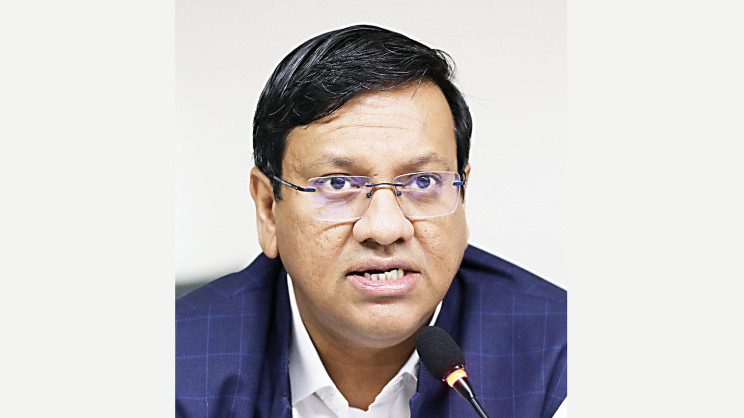
Towfiqul Islam Khan
Additional Director (Research)
Centre for Policy Dialogue (CPD)
The long-term Delta Plan remains essential, yet a shifting macroeconomic context with rising budget deficits requires a realistic financial approach. To ensure policy continuity across varying regimes, future execution must actively engage a broader spectrum of political and public stakeholders. Consequently, the plan should not be abandoned; instead, unbundling it into smaller strategic packages will foster immediate traction. Furthermore, adopting adaptive strategies to handle economic constraints, alongside cultivating multi-stakeholder collaborations from top leadership to civil society, will guarantee sustainable success.
Dr. Md. Liakath Ali
Director, Climate Change Programme
BRAC
BDP 2100 should be regularly reviewed to reflect changing climate, water, and economic realities. Therefore, stronger alignment with national climate policies, sectoral plans, and investment priorities is essential. Moreover, regular monitoring of implementation, greater public awareness, and wider engagement of government, civil society, and the private sector can strengthen ownership. Climate finance should be treated as a long-term investment rather than expenditure, while ensuring climate justice remains central to financing and implementation so that vulnerable communities receive adequate support and protection.

Shaikh Muhammad Mehedi Ahsan
Vice President (01)
Bangladesh Institute of Planners (BIP)
Achieving the Delta Plan’s objectives depends heavily on robust spatial planning across urban, regional, and rural areas to prevent environmental and infrastructural nuisances. Consequently, effectively implementing the newly enacted Spatial Planning Act through a structured three-tier system remains vital. This framework ensures that all time-bound public projects strictly align with local master plans and land-use regulations. Furthermore, broad policy debates involving professional institutions and citizens are necessary for major development frameworks. Prioritising local government and institutional reforms is the fundamental first step required to successfully deliver long-term national resilience.

Matsukawa Minako
Expert
Japan International Cooperation Agency (JICA)
Successful implementation of the BDP 2100 requires dismantling long-standing institutional silos in favour of cross-sectoral collaboration. Aligning public investment guidebooks to encourage multi-ministerial projects is crucial, as isolated sectoral approaches cannot effectively address complex climate challenges. Simultaneously, shifting toward evidence-based planning demands robust data governance to make vast existing scientific data publicly accessible, interoperable, and shared across agencies. Ultimately, mobilising the highest national authorities beyond planning divisions is essential to spearhead this multi-sector roadmap. Securing strong public opinion and collaborative development partner support will successfully drive these transformative, long-term national climate resilience goals forward.

Tanjim Ferdous
Head of Strategic Partnerships
The Daily Star
(Moderator of the Session)
The BDP 2100 provides a long-term roadmap for sustainable water management, climate resilience, environmental sustainability, and inclusive economic growth. However, translating this vision into measurable outcomes requires stronger alignment with national policies, investment priorities, and budget allocations. The roundtable explored ways to strengthen policy coherence, address institutional and financing challenges, enhance stakeholder ownership, and identify priority actions to accelerate Delta Plan implementation over the next five years.
Comments