The algorithm found 'Afreen Afreen'. Nusrat Fateh Ali Khan’s magic was already there

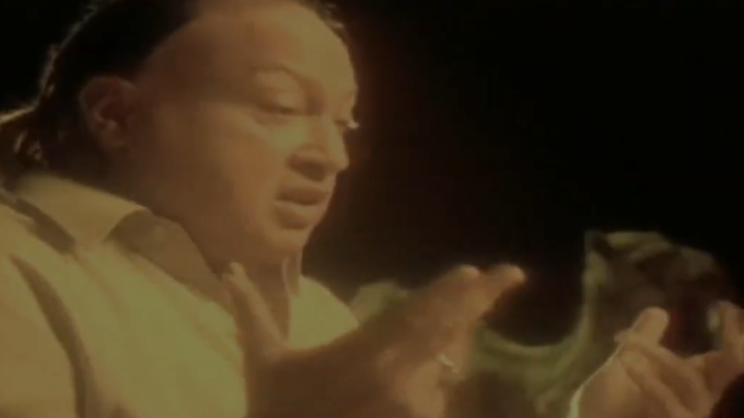
Between the choreographed dances, the manufactured controversies and the disposable paraphernalia of internet fame, there he is -- eyes closed, head tilted, one hand raised as though conducting an orchestra.
Scrolling when a sound forces one to surrender. That is how most of his new audience meets Ustad Nusrat Fateh Ali Khan now. Not through a concert hall or a record collection, but through the accident of an algorithm.

The voice is unmistakable, even to an uninitiated ear. There is a force in it that seems to arrive from somewhere beyond the recording, a strange amalgam of tenderness, anguish and exaltation. You may not understand the language. You may not know the man. Yet something has already happened.
The young discover him without nostalgia; the old return to him with memories intact. Both find something worth staying for.
Born on October 13, 1948, Nusrat was no ordinary singer. A virtuoso of qawwali, the devotional musical tradition associated with Sufi shrines, he inherited a formidable musical legacy and expanded its reach through a voice of extraordinary range, improvisational brilliance and emotional acuity.
His performances could begin in quiet contemplation and gather into ecstatic intensity, his intricate vocal ornamentations seeming to stretch the limits of what a human voice could express.
Yet, his genius cannot be confined to the genre that nurtured it.
One need not understand the theology of Sufi devotion, recognise the conventions of Urdu poetry or possess any knowledge of South Asian classical music to be moved by his singing.
The emotion precedes the explanation. His voice communicates in a language older than vocabulary: longing, surrender, exhilaration, grief.
These are not exclusively South Asian sentiments, nor do they require a passport to be understood.
Perhaps, this is why his music survives so effortlessly beyond its original context. The internet may have introduced him to a new generation, but the algorithm did not create his appeal. It merely stumbled upon something that was already universal.
Few compositions demonstrate this more beguilingly than Afreen Afreen, released in 1996 as part of the album Sangam.
Composed and performed by Nusrat Fateh Ali Khan, with lyrics by Javed Akhtar, music direction by Faakhir Mehmood with production and direction by Strings, the song was a meeting of musical instinct and poetic intelligence and the new era’s appeal that proved considerably more durable than the fashions of the decade that produced it.
The word Afreen, an exclamation of praise and appreciative astonishment, becomes the song's governing idea. The beloved is so beautiful that description seems almost futile; the singer can only return to his expression of amazement, each repetition making the sentiment more intimate, more insistent.
Javed Akhtar's lyrics draw upon the rich traditions of Urdu romantic poetry, in which a glance can become an event of cosmic significance and the beloved's beauty an occasion for something approaching transcendence.
Nusrat supplies the words with their irresistible emotional force. His voice moves between restraint and abandon, making the melody feel at once sensuous and rapturous. The arrangement provides a supple rhythmic foundation without overwhelming the vocal performance, allowing the refrain to linger in the mind long after the song has ended. It is romantic music that neither embarrasses itself with excess nor mistakes simplicity for shallowness.

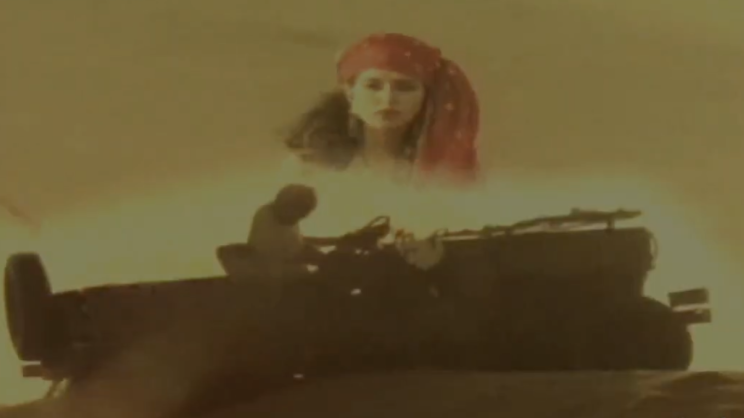
The original music video, featuring Lisa Ray and Himanshu Malik, adds another dimension to the composition's enduring appeal. There is an unmistakable sensuality to its imagery, but it is a sensuality governed by elegance rather than exhibitionism.
Ray's arresting beauty, Malik's presence, the lingering glances and the carefully cultivated atmosphere of romantic anticipation all complement the song's central conceit.
The video understands that attraction is not simply about what the camera reveals, but also about what it allows the imagination to supply.
 For all latest news, follow The Daily Star's Google News channel.
 It is sexy without being vulgar, romantic without becoming saccharine, and stylish without sacrificing sincerity. Three decades later, its essential allure remains undiminished.
The song's subsequent reinvention for Coke Studio Pakistan in 2016, performed by Nusrat's nephew Rahat Fateh Ali Khan and Momina Mustehsan, introduced it to another generation.
Its renewed popularity demonstrated that Afreen Afreen was not merely a product of its original moment. The composition could be reimagined, its textures altered and its emotional register recalibrated, without losing the quality that made it memorable in the first place.
While the former belongs to its moment; the latter continues to discover new meanings in the moments that follow.
His voice continues to travel, untroubled by the passage of time or the caprices of digital fashion.
Someone encounters it between two forgettable posts; someone else recognises the song from a distant memory; another hears it for the first time and wonders how a voice can contain so much.
The answers may lie in his virtuosity, his inheritance or his extraordinary command of musical expression. But they also lie in something less easily explained -- his capacity to make the listener feel that the song is speaking to an experience uniquely their own.
For Rushnaf Wadud: The songs he never released, the lives he changed
James, Hasan among major acts at upcoming Dhaka rock concert
BTS, BIGBANG lead nominations for 2026 MAMA Awards
Musician Rushnaf Wadud passes away

Mayer Tori revives folk music by introducing children to traditional instruments
Ishaan returns with new song ‘Dhoop’

Awaiting Uma, Awakening Durga

Gems of Nazrul celebrates a decade with glorious musical evening

Kushum Shikder makes musical comeback with ‘Probol Ghor’