


Awaiting Uma, Awakening Durga


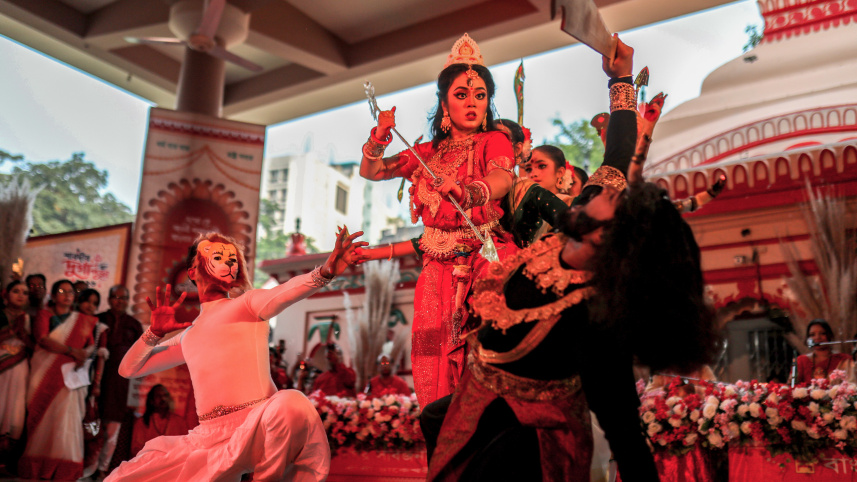
Durga arrives in autumn bearing two faces, two stories, and a single truth.
To the heavens facing a cosmic crisis, she is Mahishasura Mardini, the ten-armed warrior born of divine radiance, riding a lion into battle to vanquish the buffalo demon Mahishasura and restore balance to a trembling universe.

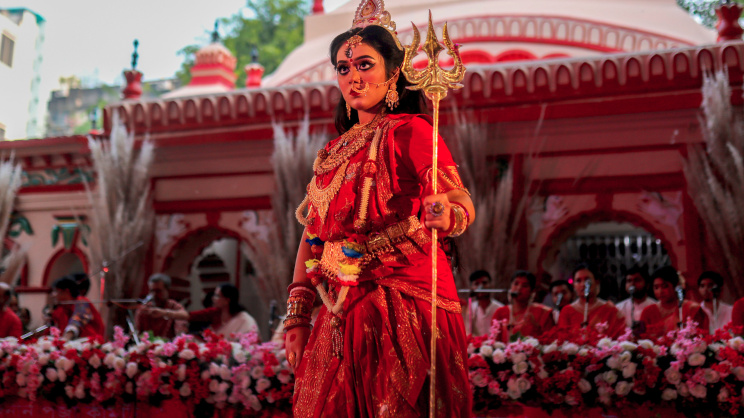
To her parents on earth, however, she is simply Uma, the beloved daughter returning home from distant Kailash for a fleeting annual visit, carrying with her the warmth of reunion and the inevitability of parting.
This remarkable duality unfolds over the very same autumn days.
Durga is at once destroyer and daughter, fierce protector and cherished child. In many ways, she embodies the philosophical idea of coincidentia oppositorum -- the coincidence of opposites -- the notion that seemingly contradictory realities may in fact coexist as inseparable parts of a larger truth.
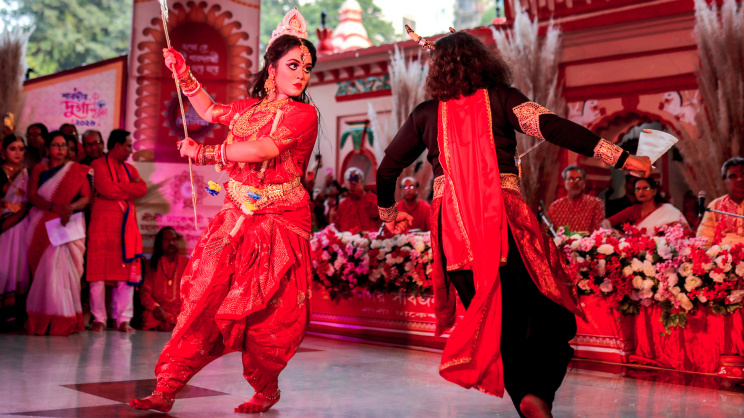
Yesterday, Hindu communities across Bangladesh marked Mahalaya, the sacred threshold between anticipation and arrival, heralding the goddess's descent to earth.
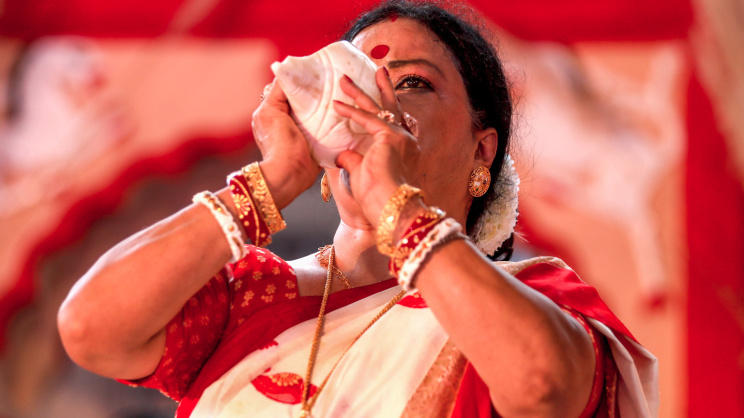
Her coming is announced by a tapestry of sounds: the beat of the dhak and dhol, the call of the shankha, the uludhwani, devotional songs, Sanskrit shlokas, and the rhythmic recitation of the Chandi.
For generations, Bangalee Hindu households have greeted this dawn before sunrise, gathering around radios, televisions, and now digital screens to listen to the iconic "Mahishasura Mardini" broadcast, immortalised by the legendary voice of Birendra Krishna Bhadra and a constellation of celebrated artistes.
"As children, we woke up to the sound of 'Mahishasura Mardini' on the radio," recalled 55-year-old Kironbala Choudhury, who attended the Mahalaya programme at Sree Sree Raksha Kali Mandir in Shankhari Bazar yesterday.
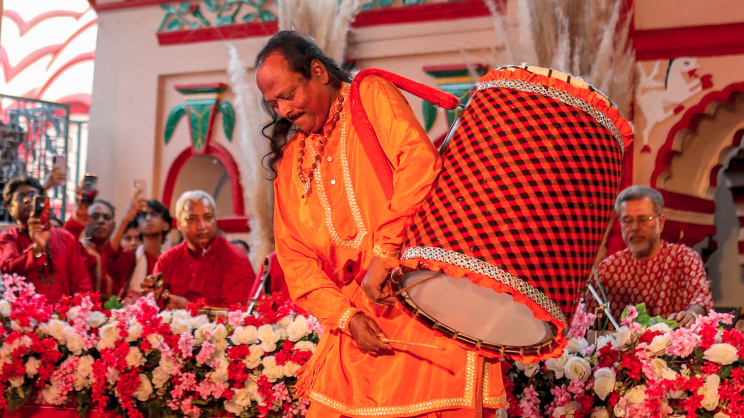
"Birendra Krishna Bhadra's voice, along with the clanging rhythm of the dhak and dhol and the uludhwani, announced that Mahalaya had arrived," she said. "Later, at the community puja mandap, we would join others in welcoming Durga, waiting for a daughter's grand homecoming."
For Kironbala, Durga Puja has always felt larger than ritual alone. "It has always been a community festival," she said. "People come together not only to worship, but to celebrate."
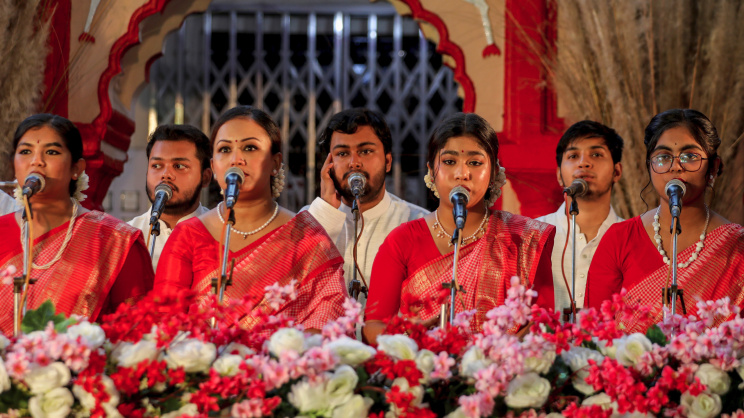
Across the country, from Dhakeshwari National Temple to mandaps in Old Dhaka neighbourhoods, Mahalaya observances featured Chandipath, conch-shell calls, mantras, devotional songs and collective prayers.
The soundscape itself seemed to mirror Durga's dual identity. The Chandipath and Sanskrit invocations call forth the goddess as a cosmic force -- the embodiment of strength, courage and protection. She is invoked to dispel darkness and establish harmony beyond barriers of caste, creed and colour.
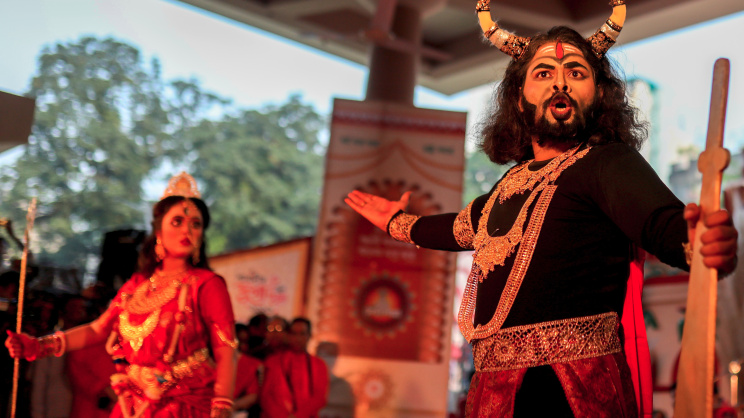
The Agomoni songs, by contrast, turn inward to the intimate world of family. Here, Durga is Uma. Menaka waits anxiously for her daughter, counts the days to her arrival, and dreads the inevitable journey back to Kailash.
That maternal yearning found enduring expression in the songs of 18th-century poet Ramprasad Sen:
Eibar amar Uma eley, ar Uma pathabo na. Bole bolbe lokey mondo, karo kotha shunbo na.
[This time, if my Uma comes home, I will not send her away again. Let people say what they will; I shall listen to no one.]
Parallel to these tender songs of longing runs another narrative altogether.
Mahishasura Mardini opens with Sanskrit verses celebrating the goddess who destroys evil.
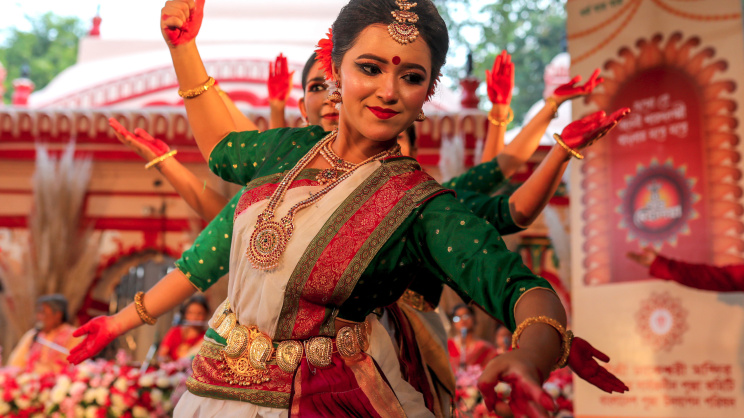
On the set of the programme, Dwijen Mukherjee's voice rises in invocation:
"Jago tumi jago, jago Durga, jago dasha praharana dharini"
[Awake, Durga, bearer of ten weapons; arise and vanquish the forces of darkness.]
 For all latest news, follow The Daily Star's Google News channel.
 For ninety-year-old Nabakanta Master of Shibganj in Chapainawabganj, that voice remains inseparable from Mahalaya itself. His family has organised Durga Puja at their ancestral home for decades. Though they continue the tradition of arranging live Chandipath recitations, he said it is often Birendra Krishna Bhadra's recorded voice that draws the largest crowds.
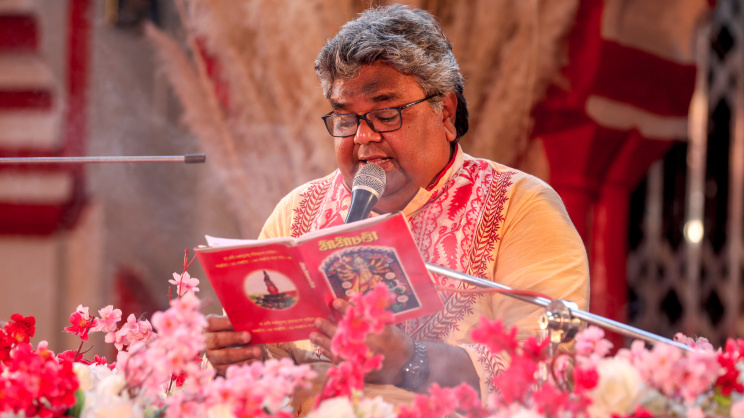
"We have always arranged Chandipath, just as our ancestors did," he said. "But when Birendra Krishna Bhadra's voice comes through the loudspeakers before dawn, hundreds of villagers gather at the temple without any invitation."
"People are deeply familiar with it. A live recitation reaches only those who are present, but 'Mahishasura Mardini' feels personal, familiar and homely. That is why we continue both traditions."
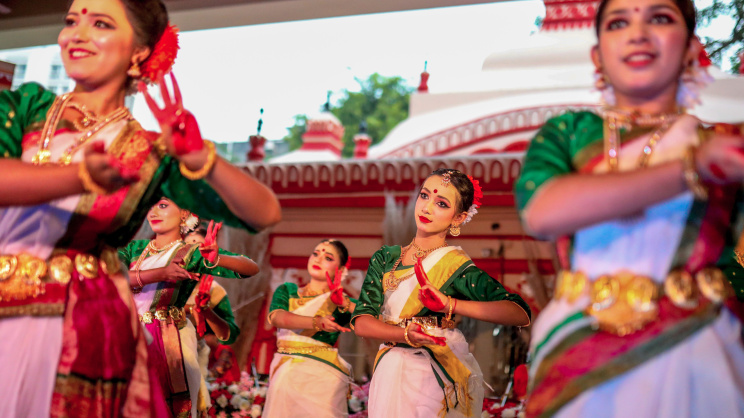
The medium may have changed over time. The radio sets that once occupied pride of place in Bangalee homes have largely yielded to television broadcasts, online recordings and streaming platforms.
Yet every Mahalaya morning, the old sounds return. The first roll of the dhak. The conch shell's call. Birendra Krishna Bhadra's unmistakable voice. The verses of the Chandi.
Together they announce not merely the beginning of a festival, but the return of a goddess who is, at once, a warrior destined to save the universe and a daughter coming home.
Comments