


In the age of AI allegations
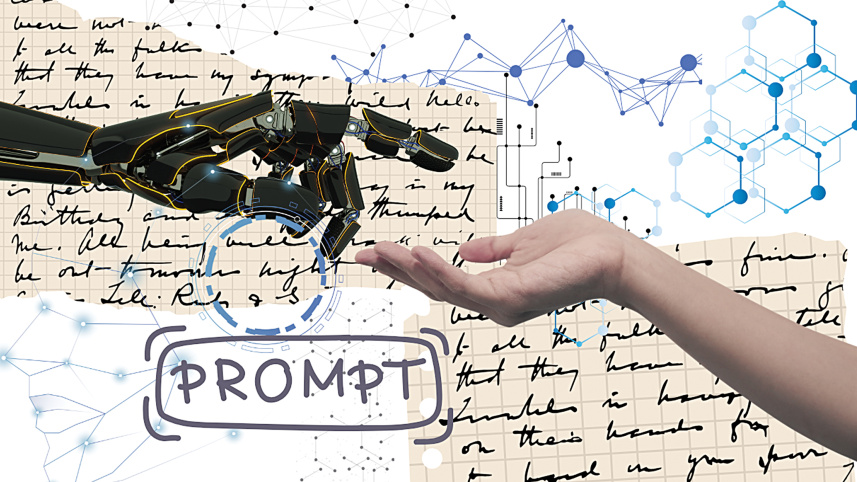
Last year, a friend showed me how a certain portal kept flagging his grad school application essay as written by AI. He told me he’d written the whole essay himself (and I know him well enough to trust him), and yet that portal was hurling AI-use allegations at him. I was baffled despite the reassurance of the fact that such detection portals are often faulty; anyone can write something wholly original these days, but those portals will not care and punch them with the allegations regardless.
In the last few days, AI allegations have stormed the Commonwealth Short Story Prize’s judging process. One story titled The Serpent In The Grove (a regional winner for the Caribbean) is at the centre of those allegations. Not only is the author’s headshot AI-made, but he’s also a public AI-promoter, as per his social media. The story is strewn with nonsensical metaphors and other cringe-worthy phrases that make very little sense. I am not going to set the context here; one can easily find it on The Guardian and Literary Hub after googling the story’s title. In any case, it seems very likely that the story was written with AI’s help (the writer’s promotion of AI across his social media and his headshot are very strong indictments).

The backlash that story is facing gives me hope. Readers are not willing to be duped into consuming AI slop. But there is also a benighted aspect to this whole furor, which causes one to worry about snap and definitive judgments. Besides the story in question, two other stories have also faced AI allegations. Those allegations stem from the fact that someone ran those stories in an AI-detection portal and found strong hints of AI usage. Whoever went on this mission to scan the presence of AI was clearly operating from a blind faith in these detection portals. Unfortunately, many people these days have a similar blind faith. They think these detection portals always present the Truth. They have lost sight of the fact that these portals are extremely susceptible to faulty judgements. And so it’s quite disheartening to see people lambasting writers based on unreliable judgements offered up by these portals.
I cannot help but throw up some questions on the page:
What does the future hold for writers? Do we have to be cognizant now of an AI voice lest we end up imitating it? Do we have to have a detector constantly hovering above our shoulders asking us to warp our language so that it doesn’t get flagged as AI? Do we have to fear a mob of online sleuths who will drag us through mud for using em dashes and other common, human ways of writing that are now apparently not a sign of human presence but that of AI? How should a writer quietly and calmly think and commit to their art and language when they are creating from a place of fear and stress in light of all these factors? Why does no one recall that AI’s sense of language has been trained via the non-consensual consumption of published, copyrighted works?
As I conclude my little rant, I think of a first-semester undergrad I had the misfortune of meeting multiple times earlier this year. He would always valorize ChatGPT and drone about how it helped him sail through his assignments (even his communication and writing class assignments), how his instructors couldn’t detect anything. He also called himself an expert in AI detection. People like him won’t think twice before using AI and AI-detection portals for the most mundane of tasks like writing an email. Their alarming reliance is something we need to push back against. Yes, criticising AI slop and its promoters is the right way to move forward. But there must also be a caution against smearing works (based off of the judgments from those erring portals) that are not strongly proven to be the products of AI. One must keep in mind, no matter how hard it gets in this dizzying age of AI slop, just because someone lacks the skills of forming original thoughts and sentences and is thoroughly reliant on AI does not mean everyone else is also an AI-reliant abomination.
Shah Tazrian Ashrafi has an MFA in Fiction from the University of Wisconsin-Madison, where he was a Graduate Teaching Assistant. He is an incoming English Literature PhD student at Southern Methodist University.
 For all latest news, follow The Daily Star's Google News channel.
Comments