


From sea blindness to strategic agency: Bangladesh's maritime culture in a crowded bay
A country's strategic culture is revealed not only by the weapons it buys or the alliances it signs, but also by the choices it repeats under pressure. Bangladesh has repeatedly preferred law over coercion, economic access over military alignment, and diplomatic flexibility over bloc politics. These habits form the core of an emerging maritime strategic culture. Yet that culture remains incomplete. Bangladesh increasingly understands the Bay of Bengal as an economic and geopolitical arena, but its institutions still often treat the sea as a collection of separate projects—ports, fisheries, energy blocks, naval platforms, and coastal protection—rather than as one connected strategic domain.
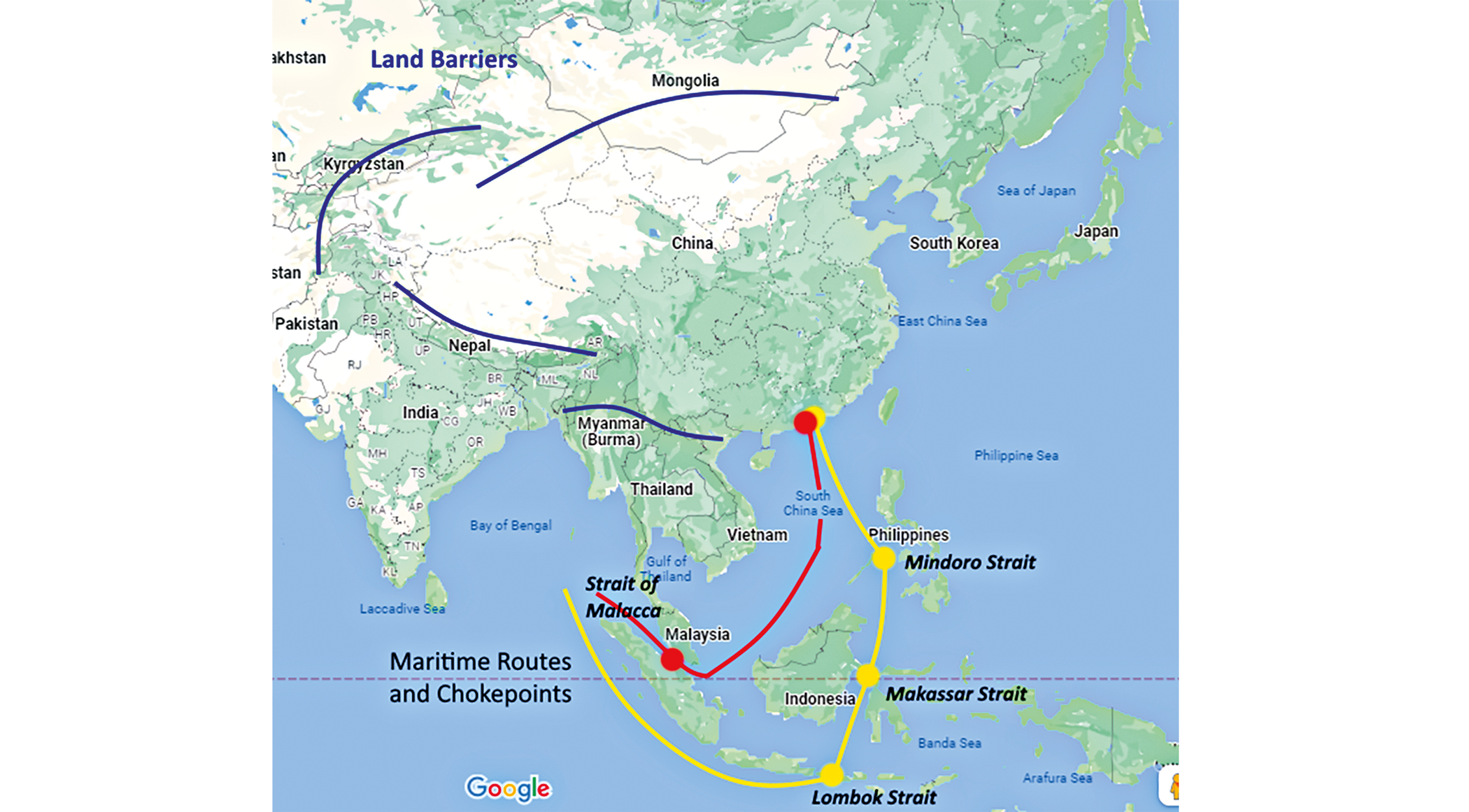
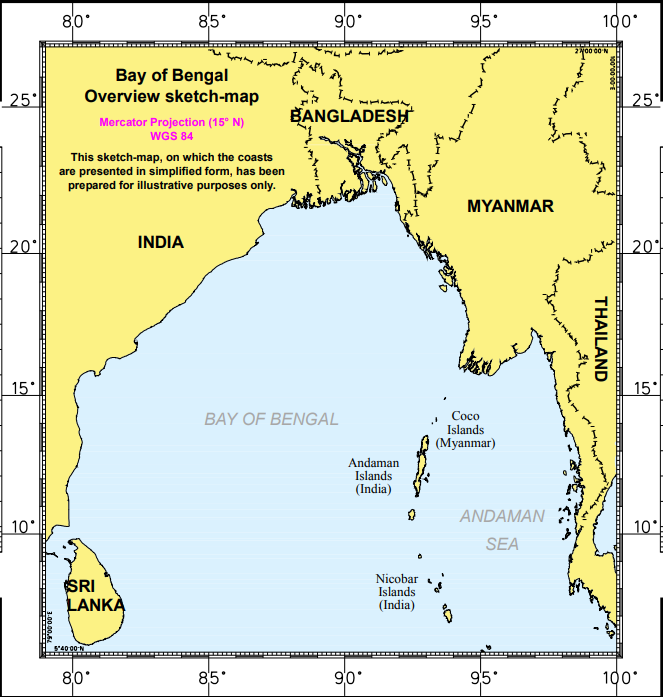
This distinction matters because the Bay of Bengal is no longer a quiet maritime periphery. It is where India's regional security ambitions, China's infrastructure and access strategy, Japan's connectivity vision, and Western interest in a "free and open Indo-Pacific" increasingly overlap. Bangladesh sits at the northern apex of this space, connecting South Asia with Southeast Asia and the Indian Ocean with the wider Pacific. Geography gives Dhaka relevance, but geography alone does not create power. Strategic agency comes from the ability to define national interests, sequence external partnerships, and prevent commercial dependence from becoming political vulnerability.
A culture shaped by vulnerability, not conquest
Bangladesh's maritime thinking has been shaped less by ambitions of sea control than by the need to protect a vulnerable deltaic state. The country's political imagination has historically been riverine and land-centred. Floods, borders, food security, and relations with larger neighbours have dominated national security discussions, while the sea has remained distant from public consciousness. This is the "sea blindness" that Bangladeshi maritime scholars have long criticised.
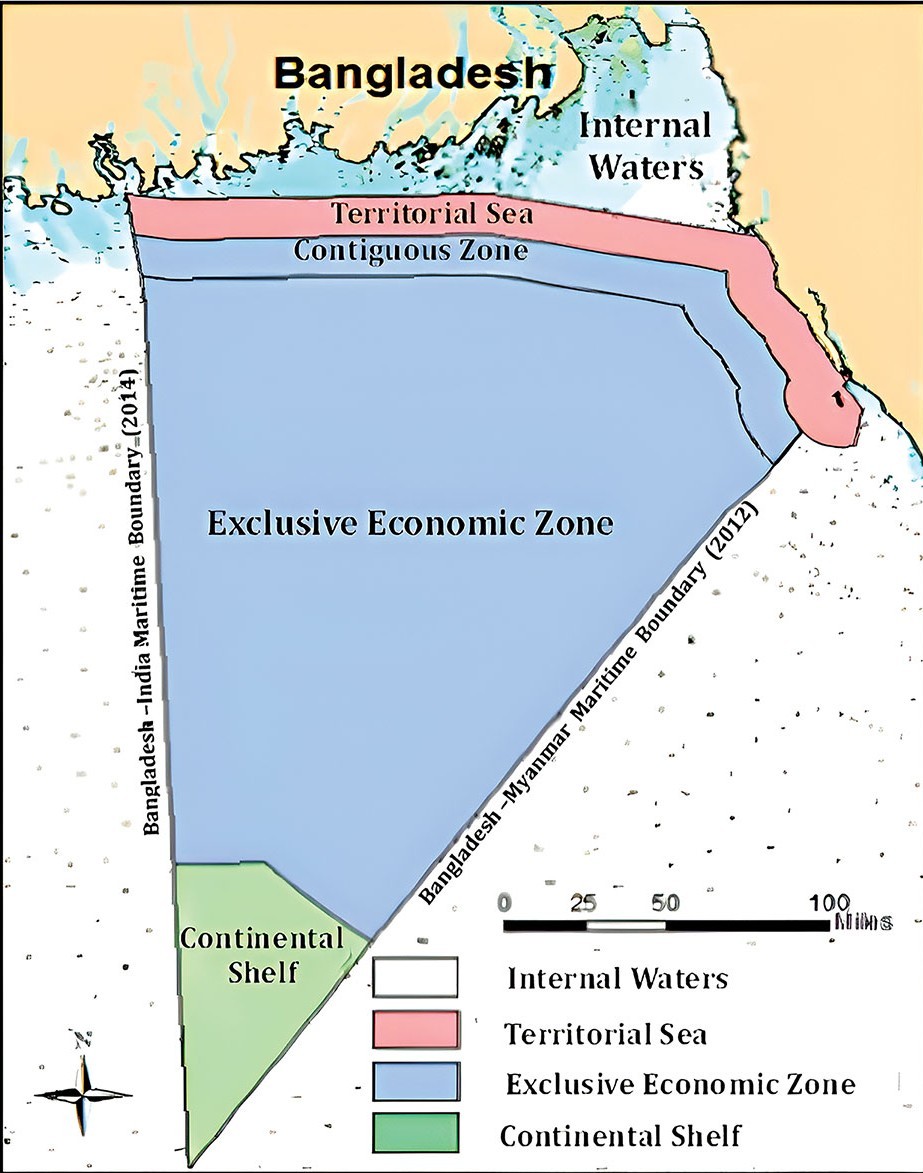
Even so, Bangladesh's early maritime legislation and later legal diplomacy reveal an important strategic instinct: when material power is limited, rules can become a form of power. The peaceful settlement of the maritime boundary disputes with Myanmar in 2012 and India in 2014 was therefore more than a cartographic success. It demonstrated a national preference for international adjudication, technical preparation, and negotiated legitimacy. Rather than securitising the disputes through naval confrontation, Bangladesh used the International Tribunal for the Law of the Sea and an arbitral tribunal administered by the Permanent Court of Arbitration to clarify its rights.
That legal victory also created a paradox. Bangladesh obtained internationally recognised rights over a vast maritime domain, but rights at sea are meaningful only when backed by knowledge, monitoring, and administrative presence. The next stage of sovereignty is not drawing lines on maps; it is detecting illegal fishing, regulating offshore activity, protecting shipping, mapping resources, responding to disasters, and enforcing environmental rules. In other words, Bangladesh's legalist culture must now evolve into a culture of implementation.
Strategic autonomy in crowded waters
The second pillar of Bangladesh's maritime strategic culture is strategic autonomy. The 2023 Indo-Pacific Outlook articulated a preference for a free, open, peaceful, secure, and inclusive region while emphasising sovereignty, international law, connectivity, and shared prosperity. Its language was deliberately less confrontational than that of many Western Indo-Pacific strategies. It did not define China as a threat, nor did it equate security cooperation with membership of a military bloc.
This reflected the enduring foreign policy maxim of "friendship to all, malice toward none", but in a more competitive environment. Bangladesh depends on China for trade, infrastructure, and defence equipment; on India for geography, connectivity, and regional stability; on Japan for high-quality infrastructure and long-term development finance; and on the United States and Europe for export markets, technology, and security cooperation. A maritime strategy that alienates any one of these partners would impose significant costs.
However, strategic autonomy cannot mean passive equidistance. It requires issue-based choices guided by clearly defined interests. Bangladesh may cooperate with one partner on port construction, another on maritime domain awareness, and a third on coastguard training without accepting an exclusive strategic alignment. But such diversification works only when Dhaka can evaluate the long-term implications of each agreement. The central question is not whether a partner is Indian, Chinese, Japanese, American, or European; it is whether the arrangement preserves sovereign decision-making, commercial competition, data control, and freedom of future access.

Ports as instruments of geoeconomic power
Nothing illustrates the intersection of development and geopolitics more clearly than Bangladesh's port agenda. Chattogram remains the country's principal trade gateway, while Mongla, Payra, Bay Terminal, and Matarbari are intended to expand capacity and reduce logistical constraints. These projects are commonly discussed in terms of cargo volume and gross domestic product, but ports are also instruments of foreign policy. They shape supply chains, hinterland connectivity, industrial geography, and relationships with external financiers and operators.
Matarbari is particularly significant. Developed with Japanese support under the broader Bay of Bengal Industrial Growth Belt vision, it is designed to receive larger vessels directly and reduce dependence on transshipment hubs. The first major container and multipurpose facilities are expected to become operational around 2029. The project could connect Bangladesh not only more efficiently to global shipping, but also to India's northeast and the landlocked economies of Nepal and Bhutan.
Bangladesh's future will not be decided by whether it "chooses" India, China, Japan, or the United States. It will be decided by whether it can choose well—project by project, agreement by agreement, and crisis by crisis. That ability is the essence of strategic culture.
The strategic lesson is not that Japanese involvement is inherently preferable to Chinese involvement, or vice versa. The abandoned Sonadia deep-sea port proposal showed how port decisions can become entangled in wider regional competition. Bangladesh should therefore resist interpreting every terminal as evidence of strategic alignment. Its objective should be a competitive, transparent, and commercially viable port network in which no external actor gains exclusive leverage over critical infrastructure.
Bay Terminal presents a related challenge. Supported by major World Bank financing and expected to increase Chattogram's handling capacity by 2030, it could transform the country's trade logistics. Yet the value of a terminal depends on more than breakwaters and cranes. Road and rail links, customs reform, digital port systems, transparent operator selection, and regulatory capacity will determine whether Bangladesh becomes a regional logistics hub or merely builds expensive waterfront assets.
Blue economy as security policy
Bangladesh's blue-economy discourse has often been rich in promise but poor in implementation. Fisheries, offshore energy, shipbuilding, marine biotechnology, tourism, seaweed, tuna, and ocean research are regularly listed as potential growth sectors. The government's proposed Tk 200 crore allocation for blue-economy research and development in the 2026–27 budget is therefore a welcome sign that the issue is returning to the policy agenda.
Yet money alone will not produce maritime capacity. Bangladesh still needs marine scientists, hydrographers, fisheries economists, maritime lawyers, data analysts, and offshore engineers. It also needs an agreed marine spatial plan to manage competition among fishing, shipping, conservation, energy, and tourism. Without such a framework, the blue economy can become a slogan used to justify disconnected projects or environmentally risky extraction.
This is also why environmental policy must be treated as security policy. Cyclones, coastal erosion, salinity, marine pollution, and declining fish stocks directly affect food security, migration, and social stability. A maritime strategic culture designed only around warships would misunderstand Bangladesh's threat environment. For a climate-vulnerable delta, mangroves, marine protected areas, early-warning systems, resilient ports, and sustainable fisheries are strategic assets.
Security beyond naval modernisation
The Bangladesh Navy's mission includes defending the country against threats from the sea, protecting maritime interests, supporting maritime governance, and contributing to national diplomacy. This broad mandate reflects the reality that maritime security is both military and constabulary. The Navy and Coast Guard must deter external threats, but they also confront piracy, trafficking, smuggling, illegal fishing, accidents, and natural disasters.
Recent incidents make this multidimensional character clear. Bangladeshi forces have intercepted illegal fishing vessels, disrupted human-trafficking operations, and expanded cooperation with partners such as Australia on drones and operational information. Such activity points to the growing importance of maritime domain awareness: the ability to combine coastal radar, automatic identification data, satellite imagery, intelligence, and patrol assets into a shared operational picture.
Bangladesh's most urgent capability gap may therefore be institutional rather than kinetic. Ships and aircraft are necessary, but they cannot compensate for fragmented information. The Navy, Coast Guard, port authorities, fisheries authorities, customs, the police, and environmental agencies need interoperable systems and clear procedures for sharing data. Strategic autonomy also requires sovereign control over sensitive maritime information, even when foreign partners provide technology and training.

The Rakhine factor
The instability in Myanmar's Rakhine State has transformed Bangladesh's south-eastern maritime frontier. The Arakan Army's expanding influence, continuing conflict, refugee movements, trafficking routes, and repeated detention of fishermen have blurred the line between interstate security and engagement with a powerful non-state actor. The Bay near Teknaf and St Martin's Island is no longer only a fishing ground or tourist destination; it is part of an active conflict environment.
Bangladesh's response has so far combined border vigilance, operational contact, and diplomatic caution. That approach is consistent with its wider strategic culture: avoiding escalation, preserving channels of communication, and seeking international support. But the situation demands more than temporary crisis management. Dhaka needs a dedicated inter-agency mechanism that links developments in Rakhine with maritime surveillance, refugee policy, counter-trafficking operations, and the protection of coastal communities.
The Rohingya crisis also shows why human security cannot be separated from maritime strategy. Dangerous sea journeys, organised trafficking, and declining humanitarian support have turned displacement into a regional maritime problem. A secure Bay of Bengal is not merely one in which naval vessels can navigate freely; it is one in which criminal networks cannot exploit desperate populations and coastal communities are not left to bear the consequences of prolonged regional instability.
Bangladesh should also move from general balancing to disciplined partnership management. Every major port concession, defence purchase, hydrographic survey, undersea cable, or data-sharing arrangement should be assessed against a common sovereignty framework. This should examine debt exposure, operator concentration, dual-use potential, cybersecurity, environmental risk, technology transfer, and exit provisions. Strategic autonomy is preserved not by avoiding agreements, but by negotiating them with knowledge and institutional memory.
From projects to doctrine
Bangladesh's maritime strategic culture can be summarised through four recurring preferences: legalism, developmentalism, strategic autonomy, and defensive security. These are sensible foundations for a medium-sized, trade-dependent, and climate-vulnerable state. The weakness lies not in the principles themselves, but in the absence of a durable architecture that converts them into coordinated policy.
The country now needs a publicly articulated national maritime strategy that survives changes of government. It should define critical infrastructure, establish rules for foreign investment in ports and digital systems, clarify the division of labour among maritime agencies, and set measurable priorities for fisheries, offshore energy, environmental protection, and naval capability. A national maritime coordination council with technical authority and regular parliamentary reporting could reduce institutional fragmentation without creating another ceremonial body.
Bangladesh should also move from general balancing to disciplined partnership management. Every major port concession, defence purchase, hydrographic survey, undersea cable, or data-sharing arrangement should be assessed against a common sovereignty framework. This should examine debt exposure, operator concentration, dual-use potential, cybersecurity, environmental risk, technology transfer, and exit provisions. Strategic autonomy is preserved not by avoiding agreements, but by negotiating them with knowledge and institutional memory.
At the regional level, Bangladesh should promote practical Bay of Bengal cooperation on search and rescue, disaster response, illegal fishing, marine pollution, and scientific research. These are areas in which India, Sri Lanka, Myanmar, Thailand, and other littoral states share interests, even when their broader politics diverge. Bangladesh's diplomatic credibility is strongest when it presents the Bay not as an arena to be divided among major powers, but as a common space requiring rules and stewardship.
The sea as a measure of state capacity
Bangladesh's maritime future will not be decided by whether it "chooses" India, China, Japan, or the United States. It will be decided by whether it can choose well—project by project, agreement by agreement, and crisis by crisis. That ability is the essence of strategic culture.
The country has already demonstrated that patient law and diplomacy can overcome geographic disadvantage. It is building the infrastructure that could make the Bay of Bengal central to its next phase of economic development. But strategic relevance without institutional capability can attract pressure rather than influence. Bangladesh must now turn legal rights into presence, port construction into geoeconomic leverage, and non-alignment into informed strategic autonomy.
The central task is therefore as much cultural as it is bureaucratic: Bangladesh must stop viewing the sea as the edge of the country and begin treating it as the centre of its security, economy, and external relations. Only then will its maritime geography become genuine strategic agency.
Mohd Amdadul Haque is a doctoral candidate in the Department of International Politics at Shandong University and an Assistant Professor in the Department of Political Science at Gopalganj Science and Technology University. His work focuses on geopolitics, maritime security, great-power rivalry, and Bangladesh's foreign policy. He can be reached at milon93@gmail.com.
Send your articles for Slow Reads to slowreads@thedailystar.net. Check out our submission guidelines for details.
The Indo-Pacific at a crossroads: What it means for Bangladesh

Could the Teesta redraw the map of India-Bangladesh diplomacy?
Iran’s China moment? From isolation to regional hegemony

Makkah Pact: The geopolitics beyond Islamic solidarity

Myanmar’s deteriorating crisis and the political future of the Rohingya

Bangladesh between India and China: The dilemma of defence diversification

What Bangladesh should ask before joining the Makkah Pact

Nepal’s difficult passage: Political change meets ecological crisis

BRICS at 20: Why the New Delhi Summit matters to the Global South
