


‘The scarcity of actors forced me back on stage’

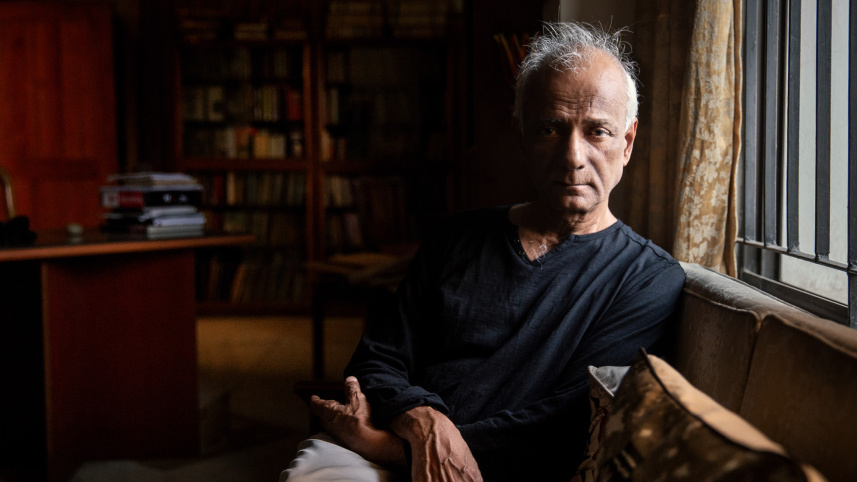
There is a particular irony in watching Syed Jamil Ahmed return to the stage after more than four decades as an actor. One of Bangladesh’s most influential theatre directors, who has spent much of his career shaping actors from the other side of the performance, is suddenly subject to the same conditions he has long asked performers to navigate.
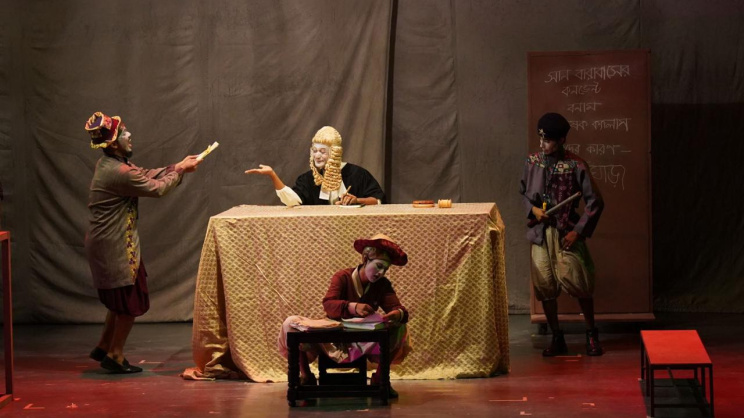
In “Round Heads and Pointed Heads” (“Golmatha Ar Chokhamatha”), the maestro of Bangladeshi theatre appears as a judge—a relatively brief role, but one that acquires additional weight because of the actor behind it.

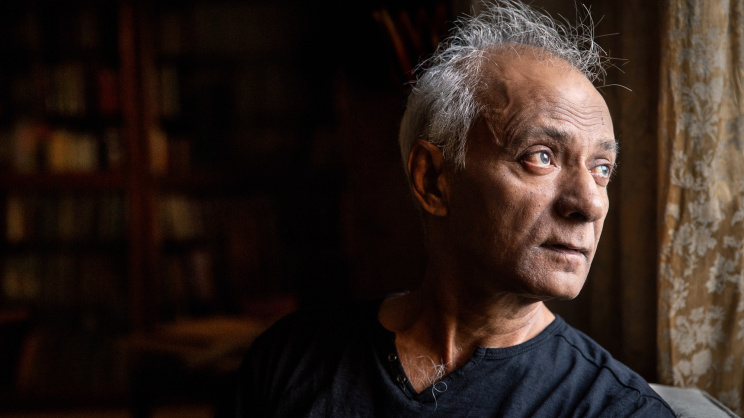
“Theatre is very much an actor’s medium. It is an event where a fictive world is created, and in that fictive world, the actors interact directly or indirectly with the spectators in a three-dimensional space,” he told The Daily Star.
The acclaimed theatre practitioner has spent most of his career on the other side of that equation. But returning to the stage has reminded him of something he had known since his training days: unlike film, theatre leaves the actor exposed.
“In theatre, a director has very little to do once the play is on. It is entirely the actors who weave the performance at one go. If they make a mistake, that mistake stays. If they succeed in holding the play together, it is their success.”

For the most prominent teacher of theatre in Bangladesh, this is not simply a distinction between two artistic forms. It is also a responsibility that a director must understand before asking an actor to step into that vulnerability.
“I believe that if one has to be a stage director, one really has to understand the actor very well,” he says. “I knew this from my National School of Drama days, but this time has strengthened that belief in me and also made me see clearly the vulnerable condition in which our actors, mostly from the middle class, act in a neoliberal, globalised world.”
Ahmed’s own experience with acting began at the National School of Drama, where he trained from 1975 to 1978. During his first year, all students went through a rigorous acting course before choosing their specialisation in direction, stagecraft or acting.
He chose direction. “I felt more comfortable behind the scenes than in front of the spectators,” he recalls.
After returning to Dhaka in 1979, Ahmed performed in two plays with Dhaka Theatre. The experience, once again, led him towards directing.
“During this acting process again, I found out that I feel more comfortable directing than acting,” he says. “Acting is a craft that requires a lot of understanding of the mechanics of acting.”
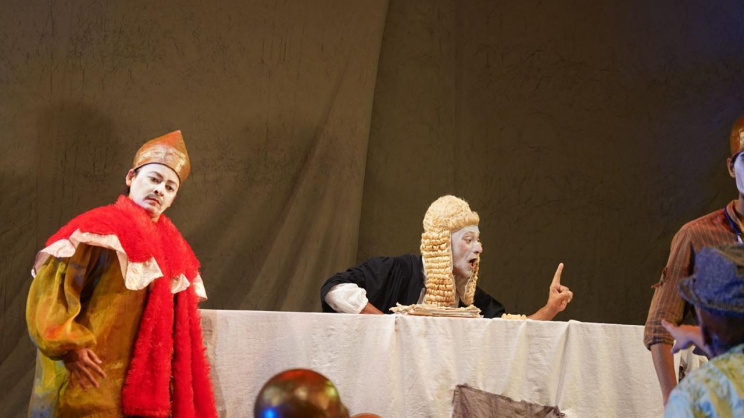
Yet stepping onto the stage again after 42 years has given him a different understanding of that craft.
“If the actor is not guided properly to build his or her character, then the actor has to be the one who faces the spectators and the criticism,” Ahmed says. “If there is not proper guidance from the director, then the actor tries various tricks from his or her bag of experience.”
But there is another, more practical reason why Ahmed returned. The production needed actors who could commit to the rehearsal process.
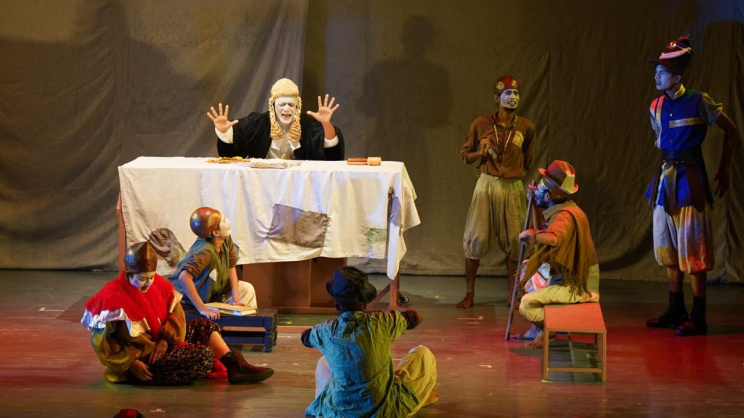
“What moved me, or rather forced me, to return to the stage is the scarcity of actors in Dhaka city,” he says.
However, the thespian is careful not to blame the actors. “Everybody is busy, and understandably so. I have no complaint. But it is difficult to get actors who are willing to commit their time, and also because there is no professional theatre in Bangladesh.”
“After this situation arose where very few actors were available, I suggested to Mohsina, to assure her and to stand by her and stand by Spardha, that I am willing to come on stage,” he said. “I think that helped because my presence attracted others, and gradually they gathered a team around Mohsina which was committed wholeheartedly to work.”
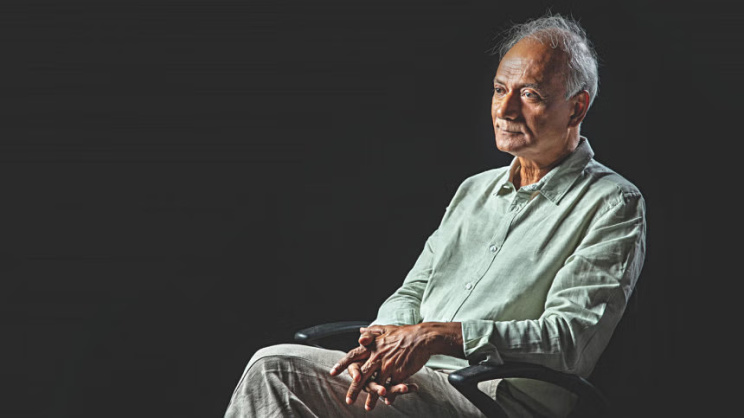
His return also changes how one sees his performance in Round Heads and Pointed Heads. He does not appear to be trying to dominate the production simply because of who he is. His presence carries the weight of his history, but the role itself remains part of the larger ensemble.
That seems appropriate for a director whose own comments return repeatedly to the actor’s place within theatre. The stage, after all, is the one place where the director ultimately has to let go.
Syed Jamil Ahmed chose direction because he once felt more comfortable backstage. Four decades later, it was the shortage of actors that brought him back to the stage.
 For all latest news, follow The Daily Star's Google News channel.
 This time, in the latest stagings of “Golmatha Ar Chokhamatha”, he was not the person directing the performance. He was the one who had to live through it.
Comments