The blind spots of Bangladesh studies

In conversation with Willem van Schendel of the University of Amsterdam, a leading scholar whose work has made significant contributions to Bangladesh studies and to the historical, anthropological, and sociological understanding of Bengal and its neighbouring regions.
The Daily Star (TDS): I would like to begin by asking about your long engagement with Bangladesh studies. Your early research focused on rural and agrarian issues, but over time your work broadened to include borders, migration, labour, environmental history, and regional connections. How did you first become involved in the field, and how has your scholarship evolved over the decades, culminating in your acclaimed history of Bangladesh?
Willem van Schendel (WVS): That's a long story. I first became interested in Bangladesh as a student. My university offered master's students the opportunity to spend time learning to do anthropological fieldwork, and I chose to go to Bangladesh. I spent some months in a village in Rangpur and became fascinated by the villagers and by a society that was so different from my own. So I decided to return to Bangladesh for PhD research.

Village and peasant studies were popular at the time, and I received a research grant to spend a year and a half in Bangladesh. I was interested in testing theories about how peasantries develop under capitalism (a popular theme at the time), and I thought it would be a good idea to re-study villages and combine anthropological fieldwork with archival research in district record rooms. I selected a Bogra village (studied by Ramkrishna Mukherjee in the 1940s), a Comilla village (studied by S.A. Qadir in 1960), and the Rangpur village that I had studied some years before. And I did not do it alone: two recently graduated students from Rajshahi University became co-researchers: Md. Mahbubar Rahman and Aminul Haque Faraizi. They both went on to pursue academic careers.
Since then, my curiosity about Bangladesh, India, and Myanmar has led me down various paths and research themes, and I still combine anthropological and historical approaches. I like to experiment with new lines of research and reach different audiences, and in recent years I have become interested in broader interdisciplinary work.
TDS: How should we understand the borders of north-eastern Bangladesh and its neighbouring regions? Before the emergence of the modern nation-state, this region was shaped by the fluid movement of people, goods, and ideas across the trans-Himalayan zone, Burma, China, and the wider East Asian region. However, the partition of the subcontinent in 1947, and more decisively the emergence of Bangladesh in 1971, transformed these once-fluid spaces through formal border demarcation.
WVS: I do not think it is helpful to consider East Bengal from an "empire" perspective—whether North Indian or British Indian—because this approach starts from the assumption that this was a peripheral region. It is much more helpful to understand historical Bangladesh as a core component of a large region between Kolkata and Kunming in Yunnan, China. For millennia, routes have connected people, goods, and ideas here, crisscrossing borders that came and went over time.
The mid-twentieth century saw the birth of an experiment that continues today: obstructing these old connections and flows in the name of national sovereignty. We now think in terms of modern states—Bangladesh, (north-east) India, and Myanmar—and we have largely lost our ability to think across them. As a result, we find it hard to recognise that these cross-border flows are continuing in modified form. States try to regulate them by means of import-export licences, passports, visas, and restrictions on digital communication—and they criminalise flows that they cannot control by defining them as "smuggling", "unauthorised migration", or "subversion". But they cannot stop them completely.
I also find borderland studies helpful in correcting the common assumption that Dhaka can be used as a shorthand for Bangladesh, and that what happens in Dhaka is far more relevant than what happens in the rest of the country, where no less than 85 per cent of Bangladeshis live. Using a borderland lens to observe the actual working of state institutions, the mindsets of elites, and the fate of struggling communities opens up a very different perspective on the multitude of people whom we think of as “Bangladesh society.”
What makes this region interesting is precisely the imposition of a Euro-American “nation-state” model on societies that are dynamic and shape this model to fit their own creativity and aspirations—as they do all over the world (including Euro-America). Rather than deploring this as a “deviation” from the norm, a “shortcoming,” or a “failure” (as is routinely done), the forms that “nation” and “state” take here should be understood on their own merits. For example, how can the example of the Bangladesh state and the tortuous trajectory of Bangladeshi nationhood be used to theorise the nation-state model worldwide?
I have found the study of borderlands useful because borderlands require you to think differently about societies: not from some imagined power centre outwards, but from the dynamism of cross-border connections inwards. They are an antidote to the “territorial trap” that many studies of Bangladesh fall victim to: the assumption that the state is a fixed spatial unit of sovereign rule, that the state acts as a container of society and the economy, and that there is a sharp division between the domestic and the foreign.
I also find borderland studies helpful in correcting the common assumption that Dhaka can be used as a shorthand for Bangladesh, and that what happens in Dhaka is far more relevant than what happens in the rest of the country, where no less than 85 per cent of Bangladeshis live. Using a borderland lens to observe the actual working of state institutions, the mindsets of elites, and the fate of struggling communities opens up a very different perspective on the multitude of people whom we think of as “Bangladesh society.”
TDS: In A History of Bangladesh, you describe the Bengal Delta as a crossroads shaped by its long-term geographical and environmental history, noting that by the end of British rule its age-old agrarian frontier had effectively closed. Today, nearly one crore Bangladeshis live and work abroad—mostly in the Middle East, as well as in Europe, the United States, and Australia. While this migration is part of a broader pattern across South Asia, can it also be understood as a consequence of the closure of Bangladesh's agrarian frontier and the search for new economic frontiers beyond the delta?
WVS: The deltaic environment, with its shifting rivers and frequent floods, has always forced many people to be on the move. For humans, despite the hazards, the benefits of an abundant monsoon environment and rich alluvial soils far outweighed the risks to life. This is why agriculture expanded (at the expense of the natural vegetation and animal life), and the delta became so densely populated.
One of the striking features of Bangladesh studies is a widespread loss of memory about historical connections to the north, east, and south-east. Links to the west (notably West Bengal, Pakistan, the Arab world, and the British Isles) have always been privileged. Reading studies of Bangladesh, you often get the feeling that it is at the eastern end of something—South Asian civilisation, the world of Islam, Bengali culture—beyond which there is a break. But equally foundational connections to Tibet, Bhutan, present-day Northeast India, Burma, and Arakan have been consistently downplayed—to the extent that many people in Bangladesh are incredulous that such links mattered or even existed. There is an urgent need for Bangladesh scholars to overcome this “eastern blindness” and (re)connect with scholars in (and working on) those regions.
Migration from the delta is hardly a new phenomenon, but over time its character and destinations changed. Previously, much emigration was in search of agricultural livelihoods in areas surrounding the delta, or as contract labourers in other parts of the colonised world. But over time, non-agricultural migration became more important. People who had benefited from education in Bangladesh took their skills abroad to build careers in highly industrialised societies, while less educated Bangladeshis joined a global underclass, eking out a living as labourers or service providers for wealthier employers abroad. Although the closing of the agricultural frontier in Bangladesh largely predated independence, the post-1971 movement of state-assisted settlers into the Chittagong Hill Tracts shows how that frontier continued to move in more recent times.
TDS: Given East Bengal's historical ties with the western parts of Bengal across present-day India and Pakistan, through shared or partly shared language, religion, and regional connections, how might we reorient our perspective towards the East? What kinds of anthropological, sociological, and historical approaches to networks and imagination are needed to broaden this understanding?
WVS: One of the striking features of Bangladesh studies is a widespread loss of memory about historical connections to the north, east, and south-east. Links to the west (notably West Bengal, Pakistan, the Arab world, and the British Isles) have always been privileged. Reading studies of Bangladesh, you often get the feeling that it is at the eastern end of something—South Asian civilisation, the world of Islam, Bengali culture—beyond which there is a break.
But equally foundational connections to Tibet, Bhutan, present-day Northeast India, Burma, and Arakan have been consistently downplayed—to the extent that many people in Bangladesh are incredulous that such links mattered or even existed. There is an urgent need for Bangladesh scholars to overcome this “eastern blindness” and (re)connect with scholars in (and working on) those regions.
Another connection that does not receive due attention is the fact that Bangladesh's state sovereignty extends far to the south. An entire “maritime province” was added to the country in 2014, when an international tribunal allocated a large chunk of the Bay of Bengal to Bangladesh. As a result, the country's territory expanded by 80 per cent. Studies of Bangladesh are still weak on this region—they could be said to suffer from “ocean blindness.”
TDS: You edited Francis Buchanan's travel diary on south-eastern Bengal (1798). How do you assess the colonial understanding of the south-eastern regions of Bengal and the adjoining hill tracts? To what extent was this understanding shaped by imperial interests such as exploration, forest extraction, and territorial control, rather than by the social and cultural realities of the region? Looking back today, how should we reinterpret these landscapes and communities through newer historical and anthropological approaches?
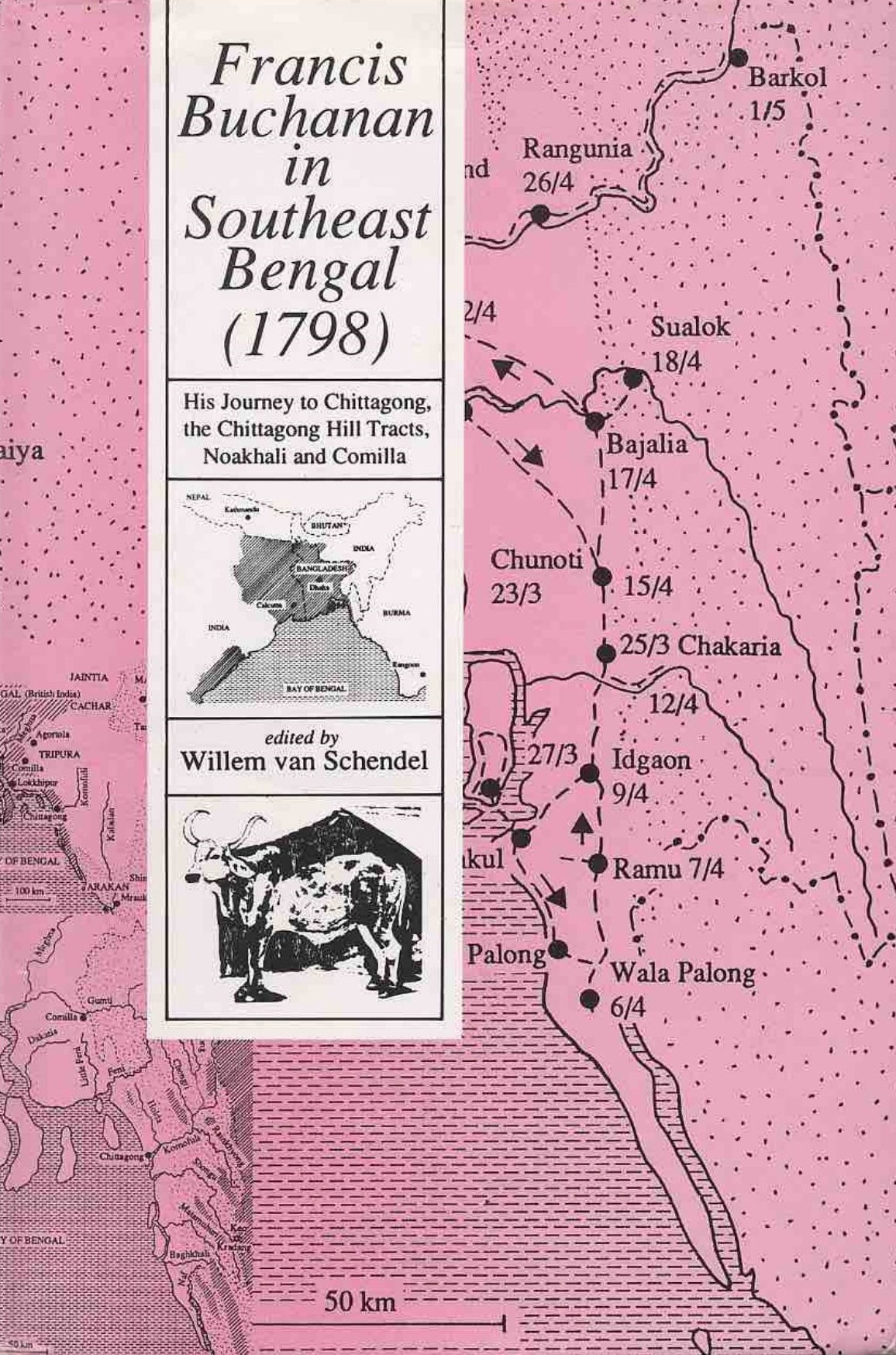
WVS: Francis Buchanan was an agent of British imperial exploration, and he was one of the best. A first-class observer, he brought an anthropological and environmental sensibility to his work. In the late eighteenth century, he was sent on a journey through south-eastern Bengal with a clear purpose: to find out how this region could be made politically safe and economically productive for the English East India Company. His report became an outstanding historical source because of his uniquely detailed descriptions of his meetings with local people and his serious attempts to understand the cultural complexity of the inhabitants of the hill country. A man of his time, he held many ideas that we now—more than 200 years later—regard as colonial, Eurocentric, biased, and misguided. But it is important to remember that he was very enlightened and open-minded for his time, and that he rendered Bangladesh studies a great service by providing a very early, detailed account of the Chittagong region. In his report, the region, its landscapes, and its people come to life.
TDS: What is a productive way to approach the history of south-eastern Bangladesh from the perspectives of humans, animals, and plants? Given its mountainous landscape, where human–non-human interactions have shaped livelihoods, mobility, and distinctive agricultural practices, how can these histories be understood through newer labour and environmental approaches that differ from those of the Bengal plains?
WVS: Studying human–non-human relations is becoming more prominent with our growing awareness of how humans are always entangled in more-than-human environments and how human-induced climate change and biodiversity loss are changing those environments. To this end, social scientists must open themselves up to the knowledge generated by natural scientists.
This is a challenge, as I found out some years ago when co-writing a book with Joy Pachuau (Entangled Lives) about what we called the “eastern Himalayan triangle,” which includes the uplands of south-eastern Bangladesh. And I have just finished a new book that tries to combine social science and natural science approaches to the lowlands, especially the tidal lands and muddy coasts of the Bay of Bengal—from Arakan/Rakhine in the east to Odisha in the west.
It looks at how humans, animals, and plants have made a living in these low-lying, partly brackish and saline landscapes, and how a more-than-human (or interspecies) approach enriches our understanding of deltaic places and societies subject to the rhythms of the ocean. Tides, monsoon rains, clouds, and cyclones all originate in the ocean but, unlike natural scientists, social scientists working on Bangladesh rarely take ocean rhythms and non-humans seriously in their research.
There is great scope for improvement here. We must re-examine an assumption underlying most of the social sciences—that there is an autonomous human sphere. In fact, that sphere has always been intimately connected with environmental processes. Another issue is the need to rethink the terrestrial blinkers of the social sciences. We are a land species, but a myriad of human and non-human connections have always linked the land to the ocean. Bangladesh provides a wonderfully muddy, soggy, and understudied example of these connections.
TDS: You have argued that Bangladesh studies has long suffered from blind spots, institutional limitations, and a sense of low self-esteem, partly because much of the earlier scholarship was shaped by external research agendas that treated Bangladesh as a "test case" of the global South. As more Bangladeshi scholars engage with the field both at home and internationally, what new methodological or theoretical approaches do you think are needed to reshape Bangladesh studies, and what will be crucial to its future development?
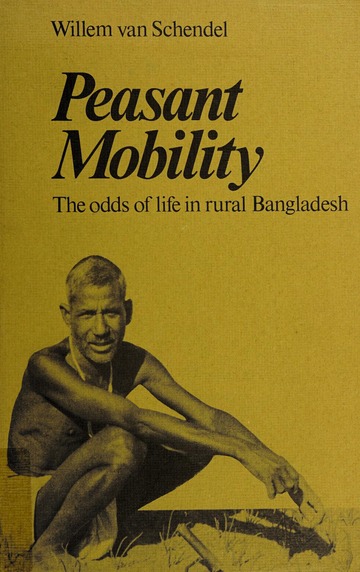
WVS: When I started studying Bangladesh in the 1970s, the research landscape was entirely different from what it is now. Research agendas were determined by foreign interests, Bangladeshi scholars were in dire straits and needed to hire themselves out as “local counterparts” to foreign projects, Bangladeshi research institutes and universities were in crisis, and few could afford to receive training abroad. No wonder Bangladesh studies suffered from low self-esteem.
Today, all that has changed. Talented students in Bangladesh are now far better positioned to blossom into scholars. Many have joined international academic networks, trained and found jobs all over the world, and revitalised academic life in Bangladesh. This new generation of scholars, in Bangladesh and beyond, is now powering Bangladesh studies and rethinking older approaches such as methodological nationalism (seeing the nation-state as a container of social processes). They are setting new research agendas and asking new questions. As a result, there is a much more vibrant and hopeful atmosphere.
But sustained academic growth depends on many factors. Research is dependent on reliable levels of state and private funding. College and university curricula and teaching practices need to be flexible and innovative. The promotion of academic staff should be based on transparent and internationally acceptable criteria. The practice of double-blind peer review helps research to attain high standards. Researchers need to explain their findings to non-specialist audiences. And freedom from political interference is essential for further academic growth. Bangladesh studies are blossoming as never before, but there is still a great deal of room for improvement.
The interview was taken by Priyam Paul.
Send your articles for Slow Reads to slowreads@thedailystar.net. Check out our submission guidelines for details.

157th Birth Anniversary of Mahatma Gandhi / Gandhi’s return to Noakhali
Why does Tagore still trouble Bangladesh’s idea of ‘us’?

Can Bangladesh make better use of its zakat money?

Three revolutions that reshaped the world

Paradise lost and found: Rediscovering early modern Bengal

Unbound Mother: The making and remaking of Kaali in Bengal
Do great leaders make history, or does history make them?
Poison and cremation: A forensic history of colonial Bengal