


The unheard theory: What the female voice in Sufi rituals reveals about modern life
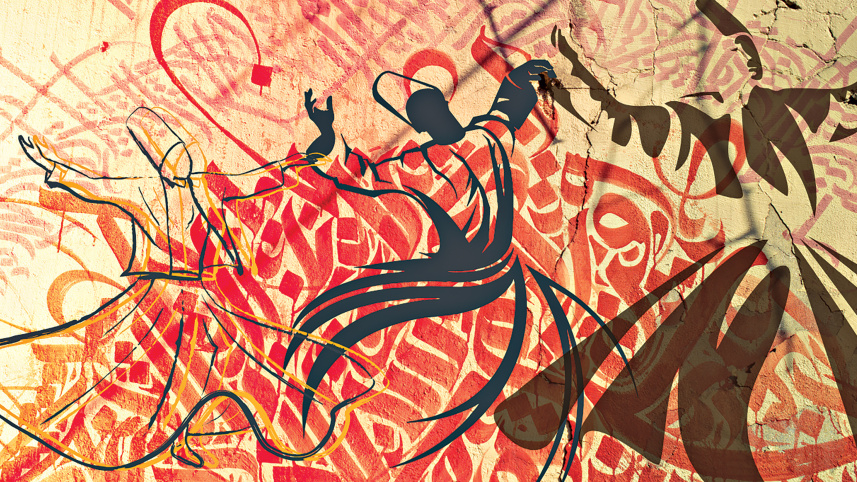
It always felt like modernity flatters itself with a simple story: history moves from darkness to light, from superstition to reason, from inherited authority to critique. Freedom, in this case, arrives through publicity—speaking openly, arguing publicly, trusting rational debate. If something is wrong, we make it visible, name it, and the public sphere will do the rest.
But modern life feels oddly disappointing. We have more platforms than ever to speak and act from, yet politics remains stuck. Critique circulates constantly, while domination adjusts its settings and survives. Perhaps the problem is not a lack of speech. Perhaps it is a failure of listening—an “acoustics” that recognises only certain tones as knowledge.

To see that, place three thinkers in the same frame: Jürgen Habermas on public reason, Zygmunt Bauman on “liquid” modernity, and Shemeem Burney Abbas on women’s devotional performance in Sufi rituals. The point is not to fuse them. It is to question modernity’s deepest reassurance: that public reason is neutral, and that whatever matters will naturally appear within its authorised formats. Some truths are not merely excluded from the public sphere; they are disqualified from counting as “public” in the first place.
Bauman argues that late modern societies can host critical speech while remaining immune to its consequences. This is not censorship. It is critique turned into a consumer experience: you are permitted—encouraged—to be outraged, provided the outrage arrives as content that can be absorbed and moved on from. You post, denounce, perform, boycott; then the feed refreshes. Resistance becomes a lifestyle choice rather than a collective project.
In Bauman’s wider picture, modern life “liquefies.” The institutions that once linked private lives to durable solidarities weaken. In their place comes a moral demand to be flexible, self-inventing, endlessly adaptable. Structural problems are pushed onto individuals as personal failure. Anxiety becomes a defect of character; precarity becomes poor planning. Life resembles a continuous audition.
Habermas worried—at a more philosophical pitch—that critique could degrade into mere unmasking: the clever exposure of hypocrisy without the capacity to build shared norms. Bauman describes the social world in which that worry becomes routine. Critique is everywhere, but consequence is scarce. We can explain endlessly; we struggle to organise. If we treat this only as a European story, we miss how “immunity” is produced elsewhere: by deciding in advance which voices can count as knowledge. Abbas’s work on Sufi rituals exposes one such decision.
A common Western habit is to understand Islam through a Christian template: mosque as church, public congregation as the centre, scripture as the primary storehouse of meaning. Once this model is accepted, “religion” becomes what is visible in officially recognised spaces and what can be cited in texts—domains historically dominated by men. What disappears is the possibility that religious life is also constituted in homes, courtyards, shrines, oral transmission—in sound.
Abbas shows that women’s voices in Sufi traditions are not decorative margins. They can be central carriers of devotion: women singing devotional poetry in shrine networks and domestic gatherings; repertoires preserved through embodied practice; even male performers adopting feminine narrative voices in certain qawwali traditions. This world is often treated as “unknown” in scholarship not because it is hidden, but because it does not match what academic listening has been trained to treat as evidence.
Here modernity’s self-image cracks. It imagines truth arriving through exposure—visible, recordable, debatable. Yet women’s devotional life has frequently been made invisible through a double justification: women are either “too insignificant” to document or “too sacred” to drag into the public glare. Either way, the archive stays clean, and the clean archive becomes proof that nothing was ever there.
The crucial point is methodological. Abbas notes how many male researchers lacked access to women’s ritual spaces and often lacked the linguistic and cultural competence to grasp oral metaphor and performative nuance. Their inability to hear became their authority to describe. A scholar who cannot enter women’s domains concludes that women have no domains; a scholar who cannot interpret sung metaphor concludes that the metaphor is not theory.
This forces a hard question back onto Habermas’s ideal of public reason: which publics? Whose arguments? If “public” is defined by institutional visibility—print, formal debate, official discourse—then the female voice in Sufi rituals is excluded before it speaks. Not because it is irrational, but because it is embodied and contextual, because it lives in performance rather than proposition.
Modernity has policed not only bodies but also forms of knowing. For traditions learned through raga, recitation, zikr, and chant, it is obvious that performance is not “mere culture.” It is a disciplined mode of thought carried by breath, rhythm, repetition, and
shared attention. To label it non-theoretical is not a neutral classification; it is political disarmament.
Abbas also examines how radio, television, and cassette culture facilitated the circulation of devotional music. Mediation can amplify voices otherwise excluded from institutions. But in liquid modernity, circulation easily detaches a practice from its ritual ecology. A performance that once demanded presence—time, repetition, shared space—becomes a clip, a mood, background sound. It can be enjoyed without entering the moral world that produced it.
Bauman’s vocabulary fits: modernity can “host” difference and remain immune to it. It does not need to ban the sacred song. It can package it, circulate it, aestheticise it—and in doing so neutralise its capacity to form a counter-public. Visibility becomes not liberation but extraction.
Bauman’s shopping mall is a perfect emblem of the late-modern community: a space where people feel together without shared responsibility. Togetherness is frictionless and convenient because the space is designed to keep obligations at bay.
Shrine life is structured differently. Not necessarily pure—shrines can be hierarchical and politicised—but different in how meaning is made: negotiated through bodies, languages, genders, local histories. It can become a counter-public precisely because it does not rely on modernity’s authorised speech-forms.
This is not a call to romanticise “tradition.” Rituals can reproduce domination; shrines can mirror social power; devotional authority can be policed. The point is sharper: modernity’s categories often cannot even register these arenas as arenas of thought, so it cannot diagnose how power works there—or how alternatives are sustained there.
Yet liquidity makes rootedness fragile. Durability requires shared time and repeated practice, liquidity rewards mobility and constant updating. The question, then, is not only whether women’s voices are “included,” but whether any thick form of collective life can survive in an environment that turns bonds into private preferences and practices into movable content.
Abbas’s ethnography delivers a philosophical interruption: theory does not live only in books, essays, manifestos, or the institutions that certify them. It also lives in sung poetry,
 For all latest news, follow The Daily Star's Google News channel.
 ritual instruction, and communal competence—sometimes among audiences with little formal schooling but great interpretive skill. To refuse that as “theory” is to refuse intellectual agency to those whose knowledge arrives in oral and embodied forms, especially women.
If critique today feels weightless, the answer may not be more critique in the same register. It may be the recovery of consequence: collective responsibility, durable attention, shared time. The female voice in Sufi rituals point toward critique as cultivation rather than hot take—an art of sustaining meanings and bonds that cannot be reduced to consumer choice.
Modernity does not only need louder speech. It needs better listening.
Rimel Sarker is a North Indian classical vocalist, author, and independent researcher based in Dhaka.
Comments