


6 books that I read at the end of last year… I hated 5 of them
You know that feeling when you crack open a new book and you're convinced that this is the knight in all its paperback shining armour that will save you from your reading slump? Yeah. Well. I went six rounds with my TBR in December 2025 and walked away with exactly one survivor: All's Well (Simon & Schuster, 2021) by Mona Awad (bless her bizarre, slippery mind).
The rest? Collateral damage.

There are too many lists on the internet pretending to know me better than I know myself. Everywhere I turn, it's: If you liked X, you'll adore Y! Google anything, no matter how vague, and suddenly 12 different websites materialise like salespeople at a department store.
So in the spirit of gentle rebellion (or really just because I feel so duped and tired after this ordeal) I decided to curate my own little anti-list of sorts. Instead of a Booktok-blessed, algorithm-approved list of what you should read next, this is a list of books I absolutely did not enjoy.
Once that section ended though, the prose really lost steam for me. The pacing started to get swampy and the narrative tried to be many things at once. The Brexit commentary felt wedged in like a random aside, and the "prison" interview chapters which were written as breathless, unbroken monologues made it tough to keep track of all the characters and tangents.
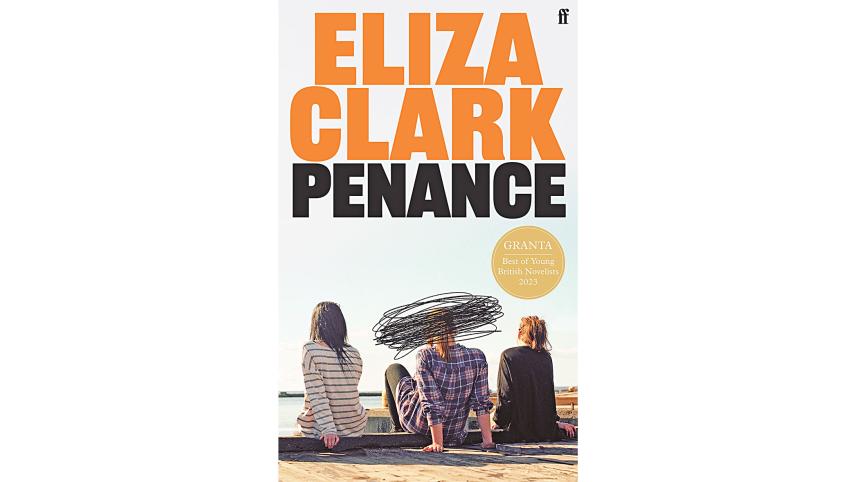
Penance
Eliza Clark
Faber & Faber, 2023
I went into Penance with real hope. The premise is incredible—a true-crime-style investigation into a teenage murder told through the eyes of a disgraced journalist trying to repair his reputation. The novel is framed as a nonfiction, complete with podcast transcriptions and interviews with the family. It really fits the eerie intimacy of the way we consume true crime these days, especially with the in-universe "history" section; I remember stopping to Google fictional towns like an idiot because Clark made them feel real enough to check for Wikipedia pages.
Once that section ended though, the prose really lost steam for me. The pacing started to get swampy and the narrative tried to be many things at once. The Brexit commentary felt wedged in like a random aside, and the "prison" interview chapters which were written as breathless, unbroken monologues made it tough to keep track of all the characters and tangents. I understand that it was a stylistic choice but the payoff fell flat, and for a 300-plus page count, I really wanted it to be more of the book I was promised when I started it.
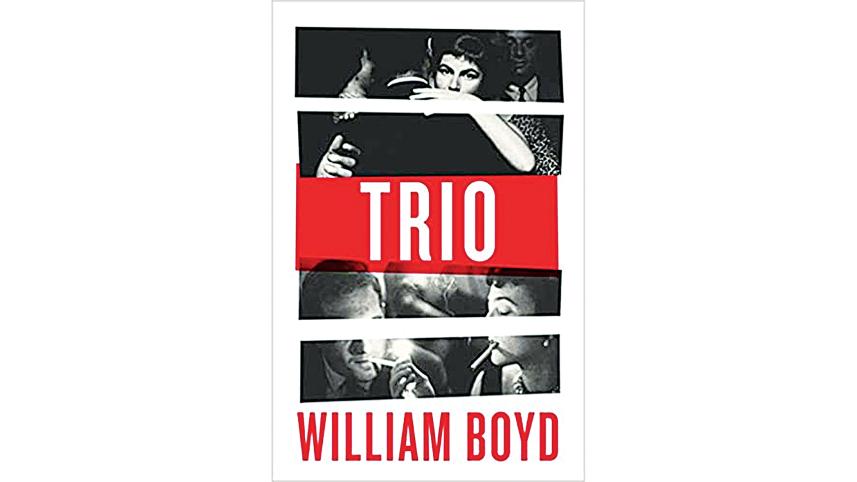
Trio
William Boyd
Vikin, 2020
'Behind the scenes of a failing film production' is my Achilles heel and William Boyd is one of those writers I've been hearing about for years—a very British, very 'masterful' author that everyone speaks highly of. So, of course I picked Trio—a behind-the-scenes dramedy about the making of a film in 1968 where the titular trio features an alcoholic novelist desperate to start her newest book (Elfrida Wing), a closeted film producer living a double-life (Talbot Kydd), and an actress on the brink of stardom (Anny Viklund). This is exactly the sort of ensemble, showbiz-adjacent character study I love watching on a screen, which means reading it immediately makes it a hundred times better.
It started out promising as well. It had everything you expected (artistic failure, terrorism panic, the queer loneliness of the '60s) and then some (the looming shadow of organised crime with estranged ex-husbands showing up outside hotels and cameramen stealing film rolls for their own illegal side-projects). There are many genuinely interesting conflicts throughout but the execution really falls flat. Boyd just scratches the surface and pulls away, every crisis dissolved into the next scene far too quickly. It's 350-something pages of gentle shuffling, especially after you are through the first two parts of the book. Elfrida Wing absolutely carried the book on her fragile, alcoholic shoulders for me. I kept turning pages mostly out of loyalty to her arc, otherwise I wouldn't even have gotten through the book.
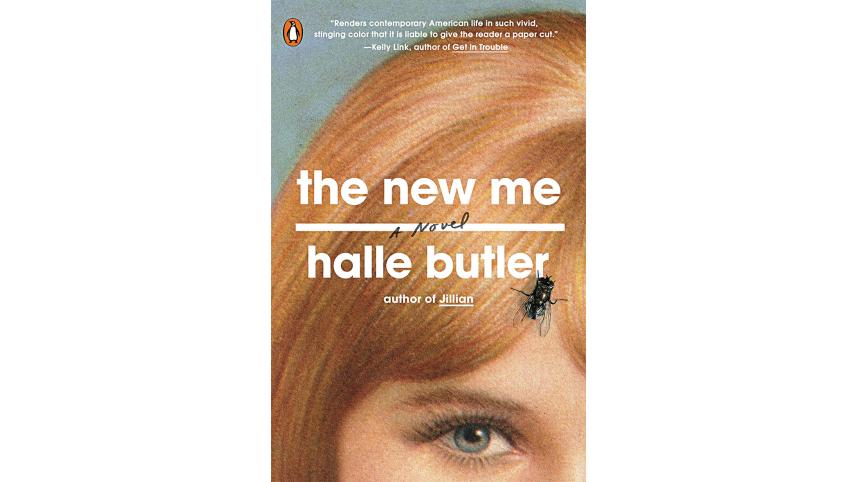
The New Me
Halle Butler
Penguin, 2019
 For all latest news, follow The Daily Star's Google News channel.
 Not to be petty but my first thought once I finished this book was, "Didn't Ottessa Moshfegh do this already?" The New Me is basically 200 pages of a woman hating her job, her boss, her life, and herself—and that can be good when done right, but this one cycled around the same internal monologues like one single, baritone note held indefinitely. I don't mind an unhinged, miserable narrator but Millie really lacked the charisma. Butler nailed some of the specific details of temp-work life, and there are a few snappy one-liners that I underlined but otherwise I was restlessly skimming through to finish this book.
Then again, I'm fortunately not (yet) stuck in a desk-job I absolutely loathe, so maybe if I read this again during an existential crisis when I'm trapped in my own horrible job, I'd find enlightenment. For now, I'd rather read something else.

We All Want Impossible Things
Catherine Newman
Harper, 2022
A woman caring for her lifelong best friend during her final days of ovarian cancer—I went in expecting a tender, grown-up novel about grief, and to come out of it a bit wrecked in the way good grief books often leave you devastated.
But Ashley, our protagonist, is difficult in all the wrong ways. Even though she is the one caring for her friend, Edi, in hospice, she hijacks every emotional beat and is one of the most exasperating protagonists I've encountered in a long time. I cannot imagine a world where your best friend is dying of ovarian cancer, and you, one of her primary caregivers, somehow is able to make it all about yourself. I kept wanting to reach into the book and shake her by the shoulders.
What's wild is that Newman seems like she knows this—there is a part where Edi literally tells Ash not to make the eulogy "all about herself". The writing is also incredibly choppy, every paragraph read like four different conversations happening at once.
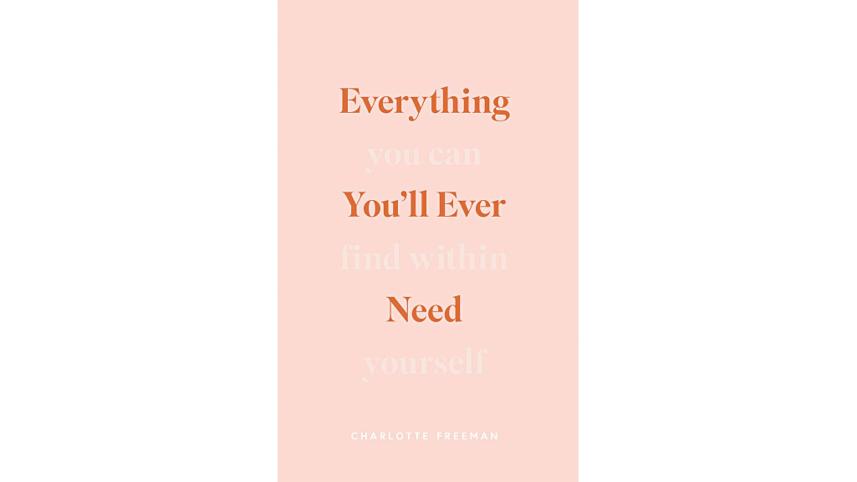
Everything You'll Ever Need (You Can Find Within Yourself)
Charlotte Freeman
Thought Catalog Books, 2020
And finally, I have saved the best for last, my piece de resistance, the one Goodreads has sitting at a whopping 4.1, which made me stare at my screen for a full minute wondering if I bought the right book, because, surely, something had gone wrong.
Charlotte Freeman's book is marketed like a raw, honest, vulnerable debut but this is actually a self-help book written in short, Instagram-ready affirmations that feel like the captions under wellness influencer reels. I'm not kidding. Every page is a fortune cookie: "Choose yourself." "Live with purpose." "Wake up and make the best of your short time on earth." And that's all. I get that sometimes people genuinely need to read those words but when you are expecting people to pay money for said "advice" it has to be better than this, especially when you can just whisper all 200 pages of advice to yourself, in the mirror, for free. I kept flipping the pages hoping for some kind of a narrative or a fresh angle, anything resembling craft and it never arrived. "Life is too damn short to live in a mediocre way." Yes! Okay! Sure! Now what? Nothing here feels earned, or even edited.
This was, hands down, the worst book I've read in years. If this helps someone in crisis, more power to you. But as a reading experience? Absolutely not.
Arshi Ibsan Radifah is a Literature major who loves unreliable narrators and Wes Anderson movie sets. If she had it her way she would have liked to play bass for a girl band in the 90s, but for now she'll suffice by rewatching Empire Records.
Comments