


7 graphic novels to read on International Women’s Day

Graphic novels or comics are a unique medium where art and literary prowess converge through both prose and imagery and bring them to life, thus giving the space for authors and artists to illustrate their stories. Sometimes these stories directly critique patriarchy, and feature feminist themes; sometimes they simply offer a mirror and the chance to reflect on women’s everyday struggles.
This International Women’s Day, we feature author-artists who choose to tell the stories of everyday women—their dreams, obstacles, and their constant battle with patriarchy and how deeply it is woven into the fibre of our society.

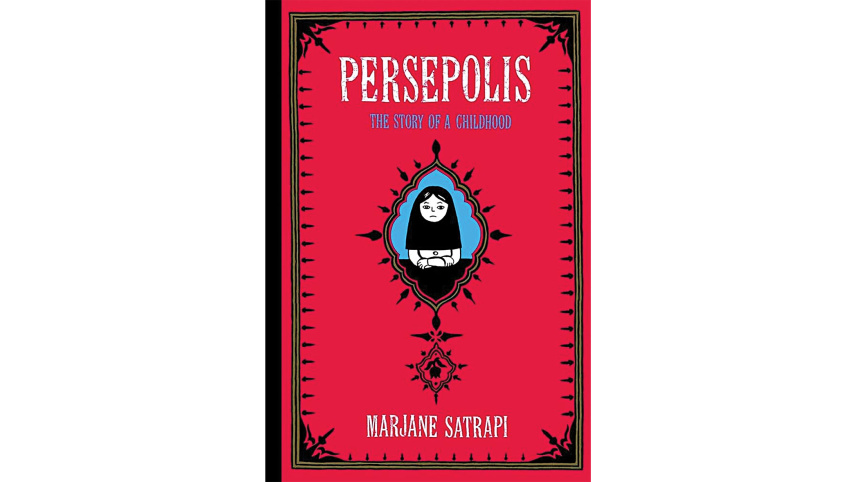
Persepolis
Marjane Satrapi
Pantheon Books, 2000
An autobiographical graphic novel, Persepolis recounts the story of Marjane throughout her life as she grows up against the backdrop of the Islamic Revolution in Iran. With evocative black and white comic strips, Satrapi’s story illustrates gender discrimination and the loss of women’s autonomy under patriarchal rule. Her struggle for autonomy amid the political crisis in Iran, and later the exclusion, the loneliness she faces in Europe as an immigrant illustrates her experiences in a manner that feels universal.
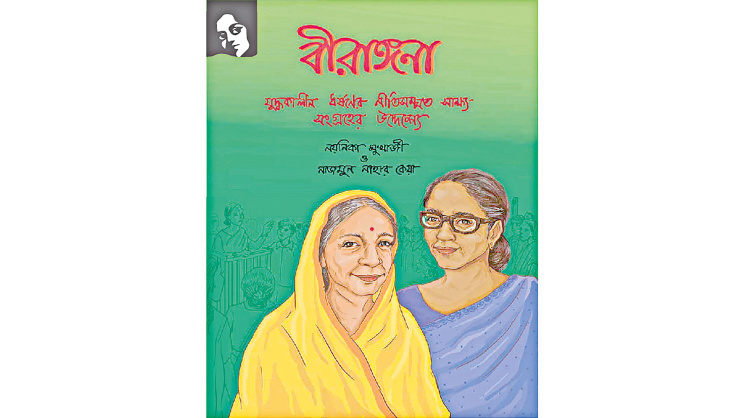
Birangona: Towards Ethical Testimonies of Sexual Violence During Conflict
Nayanika Mookharjee, Najmun Nahar Keya
Nokta, 2019
When Labony, a school student needs to complete an assignment on her family’s memories of the Liberation War of 1971, she hears of her grandmother, Rehana’s account of sexual violence during the war. Her grandmother recounts the horrifying ordeal and the stories of the Birangonas slowly unfold. This graphic novel is written in accessible format centring conversations around representing the stories and experiences of the Birangona women with empathy and nuance.
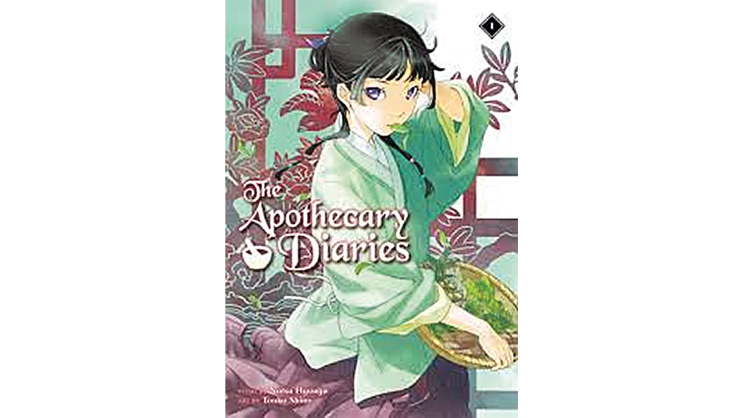
The Apothecary Diaries
Natsu Hyuga, Touko Shino and Minoki Kurata (Illustrator)
MontShogakukan, 2017
Based on the light novels by Natsu Hyuga, The Apothecary Diaries has two versions of the graphic novel series; one by Touko Shinou, another by Nekokurage. The Japanese graphic novels are set in a fictional country based on Imperial China, as the story follows Maomao a sharpwitted young woman working as an apothecary in the redlight district. Her life changes forever when she is kidnapped and sold to the imperial palace as an indentured servant. The story has a cast full of compelling characters, especially the women, both in the inner palace and the ones in the redlight district. The story does not shy away from showing how the reality of these women are essentially the same despite the class differences. This is a story about women who quietly challenge the limitations imposed on them.
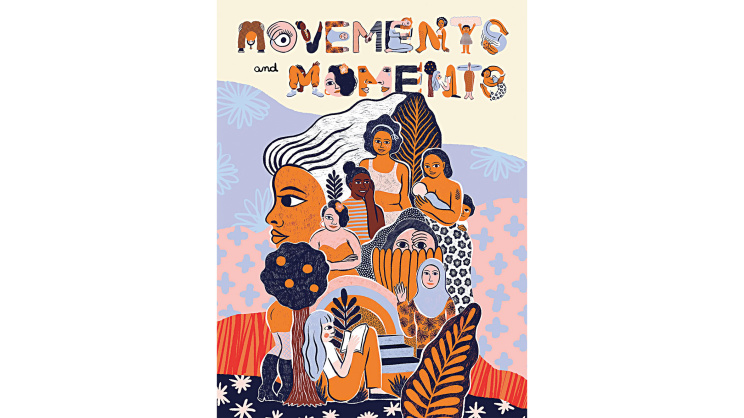
Movements and Moments: Indigenous Feminisms in The Global South
Sonja Eismann, Maya, Ingo Schöningh
Drawn and Quarterly, 2022
An intersectional feminist comic anthology with beautiful art-styles centring the stories of indigenous women, Movements and Moments shares a glimpse into the resistance and histories across many cultures from Brazil, Chile, Ecuador, India, Nepal, Peru, and Thailand. It spotlights struggles often faced by indigenous communities across the globe, particularly with accounts of sexual violence, colonialism, and the art of resistance by recounting stories of women who led mass movements of the global south in order to protect their lands, culture, and economic freedom.
Grass
Keum Suk Gendry-Kim
 For all latest news, follow The Daily Star's Google News channel.
 Drawn & Quarterly, 2019
Grass is a Korean graphic novel created by Keum Suk Gendry-Kim that portrays the true story of a Korean comfort woman as it documents the horrors that women face in war. The anti-war story recounts the experiences of “Granny” Ok-seon Lee, who was forced into sexual slavery for the Japanese Imperial Army during WWII. The term “comfort women” itself is controversial because of how the language only reflects the perspective of the Japanese military and not the victims (many of whom were minors), which the author mentions in the story.
Grass shows historical events that lead up to the war, all from a child’s perspective while showing the everyday lives of Korean civilians under the Japanese occupation. It shows how patriarchal societies deprive girls from education, how families, when facing starvation, abandon their daughters to fate worse than death, and the cost of war.
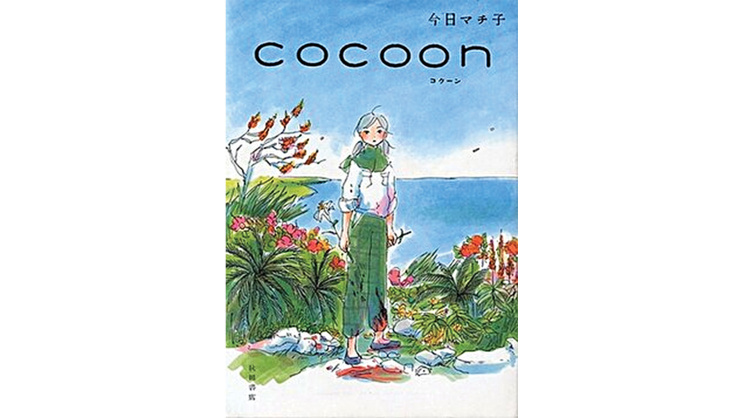
Cocoon
Machiko Kyou
Akita Shoten, 2009
Cocoon is a story of war, told through the eyes of a young girl. It is a heartbreaking chronicle of loss and resilience in the face of devastation. Based on the true story of the Himeyuri (Lily) Corps of student nurses in WWII, this Japanese graphic novel by Machiko Kyou follows San, who attends a prestigious boarding school for Girls in Okinawa. However, her regular life is disrupted when she, along with other students are recruited to help the war effort as assistant nurses.
The actual Himeyuri Corps were a group of young girls and their teachers, conscripted into the war effort as a nursing unit in 1945 by the Imperial Japanese Army. Just like the real Himeyuri Corps, San and her classmates are assured safe during an easily won battle, only to be used and deceived, eventually abandoned. San herself is excited to serve their country as a nurse, thinking she’ll be helping the wounded in a hospital—only to be sent to the frontlines. As bombs fall from the sky, San and her peers are stuck working in the caves of a field hospital, facing carnage, abuse, sexual violence, starvation and death.
There is an uncanniness through which we see brutality, hunger and death in the book, especially since it is told from the perspective of a teenager; where the horrors of war and matters of friendship and girlhood coexist, and yet a strange separation between the two is felt. The minimal dialogue and simple artstyle does not minimise the brutality; rather, it amplifies it. An animated movie based on the story was released in 2025.
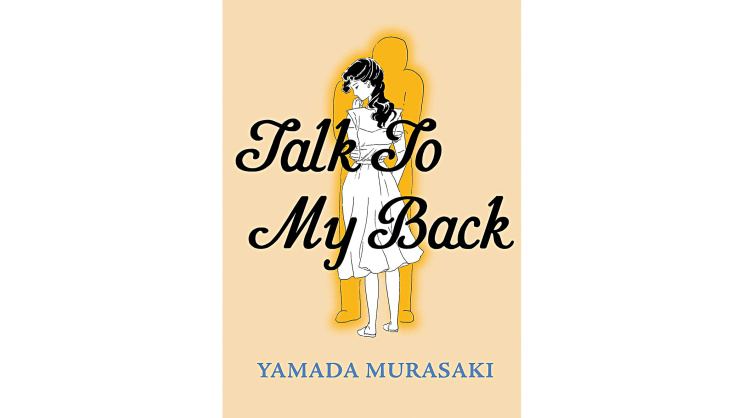
Talk to My Back
Murasaki Yamada
Garo, 1981
Set in the 1980s, this graphic novel explores the dreams and realities of Chiharu, a housewife and her relationship with both her family members and herself. Yamada is one of the first authors to use comics as a way to address domesticity and womanhood in a realistic, critical way. The graphic novel shows how the erasure of personhood happens to women within nuclear families and how they toil in domestic labour without any appreciation.
Sabrina Sazzad is pursuing a Bachelor of Social Science in Economics and adoring her cat. Reach her at sabrinasazzad07@gmail.com.
Tiasha Idrak is drowning in a swamp of her own thoughts at the moment. She writes and daydreams, the latter is more applicable most of the time. She is still trying to come up with a proper author’s bio. Tell her to stop procrastinating at tiashaidrak27@gmail.com.
Comments