


Marjane Satrapi, voice of exile and resistance, dies at 56
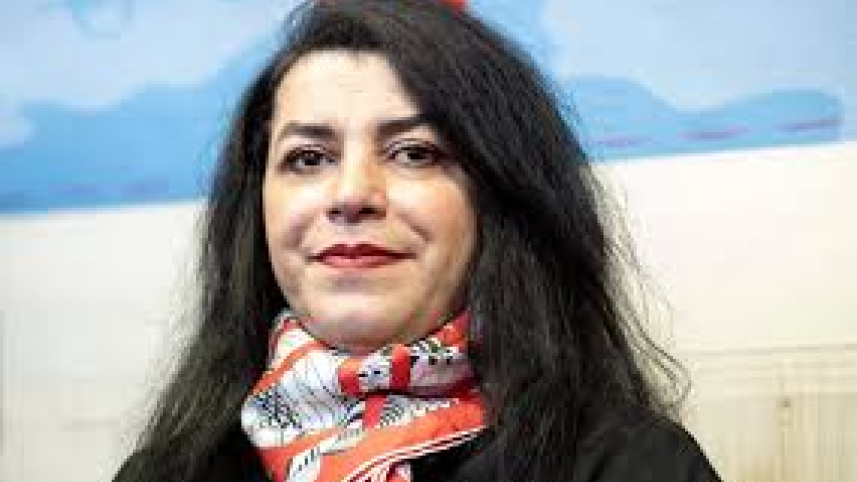
Franco-Iranian writer, illustrator, and filmmaker Marjane Satrapi, best known for her celebrated graphic memoir Persepolis: The Story of a Childhood (Jonathan Cape, 2003), has died at the age of 56. According to a statement provided to AFP by a member of her inner circle, her death came a little over a year after the passing of her husband, Swedish producer and screenwriter Mattias Ripa, whom the statement described as “the love of her life.”
Born in 1969 in Rasht, northern Iran, Satrapi moved to France in 1994 and became a French citizen in 2006. Her work often explored themes of displacement, identity, and political repression, drawing heavily on her own experiences growing up in post-revolutionary Iran.

Her most famous work, Persepolis, recounts her childhood in Tehran following the 1979 Iranian Revolution and her subsequent move to Europe. Through the graphic novel and its acclaimed film adaptation, Satrapi offered a deeply personal account of life under Iran’s Islamic regime while creating a story that resonated with readers worldwide.
French President Emmanuel Macron paid tribute to her legacy, describing her as “a great artist” who transformed the experiences of her Iranian youth into a universally meaningful narrative.
In 2007, Satrapi co-directed the animated film adaptation of Persepolis with Vincent Paronnaud. The film won the Jury Prize at the Cannes Film Festival and later received an Academy Award nomination. Accepting the Cannes honour, Satrapi dedicated the award to the people of Iran.
Tributes also came from Cannes Film Festival director Thierry Frémaux, who remembered her as both an exceptional artist and a woman whose work reflected the creativity, sorrow, and complexity of exile. He added that her courage would continue to inspire others.
Throughout her life, Satrapi remained an outspoken critic of Iran’s theocratic government. She strongly supported the “Women, Life, Freedom” protests that followed the 2022 death of Mahsa Amini while in police custody. In 2024, she published an English-language collection of graphic stories inspired by the movement and participated in demonstrations in Paris marking the second anniversary of Amini’s death.
Beyond her Iranian-focused work, Satrapi pursued a diverse artistic career. She exhibited her paintings in 2020, describing art as essential to her mental well-being, and directed films such as Radioactive (2019), a biographical drama about Nobel Prize-winning scientist Marie Curie starring Rosamund Pike.
In 2025, Satrapi declined France’s highest civilian distinction, the Legion d’Honneur, citing what she viewed as contradictory French policies that restricted travel opportunities for Iranian dissidents. While expressing deep affection for France, she said she could not overlook what she regarded as hypocrisy in its approach toward Iran.
Following the death of Mattias Ripa in April 2025, Satrapi established the Mattias and Marjane Ripa-Satrapi Cinema Foundation, which supports international students seeking to study filmmaking in Paris. Her husband had long been both a creative collaborator and a partner in her artistic journey.
Through her books, films, paintings, and activism, Marjane Satrapi gave voice to exile, memory, and resistance. Her work remains a powerful testament to the enduring struggle for freedom and self-expression.
 For all latest news, follow The Daily Star's Google News channel.
Comments