


Hope, rage, and love-worlds: The many meanings of feminised tears


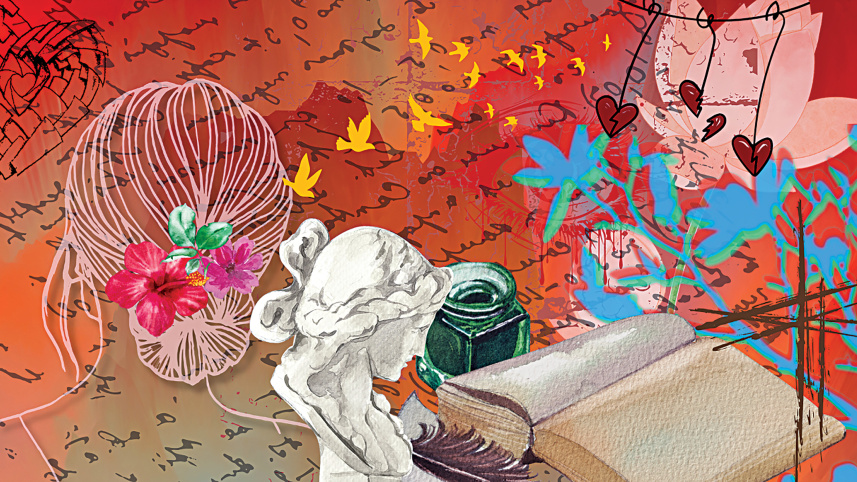
In classical studies of sensory experiences, philosophers such as Maurice Merleau-Ponty suggest that bodily sensations constitute our lived reality. Sight, sound, touch, taste, smell construct our life and make meaning of our existence. Senses are not purely biological, but are shaped by culture, environment, and politics. Senses also have a hierarchy—with vision ranking supreme above the other lesser, feminised senses. The physiological and emotional process of crying is often viewed in a gendered way and seen as an expression of weakness. Conventional wisdom suggests that a woman’s tears make her feminine, while male tears emasculate. Are tears that simple? Can the action and consequence of crying be simplified in such a binarised way? What about tears of rage, love, healing? Is crying a feminist act? What does the immediate action of crying and the politics of tears reveal about the structures of feelings our society is organised around? Are some tears more legitimate than others? Is crying more than the literal shedding of tears?
I was drawn to the question of tears while thinking through the concept of feminist rage. Many women cry when they are angry and too often, their tears delegitimise their anger. As though if anger is accompanied by tears, that anger is not justified. How many times have we found ourselves attempting to make a point but were shaken by our own uncontrollable, rage-fueled tears? Our social and cultural codes often disallow or at the very least, frown upon feminine anger. An angry woman challenges the myth of the soft, eternal feminine woman. Oftentimes thus, it is our inability to show anger that leads to crying. Yesterday, as my closest colleague and I attempted to talk about the seven-year-old girl found with her throat slit in Sitakunda Eco Park, we took turns crying and seething. I wanted to simultaneously cry, vomit, and scream. She kept crying and raging. Through tears and rage, we sat in solidarity and helplessness, standing alongside the seven-year-old fighting for her life, the dead eight-year-old from Magura, and the 5,632 children whose rapes led to cases being filed in the last 10 years in the country we lovingly call home.

We have bled for this country. Our foremothers and forefathers sacrificed life, limb, livelihood, safety, and more for this nation. And no, this conversation is not leading towards Ekattor because it is March, but because our sentiments and feelings—expressed through tears of love and loss—led to the birth of this nation. Recall for instance, the tears of the Birangonas, so instrumental in building our national narrative. The foundational concept of Bangladesh itself rests on the tears of the Birangonas, the women who were raped, violated, killed, maimed, impregnated, and left to bear the consequences of war. It is no small feat that in our collective national imagination, the Birangonas and their pain represent strength and power of the Bangladeshi women and are detached from narratives of pity and shame. The raped women of 1971 are part of the public memory of 1971. As Mojid discovers his dead, raped sister Momena’s body in Shahidul Zahir’s Jibon O Rajnoitik Bastobota (1988), “He fell to his knees, his heart wailed out, and as if in a state of delirium, he merely uttered, ‘Allah, Allah.’ Bending down over Momena’s face and gazing at her half-open eyes staring at the sky, he wept, crying, ‘Aapa, Aapa.’ Mojid’s sobs bear witness to the trauma and the aftermath of 1971, invoking the placement of tears and helplessness as part of the metanarrative of the Bangladesh War.
Similarly, when our national anthem tenderly croons, “Ma tor bodon khani molin hole, ami noyon jole bhashi”—‘noyon jol’ acts as a site of intense patriotic zeal. Our heart weeps for our nation-state, mythologising her as mother, the mother who needs our devotion, our protection, our care. ‘Desh’ as mother sustains us and our tears for our mother-nation sustains the nation state. The analogy between land and woman, between “desh” and “nari” deserves to be problematised. It is after all what has, for centuries, fueled and justified colonial occupation.[a] Women and land are sites that symbolise the colonial desire to conquer and tame, pillage and rape, plough and own. And yet, when Nazrul Islam Babu writes “chokh theke muche felo osrutuku, emono shukhero dine kadte nei” in his famous “Shob Kota Janala Khule Dao na” sung by Sabina Yasmin, we note how the ethos of the nation state does not rest only on narratives of valour and bravery but also on the notions of tears, sacrifice, and emotions. Almost 55 years later, each time the song is played, the essential formation of the modern nation state concretises in its instrumentalising of human pain and sorrow.
Our “bicchedi gaan”—a genre based almost entirely on the pathos of unrequited love, the pangs of longing, and the profound heartbreak that comes with a love that changes life—has for centuries sustained our lifeblood in this part of the world. ‘Prem’ for us is the divine feminine and ‘prokiti’ the divine masculine, forming the ethos of the natural world in our music, poetry, and philosophy. Binding the human with the environment, in profound contrast to the nature/culture split prevalent in the western ontological order, ‘prem’ and ‘prokiti’ explore the ‘bicched’ or rupture between love and nature, marking it as the site where some of our most profound cultural expressions lie. When Lalon laments “ami ek dino na dekhilam tare”, that grief is love itself. The ecstatic devotion of Sufi music too, often leads the singer and the listener to tears. Stepping away from the ratio-centric rigidity of ‘modern’ thoughts, the notes and tunes of longing urge the human soul to seek the Divine. Sufism’s celebration of ‘fana’—the breaking down of human ego—similarly attests to the act of losing oneself to the divine, accompanied by tears. Between ‘bichhed’ and ‘fana’, between seeking and longing, between lover and god, between seeker and beloved, the human spirit rises in love and pain.
Indeed, the transformative power of human emotions often reveal themselves through tears. In classical Greek mythology, the goddess of love, Aphrodite and her mortal lover, Adonis gave birth to the first red roses—born from a combination of their blood and tears. As a wounded Adonis lay bleeding, it was Aphrodite's inconsolable tears that mingled with his blood and gave birth to a deep red rose bush. Mary Magdalene’s tears too—both when they wash the feet of Jesus and when she weeps in sorry over his empty tomb—symbolise hope, devotion, and love.
Our tears testify to our humanity. Tears are revelatory. Whether shed in love, loss, hope, or pain, they provide clues to the untapped and unfathomable realities that hide deep within our souls. As for tears of rage, they are instruments of change, can alter the course of human history, and ultimately, attest to the very joys and heartbreak of our essential human condition.
Dr Nazia Manzoor is assistant professor and chair of the Department of English and Modern Languages at North South University. She is also Editor, Star Books and Literature.
Sharmee Hossain teaches English at North South University.
 For all latest news, follow The Daily Star's Google News channel.
Comments