


Can Smart Homes Actually Save Money?


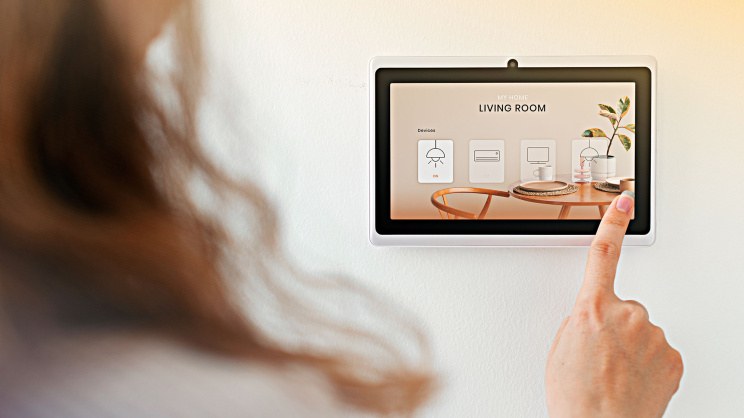
In the bustling urban landscapes of Dhaka and Chattogram, the term “smart home” is often associated with luxury like automated curtains, voice-controlled speakers, or high-end security cameras. However, as electricity prices rise and the national grid faces increasing pressure, a new narrative is emerging: the smart home as a financial tool. Beyond the convenience of turning off a light with a smartphone, modern IoT (Internet of Things) ecosystems are proving to be essential in curbing the soaring utility bills of Bangladeshi households.

“After switching to a Walton Inverna IoT AC and setting it to Eco-mode via the app, my AC bill dropped by nearly 35% compared to my old non-inverter unit.”
Smart Thermostats Drive Major Savings
The single largest contributor to electricity bills in Bangladesh is climate control. In the sweltering heat of a tropical summer, air conditioners account for nearly 75% of a typical urban household’s power consumption. Global data suggests that smart thermostats can reduce cooling bills by 15% through machine learning that adjusts to occupancy and outdoor weather patterns.
In the local market, brands like Walton have localised this technology. Walton’s Inverna (Extreme Saver) series, equipped with IoT-based smart control, allows users to monitor their power consumption in real-time. According to tests certified by the Bangladesh University of Engineering and Technology (BUET), these smart-controlled units can cost as little as Tk 2.19 per hour in Eco-mode. By allowing users to schedule cooling and adjust temperatures remotely, the risk of “accidental waste”, leaving an AC running in an empty room—is virtually eliminated.
Lighting Automation Reduces Electricity Waste
While an individual bulb might not seem like a major expense, lighting typically accounts for 15% of household energy use in Bangladesh. The move from traditional incandescent bulbs to LEDs was the first step; the second is automation. Smart lighting systems, such as those integrated via Samsung SmartThings or LG ThinQ, utilise motion sensors and ambient light detection to optimise output.
If a room is sufficiently lit by daylight, smart sensors can dim the lights or turn them off entirely without human intervention. Global research from various platforms indicates that smart lighting can save between 7% and 27% on a home’s lighting energy use. In large Bangladeshi apartments where lights are frequently left on in corridors or guest rooms, this automation translates to hundreds of taka saved every month.
Local Brands Leading Smart Integration
The transition to energy-efficient living is being championed by local and international brands tailored for the Bangladeshi market. Singer Beko has introduced “ProSmart Inverter” technology in their washing machines and refrigerators, focusing on reducing noise and energy consumption. Their smart-ready appliances are designed to handle the voltage fluctuations common in the local grid, ensuring that energy-saving features remain operational even under stress.
Similarly, LG Bangladesh has largely promoted its ThinQ ecosystem. Through a single app, users can manage everything from their refrigerator’s cooling intensity to the drying cycles of their washing machines. The app provides a
“Home Energy Platform” that identifies which appliance is the “energy vampire” of the house, allowing homeowners to make data-driven decisions on when to upgrade or service their devices.
Real Data on Monthly Bills
The financial impact of these technologies is no longer theoretical. Real-world comparisons show a stark difference in monthly expenditure. Rezwan Ahmed a private service holder with a family of 6 lives in Gulshan, has shifted to a disciplined, smart-assisted cooling routine and utilising IoT-enabled appliances saw their monthly DESCO bill drop from Tk 2,800 to Tk 1,600—a saving of over 40%.
“After switching to a Walton Inverna IoT AC and setting it to Eco-mode via the app, my AC bill dropped by nearly 35% compared to my old non-inverter unit,” says Sifat Khalil, a marketing executive living in Wari. “The ability to check my daily unit consumption on my phone has made me much more conscious of our family’s habits.”
As the cost per unit of electricity will continue to climb under new government tariffs, the initial investment in smart technology is believed to pay for itself within 18 to 24 months
Another testimonial comes from the professional sector. “The LG ThinQ app allows me to track exactly which room is drawing the most power. By automating my balcony and kitchen lights with motion sensors and using the energy-saving mode on my washer, I saved more than 1000 BDT in just one month,” notes Farhana Kabir, a founder and senior architect living in Dhaka.
Future of Energy Efficient Living
The roadmap for the Bangladeshi home is clear: integration is the key to affordability. As the cost per unit of electricity will continue to climb under new government tariffs, the initial investment in smart technology is believed to pay for itself within 18 to 24 months. By making individual devices work as a coordinated system, homeowners are not just buying convenience but are securing a more sustainable and cost-effective future,
Whether it is a Singer Beko refrigerator adjusting its compressor speed during off-peak hours or a Google Nest thermostat learning the family’s schedule, the “smart” in smart home now firmly stands for “saving.”
 For all latest news, follow The Daily Star's Google News channel.
Comments