


Widening access to home finance Trust Bank PLC.
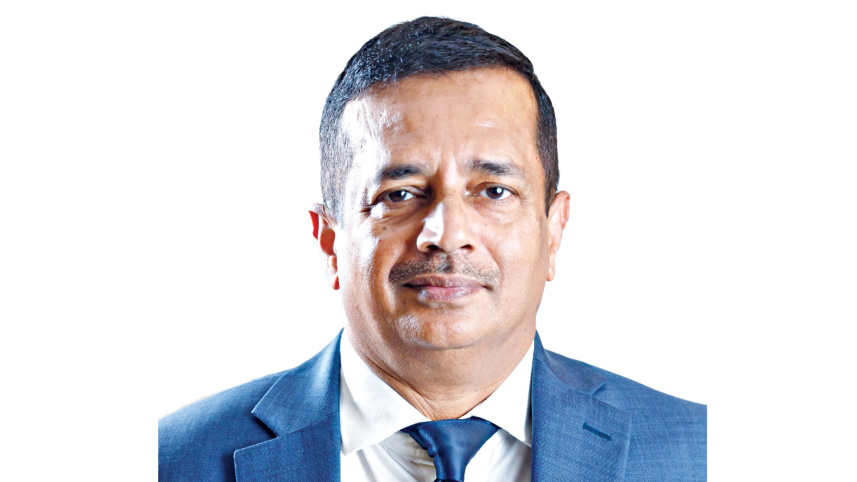
Ahsan Zaman Chowdhury
Managing Director & CEO
Trust Bank PLC.

“Policy support should focus on building an ecosystem for affordable and responsible housing finance, rather than simply encouraging higher lending.”
Trust Bank PLC is looking beyond conventional salary-based lending as Bangladesh’s housing needs continue to rise. Ahsan Zaman Chowdhury, Managing Director & CEO of Trust Bank PLC, says wider access will require better property information, flexible credit assessment and stronger long-term funding. He argues that affordability depends on more than interest rates, with repayment burden, tenure, upfront costs and process transparency all shaping whether a customer can realistically buy a home.
The Daily Star (TDS): While housing demand continues to grow, formal home-loan penetration remains low. What are the main bottlenecks?
Ahsan Zaman Chowdhury (AZC): Bangladesh has a significant housing requirement, yet mortgage finance remains shallow, with the mortgage debt-to-GDP ratio at around 1.9%, according to the Asian Development Bank.
The key barriers are affordability, limited verifiable income information, complex property documentation and title verification, and the cost and tenor mismatch in housing finance. A large share of household income is generated outside salaried employment, making traditional credit assessment difficult.
The solution is not simply to lend more, but to widen access without compromising credit discipline through better data, faster property verification, appropriate loan structures and stronger long-term funding.

TDS: What home-finance products does Trust Bank offer to make borrowing more accessible?
AZC: We look at the customer’s actual need and repayment capacity rather than offering a single standard product. Our home-finance proposition covers home purchase, construction and renovation, with financing limits, tenure and repayment structures suited to the customer’s profile. We also consider refinancing or takeover solutions where they provide genuine value.
Affordability is not only about interest rates. It also depends on total ownership cost, monthly repayment burden, tenure and repayment certainty. Our objective is a structure sustainable for the customer and prudent for the bank.
TDS: What flexible repayment structures or Shariah-compliant options can lower the entry barrier?
AZC: Housing finance is a long-term commitment, so repayment structures should reflect the customer’s income profile and future earning capacity. Where appropriate, we consider longer tenures, structured repayment arrangements and takeover solutions to make monthly repayments more manageable.
Flexibility cannot mean weaker underwriting. Repayment capacity, debt burden and overall credit profile still need careful assessment. For customers seeking Shariah-compliant financing, Islamic banking solutions can provide an alternative route to homeownership. I believe the market will increasingly move toward customer-segmented and cash-flow-based housing finance.
TDS: How are you supporting women and first-time home buyers?
AZC: Female customers and first-time buyers are important to expanding formal housing finance. Our approach is to design propositions around affordability, income profile and repayment capacity rather than relying only on preferential pricing.
For eligible customers, competitive pricing, appropriate fees, suitable repayment tenures and simplified processing can improve access. For first-time buyers especially, reducing upfront financial pressure and making the application process transparent can be more meaningful than a small rate concession alone.
TDS: What digital or internal improvements are helping reduce turnaround times?
AZC: Our focus is on simplifying the customer journey through process standardisation, digital document handling, workflow automation and better coordination across business, credit and operations. Data-driven early screening can also identify eligibility and documentation requirements sooner.
Digitalisation is not simply an efficiency initiative; it is also a risk-management tool. Better data and standardised workflows can reduce manual errors, improve consistency and give customers better visibility over where an application stands and what comes next.
TDS: What policy-level changes are needed to expand home finance?
 For all latest news, follow The Daily Star's Google News channel.
 AZC: Three areas are particularly important: property-information infrastructure, long-term funding and credit-data availability. Faster, more reliable property registration and title verification would reduce lenders’ operational and legal risks. Long-term funding mechanisms would also help banks offer longer-tenor housing finance more efficiently, given their reliance on shorter-tenor deposits.
Broader and more reliable credit and income information would allow lenders to assess customers beyond traditional salary documentation. The World Bank estimates Bangladesh needs around 250,000 new houses annually to address existing deficits and future demand. Policy support should focus on building an ecosystem for affordable and responsible housing finance, rather than simply encouraging higher lending.
Comments