


Bridging the home finance gap Bank Asia PLC.
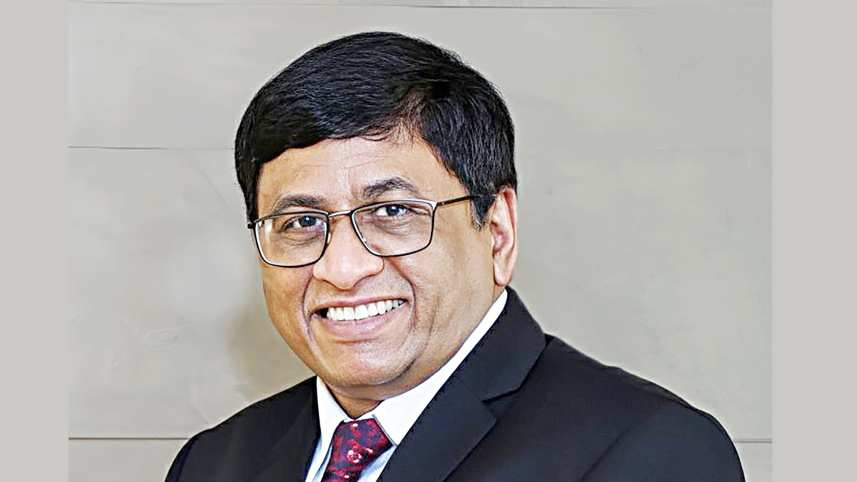
Sohail R K Hussain
Managing Director
Bank Asia PLC.

By modernising land records and offering flexible, 25-year repayment structures, we can transition from a traditional lending model to an inclusive ecosystem that makes homeownership achievable for every Bangladeshi family.
Bank Asia PLC. is addressing the home-finance gap by simplifying documentation, extending repayment tenures, and catering to underserved segments like women and first-time buyers. Through digital innovation and a customer-centric Relationship Manager (RM) model, the bank is making the dream of homeownership a reality for more Bangladeshi families.
The Daily Star (TDS): While housing demand is growing, formal home-loan penetration remains low. What are the primary bottlenecks preventing eligible buyers from accessing finance?
Sohail R K Hussain (SRKH): Taking a formal home loan remains a major long-term financial decision for many. One of the key challenges is the availability of documented and verifiable income, particularly for self-employed individuals and businesspeople. Affordability is another significant issue; customers must ensure they can manage long-term repayment obligations while arranging the required equity contribution.
Additionally, property-related documentation is often complex. Title verification, property valuation, legal vetting, and the registration process require considerable time and cost. Addressing these challenges through simpler documentation, more efficient verification processes, and greater customer support is essential to expanding access to formal home finance in Bangladesh.

TDS: What flexible repayment structures and Shariah-compliant options do you currently provide to lower the entry barrier for borrowers?
SRKH: Affordability is a critical consideration because the repayment obligation continues for many years. Bank Asia offers home-loan tenures of up to 25 years, subject to the customer’s requirements and credit assessment. We also provide a grace period of up to 12 months, partial and full settlement facilities, and phase-by-phase disbursement. This ensures proper fund utilisation and purpose fulfilment with reduced interest for the customer. Our takeover facility also enables customers to transfer existing loans from other institutions with additional financing options.
For customers seeking Shariah-compliant financing, our Islamic House Finance Scheme provides financing with a maximum tenure of 25 years, including a one-year grace period. The facility is structured entirely on a Shariah-compliant basis, ensuring that ethical and religious preferences do not act as a barrier to ownership.
TDS: The lack of conventional income documentation often delays loan approvals. How is your institution addressing these hurdles?
SRKH: We take a customer-segment-based approach to assessing repayment capacity. Rather than restricting home finance to salaried employees, we consider a range of categories, including self-employed professionals, businessmen, mariners, landlords, and wage earners, provided the document requirements are specific.
At the same time, appropriate legal and credit due diligence remains vital since the property serves as security. Accordingly, valuation, legal vetting, CIB, and credit verification are integrated into our financing process. Dedicated, trained RM support facilitates the customer in obtaining every required service from a single point. Going forward, greater integration of digital verification and standardised property documentation will significantly reduce processing time without compromising quality.
TDS: Does your bank offer preferential rates or tailored schemes for female applicants and first-time home buyers?
SRKH: Bank Asia recognises the importance of expanding access for these groups. We already have women-focused deposit products, such as “Achol,” with preferential rates. Our newly formed Women Banking unit is currently working on home-finance propositions specifically for female customers, including preferential interest rates, concessions on processing fees, and financial-literacy support systems.
Many first-time buyers need more guidance as this is often their first major long-term financial commitment. To support them, we have introduced an RM model for financial consultancy alongside extended support for documentation.
TDS: What internal process improvements or digital tools have you introduced to reduce turnaround times?
SRKH: We have implemented a centralised process along with Service Level Agreements (SLAs) among stakeholders to reduce turnaround times. By introducing simplified application forms and eliminating redundancy, we have streamlined the experience.
Bank Asia has also partnered with reputed real estate developers, which facilitates legal vetting and valuation for multiple customers within the same project. Digitalisation is an important part of our strategy; we are verifying credentials through digital means and third-party vendors to make the process faster and smoother for the borrower.
TDS: What policy-level reforms would be most effective in expanding access to home finance in Bangladesh?
SRKH: Several measures could help. First, the modernisation and integration of land records would reduce title-verification time and legal uncertainty. Second, the availability of long-term housing-finance funding would help institutions offer competitive, sustainable tenures, particularly for middle- and lower-middle-income segments.
 For all latest news, follow The Daily Star's Google News channel.
 Standardising property documentation and valuation practices could further reduce costs. Finally, a coordinated effort among banks, regulators, and developers is needed to improve financial literacy. Many borrowers are not fully familiar with equity contributions or legal requirements, and policy support for first-time buyers and women would encourage more formal borrowing.
Comments