Rohingya repatriation needs more than diplomacy
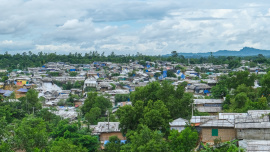
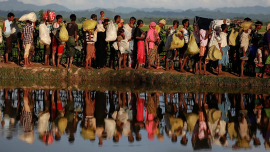
Nine years ago, in the last week of August 2017, Bangladesh opened its border to hundreds of thousands of Rohingya fleeing unimaginable violence and persecution. Within weeks, more than seven hundred thousand people had crossed over from Rakhine State. Cox’s Bazar, already one of the poorest districts in Bangladesh, became their refuge. Nine years later, the district continues to host them, alongside tens of thousands of children born in the camps since then.
While the response may not have been perfect, by any reasonable measure it has been an extraordinary humanitarian effort. Few countries anywhere in the world, and none in Asia, have hosted such a large refugee population for so long with so little in return. Fewer still have continued to shoulder that responsibility as global attention has shifted elsewhere and donor funding has declined year after year. Yet an uncomfortable question remains: beyond the vital task of ensuring the survival of the Rohingya as a people, what has nearly a decade of humanitarian assistance actually resolved?
The answer is: not the problem that matters most. Shelter, food rations, health clinics and camp schools have helped a persecuted people survive with some measure of dignity, but they cannot address the root cause of the crisis, which is fundamentally political rather than logistical. The Rohingya remain in Cox’s Bazar not because Bangladesh lacks the food, transport or logistical capacity to send them home. They remain because Myanmar has spent decades denying their place in its history and their right to belong. No amount of humanitarian assistance alone can resolve that fundamental political question.
With every year that passes without a political resolution, the situation worsens in ways that are rarely discussed. A generation of Rohingya children is now growing up in the camps who have never seen Rakhine, never walked its paddy fields or fishing villages, and are slowly losing their grip on the language, the songs and the oral history that their grandparents still carry. Aid has kept a body alive. What it cannot do is keep a people's memory of home alive.
With every year that passes without a political resolution, the situation worsens in ways that are rarely discussed. A generation of Rohingya children is now growing up in the camps who have never seen Rakhine, never walked its paddy fields or fishing villages, and are slowly losing their grip on the language, the songs and the oral history that their grandparents still carry. Aid has kept a body alive. What it cannot do is keep a people's memory of home alive. That work has to happen somewhere else.
The greatest obstacle to Rohingya repatriation has always been political: Myanmar's refusal to recognise the Rohingya as people who belong to the country. This is why attempts at Rohingya repatriation in 2018 and 2019 failed before a single family could return. Few would choose to go back to a country that still refuses to recognise their right to belong there.
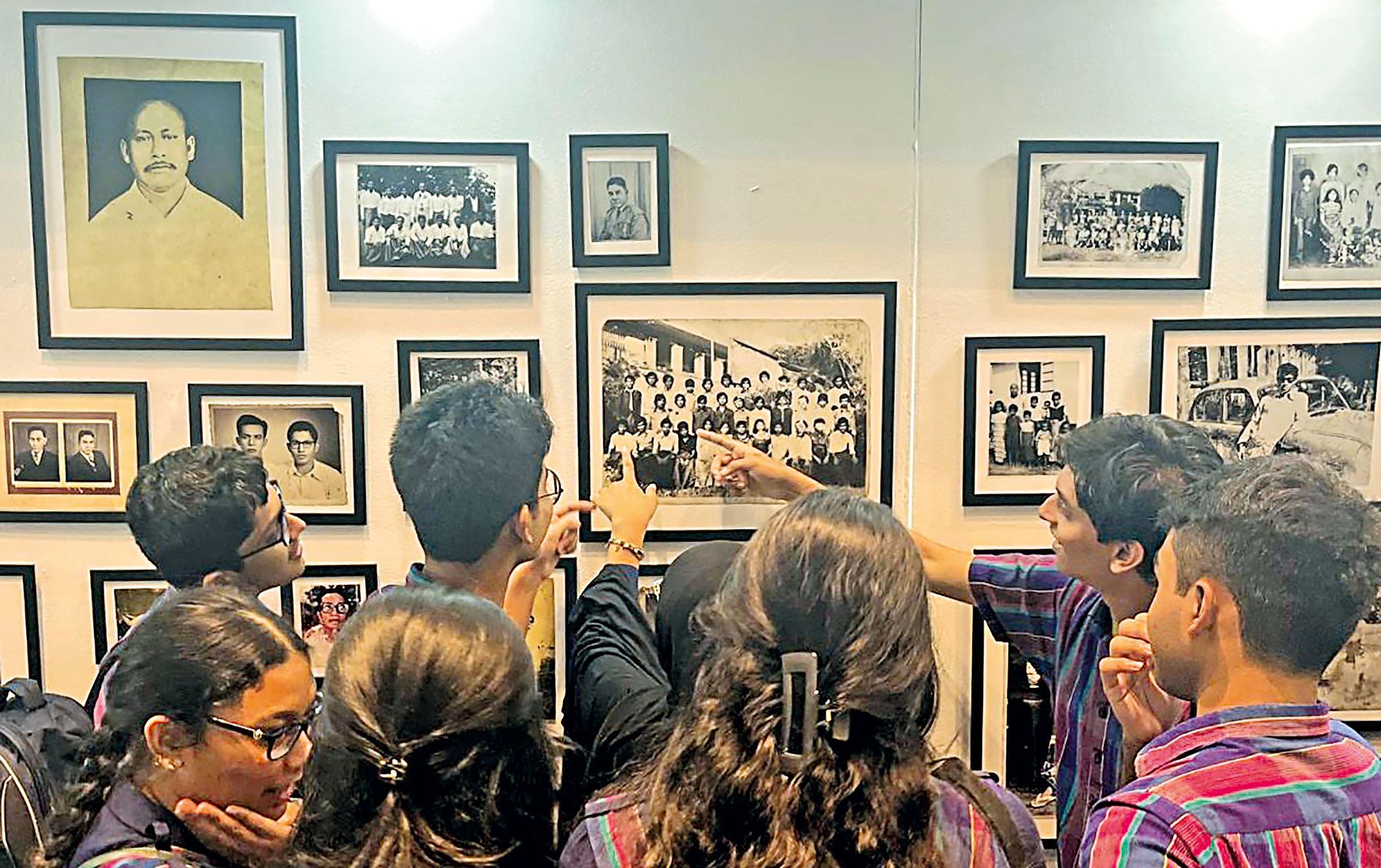
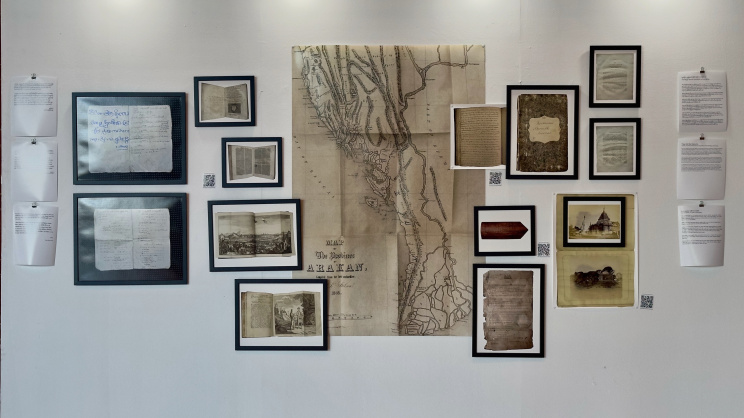
If the obstacle is fundamentally political, then the solution must also be diplomatic. And effective diplomacy depends on evidence and leverage, not sympathy alone. This is where culture, memory and history become more than matters of identity; they can serve as powerful instruments of diplomacy and statecraft. A rights-based, voluntary and sustainable return requires Bangladesh and its international partners to demonstrate, rather than simply assert, the Rohingya's deep historical roots in Arakan. Evidence of those roots can be found in their distinct language, oral genealogies identifying specific villages and land, photographs, garments, maps and the testimonies of elders who still remember exactly where they lived. Individually, these may appear to be fragments of memory. Properly documented, preserved and archived, together they can form a body of evidence that courts, governments and international institutions can use.
This is not an abstract argument. In January this year, the International Court of Justice concluded three weeks of hearings on the merits of The Gambia's genocide case against Myanmar, including closed testimony from Rohingya survivors, with a judgment expected before the end of the year. Whatever the outcome, the proceedings underscore a fundamental point: in international legal and diplomatic forums, carefully documented evidence matters.
The experiences of other displaced peoples show what this can mean in practice. In Cambodia, a documentation centre established in the 1990s to record crimes committed during the Khmer Rouge era later provided a substantial body of documentary evidence used by the UN-backed tribunal that prosecuted and convicted senior Khmer Rouge leaders. What began as an effort to document and preserve memory eventually became an important source of evidence for an international justice process.
In Bosnia, the 1995 Dayton Agreement broke new ground by recognising not only the right of displaced people to return to their country, but also their right to return to their pre-war homes and reclaim their property. Within a decade, more than a million people had returned, while more than two hundred thousand properties had been restored. Implementing such a process would have been extraordinarily difficult without records establishing who had lived where and who had legitimate claims to property.
The lesson from both cases is straightforward. The pursuit of return and justice was strengthened because the difficult work of documenting histories, experiences, homes and rights had already been undertaken, often long before anyone knew precisely when or how that evidence would be needed.
It is through this lens that the proposed Rohingya History and Knowledge Centre (RHKC) in Camp 17 should be viewed: not simply as a museum or a cultural addition to the humanitarian response, but as an institution that can train Rohingya youth to record three-generation oral histories and preserve maps, artefacts and testimonies according to standards that can withstand international scrutiny. Such a centre could give Bangladesh something that appeals for additional humanitarian funding alone cannot provide: a body of community-sourced historical evidence that challenges Myanmar's claim that the Rohingya do not belong there. It could also give the international community an opportunity to see and hear that history directly. Just as importantly, it could give young Rohingya something particularly valuable in the confines of a refugee camp: the opportunity to become active custodians and documenters of their own history, rather than merely the subjects of narratives produced by others.
Such an institution would also send a broader message to the international community. It would demonstrate to donor governments and multilateral partners that Bangladesh is not simply managing a humanitarian emergency indefinitely, but is also helping to build the foundations for a political solution and, ultimately, sustainable Rohingya repatriation.
This is where culture, memory and history become more than matters of identity; they can serve as powerful instruments of diplomacy and statecraft. A rights-based, voluntary and sustainable return requires Bangladesh and its international partners to demonstrate, rather than simply assert, the Rohingya's deep historical roots in Arakan. Evidence of those roots can be found in their distinct language, oral genealogies identifying specific villages and land, photographs, garments, maps and the testimonies of elders.
The Government of Bangladesh should therefore consider institutions such as the RHKC as part of its broader Rohingya repatriation strategy rather than as separate cultural projects operating alongside it. The Office of the Refugee Relief and Repatriation Commissioner should continue to provide administrative support for this work rather than leaving NGOs and other organisations to sustain it on their own. Bangladesh's Foreign Ministry, in turn, should brief its counterparts at the UN, ASEAN and the OIC on what this documented material contains and how it can strengthen the historical, legal and moral case for a rights-based return.
International partners should also recognise heritage, historical documentation and the preservation of collective memory as important components of the broader humanitarian response. This work deserves a more central place in the long-term strategy than it currently occupies. Crucially, whatever institutions are created should remain rooted in Rohingya ownership, with the community itself playing the leading role in preserving its history, both in the camps and, eventually, after returning home.
Despite severe constraints, Bangladesh has already demonstrated an extraordinary humanitarian commitment to the Rohingya. This does not mean that the rights and empowerment of the Rohingya while they remain in Bangladesh should be sidelined in favour of an exclusive focus on repatriation. Rather, giving real meaning to the goal of sustainable repatriation requires another, quieter and in some ways more difficult undertaking: patiently documenting and preserving the evidence that a people Myanmar sought to erase from its national history never disappeared. If and when the political conditions for return finally emerge, the Rohingya should be able to return not as a people still struggling to prove their right to belong, but as a people whose history, identity and connection to their homeland have been carefully preserved.
Mohammad Mizanur Rahman (Additional Secretary) is the Refugee Relief and Repatriation Commissioner (RRRC) at the Office of the Refugee Relief and Repatriation Commissioner in Cox’s Bazar.
Md. Mofaq Kharul Islam (Taufiq) is Associate Director at the Centre for Peace and Justice (CPJ), BRAC University.
The views expressed in this article are solely those of the authors and do not necessarily reflect those of the Government of Bangladesh or BRAC University.
Send your articles for Slow Reads to slowreads@thedailystar.net. Check out our submission guidelines for details.
Nine years on, Rohingya refugees need more than shelter
Myanmar’s partial Rohingya repatriation plan: Another attempt to mislead Bangladesh?

Is Trump’s Gaza peace plan falling apart?

What Japan’s changing Indo-Pacific strategy means for Bangladesh
Can India and Bangladesh build a more equal economic partnership?

Bangladesh First: Rethinking the relationship with India
A new political voice is emerging from the Rohingya diaspora. Why it matters

Bangladesh’s FDI puzzle: Why human capital, not red tape, is the real constraint
Will the Saudi Arabia-Turkiye-Pakistan Makkah Agreement create a new regional security order?