


Building better human beings
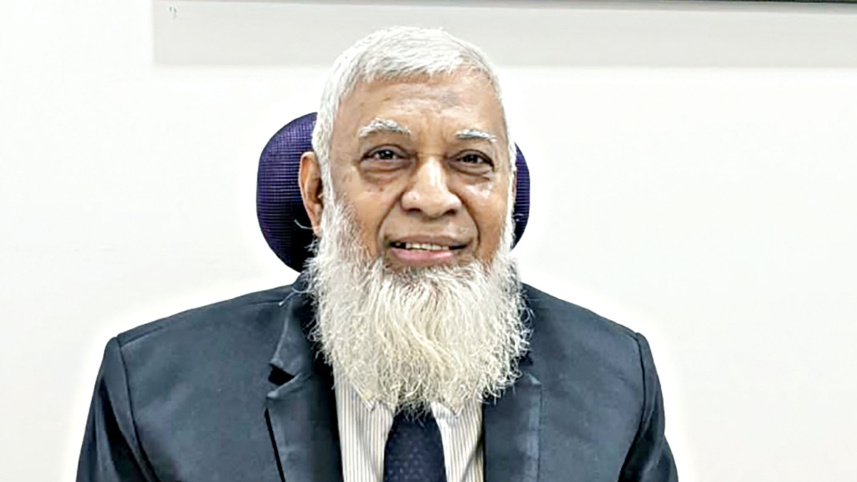
Beyond academic results, our fundamental objective is to make students better human beings.
From its establishment in 1997 with the motto “Exploration Through Education” and its emphasis on disciplined learning, holistic development and student discovery to its commitment to Bangla language and cultural heritage alongside an international curriculum, ABC International School seeks to prepare students for academic success while nurturing confidence, leadership, social responsibility and character. M. Abdul Hai, Principal of ABC International School, speaks to The Daily Star about the institution’s distinctive three-way counselling system, its approach to classroom discipline and teacher-student relationships, the importance of Bangla culture, student participation in extracurricular and British Council initiatives, professional development for teachers, transparent examination practices and its vision of developing students into capable and responsible human beings.

The Daily Star (TDS): What does a typical day at ABC look like for you?
M. Abdul Hai (MAH): Once I enter the school campus, I become very happy because I see many children coming in. They greet me and I exchange greetings with them, which gives me a different kind of pleasure. The first thing I do is walk around the campus to see whether everything is clean and tidy and whether everyone is at their designated duty stations, including security personnel, administrative officers and accounts officers.
I then discuss what happened the previous day and what we should be doing that day with our vice-principal and others. After the morning assembly, I go around the classrooms to see whether lessons are taking place properly and students are engaged. I also check different parts of the school to ensure discipline is maintained and students are in their classes. I then return to my office, attend to incoming letters and direct the relevant people to take necessary action.
TDS: What is ABC’s unique ‘X-Factor’?
MAH: ABC has a special arrangement for providing holistic education to students. Our three-way counselling system, involving parents, students and teachers, is particularly effective. We give students home-study routines and involve parents in ensuring that those routines are followed. This creates accountability and encourages students to remain engaged with their studies. ECA clubs like debate, spell bee, Robotics, Biodiversity conservation, community service, etc strongly encourage students, and it helps expose their inherent talents.
We also give considerable importance to the relationship between teachers and students. Teachers must be properly prepared before entering the classroom and should create an environment where students feel confident that their teachers are there to help them. There should be no hard feelings between teachers and students. A teacher should have a smile on their face because affection and a close relationship are important parts of education.
TDS: How do you balance international education with Bangla culture?
MAH: We make a conscious effort to ensure that our students do not lag behind when it comes to Bangla language and culture. Our students actively participate in Bangla debates and essay-writing competitions, and we arrange cultural programmes focused on Bangla, Bangladesh’s traditions and heritage.
We celebrate Pohela Boishakh, International Mother Language Day and other national occasions. We also arrange pitha festivals and fruit festivals to promote Bangla culture. We encourage students to speak and write in Bangla because preserving our language and heritage is an important responsibility.
TDS: What has reading taught you as an educator?
MAH: I always read newspapers. During my university years, I also read volumes of Homer, Virgil, Shakespeare, Bacon, John Donne, etc. These experiences enlightened me and helped shape my understanding of education.
Reading has no alternative. It enlightens people and makes them more knowledgeable. We have a very good library and always encourage students and teachers to go there and read. We do not force them to read particular books. We allow them to read what they like because if you force someone to read something they do not like, it can become counterproductive.
TDS: How do British Council initiatives benefit your students?
MAH: Participation in British Council initiatives enhances students’ confidence, speaking abilities and exposure to a wider environment. I remember one of our students participating in FameLab last year. It was her first exposure to such a wider atmosphere, yet she performed remarkably well without showing any nervousness.
The initiatives of the British Council also allow students to interact with people beyond their immediate school environment. Such exposure broadens their outlook and develops their communication skills.
TDS: How has British Council training changed your classrooms?
MAH: Our teachers have benefited greatly from British Council training. When I started teaching, I did not know where to start or how to structure a lesson. Over the years, I learned the importance of preparing in advance, deciding what questions to ask, what to write on the board and what homework to assign.
Our teachers now enter classrooms with much greater confidence. Their lesson plans are clear and cover almost everything they need to accomplish. They also know how to involve every student, including those who are shy or academically weaker.
 For all latest news, follow The Daily Star's Google News channel.
 For example, if there is a weaker student who feels shy, a teacher can ask them a question whose answer they already know. Once the student responds successfully, they become happy and gradually gain the confidence to participate more actively in the lesson.
TDS: How do you ensure reliable and transparent examinations?
MAH: We are grateful to the British Council for its support. Registration, examination conduct and result publication are handled efficiently and without unnecessary complexity. Whenever we have faced difficulties, the British Council has come forward to help us resolve them.
We follow the same philosophy of transparency in our own examinations. Whether it is a local examination or an international examination, we do not allow manipulation by management, teachers or anyone else. Our policy is to maintain 100% transparency and ensure that there is no opportunity for negative practices. Our parents recognise this as one of the strengths of ABC.
TDS: What achievement are you most proud of, and what does it mean for ABC’s future?
MAH: I am particularly proud of our three-way counselling system. I worked in Scholastica and also in Turkey, but I never encountered a system where parents, students and teachers are brought together to enhance academic performance of their wards. I also proud of achieving Scholar’s Award – an initiative of the British Council. It goes without saying that Daily Star Awards, Edexcel /Pearson Awards are coming in plenty every year. ABCIS is also takes pride to tell parents and well-wishes about achieving World/Asia/Country Highest in their IGCSE & IAL exams.
We ensure that every individual student receives counselling. When a student has a weakness, we discuss it privately with the student, their parents and teachers and suggest positive remedies. Parents are then involved in following the home-study routine. I believe this innovation has greatly helped our students perform well in public examinations.
But beyond academic results, our fundamental objective is to make students better human beings. We want them to develop critical thinking, leadership and the ability to find sustainable solutions.
Many of our students come from privileged backgrounds, so we want them to understand that life also involves hardship and responsibility towards others. The Duke of Edinburgh’s Award helps in this regard by taking students to remote communities where they interact with people living in difficult circumstances, share food and provide practical assistance.
I always tell our students that once they become qualified and develop their abilities, they should return to those communities and help people in need. Ultimately, education must be about making good human beings. That is the fundamental thing.
Finally, I wish to extend my heartiest thanks to the members of the “Board of Sponsors” for their support without which ABCIS couldn’t have come to where it stands today. We are also grateful to British Council and Daily Star for their role in promoting Holistic education in Bangladesh.
Photo: Tahsin-Ul-Islam Samin
Comments