


A deep dive into M Ahsan Ullah Khan’s Communication That Works
We have all been there. You are sitting in an important meeting. You have a brilliant idea in your head. You know the solution to the problem. But when you open your mouth to speak, the words get stuck. Or perhaps you spend thirty minutes staring at a blank screen, trying to write a simple email to your boss, terrified of making a grammar mistake.
In Bangladesh, we spend years learning English in schools. We learn the rules, the tenses, and the vocabulary. Yet, when we enter the corporate world, we realize there is a massive difference between "Exam English" and "Office English."

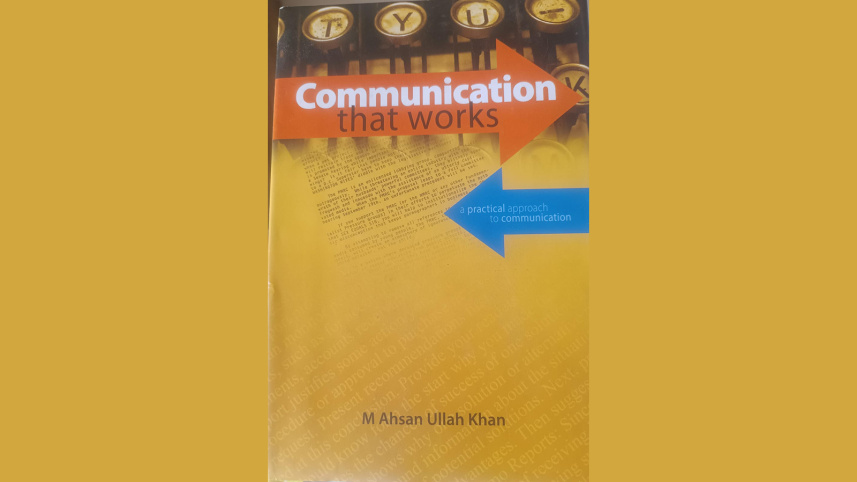
This is the exact problem M Ahsan Ullah Khan solves in his book, Communication That Works. It is not just a textbook; it is a survival guide for the modern workplace.
The Author:
Most business books are written by professors who have spent their lives in universities. While they know the theory, they often miss the messy reality of office life.
M Ahsan Ullah Khan is different. He wears three hats. First, he is a high-ranking banker (Executive Vice President), so he knows exactly what bosses look for when they hire or promote people. Second, he is a university teacher, so he knows where students struggle. And third, he is a TV news presenter, so he is a master of speaking clearly.
When you read this book, you feel like you are getting advice from a wise mentor who has seen it all.
The Book:
The book is divided into several key sections, each tackling a different part of professional life. Let’s break down what makes this book so useful.
Have you ever received an email that was so long and confusing you didn't know how to reply? Khan teaches us how not to be that person. He emphasizes clarity over fancy words. In school, we are taught to use big words to impress teachers. In the office, big words just confuse people. The book gives practical examples of how to write memos, letters, and emails. He shows you the standard formats used in top companies today, so you don’t have to guess.
Speaking with confidence is often the hardest part for many professionals. You might be great at your job, but if you can't present your results, no one notices. Khan breaks down how to give a presentation. It isn't just about reading slides; it is about connecting with the audience. He addresses the nervousness we all feel. By providing simple structures for sentences, he helps readers build the confidence to speak up in meetings without fearing judgment.
Manners matter (Corporate Etiquette) and this is a section that is missing from almost every other English book. Knowing the language is not enough; you also need to know the culture. How should you sit during an interview? What should you do with your hands? The book explains how your body speaks even when you are silent. Khan explains how to disagree with someone politely and how to handle difficult conversations without making enemies.
Why This Book is Different
There are thousands of books on "Learning English" in the market. So, why buy this one?
It is Local: Most international books assume you are working in New York or London. Communication That Works understands the Bangladeshi context. It understands the specific challenges Bengali speakers face when switching to English. It is tailored for our environment.
It is Practical: Khan does not bore you with endless pages of grammar rules. He assumes you already know the basics. Instead, he focuses on application. He answers the question: "How do I use what I know to get my job done?"
It is Comprehensive: It covers everything. Whether you are a fresh graduate preparing for your first interview, or a mid-level manager trying to lead a team, there is a chapter here for you.
Based on the principles found in M Ahsan Ullah Khan's Communication That Works, we have picked up 5 key practical tips you can start using in your office tomorrow to see immediate results.
These tips focus on "Communication over Calculation" prioritizing getting your message across clearly rather than trying to be perfect.
1. The "Subject Line" Rule (For Emails)
 For all latest news, follow The Daily Star's Google News channel.
 The Principle: Executives are busy. They often decide whether to open an email based only on the subject line. Action for Tomorrow: Stop writing vague subject lines like "Hello," "Update," or "Urgent." Instead, be specific.
- Bad: "Meeting regarding project."
- Good: "Action Required: Project X Budget Approval by Tuesday." Why it works: It tells the receiver exactly what the email is about and what they need to do, before they even open it.
2. Stop "Translating" in Your Head
The Principle: Many Bengali speakers try to form a complex sentence in Bangla and then translate it word for word into English. This causes hesitation and awkward grammar.
Action for Tomorrow: When you speak in a meeting, use Short, Simple Sentences (S.S.S.).
- Instead of: "I was thinking that perhaps if we could potentially look at the sales figures..."
- Say: "Let’s look at the sales figures." Why it works: Simple English is confident English. It reduces the chance of making mistakes and makes you sound more decisive.
3. The "Sandwich Method" for Feedback
The Principle: Giving negative feedback or disagreeing with a colleague can be tricky, especially in our culture where we want to be polite.
Action for Tomorrow: If you need to correct someone or say "no," sandwich the negative point between two positive ones.
- Top Bun (Positive): "Your report was submitted on time, which is great."
- Meat (The Correction): "However, the calculation in section 3 needs to be fixed."
- Bottom Bun (Positive): "Once that is done, it will be perfect for the client." Why it works: It softens the blow and keeps the relationship positive while still getting the work fixed.
4. Master the "Pause"
The Principle: Nervous speakers rush. They talk fast because they want to get it over with.
Action for Tomorrow: Before you answer a question in a meeting, count to two in your head.
- Do this: Listen, then take a Pause for 2 seconds and finally answer. Why it works: This tiny pause shows you are thinking, not just reacting. It gives you time to structure your sentence and makes you look more in control.
5. Body Language: The "Open" Stance
The Principle: Your words say "I am confident," but your body might be saying "I am scared."
Action for Tomorrow: Watch your hands during meetings.
- Don't: Cross your arms (it looks defensive) or hide your hands under the table (it looks nervous).
- Do: Keep your hands visible on the table or use them to gesture slightly when you talk. Why it works: Visible hands are a universal signal of honesty and openness. It subconsciously makes people trust you more.
Finally, in today's job market, having a degree is not enough. Technical skills get you the interview, but communication skills get you the job.
M Ahsan Ullah Khan’s Communication That Works acts as a bridge. It takes you from being a nervous student to a confident professional. The language is simple, the advice is solid, and the impact is real.
If you are looking to fast-track your career, stop worrying about memorizing more dictionary words. Pick up this book, learn to use the words you already have, and watch your career take off.
Comments