


What if FIFA doesn't blink?
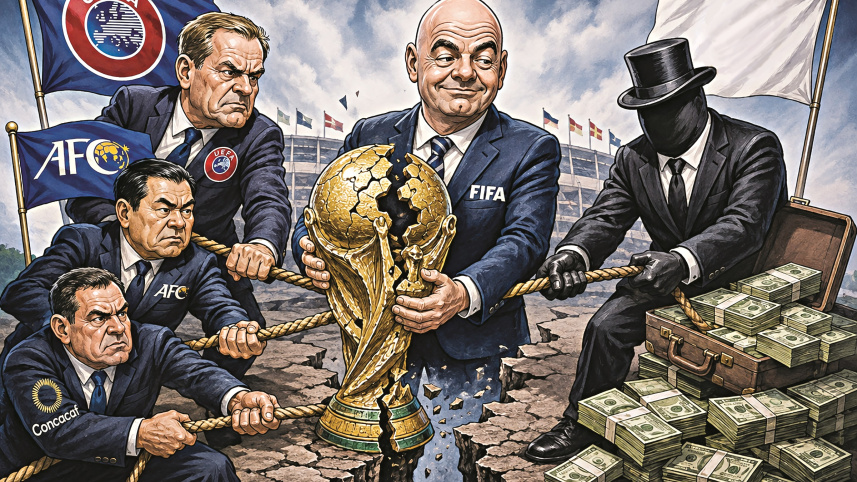
The world of football stands on the brink of its biggest governance crisis in decades.
UEFA has threatened to boycott FIFA competitions if the governing body presses ahead with President Gianni Infantino's controversial plan to sell a minority stake in the commercial rights of the World Cup. CONCACAF has also rejected the proposal, while AFC has expressed "deep concern" and declared its solidarity with UEFA and CONCACAF in opposing the plan. What began as a financial proposal has rapidly escalated into a power struggle over who controls football's richest and most prestigious tournaments.

FIFA insists that "nobody is selling football." Its critics argue the opposite.
To them, the proposal to create FIFA Forward Enterprise (FFE)--a subsidiary valued at $20 billion before selling a 20 per cent stake to private equity investors reportedly led by Thrive Eternal--amounts to handing outside financiers a permanent share of the game's crown jewel.
The question is no longer whether the proposal is controversial. It is whether Infantino can force it through without inflicting lasting damage on FIFA's authority.
The answer may arrive sooner than anyone expected.
Infantino has reportedly set September 19 as the deadline for member associations to approve the proposal. If he refuses to back down, FIFA could face immediate disruption. The FIFA Women's Under-20 World Cup begins in Poland on September 5, placing a UEFA nation at the centre of a dispute involving the organisation that governs European football. Even if the tournament proceeds, the political uncertainty would cast a shadow over the competition.
The uncertainty would not end there. The European qualifying play-offs for the 2027 Women's World Cup are scheduled for October, leaving FIFA with unenviable choices if the boycott threat becomes reality.
Carlos Cordeiro, one of Infantino's senior advisers since 2021 and a former Goldman Sachs vice chairman, resigned on Friday, publicly dismantling the financial logic behind the proposal. FIFA, he argued, already holds billions of dollars in debt-free reserves and expects around $15 billion in revenue during the current commercial cycle. Selling a permanent stake in the World Cup's commercial business to raise $4.2 billion, he said, amounts to "mortgaging football's future" without any compelling justification.
This also complicates FIFA's pitch to investors.
Infantino has promised member associations up to $40 million in additional development funding through the new structure, but those projections depend on the commercial value of FIFA competitions. Investors are buying certainty as much as football. A World Cup missing Europe's leading nations, alongside much of Asia and North America, would become a far less attractive commercial proposition. Broadcasters and sponsors would inevitably begin questioning the value of diminished tournaments, placing further pressure on the valuation underpinning the deal.
Until this week, Infantino appeared on course for another comfortable term as FIFA president. Now he faces the defining challenge of his leadership. Push ahead with the proposal and he risks more than political embarrassment. He risks creating the deepest fracture international football has witnessed in generations. Retreat, and he suffers the most public climbdown of his presidency.
The coming weeks may determine the future of football's governance. The question now is simple: will FIFA blink, or will the confederations?
 For all latest news, follow The Daily Star's Google News channel.
Comments