


After Messi: Argentina’s No.10 awaits its next star
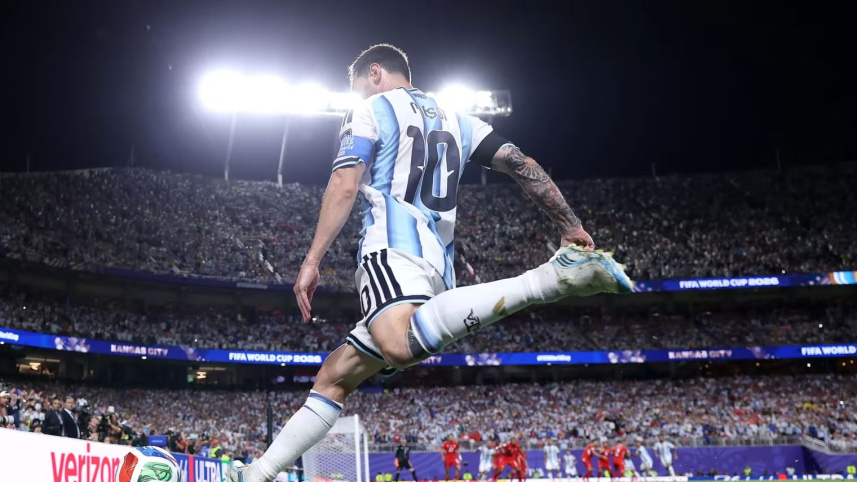
Argentina are now entering a period of transition.
Lionel Scaloni, at the helm since 2018, is yet to confirm whether he will remain beyond the end of his contract in December. Meanwhile, La Albiceleste head into the upcoming international window facing a situation they have not encountered for 17 years: with Lionel Messi no longer involved, they must decide who will wear the No10 shirt.

Scaloni, however, was quick to put the debate on hold ahead of Argentina’s matches against Bolivia, Burkina Faso and Benin. “Nobody will wear the No10 in these matches,” he said at the time. “We don’t have to give it to anyone. We’ll wait until Leo’s match and then see what happens. The idea is for one player to make it their own.”
Following Messi’s retirement from international football, deciding who inherits the number 10 will be one of the key questions for Scaloni and his coaching staff, although that question remains unanswered for now.
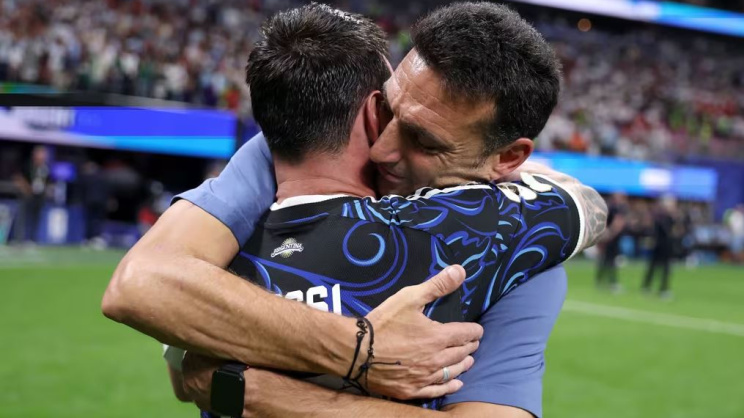
The No10 shirt holds a special place in Argentinian football.Its significance is woven into the story of La Albiceleste’s three FIFA World Cup triumphs: Mario Kempes wore it in 1978, Diego Maradona in 1986 and Messi in 2022.
“We all thought we were a bit different as players. Even if we weren’t, we all wanted to wear number 10 from a young age. Obviously, it’s always been a special shirt,” said Messi.
The adidas Golden Ball is presented to the best player at each FIFA World Cup finals. Those who finish as runners-up in the vote receive the adidas Silver Ball and Bronze Ball awards as the second and third most outstanding players in the tournament respectively.
Scaloni has already confirmed that Cristian Romero will take over as captain, with Emiliano Martínez next in line, but who will wear Argentina’s No10 shirt remains up in the air. After the Maradona era, Ariel Ortega was among those to inherit the number. But once Messi took over the shirt in 2009, there was never any doubt over who it belonged to. Now, a new era beckons.
Kempes, Maradona and Messi helped shape the culture surrounding the shirt. Three left-footed masters, they embodied Argentina’s footballing identity like few others through their dribbling, close control, imagination and guile.
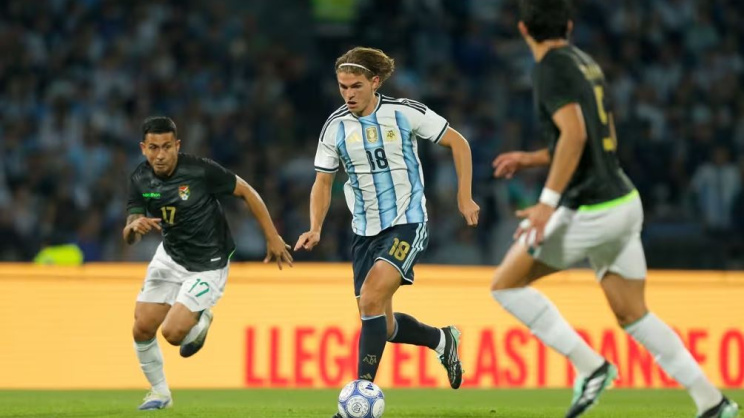
Their legacy helped give the No10 its enduring mystique. In Argentina, whether it is a kick-about in the street, a match on a rented pitch, an organised competition or a top-flight fixture, the player wearing number 10 invariably catches the eye.
At 22, Nico Paz is one of the names that springs most readily to mind when considering the future of Argentina’s No10 shirt. Left-footed, creative and intelligent in his movement between the lines, the midfielder offers a unique blend of flair and composure, as well as the ability to make a difference in the final third.
He saw limited action at this year’s global showpiece in North America, coming on in the win over Algeria before starting the final group game against Jordan, but now looks increasingly ready for a leading role.
“He’s got so much quality and I hope he keeps improving,” Messi said. “He hadn’t even been born yet when I made my first-team debut. He’s got a great head on his shoulders and understands the game perfectly. I hope he keeps progressing like this. He played and enjoyed himself, and I think he’ll feel comfortable in this team because we have a lot of the ball. He grew up playing that way and has what it takes to thrive.”
Franco Mastantuono, meanwhile, is still hoping to establish himself at Real Madrid, but his spell with Fiorentina has put the talent he first displayed at River Plate firmly back in the spotlight. Still only 19, Mastantuono has a wand of a left foot, a powerful shot and the close control to glide past opponents. His tall, slender frame also helps him make an impact when driving forward with the ball or making runs without it.
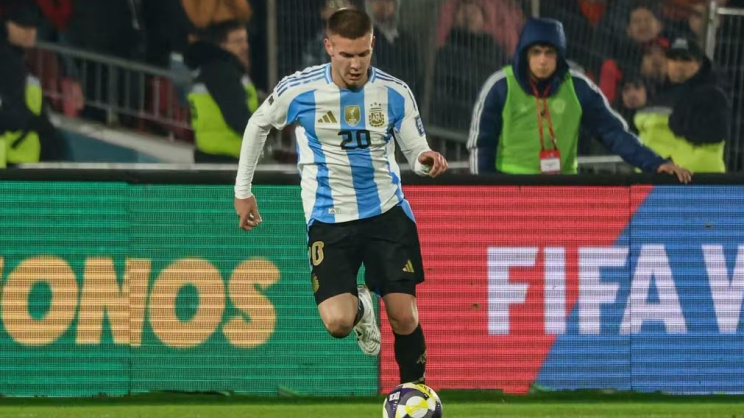
“They can play together,” Scaloni said when asked about the possibility of Paz and Mastantuono forming a partnership. “Usually, one of the two would start, but they can play together. The desire is certainly there.”
There are also members of Argentina’s Qatar 2022-winning squad who could inherit the number. During Scaloni’s tenure, Messi himself highlighted the technical ability of Argentina’s midfielders and noted that many of them had grown up playing in the enganche role – the quintessentially Argentinian playmaker who operates between the lines of midfield and attack. In Argentina, the traditional enganche has long been synonymous with the No10 shirt.
“We found some wonderful midfielders, most of whom had been playmakers at some point, and you can really tell,” Messi explained. “When you dominate possession, a playmaker gives you something different – they’re someone who rarely gives the ball away. We started losing the ball less in midfield and, through long spells of possession, we became stronger.”
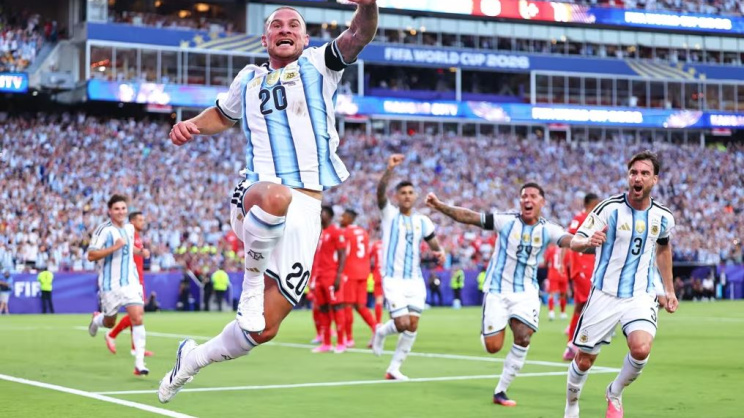
With that in mind, it would hardly be surprising to see Alexis Mac Allister, who wears the number for Liverpool, Thiago Almada, now at River Plate, or Enzo Fernandez inherit Argentina’s No10 shirt.
Messi’s time with Argentina may have reached its final chapter, but the story of the number 10 is far from over. Its blank pages are filled with potential heirs, dreamers and ambitious young stars: established names already part of the national team and children only just beginning to play the game, imagining themselves one day representing La Albiceleste with that number on their backs.
A number steeped in tradition, responsibility and pride.
 For all latest news, follow The Daily Star's Google News channel.
Comments