I never had breast cancer, but experienced its stigma

I was in my first year at the University of Dhaka when I broke my leg while trying to catch the university bus. Examinations were under way, which made the timing especially inconvenient. I moved temporarily into Kuwait Maitree Hall because getting around with a fractured leg had become difficult. My concerns were practical: reaching the examination room, managing the pain, and getting through the semester without falling behind.
Then, one evening, I choked while eating. Food lodged in my airway, and I could not breathe. The women around me rushed me to Dhaka Medical College Hospital, where I briefly lost consciousness. When I came round, my chest hurt terribly. The pain persisted over the following days, so I returned for further tests. The imaging and other investigations did not reveal anything alarming. The doctors thought that the accident, the examinations, the move to an unfamiliar hall, and the frightening choking episode might all be contributing to my symptoms.
As if that were not enough to deal with, I discovered that another diagnosis was circulating around the hall. Apparently, I had breast cancer.
I still do not know who started the rumour. I do remember how quickly it acquired a plot. I might die. If I survived, I would probably lose a breast. That would mean losing my femininity and, inevitably, my prospects of marriage. The conclusions were remarkably confident for a diagnosis no doctor had made. I was trying to sit my exams with a broken leg; other people had already planned the rest of my life.
When a rumour becomes a verdict
I laughed when I heard it. The absurdity was difficult to resist. But the looks I received were less funny. A few women regarded me with an unfamiliar mixture of sympathy and apprehension. They were not necessarily being malicious. Perhaps they were worried or simply repeating what they had heard. Yet their pity was directed at someone who did not exist: a woman whose body had supposedly made her unfit for the future they imagined for her.
What has stayed with me is not the mistaken diagnosis. It is the speed with which a possible illness became a verdict on womanhood. Nobody seemed especially interested in what my doctors had said. The urgent questions were whether I would still have breasts and whether someone would marry me. Why did the imagined loss of an organ matter more than the actual distress of the person standing in front of them?
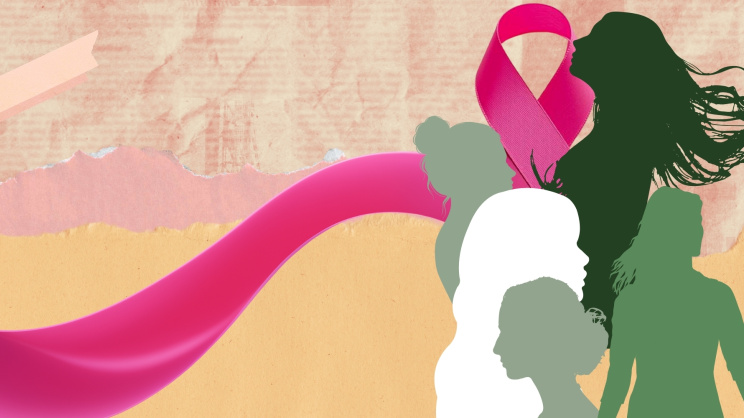
I have thought about that episode many times since, particularly in my work as a researcher. October, Breast Cancer Awareness Month, brings pink ribbons, fundraising appeals and reminders about symptoms. These campaigns can be valuable. But my memory of the hall makes me wary of treating awareness as simply a matter of recognising a disease by name. People can know the words ‘breast cancer’ and still understand very little about the women who live with it.
The scale of the illness is not in doubt. The International Agency for Research on Cancer estimated that there were about 2.3 million new breast cancer cases and 666,000 deaths worldwide in 2022. Its estimate for Bangladesh put the number of new cases among women at 12,989 that year. These figures are estimates, not a complete national register of every person diagnosed. That distinction is important: what a country can count depends partly on what its health system is able to detect and record.
Beyond awareness campaigns
Statistics tell us how large a problem may be. They tell us much less about what happens when someone first notices a lump. I think of the distance between that moment and an actual diagnosis: arranging a consultation, travelling to a healthcare facility, obtaining imaging or a biopsy, waiting for a result, and finding the money to return. For a woman with paid work, children or relatives who depend on her, each appointment can require negotiation. For a woman living far from specialist services, distance can be as much a financial burden as a geographical one.
There is no single experience of being a Bangladeshi woman. A student in Dhaka, a garment worker supporting relatives, and a woman in a rural household may have very different resources and degrees of independence. It would be misleading to assume that every woman must ask permission to see a doctor, or that all women delay seeking care because of shame. But income, mobility, family responsibilities and the availability of trustworthy services can shape how quickly concern translates into treatment. An awareness message that ignores these conditions asks individuals to solve problems they did not create.
When the body becomes a measure of womanhood
The social story matters as well. In South Asian settings, as elsewhere, breasts can carry meanings that have little to do with health: attractiveness, sexuality, motherhood and the expectations placed on a wife. In the hall, the rumour made those associations visible. A young woman who might need surgery was imagined first as a woman who might no longer be desirable. It was as though her body were being assessed for other people's approval rather than treated as her own.
I do not want to replace that crude judgement with another one. Some women experience breast surgery as a profound loss; others do not describe it that way. Some want reconstruction, while others do not. Some care deeply about how treatment changes intimacy or appearance. None of these responses makes a woman less feminist, less resilient or any less herself. What matters is that the decision and its meaning belong to her, not to relatives, neighbours or an audience of sympathetic strangers.
Separating cancer myths from medical facts
The medical assumptions behind the rumour were wrong too. Breast cancer is not invariably fatal, and treatment does not always involve removal of the breast. The options depend on the type and stage of the cancer, as well as the person's circumstances. Breast-conserving surgery is appropriate for some patients; others require different combinations of surgery, radiotherapy and medicines. Hormonal, targeted and immune-based treatments have expanded the options available to selected groups of patients. Such advances deserve attention, without pretending that every patient can access them or that treatment is ever simple.
Nor should we frighten women into constant self-surveillance. A new lump in the breast or underarm, changes to the skin or nipple, or unusual nipple discharge warrant assessment by a healthcare professional. Many such changes are not cancer. Breast cancer may also occur without pain. Knowing what is normal for one's body is useful, but it is not a substitute for clinical assessment or screening recommended for one's age and level of risk. Telling a woman to be vigilant means little if there is nowhere reliable and affordable for her to turn when she needs help.
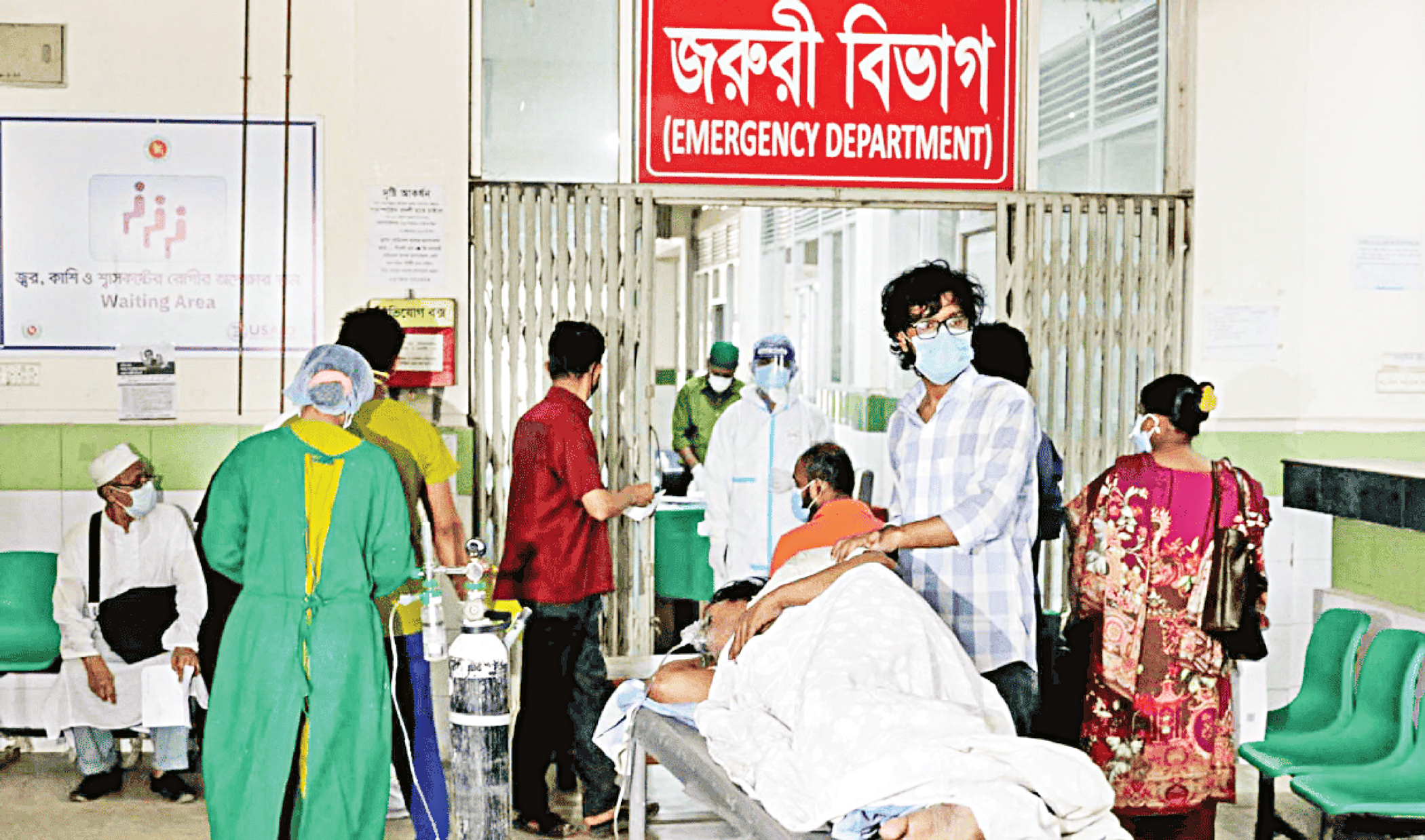
The World Health Organization's Global Breast Cancer Initiative recognises this gap. It connects early detection with timely diagnosis and comprehensive management. For Bangladesh, the real test of awareness is therefore not the number of pink banners displayed in October. It is whether a woman can move from a worrying symptom to an explanation and appropriate care without being defeated by repeated journeys, costs or delays. Better referral pathways, greater pathology capacity, clear communication and continuity of treatment are less photogenic than campaigns. They are also indispensable.
Life beyond treatment
My research has made me particularly attentive to what happens after treatment begins. I have undertaken qualitative research with younger women living with lung cancer and worked on a process evaluation of an exercise intervention for people recovering from cancer treatment. These projects are different, and neither entitles me to claim that my own research has demonstrated a reduction in cancer recurrence. The research on the exercise intervention examines how support is delivered and experienced, including the practical conditions that help or hinder participation.
There is good evidence that appropriately tailored physical activity can help many people affected by cancer improve their fitness, manage fatigue and enhance their quality of life. The question of whether exercise also reduces the risk of recurrence requires greater precision. A randomised trial published in 2025 reported improved disease-free survival among patients with colon cancer who followed a structured exercise programme after chemotherapy. This is an important finding, but it does not establish the same effect for every cancer or every exercise programme. Trials and follow-up research continue to address these distinctions. Patients deserve the benefits we can substantiate, not promises that outrun the evidence.
The questions people raise in interviews are often less tidy than a clinical outcome measure. How do I get through an ordinary day when I am exhausted? Who will manage things at home? How do I explain what is happening to my family? What if I look well but do not feel well? Counselling, rehabilitation, practical help and respectful communication are not decorative additions to treatment. They can determine whether a person feels able to live a life alongside illness and its aftermath.
The limits of sympathy
That brings me back to the women in the hall. I do not remember them as villains. We were young, and our understanding of illness was shaped by what people said around us. I suspect some genuinely thought they were expressing concern. But concern can be intrusive when it arrives with a ready-made account of another person's body and future. It is possible to feel sorry for someone without ever asking what she needs.
There is an unsettling difference between my experience and that of a woman who actually has breast cancer. I could laugh because the rumour was false. She might hear the same comments while trying to absorb a diagnosis, weigh treatment options or decide whom to tell. What sounded ridiculous in my case could become one more burden in hers.
If I could return to that corridor in Kuwait Maitree Hall, I would not give a lecture about stigma. I would probably tell the women what the doctors had actually said and ask why they had been so certain about everything else. Perhaps we would laugh together. Then I would ask a more difficult question: if I had been ill, would they have spoken to me, or only about me?
It is a question worth carrying beyond October. A woman who has cancer may need treatment, money, privacy, company or simply someone who listens. She does not need strangers to decide whether she is still beautiful, marriageable or complete. I had a broken leg, a frightening night in hospital and examinations to finish. The diagnosis was invented. The assumptions behind it were real.
Dr Lubna Ferdowsi is a researcher and educator whose work engages with society, culture, identity, public policy and questions of citizenship.
Send your articles for Slow Reads to slowreads@thedailystar.net. Check out our submission guidelines for details.

Can AI fix what cheap labour cannot in Bangladesh?
Unsafe pesticide use in Bangladesh: Are we poisoning our food in the name of productivity?
Bangladesh's Article 26 challenge: Reforming laws, protecting workers' rights

The double burden behind women’s empowerment
Pets, companions, kin: Rethinking the human-animal relationships
Between Gabura and India: Work, loss and unequal choices
Fewer fish, higher costs: The struggle of Bangladesh’s Hilsa fishermen
Duli to Baaji: Whose gaze shapes indigenous representation?

The everyday resistance of Rohingya women the world rarely sees