Can AI fix what cheap labour cannot in Bangladesh?

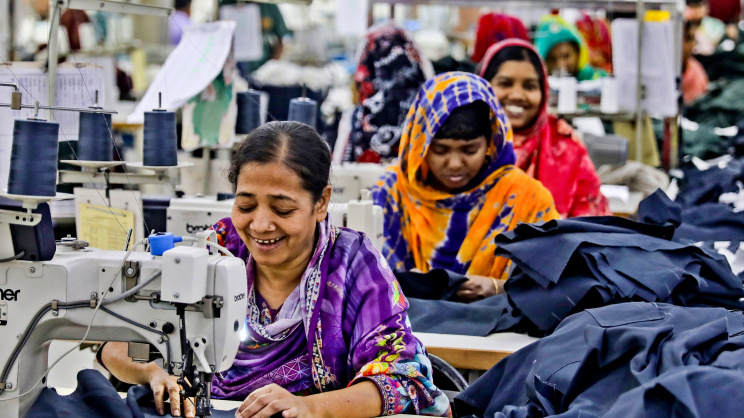
Bangladesh's garment industry is often explained by its low wages, yet research conducted inside its factories shows that wages do not explain why some firms perform far better than others. In a study of nearly 100 Bangladeshi factories, economists led by Christopher Woodruff and Rocco Macchiavello measured the efficiency of individual sewing lines. Lines at the 90th percentile were about 50 per cent more efficient than those at the 10th percentile, and the differences persisted over time, often between lines on the same factory floor. Capital investment accounted for only a small part of the gap. Since the lines drew on the same labour market and paid broadly the same wages, labour costs could not account for it either. The researchers' wider work points to supervision and management as a large part of the answer.
I approach this evidence as an outsider. I am neither an economist nor a manufacturer; my work is in biotech, where I help decide which drug programmes deserve scarce capital and which should be stopped. That work consists largely of acting on incomplete evidence, and it has left me sceptical of a belief that accompanies almost every new technology: that a powerful tool will raise the performance of everyone who adopts it.
The belief that artificial intelligence will transform industries is now widespread. Bangladesh's garment industry, which earned $38.7 billion between July 2025 and June 2026 and accounted for about 80.6 per cent of the country's merchandise exports, employs around four million people, most of whom are women. AI may become widely accessible, but access alone does not guarantee economic returns. Firms with stronger management, better data and established processes appear better positioned to extract value from it. Whether AI ultimately widens or narrows productivity gaps remains an empirical question. Bangladesh still relies on cheap labour, but factory evidence indicates that labour costs alone cannot explain competitiveness.
Energy and finance come first, as the World Bank's Franziska Ohnsorge acknowledged this month when she urged governments to close the foundational gaps that hold back AI adoption.
What has changed
Most of what has changed this year has little to do with algorithms. In 2025, Vietnam overtook Bangladesh in apparel exports, shipping $39.6 billion worth of clothing against Bangladesh's $38.8 billion. Bangladesh's garment earnings fell by a further 1.6 per cent in the fiscal year ending in June.
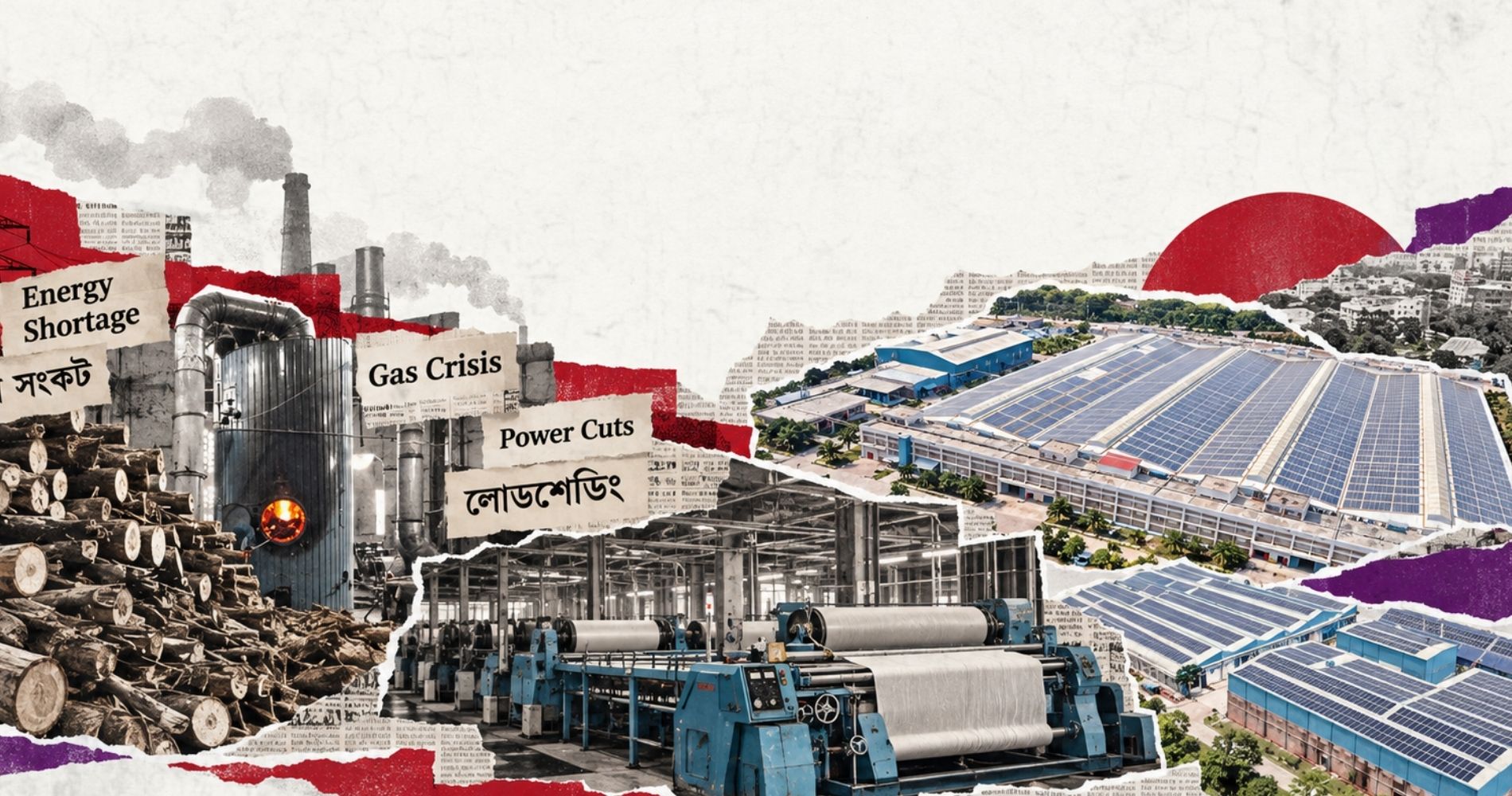
The domestic environment has also deteriorated. In August, falling gas pressure left most factories around Dhaka operating at 60 to 70 per cent of capacity, according to BGMEA. Bangladesh is scheduled to leave the UN's list of least developed countries on 24 November, with implications for its preferential market access, although a request to defer graduation until 2029 remains before the General Assembly.
Buyers, meanwhile, want more information; the European Commission plans to adopt rules for a textile digital product passport in late 2027, requiring suppliers to provide structured data on materials and origins. AI adoption on Bangladeshi factory floors remains at an early stage and is largely vendor-led. Available international research cannot establish how widely Bangladesh's garment firms use AI or what returns they obtain.
The limits of the old advantage
Low wages built the industry, and they still help secure orders for basic clothing. The comparative evidence nonetheless indicates that cheap labour alone does not make an industry productive. Vietnam overtook Bangladesh while paying higher wages and selling a more diversified, higher-value product mix.
The most rigorous evidence comes from inside firms. In a randomised experiment published in 2013, Nicholas Bloom and colleagues provided free management consulting to Indian textile mills and found that productivity rose by 17 per cent within a year through better quality, higher efficiency and leaner inventories. The mills had not adopted these practices chiefly because they did not know about them, and badly run mills had survived because competition was too weak to force them out. Wages establish a baseline for competitiveness, while the organisation of production determines how far a firm can exceed it.
Two technologies, two stories
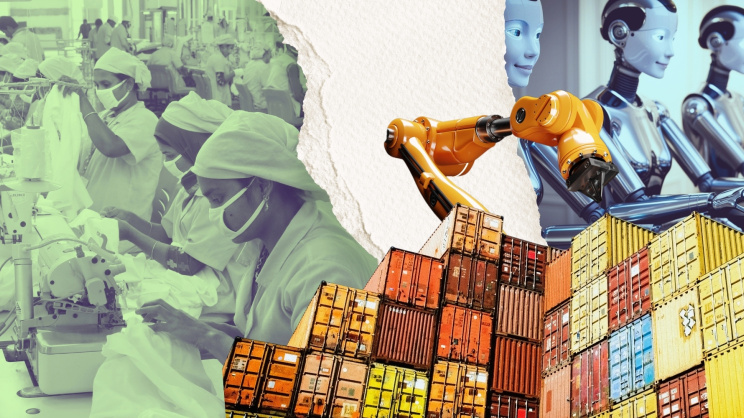
Public debate in Dhaka often treats automation and AI as a single threat, though they operate differently and call for different responses. Automation can reduce the labour needed for particular tasks; its effect on total employment also depends on production volumes, new roles, wages, investment and market demand. A 2024 study by the Bangladesh Labour Foundation, BRAC University and Solidaridad reported reductions in labour requirements of about 31 per cent across the production processes studied, including 48 per cent in cutting and 37 per cent per line in sweater factories. These are findings from that study, not a measure of industry-wide job losses. Helpers, women and less-educated workers were particularly exposed.
Rubana Huq, whose Mohammadi Group runs automated sweater knitting operations, reported in 2018 that her factories had shed 500 jobs, and the Centre for Policy Dialogue estimated in July this year that up to 1.22 million garment jobs could disappear by 2041. Sewing, which employs most of the workforce, remains difficult to automate fully because robots still struggle to handle flexible fabric, and Miran Ali of BGMEA has said the industry will not fully embrace automation.
AI software affects workers indirectly by planning production, balancing lines, detecting defects and recording output. Oli Ahad, founder of Dhaka AI Lab, has argued that the industry has no choice but to adopt it, while trade unionist SM Ahasan Habib Bulbul has called for the gains from monitoring to be reinvested in workers. For most workers, the immediate questions are who sets the pace of work and who controls the data generated by their work.
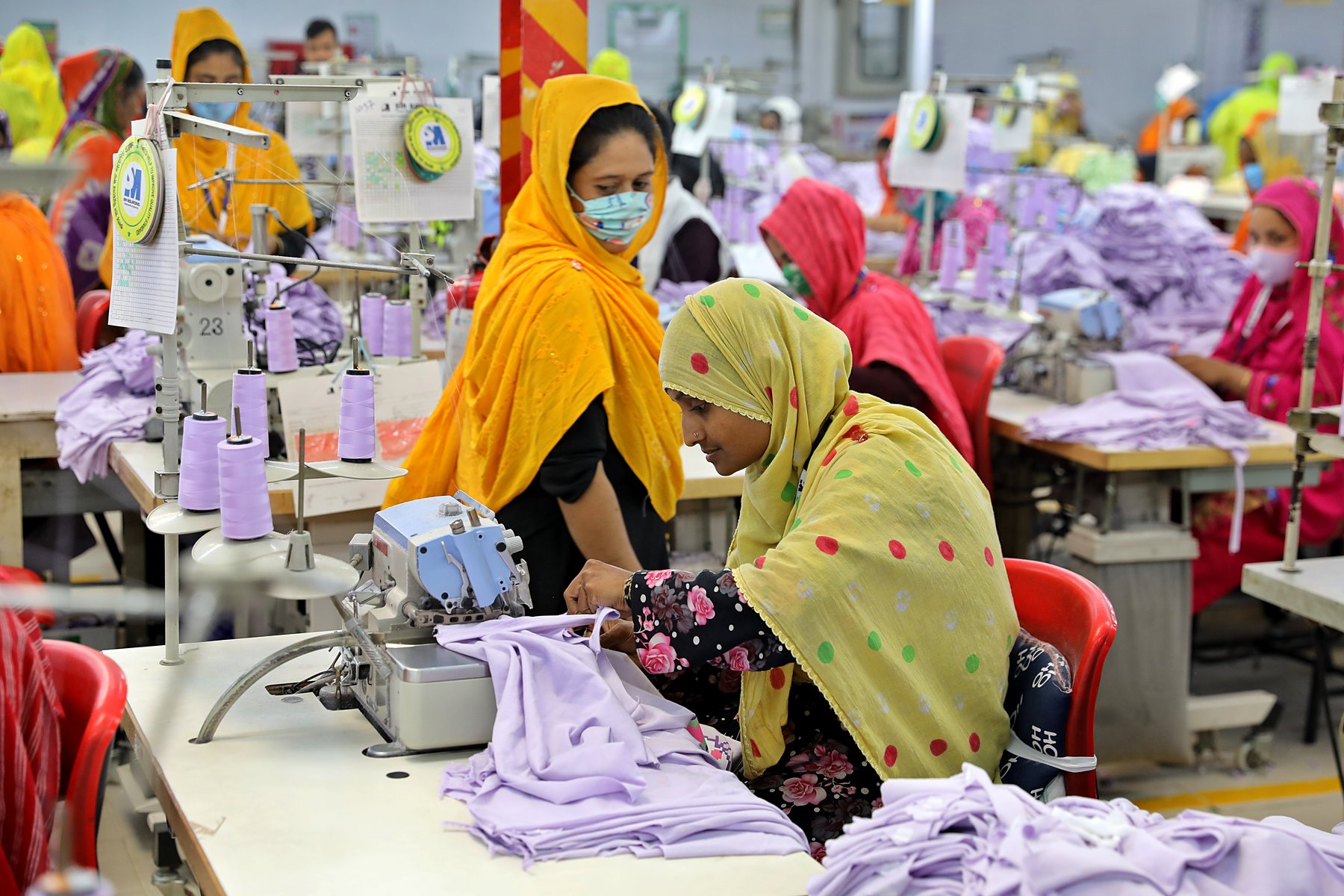
Women are at the centre of both developments. Their share of the garment workforce fell to about 58 per cent by 2020, partly as automation eliminated helper roles, while at the start of the GEAR programme, 19 out of every 20 line supervisors were men. GEAR trained women operators to become supervisors, and an assessment by Oxford and BRAC University, published by the IFC and ILO in 2025, found that their lines were 2.5 to 4.3 percentage points more efficient than those of untrained supervisors, a gain worth up to $182,000 a year for a typical 20-line factory. A separate randomised trial found that women supervisors initially lagged behind their male counterparts, largely because workers doubted their abilities, but matched men's performance within four to six months. Automation pushes women out at the bottom of the factory hierarchy, while management practices keep them out of supervisory roles; the latter problem reduces output and is less costly to address.
Why organisation matters for AI
The World Bank's World Development Report, published in August, includes a finding that should shape this debate. Its supporting research distinguishes access to technology from the intensity of its use. Direct evidence from a survey of Romanian firms shows that AI adoption is concentrated among larger, more productive and better-managed firms. The researchers caution that these findings do not establish causal effects or represent all developing countries. A study of British firms by Cambridge's Bennett Institute reinforces the point. Firms with better management practices in 2020 were significantly more likely to have adopted AI by 2023, yet the same practices did not predict the adoption of robots or specialised equipment. These findings identify an advantage in adoption; they do not establish which firms will capture most of the eventual productivity gains.
The probable reason is practical. AI tools used for planning and quality control depend on reliable operational data and on the decisions taken in response to their recommendations. My own field offers a parallel. In drug discovery, computational tools can generate predictions and rank opportunities. Their commercial value depends on the quality of the evidence, the experimental systems used to validate those predictions and the organisation's willingness to discontinue unsuccessful projects. In portfolio management, a promising prediction is a reason to design the next experiment, not sufficient grounds to commit more capital. The software does not supply that judgement.
Buyers are moving more quickly than factories. Shein, the online retailer, makes 100 to 200 pieces of each new style, reorders only what sells and runs its suppliers on its own software. In the Oxford data, lines producing for higher-end buyers were more efficient even within the same factory. In July, Ha-Meem Group signed an agreement with the robotics company Robonauts that lists workforce development ahead of automation, which is the sequence this evidence recommends.

The strongest objection
A factory owner in Gazipur could reasonably object that this inverts the order of problems. Supervisor training improves line efficiency by a few percentage points, whereas this year's gas shortages have cut capacity by a third or more across much of the industry. Losing least-developed-country status could add tariffs of around 9 per cent in Europe and the UK on key products, according to one think tank's estimate, while credit remains scarce and costly. Miran Ali made a version of this argument in 2024, blaming power cuts and port and road congestion for much of the industry's low efficiency. The owner might add that buyers capture the gains. Mark Anner found that the prices American importers paid for Bangladeshi trousers fell by about 41 per cent between 2000 and 2014, even as lead times shortened, and AI may concentrate demand data further in buyers' hands.
AI software affects workers indirectly by planning production, balancing lines, detecting defects and recording output.
Much of this is correct, and my argument must acknowledge it. Energy and finance come first, as the World Bank's Franziska Ohnsorge acknowledged this month when she urged governments to close the foundational gaps that hold back AI adoption. The objection nonetheless underestimates how shocks operate. Bloom's mills showed that badly run firms survive when pressure is low, and the next three years will not be such a period. Even August's crisis prompted an organisational response, with BGMEA reporting that factories ran dyeing units during off-peak hours to build fabric stocks while continuing to pay workers. Some managed this; others did not. Capability is also a source of bargaining power, since a factory that can supply small batches, traceable data and consistent quality can choose buyers who tend to pay more. The argument therefore survives in a narrower form. Energy, finance and market access will determine whether the industry retains its scale; organisational capability may help explain which firms within it adapt successfully. AI could raise the cost of lacking that capability, but whether it also helps firms acquire it remains to be tested.
What would prove this wrong
There is a serious possibility that AI could help weaker firms catch up. In the best-known field study of generative AI at work, Erik Brynjolfsson, Danielle Li and Lindsey Raymond found that an AI assistant raised the productivity of more than 5,000 customer-support agents by 14 per cent on average, with novices becoming about a third more productive and the most experienced workers gaining almost nothing. The tool appeared to make experienced workers' practices more accessible to newcomers. Call centre evidence cannot be transferred directly to garment manufacturing, but it raises a question: could inexpensive planning and inspection tools give weaker factories access to capabilities they currently lack? If those factories achieve larger, sustained efficiency gains, AI would be reducing an existing management disadvantage. Over the next three to five years, researchers should compare changes in efficiency among factories adopting AI with different levels of initial capability, accounting for changes in orders, product mix and other investments. A narrowing gap would challenge the hypothesis that AI mainly compounds existing advantages. Researchers such as Atonu Rabbani at the University of Dhaka and Christopher Woodruff at Oxford have worked with the line-level data needed to investigate this, provided factories and buyers are willing to share the relevant figures.
What follows
For factory owners, the sequence of investment matters more than its scale. Measurement should come first, because a firm that knows its standard minutes and defect rates can judge whether an AI tool helps, while one that does not must accept the vendor's figures. Investment in supervisors, including women, should follow, since the evidence supporting it is stronger than that for any software. Treat each AI product as a trial with a defined measure of success and a stop date, as disciplined drug developers do with their own programmes.
For the government, energy and finance remain the first priorities, and no technology policy can substitute for them. A cheaper step is measurement. A national survey using the World Bank's enterprise module on AI would show which firms are falling behind before the market does. Buyers, for their part, will obtain traceable, small-batch supplies sooner from suppliers who share in the gains.
The lesson extends beyond Bangladesh. For a decade, economists have asked whether automation will close the ladder of labour-intensive manufacturing that Korea, China and Bangladesh climbed. The evidence from Bangladesh's factory floors suggests another risk: that organisational weakness could limit firms' ability to benefit even while cheap labour continues to win orders. AI might deepen that disadvantage or help firms overcome it. The next test of Bangladesh's industrial competitiveness may be less about which factories acquire AI first than which can turn technology into measurable improvements in productivity, quality and reliability. The distinction will matter long after today's technologies have changed.
Mukhtar Ahmed, PhD, is a biotech executive and strategic adviser.
Send your articles for Slow Reads to slowreads@thedailystar.net. Check out our submission guidelines for details.

Unsafe pesticide use in Bangladesh: Are we poisoning our food in the name of productivity?

Bangladesh's Article 26 challenge: Reforming laws, protecting workers' rights

The double burden behind women’s empowerment

Pets, companions, kin: Rethinking the human-animal relationships

Between Gabura and India: Work, loss and unequal choices

Fewer fish, higher costs: The struggle of Bangladesh’s Hilsa fishermen

Duli to Baaji: Whose gaze shapes indigenous representation?

The everyday resistance of Rohingya women the world rarely sees

The banyan tree that became a restaurant for birds