Bengal’s forgotten connections with Nazi Germany

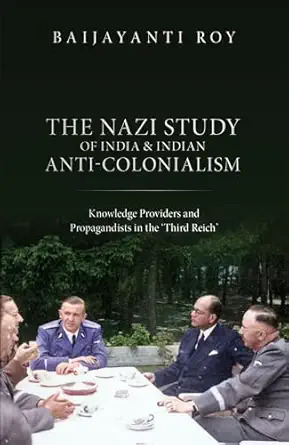
Dr Baijayanti Roy, a faculty member at Goethe University in Germany, speaks to The Daily Star about her book, The Nazi Study of India and Indian Anti-Colonialism: Knowledge Providers and Propagandists in the Third Reich.
The Daily Star (TDS): What sparked your interest in writing The Nazi Study of India and Indian Anti-Colonialism?
Baijayanti Roy (BR): From my teenage years, I was interested in the history of Nazi Germany. My PhD (from Goethe University, Frankfurt am Main), which formed my first monograph, was on Albert Speer, Hitler's architect and later Minister for Armament Production.
After my PhD, I wanted to look at the historical connections between Nazi Germany and contemporary India, which was then under British rule. Also, I wanted to know more about the German scholars who specialised in India, i.e. the Indologists, and their connections to Nazi politics. The book is a product of these impulses.

TDS: While the Congress leadership rejected Fascism and Nazism, others saw Germany as a potential strategic counterweight to the British Empire. How did these competing perspectives shape Indian connections with the German Nazi Party?
BR: Indian National Congress, which was the official face of the Indian anti-colonial movement, envisioned a free, democratic, and secular India. The Congress leadership, particularly Gandhi and Nehru, were very clear about rejecting both imperialism and Fascism/Nazism. It was only some right-wing elements in Indian politics that uncritically admired Nazi Germany. There was indeed a Nazi network operating in India. It included a Nazi Party offshoot as well as various Indian and German individuals who acted as mediators between the Nazi Party and various groups of Indians. However, their influence remained limited.
TDS: Long before the rise of Nazism, German Indologists had made significant and systematic contributions to the study of India. Do you see the discourse of Aryanism as a continuous thread linking these early scholars to the Nazis, or did Nazi ideology fundamentally reinterpret and redefine the Aryan idea?
BR: Yes, one can actually find certain ideas about Aryanism, using India as a case study, that ran like a thread from the 19th century until the years of Nazi rule. Of course, in the 1930s and early 1940s, there were Indologists like Walther Wüst and Jakob Wilhelm Hauer who consciously wrote about India's "Aryan past" in ways that legitimised aspects of the Nazi worldview.
Another aspect of Aryanism and German Indology is that it was dominated by a racist discourse, the basic contention of which was that a branch of white-skinned Nordic Europeans had invaded ancient India and subjugated the dark-skinned original inhabitants there. These white-skinned people called themselves "Aryans", and they were supposedly the ones who brought culture and civilisation to India, as witnessed through the Vedic texts and even the Bhagavad Gita.
Also, the emergence of race science (racial anthropology) from the late 19th century was equally, if not more, active in disseminating such racialised views. From the early 20th century, Indological works on Aryanism often took recourse to such racialised anthropological studies to bolster their claims.
TDS: Your research shows that ethnocentric and pseudo-scientific race theories shaped German perceptions of India. How did these ideas influence interactions between India and Germany, and to what extent did they contribute to organisational and ideological affinities between the two countries? Did they also affect Hindu-Muslim relations?
BR: The interactions between India and Germany occurred at different levels. German Indologists and anthropologists/ethnologists were very well respected among their Indian peers, who actually accepted the racialised discourses coming from the West. Despite talks of professional respect and even Indophilia, which was a legacy of German Romanticism among some German scholars, the relationships between the professionals of the two countries were rarely equal.
Among ordinary Germans, everyday racism towards Indians became quite conspicuous after the Nazis came to power. The Nazi ruling elite, including Hitler and the Nazi Party's philosopher Alfred Rosenberg, never bothered to hide their contempt for modern Indians, whom they considered to be descendants of "fallen Aryans", the product of racial miscegenation between the white-skinned Aryans and the dark-skinned aboriginals. Subhas Chandra Bose protested against open racism towards Indians in Germany during the 1930s, but to little avail.
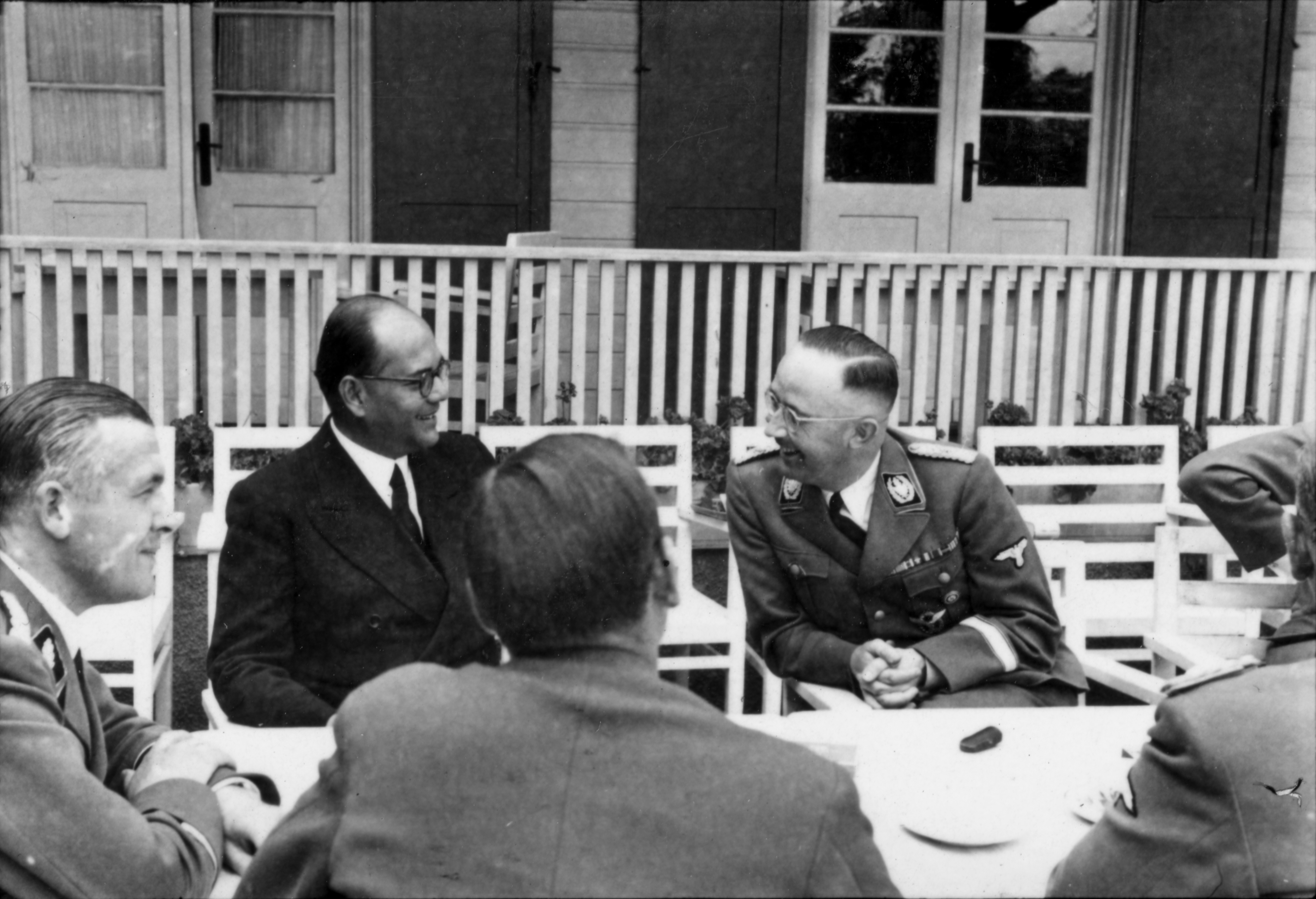
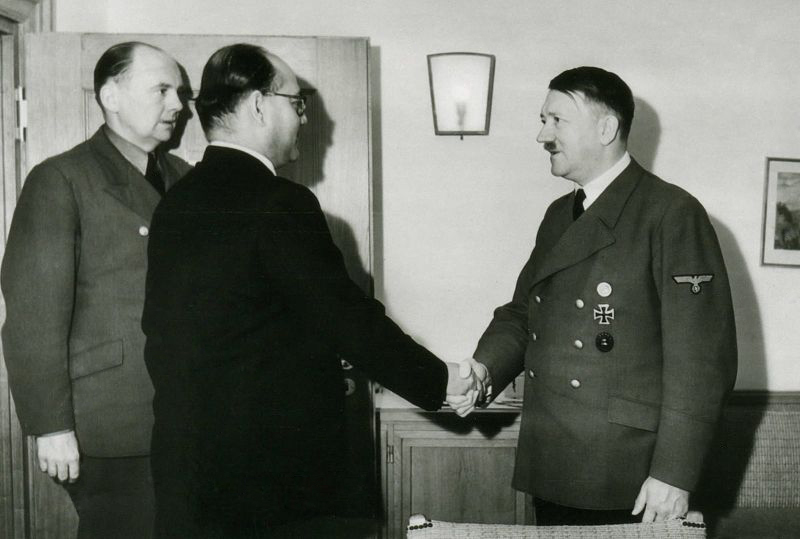
Only from around 1938, when war with the British Empire appeared unavoidable, did the Nazi ruling elite, particularly Foreign Minister Joachim von Ribbentrop, strategically express support for India’s anti-colonial movement and profess respect for Indians. Nevertheless, as I have shown in my book, German Indologists, officials, and soldiers often treated Indians as racial inferiors, and such treatment hindered the smooth functioning of various organisations.
As to the Hindu-Muslim rivalries, it is well known that the Hindu nationalists admired the Nazis. Obviously, these politicians did not study the Nazi attitude towards Indians in any detail. There were also attempts by the Nazis to use the Aryan race theory to appeal to the Hindus, as I have written in my book as well as in my article titled "Hakenkreuz, Swastika and Crescent". Hindu revivalist organisations like the Gaudiya Society and the Arya Samaj, which wanted India to reclaim its purportedly lost "Aryan glory", were used by different German organisations and individuals to propagate Hitler and Nazism in India. A statement written by Padmaraj Jain, the Honorary General Secretary of the Hindu Mahasabha, to the German Consulate in Calcutta in March 1939 sums up the Nazi propaganda tropes among the Hindus. The statement claimed that Nazi Germany's revival of Aryan culture, its glorification of the swastika, its patronage of Vedic learning, and its championing of Indo-Germanic civilisation had been welcomed by the Hindus.
Some of the German Indologists and officials who shaped Nazi propaganda towards India, particularly from 1938 onwards, had a pro-Hindu and anti-Muslim bias. However, they were not allowed to express such sentiments directly, since Ribbentrop (and later Bose, from 1941) made it clear that German propaganda was not to use religion directly in addressing Indians.
TDS: What forms of Nazi propaganda circulated in India at the time? Were Indian admirers of Nazi ideology merely passive recipients of these ideas, or did they actively reinterpret and adapt them to suit their own political and ideological agendas?
BR: From 1933 onwards, Hitler and Nazi Germany were admired by certain groups of right-wing Indians, who were often anti-British nationalists. From about 1933 to 1938, the Nazi network operating in India spread propaganda that focused on Germany's supposed rejuvenation under Hitler. For some right-wing Indians, Nazi Germany presented an aspirational model for ethno-religious nationalism, particularly as the "Third Reich" seemed to challenge the supremacy of the British Empire. From 1938, the focus of German propaganda changed to present Nazi Germany not only as a challenger of the mighty British Empire, but also as a friend and sympathiser of the Indian nationalist movement for independence. However, the Hindu nationalists and revivalists kept mostly aloof from the Indian anti-colonial movement.
It is relatively little known that the Nazis tried to influence Buddhists, particularly in Ceylon (Sri Lanka). Aryanism played a role in the self-image of some Buddhists as well. German Indologists considered Buddhism to be an Aryan religion. In particular, Wilhelm Geiger, an expert on Sri Lanka, declared Sinhala to be an Indo-Aryan language, thereby "Aryanising" Sinhala and contributing to the development of Sinhalese Buddhist nationalism. Certain German Buddhists allegedly spread pro-Nazi and anti-British propaganda among Buddhist nationalists in Sri Lanka.
In my recently published article on the German Society of Aligarh Muslim University, I have drawn attention to the Nazi propaganda aimed at Muslims, whereby Hitler was equated with the Prophet and the Nazi concept of Volksgemeinschaft, or National Community, was presented as compatible with the concept of the Islamic jamaat. The German Society of Aligarh Muslim University became progressively anti-British and pro-Pakistan, particularly after the war started. So German propaganda aimed at Indian Muslims had some connections with the movement for Pakistan. In the early 1940s, the German Foreign Ministry was keen to encourage the Pakistan movement because it thought this move would gain it additional sympathy in the Muslim world. However, Ribbentrop, as well as Subhas Chandra Bose, prevented any direct encouragement of Pakistan on the part of the Germans.
TDS: How did Nazi connections develop in Bengal, particularly in the context of Subhas Chandra Bose's tactical engagement with Germany and Japan during the Second World War? More broadly, what impact, if any, did Nazi ideology have on the Indian anti-colonial movement?
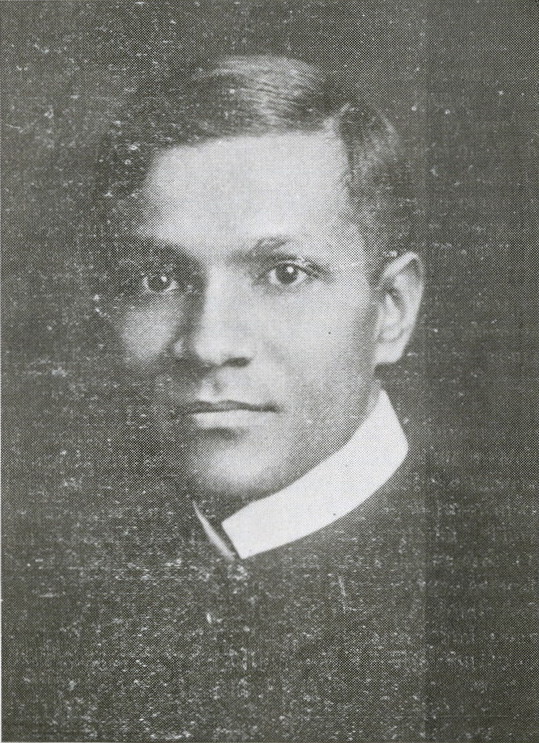
BR: Even before Bose's connections with Nazi Germany, a section of the educated elite in Bengal found much to admire in Hitler and Nazi Germany. The most notable among them was Benoy Kumar Sarkar, who established the Bengali Society for German Culture in Calcutta in 1933 to disseminate the virtues of Nazi policies and worldview among the Bengali intelligentsia. The lectures organised by this society were given mostly by Indians who had studied in Germany or were influenced by Nazi ideas, as well as by Germans themselves. This organisation possibly received financial help from the German Consulate in Calcutta. I have written an online blog on this organisation.
However, this organisation, much like the German Society of Aligarh Muslim University, was banned by the British after the onset of the war. Pro-Nazi articles, written by Indians and Germans from Germany, were also banned. Therefore, pro-Nazi sentiments could only be expressed in private. A limited amount of Nazi propaganda could enter India during the war through circuitous routes, but such propaganda did not have any widespread impact.
The extent of the connections between Bose and Nazi Germany was not very well known in India. Here, we must also remember that, although Subhas Chandra Bose went to Berlin in 1941, he had initially wanted to go to Moscow. When that failed, he took the Berlin route. Bose had (in)famously declared his admiration for both a Soviet-style government and aspects of Fascism and Nazism. During his visits to Germany in the 1930s, he formed an "Indian Students Association" in Berlin, which comprised nationalist Indians, students, and professionals. This group had good connections with certain representatives of the Nazi government. So Bose had political ties with the Nazis even during the 1930s, but his preferred destination in 1941 was the Soviet Union. He had kept his options open.
The popular view then, as now, is that Bose remained completely aloof from all forms of Nazi politics. Bose's radio broadcasts from Germany and Japan were hugely popular, but they contributed mostly to bolstering his image as an anti-colonial icon. Nazi propaganda had no direct influence on the mainstream Indian anti-colonial movement under the Indian National Congress, which, as I mentioned, openly rejected Fascism and Nazism along with imperialism. As I have written in my essay titled "Hakenkreuz, Swastika and Crescent", "It is imperative to remember that most Indians rejected the Nazi propaganda overtures, irrespective of the religious or secular garbs in which they were presented. It is a significant and proud heritage that today's India would do well to call to mind."
The interview was taken by Priyam Paul.
Send your articles for Slow Reads to slowreads@thedailystar.net. Check out our submission guidelines for details.
Forgotten story of Jeanette Van Tassel, the American woman who flew over Dhaka in 1892
Beyond 1947 / A personal essay
Abul Mansur Ahmad / A global quest in search of a nation

Chand Bibi and the forgotten history of Muslim women’s political resistance
Women’s voices in Nazrul’s Dhumketu
How Milad-un-Nabi shaped Muslim cultural life in colonial Bengal
What Rashomon teaches us about truth and human behaviour
Why Chittagong never became a maritime city
The many worlds of Ghulam Murshid