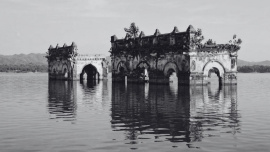
Bengal, Mysore, and the making of American independence

Whenever we talk about the American War of Independence, our imagination conjures up images of the dusty roads of Lexington and Concord, the heated debates in the assembly halls of Philadelphia, and the rise of a nation fighting for its freedom. We generally view it as a local rebellion against British tyranny. Yet the deeper currents of history tell a different story. The birthlines of this nation were also drawn on the soil of the Indian subcontinent. Modern national identities had not yet formed. The distance was insurmountable. Consequently, there is no direct documentation of any Bengali or Indian warrior being present on American soil. However, India and America were already bound together by the invisible threads of economics, military strategy, and imperial politics.
The fire of Bengal: Corruption, tea, and the birth of revolution
After the Battle of Plassey, the East India Company seized the wealthy territory of Bengal. But through corruption, greed, and the devastating famine of 1770, the Company found itself on the brink of ruin. To save this sinking ship, the British Parliament passed the Tea Act of 1773. This allowed the East India Company to market duty-free tea in America and rake in profits. It was a ruthless tactic that impoverished local American merchants. This monopolistic greed of the British merchant-imperialists lit the fire of American resentment, giving rise to the Boston Tea Party. It was as if the smoke from Bengal's exploitation drifted across the oceans to gather the clouds of rebellion in the American sky.
This irony became even starker after the war. General Cornwallis, who surrendered to George Washington at Yorktown, was sent to Bengal within a few years. There, through the Permanent Settlement, he drove the roots of British rule even deeper. Turning away from the ruins of a defeated empire in the West, he looked towards an empire on the rise in the East.
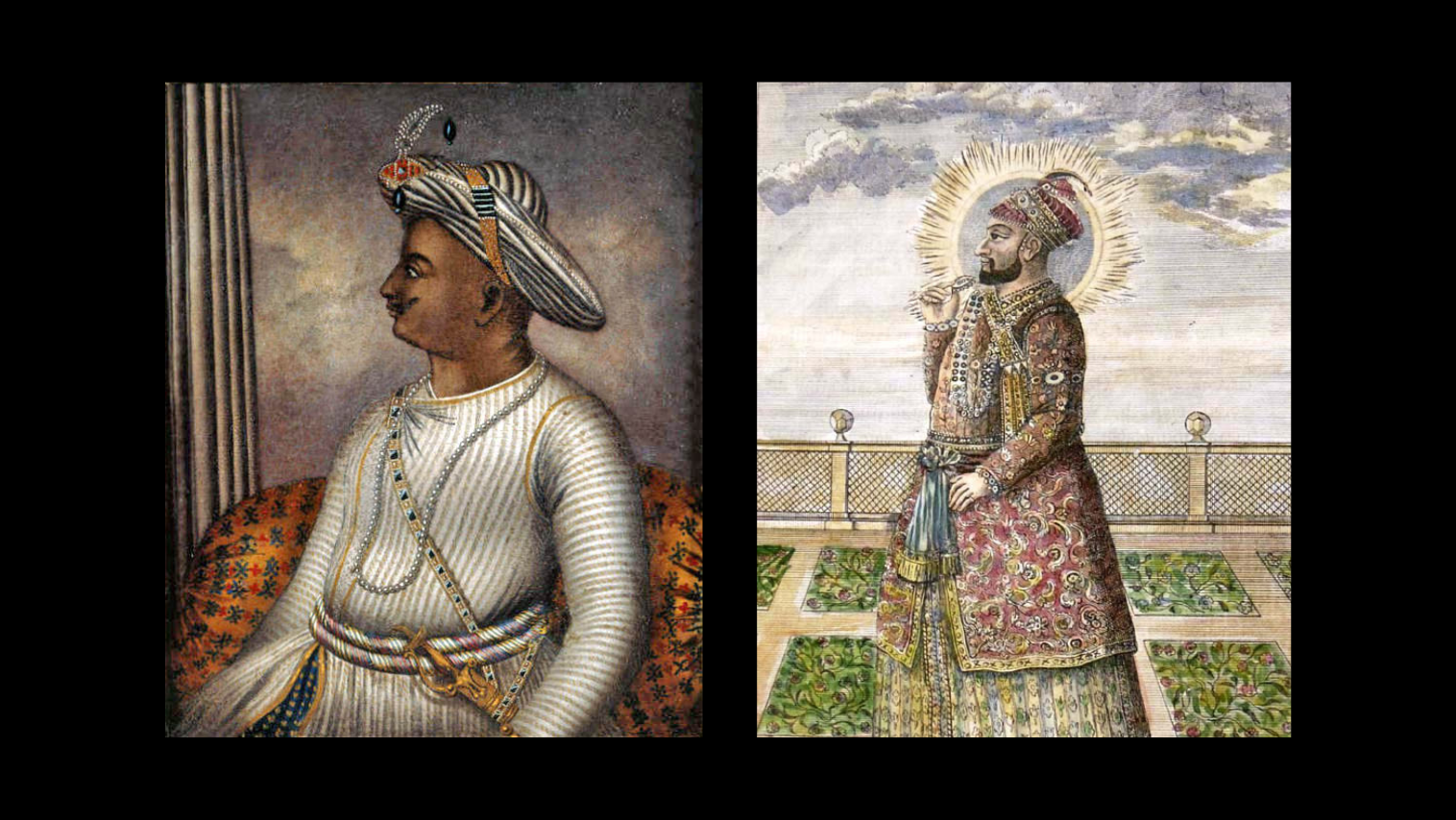
The thunder from the South: Hyder Ali and Tipu Sultan
In 1778, when France entered the war as an ally of America, the conflict transformed into a global war. To break British power, France reached out to Mysore in South India, to Hyder Ali and his brilliant son, Tipu Sultan.
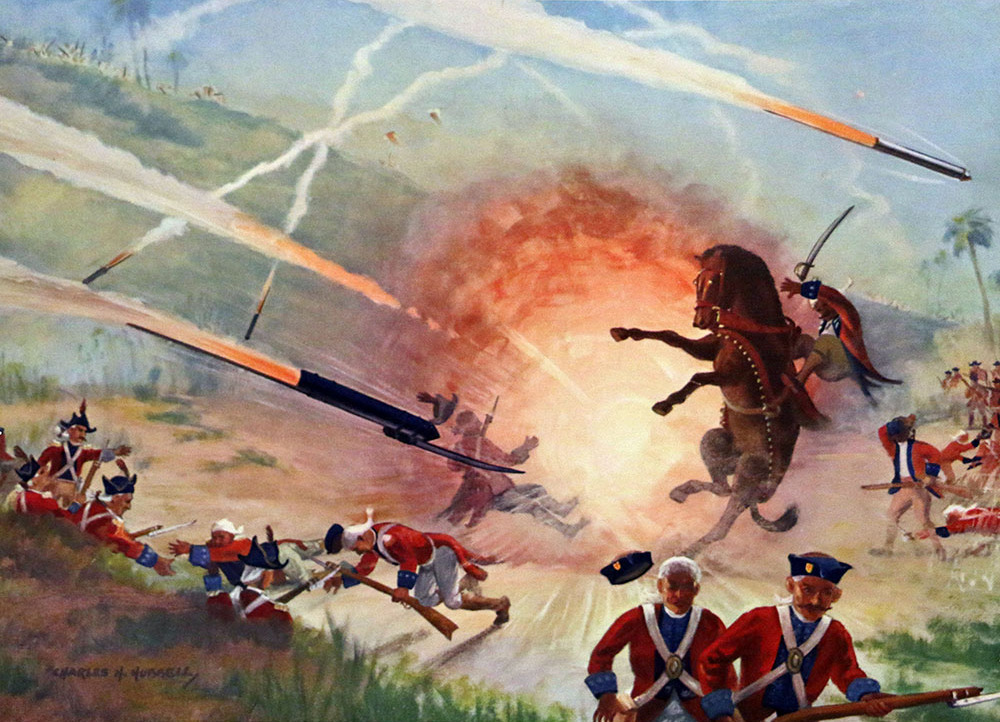
Allying with the French, they launched the Second Anglo-Mysore War. At the Battle of Pollilur, their iron-cased rockets painted streaks of fire across the sky, tearing the British forces apart. This resistance forced Britain to divert one-fifth of its navy, thousands of soldiers, and enormous financial resources towards India. As a result, its strength crumbled on the American battlefields against General George Washington.
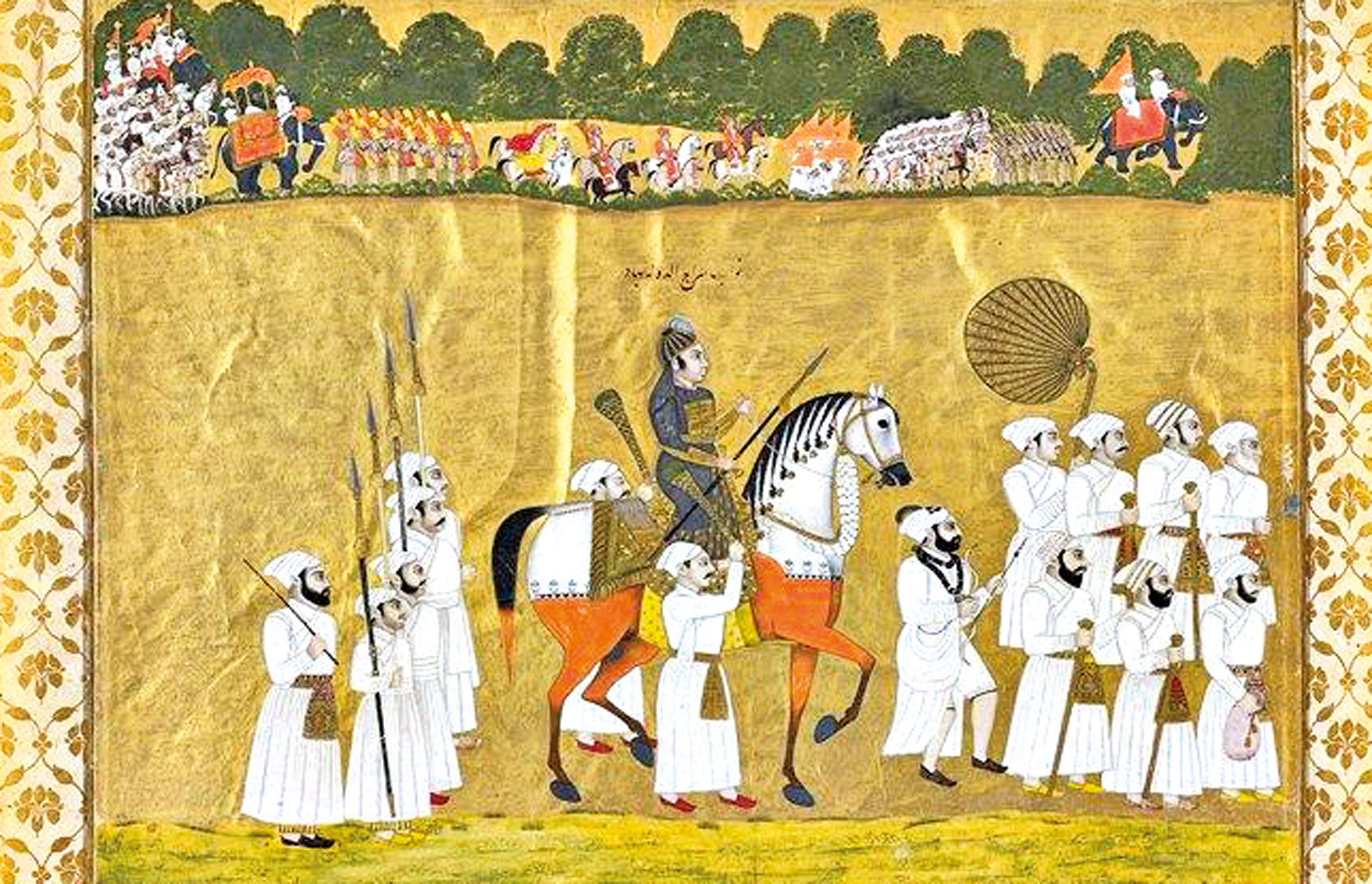
Inspiration for America's founders
John Adams wrote a letter to Congress praising the "famous Hyder Ali", which was read aloud before the assembly. In Paris, French officials proposed to Benjamin Franklin that direct contact be established between the Americans and Hyder Ali.
Tipu Sultan was also fascinated by global revolutionary ideals. He joined the Jacobin Club and planted a "Tree of Liberty" in Seringapatam (present-day Srirangapatna).
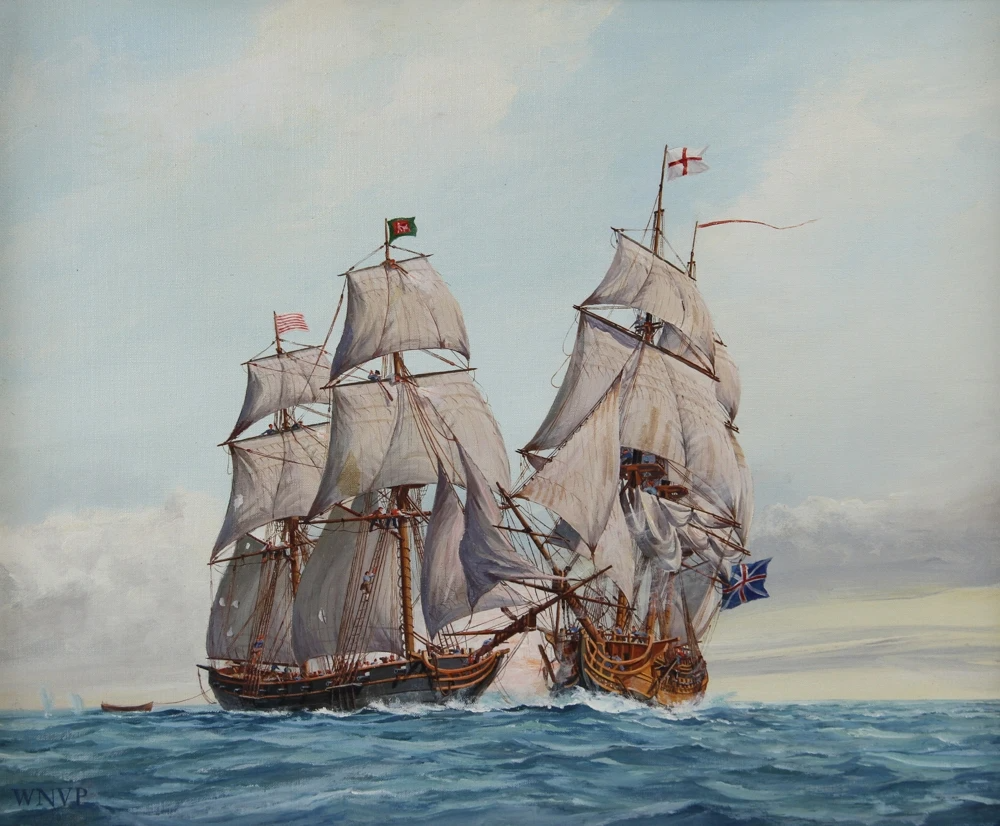
During the latter part of the American War of Independence, the rulers of Mysore, Hyder Ali and his son Tipu Sultan, were among the principal and most powerful enemies of the British East India Company. By keeping British forces tied down in the East, they indirectly aided the American freedom fighters. Inspired by Hyder Ali's anti-British heroism, the Pennsylvania State Navy named one of its warships Hyder Ally in his honour.
During the latter part of the American War of Independence, the rulers of Mysore, Hyder Ali and his son Tipu Sultan, were among the principal and most powerful enemies of the British East India Company. By keeping British forces tied down in the East, they indirectly aided the American freedom fighters. Inspired by Hyder Ali's anti-British heroism, the Pennsylvania State Navy named one of its warships Hyder Ally in his honour.
The ship was essentially a state-sponsored privateer, commissioned to protect Pennsylvania merchants and break the British blockade. It carried 16 cannon and was commanded by Captain Joshua Barney, one of the legendary figures of the American Navy.
On April 8, 1782, at the mouth of Delaware Bay, the American ship Hyder Ally collided head-on with the British Royal Navy warship HMS General Monk, which carried 20 cannon.
Captain Joshua Barney very cleverly shouted a false signal, or order, out loud, which confused the British captain. However, Barney's sailors already knew the plan. Taking advantage of this confusion, the Hyder Ally rammed the British ship, rendering its cannon useless. After just half an hour of extremely intense and bloody combat, the British ship HMS General Monk was forced to surrender to the American ship Hyder Ally (Reference: The Hyder-Ally vs. the General Monk, https://www.barneyfamily.org/docs/article_04.php).
This victory is considered one of the finest and most perfect naval tactical triumphs of the American War of Independence. Later, HMS General Monk was renamed General Washington.
One nation's freedom, another nation's fall
The British preoccupation with the battlefields of India paved the way for American independence, which was secured by the Treaty of Paris in 1783. But for Mysore, the consequences were catastrophic. Having lost the Thirteen American Colonies, Britain grew even more determined to expand its empire in the East. After successive invasions, Seringapatam fell in 1799, and Tipu Sultan lost his life on the battlefield. Following the Sepoy Mutiny, his descendants were exiled from Mysore to Calcutta (present-day Kolkata).
The fates of these two nations, standing at opposite ends of the ocean, seem like two pages of the same history: the rise of freedom on one side and the fall of a kingdom under the ruthless shadow of empire on the other.
Dr Mostofa Sarwar is Professor Emeritus at the University of New Orleans, former Visiting Professor and Adjunct Faculty member at the University of Pennsylvania, and former Dean and Vice-Chancellor of Delgado Community College. He can be reached at asarwar2001@yahoo.com.
Send your articles for Slow Reads to slowreads@thedailystar.net. Check out our submission guidelines for details.

157th Birth Anniversary of Mahatma Gandhi / Gandhi’s return to Noakhali
Why does Tagore still trouble Bangladesh’s idea of ‘us’?

Can Bangladesh make better use of its zakat money?
Three revolutions that reshaped the world
Paradise lost and found: Rediscovering early modern Bengal
Unbound Mother: The making and remaking of Kaali in Bengal
Do great leaders make history, or does history make them?
Poison and cremation: A forensic history of colonial Bengal