Yes? Non? Anglo-French power plays in the run-up to Plassey
Could ‘neutrality of the Ganges’ in Bengal ever be a stable outcome in the light of the jostling of the East India companies of Britain and France in India in general, and Bengal in particular? Did détente stand a chance in light of the Seven Years’ War in Europe that began in 1756 between the Anglo-Prussian coalition and the one led by France?
Was the Battle of Plassey that took place on 23 June 1757—or for that matter, a Plassey-like battle—inevitable?
No. No. And very likely.
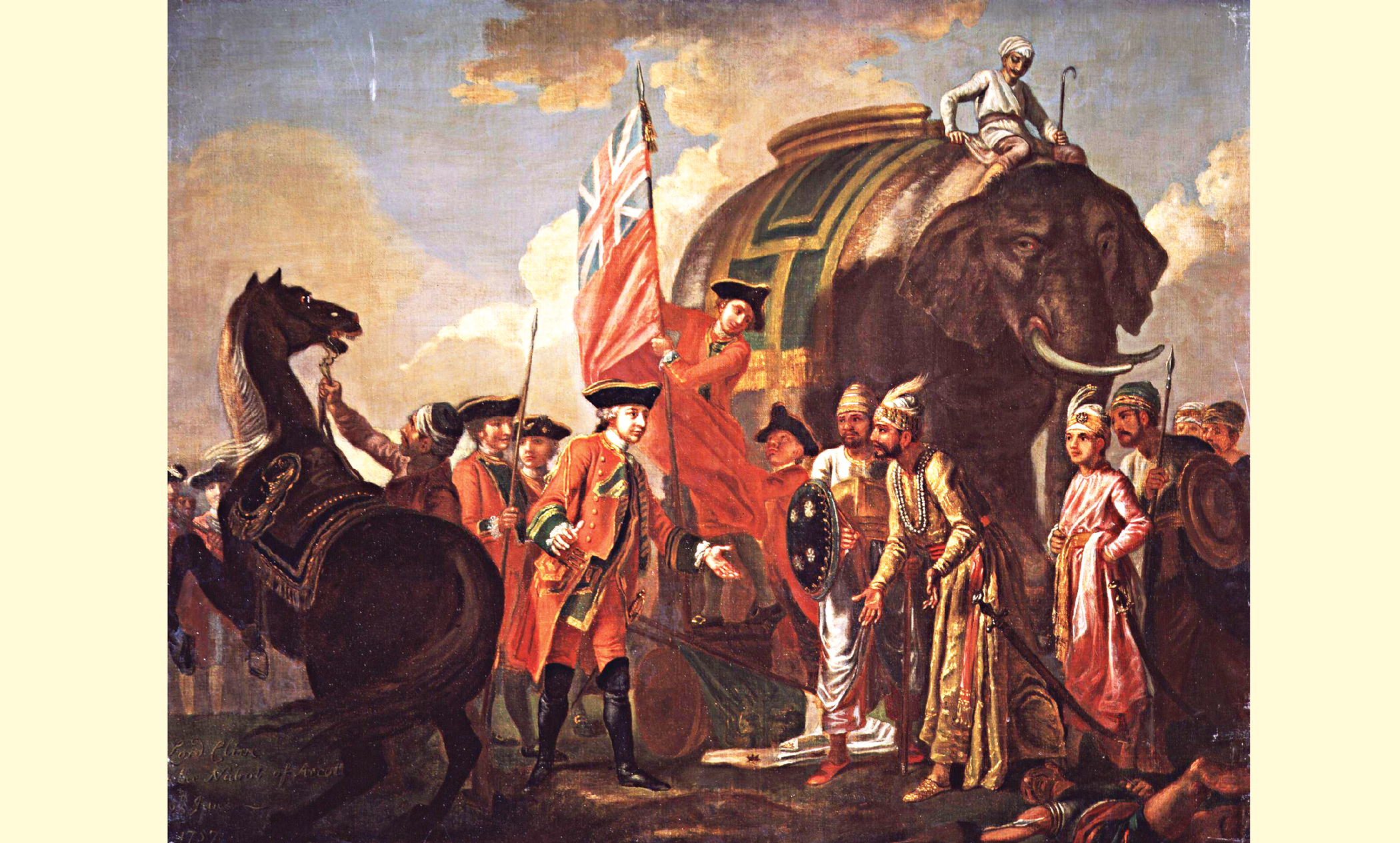
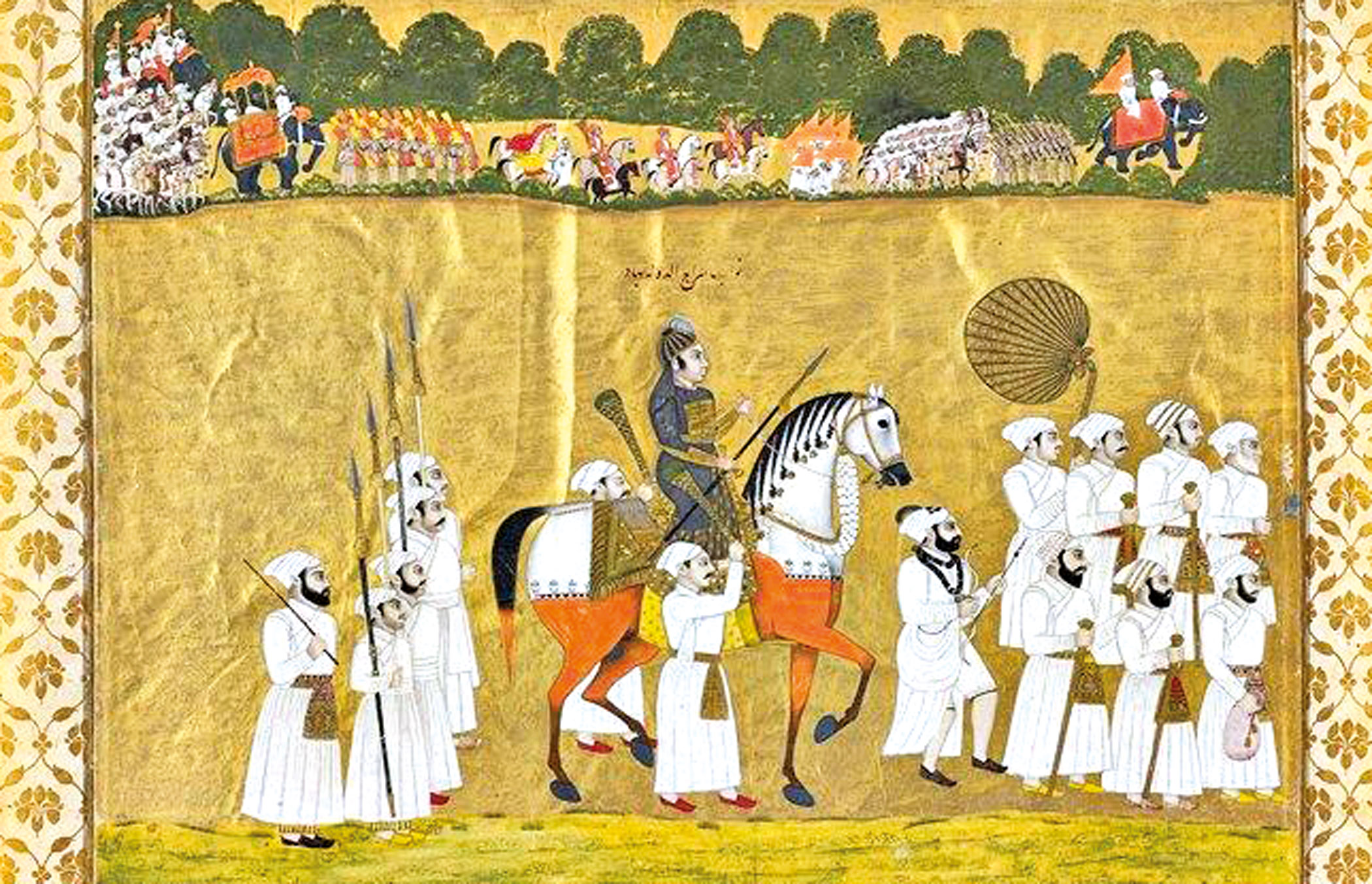
A curious détente existed in Bengal between the British and French companies until the arrival in Bengal of Lt. Col. Robert Clive and Admiral Charles Watson from Madras in late 1756. The joint Company and Crown force had in its mind the recovery of its possessions and rights in Calcutta and upriver in Qasimbazar from Bengal’s nawab Siraj-ud-daula. The nawab had driven the British East India Company from its Bengal holdings in the summer of 1756.
Whatever happened in Europe between their governments, the two companies would maintain neutrality if not cordiality in Bengal. This had seen the French and British companies through an adversarial relationship of their countrymen elsewhere, including southern India.
For the British the plan was: If not reconquest, then restitution. If not restitution, then some form of compensation—at any rate, a recovery both for the sake of business in Bengal and keeping French interests at bay. It could be said that the reclamation of Fort William and its environs by British forces over 2-3 January 1757 and an eventful skirmish with Siraj’s forces in the vicinity of Calcutta early the following month emboldened this project from mere reclamation to sowing the seeds of outright control. The Treaty of Alinagar signed on 9 February 1757, by which Siraj formally acknowledged the regaining of Calcutta by the British and which restored the Company’s rights in Bengal, was only the first significant step in that direction.
Until then, it had been in the interest of the British in Calcutta to avoid overt conflict, a studied position also maintained by the French in Bengal, who had as their regional base Chandannagar, or Chandernagore, upriver from Calcutta.
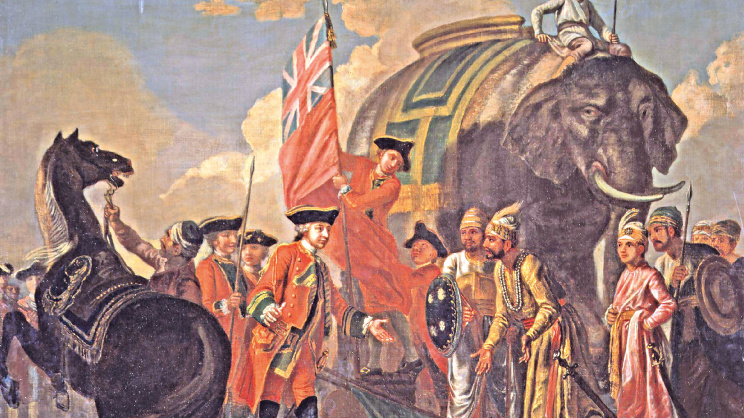
Whatever happened in Europe between their governments, the two companies would maintain neutrality if not cordiality in Bengal. This had seen the French and British companies through an adversarial relationship of their countrymen elsewhere, including southern India. The détente persisted through the churn of the First Carnatic War (1746–48) and the Second Carnatic War (1749–54), times when the two countries were not at war in Europe but continued a proxy war with the help of their company-and-country forces—and which earned Clive fame, and his title of Mahabat Jang, Horror in War, from the nawab of Arcot.
But it was only after the declaration of the Seven Years War in Europe in May 1756, news of which reached India in late 1756, conflated with the British loss of Calcutta, the need to retake it, and to secure trade with a favourable political environment, that matters spilled over in Bengal too.
It is what the Reverend James Long, who compiled volumes of often-underplayed Company records, colourfully described as the ‘feelings of international bitterness, so strong in Europe … were transferred to India; hence French and English regarded each other as national enemies; they fought for the expulsion of each other.’ The chronicler-historian S.C. Hill employed the phrase claimed by Arabs and Europeans alike: ‘Two swords cannot be in one sheath.’
For their part, the French beset by the on-again, off-again entreaties and threats from Siraj, appeared keen to not place ‘any unnecessary obstacles’, as Hill mentions by way of explanation, in the way of seeing the nawab ‘well beaten’, and yet safeguard their interests. The strategy was, of course, very chancy and evolved with every throw of the dice in Bengal; and it was specifically aimed at attempting to protect their position primarily in relation to the British.
There is even a suggestion that the French were paranoid about the possibility that, if the British demanded reparations from Siraj after their recapture of Calcutta, the nawab might simply permit the British to capture French settlements to clear that debt. Renault de St Germain, governor of the French settlement at Chandannagar at the time, urged Jean Law, chief of the French trading post at Qasimbazar, to ensure that in the event of a treaty between Siraj and the British, a clause be inserted guaranteeing ‘neutrality of the Ganges’ and prevent such an occurrence.
There would be no such clause in the Treaty of Alinagar. ‘Neutrality of the Ganges’ would remain mere words, to be considered according to the will, or the lack of it, of the British, French, and Siraj. But the French persisted and proposed just such an agreement with the British beyond the scope of the Treaty of Alinagar. They would persist up until the time Clive decided to attack Chandannagar in March 1757.
Hill notes that the ‘English had no intention of creeping quietly back into the country.’ He cites Clive’s letter dated 11 October 1756 to the Company’s Secret Committee in which he wrote, ‘I hope we shall be able to dispossess the French of Chandernagore.’ The letter was written five days before the expedition set sail from Madras for Calcutta.
There is another reinforcing letter, from the Select Committee in Madras to Admiral Watson, dated 13 November 1756, which was received in Calcutta on 13 January 1757, eleven days after the recapture of Calcutta by the British. In it the Committee wrote of how they had only the previous day received ‘by way of Bombay,’ the declaration of war by their government against France. It offered belligerent advice:
‘If you judge the taking of Chandernagore practicable without much loss it would certainly be a step of great utility to the Company’s affairs and take off in great measure the bad effects of the loss of Calcutta by putting the French in a position equally disadvantageous.’ It was a prime example of what the military historian Stuart Reid pithily terms ‘mercantile soldiering.’
Altogether it was shaping up to be another arena of glory for Clive, who, as the historian and author Piers Brendon writes, led by ‘relentless dynamism and hypnotic charisma’ and employed every trick in the book — ‘as much bribery as force’—to defeat the opponents of Company and Crown and reach the plane his personal motto described: Primus in Indis. First in India.
Hugli and Bandel, both prosperous settlements, the first described by Clive in one of his letters as the ‘second city in the kingdom’, and Bandel, a Portuguese trading post, would be devastated by Clive and Watson after their arrival in Calcutta—actions that drew Siraj to his unsuccessful campaign to retain Calcutta. Chandannagar was spared during this sortie, but it seemed more a calculated slight, as if the French would not dare to be drawn to battle here one way or the other, and suffer to be mopped up at the will of the British Company’s commanders. ‘So it is evident that he came with this intention to Bengal,’ insists Hill.
The French in Bengal would have to go. At the very least their military and political influence would need to be diminished to such an extent as to allow the interests of the Company and Crown an unhindered run. Neutrality would be moot when faced with this attitude.
To be fair, the tide of opinion was turning for the French Company too—back home in France. When Thomas Arthur, also Comte de Lally, was sent as governor general of France to India in the wake of hostilities between France and Britain in 1756, we learn from Long’s compilation of the French Company’s unambiguous instructions to the count: ‘All English fortifications to be destroyed, all other English places to be demolished, all English soldiers, sailors, writers to be sent to the Island of Bourbon.’ We learn that Louis XV, the king of France, was agreeable to this, and the decision that any British territory captured would be depopulated of Britons.
Count Lally would reach India after Plassey was a fâit accompli, and ran a disastrous campaign in India, including a defeat for the French at the Battle of Wandiwash (Vandavasi, southwest of Madras) in 1760, and the French surrender of Pondicherry to the British the following year. He would also be beheaded upon his return to France. But while that strand of history is a minor digression, the intent of the French is not.
Let us return to Calcutta. Even with Clive’s obvious belligerence and the charter of aggression he carried from Madras, the Calcutta Council discussed with complete seriousness the French proposal for neutrality in Bengal. We learn that the Council favoured it— ‘The treaty was drawn up, agreed on unanimously, and before signature, was sent at once to Admiral Watson,’ notes Long.
The admiral objected, indeed, refused to ratify the treaty on the grounds that such an agreement would need to be ratified at the French subcontinental ‘capital’ at Pondicherry, which entailed a minimum delay of two months.
Besides, there was every chance the council there would decline to ratify it. And, that such an agreement, even if ratified, might not be honoured by commanders of French ships who answered to their government, not the French company. As Long puts it, ‘…a number of Members of Government considered the French…notorious for breach of faith and violation of treaties.’ Admiral Watson also questioned the sureness of Siraj’s guarantee on such a pact of neutrality (‘…and the Nawab’s guarantee would be little worth,’ Long notes uncharitably, ‘as he was of a fickle and uncertain disposition’).
The attack on Chandannagar that eventually took place can be largely attributed to Clive. Through masterful manoeuvring and wordplay, even hinting that he would return to Madras, his home, Clive would place his views on the danger the French presented in a letter to the Select Committee at Calcutta on 4 March 1757. It became part of the Committee’s Proceedings the same day. In the letter, Clive displays great irritation and impatience, besides sealing the debate about the conflated interests of Company and Crown:
‘As Mr. Watson has declined accepting of the expedients proposed to him by us in refusing either to attack Chandernagore immediately or enter into such a neutrality with the French as we have recommended to him and which we think greatly for the benefit of the East India Company both in these provinces and on the Coast of Coromandel, I think he has taken the consequences of miscarriages upon himself, as in so doing … he runs counter to His Majesty’s instructions, which require that he should give attention to all representations made to him by the Company’s Agents in India for the good of their service.’
As the admiral was hesitant, Clive added, as commander of land forces he might as well return to Madras with as many troops as possible. In any case it was getting late in the season for sailing back to Madras. But should Admiral Watson refuse neutrality, an ‘immediate attack’ of Chandannagar would become ‘absolutely necessary.’
Clive then appealed to the perception of the world at large about the hesitation—even weakness—of the Company and the British to arrive at a decision. They would lose credibility: they had invited the French for discussions on neutrality, a project blessed by Siraj, and yet would not sign the treaty. ‘… What will the Nabob think? After the promises made him on our side, and after his consenting to guarantee this neutrality, he and all the world will certainly think that we are men of a trifling, insignificant disposition, or that we are men without principles.’
So, Clive insisted, either sign the document of neutrality immediately and be done with it or prepare to immediately attack Chandannagar. The French would not wait to ally with Siraj, or he with them—if indeed Siraj had any intention to honour neutrality or ‘articles of peace’ in the first place.
‘You may be assured the instant the French find their offers of a neutrality refused,’ Clive drove on with his ultimate argument, ‘they will immediately assist the Nabob in all his designs against us if he has the least intentions of not complying with the late articles of peace. It may then be too late to wish Mr. Watson had been pleased to pay more attention to our representations.’
Clive insisted that any ‘future operations’ against Siraj would depend on Clive’s troops. And, to take on both the French and Siraj together would be a ‘very precarious’ undertaking, even if all troops despatched to Bengal were counted, as the numbers would still not be robust. The French had to be removed from the equation. For that the British had to move quickly, Clive insisted, and attack. Or else Clive would not be responsible for any ‘misfortune.’
So, what will it be, gentlemen? —Clive’s tone again pressed for a decision and reminded the Council of the disadvantage of any enterprise of war without his troops. Attack, or not? Please make up your mind so I can either take the battle to Chandannagar and Siraj or return to Madras with most of the troops. In that case good luck to you, and, by the way, could you please arrange transport for my trip back to Madras?
As it turned out, Long notes, ‘The Council altered their opinions under these circumstances and resolved to attack Chandernagore.’
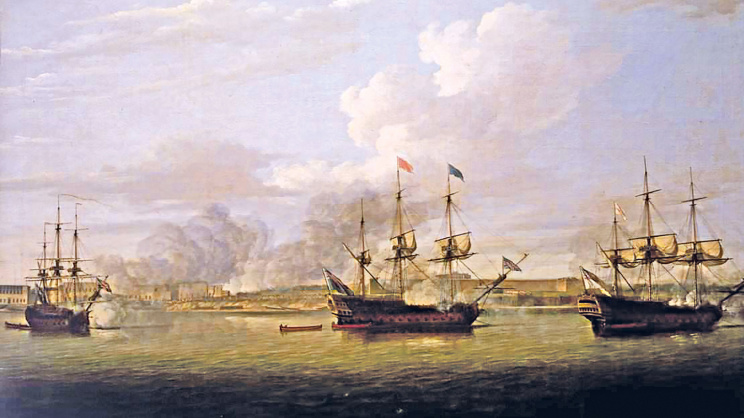
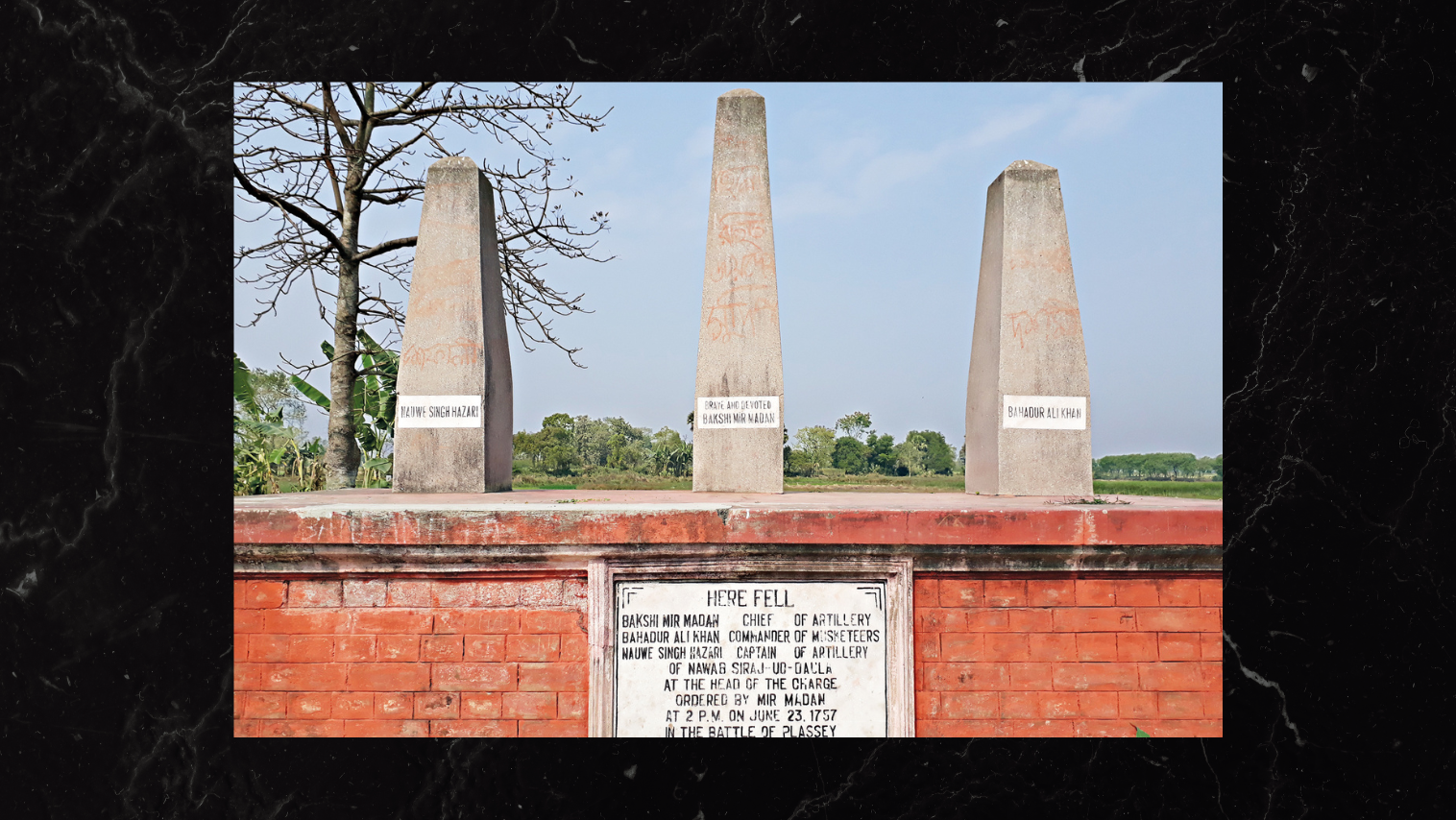
The coordinated land-and-river attack on Chandannagar began on 14 March 1757. While Clive had led the attack over land, Watson led the Crown fleet from his flagship Kent. The French settlement was devastated. All French shipping was sunk, either in an abortive bid to deny the British fleet led by Admiral Watson easy access, or by British naval bombardment.
With the decision taken to destroy the fort at Chandannagar and the British Company firmly entrenched on French territory along the Hugli river, on 16 April 1757 Clive would write to the Company’s Court in London justifying the attack:
‘When Chandernagore is considered as the granary … and Pondichery as mistress of a great trade to Europe and round India … the loss of it must be acknowledged a very severe blow to the French Company and nation. The destruction of this flourishing colony will, I am persuaded, be attended with many signal advantages to the trade of the East India Company.’
Siraj, caught between the throes of his own instabilities in Murshidabad’s power dynamics and the Great Games of emergent global powers and their local supporters, was at this stage perhaps little more than an expendable pawn adrift in the eastern edge of a weakened Mughal empire. As Plassey would demonstrate, politics and war were, as ever, just business.
Sudeep Chakaravarti is the author of Plassey: The Battle that Changed the Course of Indian History and several books that encompass history, ethnography, geopolitics, and geo-economics. He is a Professor of Practice at Ahmedabad University, and Executive Director of the university’s Stepwell Centre for Asian Futures.
Send your articles for Slow Reads to slowreads@thedailystar.net. Check out our submission guidelines for details.


157th Birth Anniversary of Mahatma Gandhi / Gandhi’s return to Noakhali
Why does Tagore still trouble Bangladesh’s idea of ‘us’?

Can Bangladesh make better use of its zakat money?
Three revolutions that reshaped the world
Paradise lost and found: Rediscovering early modern Bengal

Unbound Mother: The making and remaking of Kaali in Bengal

Do great leaders make history, or does history make them?
Poison and cremation: A forensic history of colonial Bengal