Annapurna Devi and the gendered silences of classical music
Classical music is a genre so revered that the respect often reverses the value of the music, turning it into an untouchable category. To make matters worse, the world of classical music in the Indian subcontinent has its own gatekeepers: jamdani-draped, raw-silk-punjabi-clad individuals who arch their eyebrows in annoyance and name-drop their favourite raags, as if holding the key to an ivory tower of culture, performing a carefully constructed sense of class exceptionalism.
The elite class certainly continues to be patrons of the arts, as they have historically been, with classical musicians performing at royal courts. In the current world of music streaming platforms, every listener is important. With this cultural politics in the background, it is perhaps not confounding that the stories of the musical maestros are not well known.
Colonialism’s gendered cost on classical music
The two primary reasons for the lack of popularisation of the lives of musical maestros like Ustad Allaudin Khan and Gauhar Jaan are, first, the contested question of cultural ownership in the post-partition landscape now comprising Bangladesh, India, and Pakistan; and second, the prioritisation of Western epistemology—a form of colonial baggage that has continued to erode the oral guru–shishya tradition upon which classical music in the region has historically relied. There is also an added burden of the gendered cost borne by the female court musicians, denounced and socially stigmatised by Victorian morality standards imposed by the British. This piece will focus on a different kind of patriarchal violence—one that continues to thrive to this day—and that curtailed the public performing lives of female artists like Annapurna Devi, the surbahar virtuoso, doyenne of the Senia Maihar gharana, as well as a student and daughter of Ustad Allauddin Khan, the founder of their gharana.
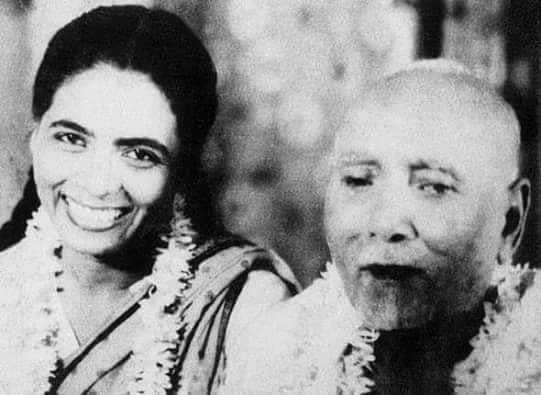
Annapurna Devi, or Guru Maa, for her students, took the approach of teaching through anecdotal memory of her guru, Ustad Allauddin Khan, under whom she would train all day, interrupted only by helping her mother with meals and the necessities of rest. A life of rigorous training in classical music was not simply to attain discipline and perfection in the art, but to ensure that the student is learning how to conduct their lives through the practices of the teacher, who had also learned from his or her teacher, and so on. These teachings are in harmony with the ancient philosophy of the guru-shishya tradition, whose ultimate goal was self-realisation and continuation of the tradition’s wisdom. Therefore, it is only fitting that Annapurna Devi spoke very little of herself and always invoked the sayings and stories of Ustad Allauddin Khan during her own lessons.
Unfortunately, Annapurna Devi’s life story is crowded with crude public conjectures and conspiracy theories; it was so even when she was alive. Despite people dragging her name through the mud for personal gain or tabloid popularity, she remained tight-lipped, adhering to her ethics of decentring the artist and serving the next generation of the Senia–Maihar gharana, producing maestros such as flautist Hariprasad Chaurasia and Nityanand Haldipur.
It is difficult for modern minds to sift myth from reality in the stories surrounding musical maestros, such as those involving Pratiti Devi (Ritwik Ghatak’s sister) and her mother, Indubala Devi, who had hosted Ustad Allauddin Khan in their Dhaka home. They had once sneaked in to watch him practise his riyaz at an ungodly hour of the night, only to find his body suffused with a golden glow. There are also accounts of Annapurna Devi’s famed clairvoyance among her students, and of the uncanny disturbances around the trees in their Maihar home, which frightened everyone until Ustad Khan realised that they coincided with the time Devi practised shuddha Malkauns in her room at night. He is said to have reassured them that a perfectly rendered shuddha Malkauns can sometimes evoke such unusual experiences, and forbade her from playing the raag in its pure form thereafter.
Whether one chooses to believe such stories or to interpret them through a post-Enlightenment rationality, what matters most is that they be approached with the same reverence as the shuddho swars—sa re ga ma pa dha ni—which, in themselves, may not denote fixed meaning, yet whose aural power not only transcends language but also demands a different mode of seeing, one that allows us to tap into our deepest human emotions.
Allauddin Khan’s daughters and disciples under patriarchy’s spectre
Ustadji himself was born in a family from Brahmanbaria. Though he had run away from home at the age of eight, he had many musical influences, starting from Jatra and other sonic experiences available to him in Brahmanbaria. He has had many teachers, among whom Wazir Khan, the descendant of Mia Tansen’s daughter's family, is most often talked about. Khan was a deeply religious man, attached to his ancestral home and attentive to the needs of those around him — except that when it came to his riyaaz (musical practice), nothing else mattered.
He married off his eldest daughter, Jahanara, who was fond of music, in a Muslim family in Bangladesh. That family forbade her from practising any music, she had learnt Dhrupad singing from Ustadji, and would do her riyaaz when she was alone. One day, her mother-in-law returned home to find her immersed in singing a Dhrupad composition of Shiv Stuti.
They declared her a kafir, burned her tanpura, and forced her to eat beef to prove that she was Muslim. Jahanara, who was pregnant at the time, refused. As a result, she was brutally beaten, which led to a miscarriage. She was then sent back to her parents’ home in Maihar, where she passed away shortly afterwards.
Ustaadji never recovered from the trauma of his daughter’s horrific death. He later decided to marry his most dedicated student, his daughter Annapurna Devi, to his talented and obedient pupil Ravi Shankar, despite the reservations of many and his initial impression of Shankar as erratic and unreliable. He thought marrying Devi to Shankar would ensure the continuation of her music.
It was a very happy marriage for the first two years, until Shankar’s infidelity created a rift in the relationship. The distance between them deepened further as his self-serving, Macbethian ambition to reach the heights of fame took hold. This eventually led Devi to withdraw from public life, bringing her performances before audiences to an abrupt end.
Annapurna Devi, always adhering to the teachings of her ustaad, had paid no heed to public recognition, choosing instead to treat music as shadhona and to teach her shishyas (pupils) free of cost. An essential aspect of not accepting fees was Devi’s unwavering faith in the pure guru–shishya tradition; the teacher decides both the instrument and ragas to be taught to the student, based on the disciple’s temperament and tenacity.
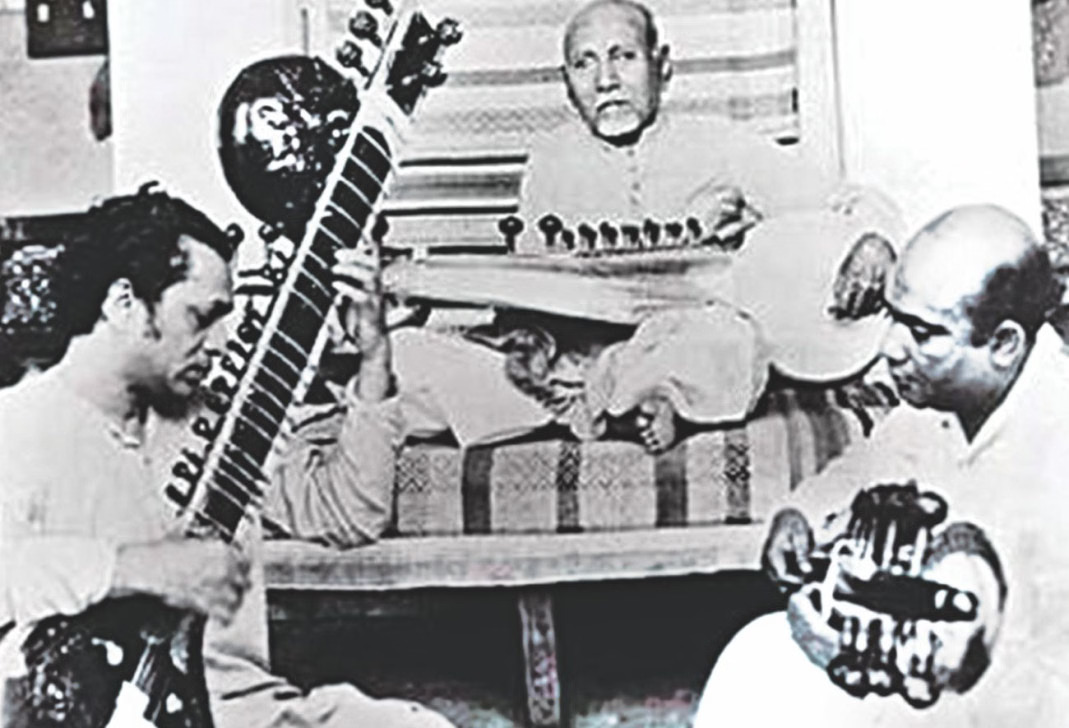
Devi believed that the resignation- and trust-based model loses its impact and even its purpose when fees are introduced into the equation. This tradition requires complete faith between the teacher and the disciple, and absolute surrender to the methods of teaching on the latter’s part, much like how Ustaad Allauddin Khan did not allow Pandit Ravi Shankar to learn the surbahar, a cousin of the sitar, best suited for playing the alaap and widely considered to be a classical music connoisseur’s instrument. Ustaadji did not find Shankar’s temperament appropriate for playing this instrument, but he had himself offered to teach Annapurna Devi, considering her personality and tenacity.
Behind the making of this genius recluse, however, lies the unfortunately all-too-familiar story of female maestros across all fields who were met with the vile and often destructive envy of their cis-male peers.
Pandit Jotin Bhattacharya’s book, Ustaad Allauddin Khan ebong Amra, records Zubeida, the wife of Ustaad Ali Akbar Khan, with whom Devi and Shankar shared an apartment, recalling hearing Shankar telling Devi, “You have a lot of ego about your playing well, I’ll break all your fingers.” After that, Shankar asked all of them to leave the house, including the children, and while Devi was packing her belongings, he did not allow her to take her most prized possessions—her music notation books.
Same gharana, differences in music performance
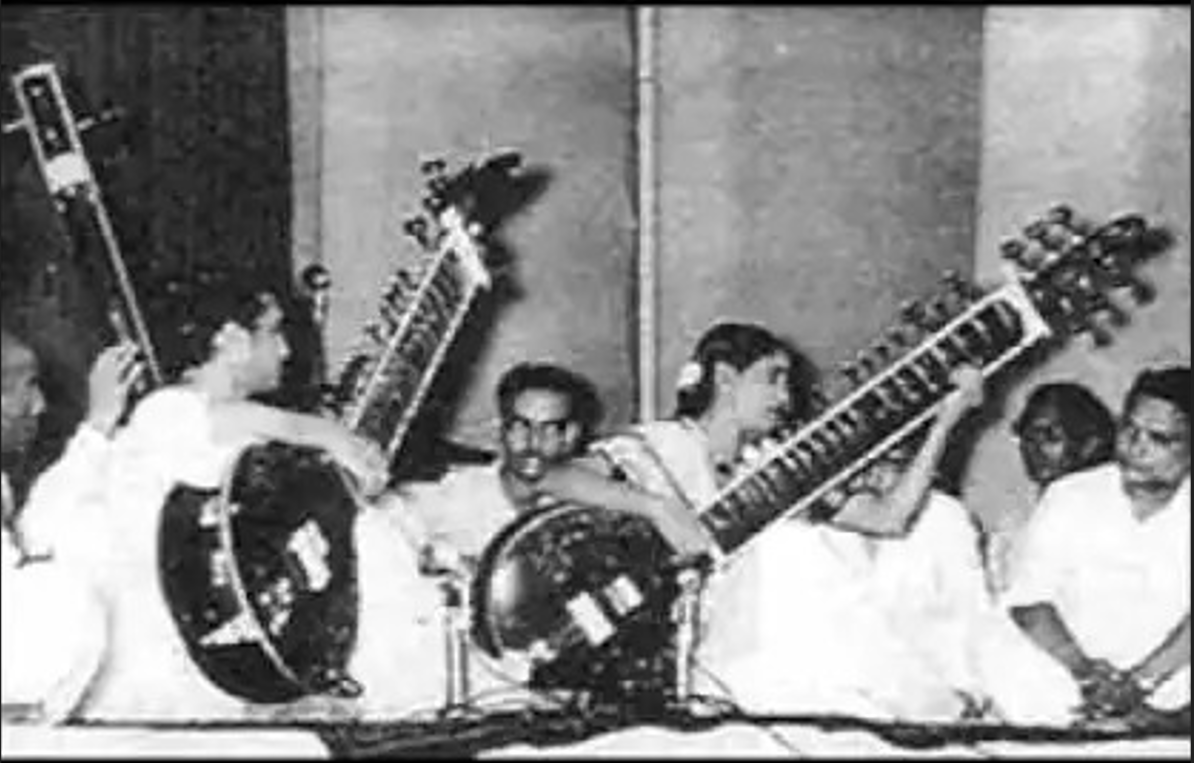
Jataayu, recalling an incident that took place after the couple’s jugalbandi, which caused the first major fissures in their marriage, says: “His point of view was that, in order to please the audience, we should modify the music by making it lighter, a bit Westernised, and thus more palatable. However, I refused, as I wanted to remain in congruence with our rich classical heritage… I believed that the audience ought to evolve and learn to appreciate the richness of our heritage in its pure form; the artists should not stoop down.” (191, Jataayu.)
Devi, whose surbahar favours the contemplative alaap—the improvisational opening—along with her gharana’s forte, excellence in improvisation, respected Shankar as a musician despite his misogyny and narcissism. She drew the line, however, when it came to his emphasis on jod—the steady pulse transitioning from alaap—and jhala—the fast and energetic climax of a raag performance. Such was the dialectical difference between their conceptions of music. These differences were certainly marked by their diverging ambitions.
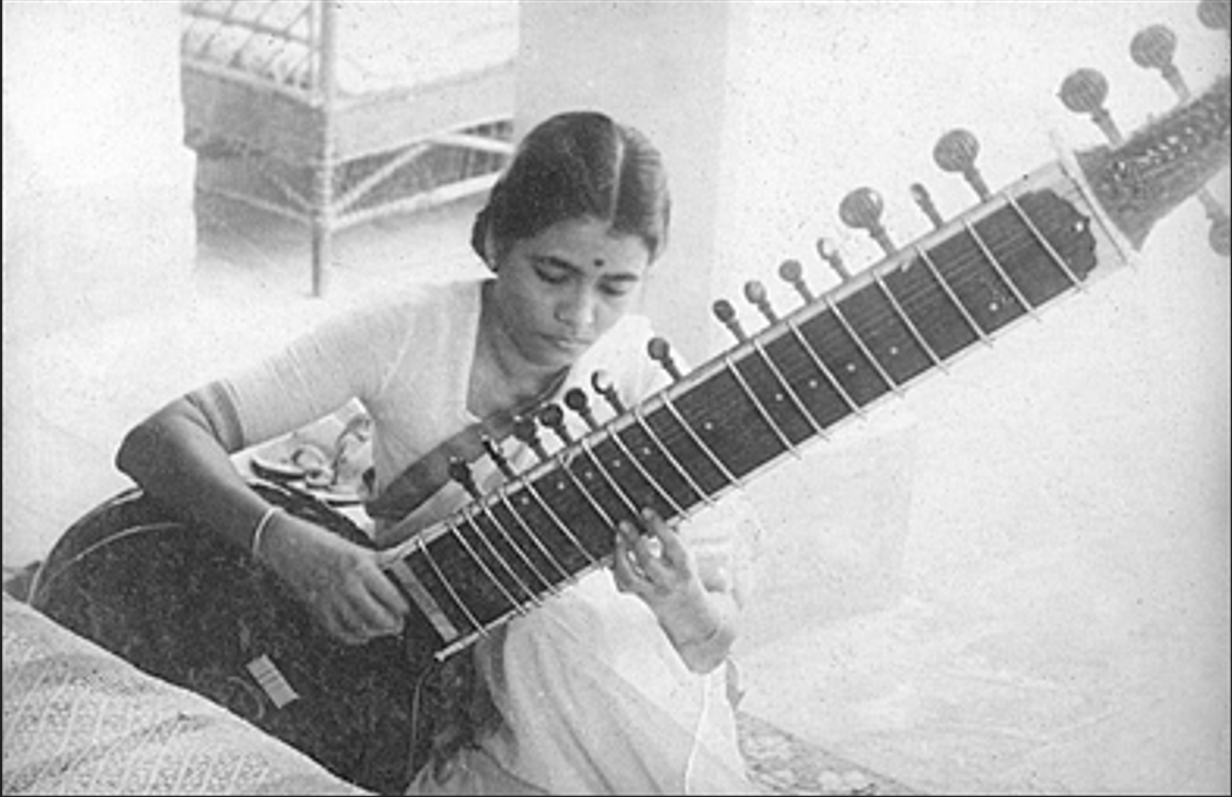
Devi’s pursuit of shadhona and excellence in music had little to do with fame or socially ascribed success. Despite the decolonisation rhetoric all around us, her conception of music as a path to fulfilment, or moksha in Vedic terms, appears counterintuitive in our neo-colonial world of hustle.
Classical music in the region has certainly sustained itself, despite the gramophone’s restricted length or the current deficiency in attention span, but the jeering crowd or the victor of any cultural contest should not be our only storyteller, nor should the story of Annapurna Devi—the grand female maestro of the illustrious Maihar gharana—be swallowed by the gorge of cacophony.
Raidah Binthe A. is a writer, researcher, and raging feminist based in Dhaka.
Send your articles for Slow Reads to slowreads@thedailystar.net. Check out our submission guidelines for details.

157th Birth Anniversary of Mahatma Gandhi / Gandhi’s return to Noakhali
Why does Tagore still trouble Bangladesh’s idea of ‘us’?

Can Bangladesh make better use of its zakat money?

Three revolutions that reshaped the world
Paradise lost and found: Rediscovering early modern Bengal
Unbound Mother: The making and remaking of Kaali in Bengal

Do great leaders make history, or does history make them?
Poison and cremation: A forensic history of colonial Bengal